

What does "The Museum of Innocence" tell us?
Writer Başak Akgün Akil examines Orhan Pamuk's "The Museum of Innocence," the source material for the popular recent series and book.



Writer: Başak Akgün Akil
If a person knew they were in a story throughout their life for which they would be responsible for the consequences, with all their dreams, flaws, and decisions, and if they could flip through the pages quickly to see the outcomes of their choices, would they still walk the same path and take the same steps in the same way? Sometimes, while watching a film, we are tested by emotions we have never known through the characters; at times we judge the character, get angry, perhaps hate them, or perhaps love them very much. Yet in literature, the essence is the story, the essence is life, the essence is the human, and literature is precisely the art of being able to embark on this journey of thought.
"The Museum of Innocence," adapted from the novel of the same name by our Nobel laureate author Orhan Pamuk and currently meeting its audience on Netflix, has been the subject of much conversation lately. Written through the inner world of the main character, Kemal, the novel presents its love story to the audience with subtlety, flowing like a raindrop from the bourgeois life of Nişantaşı to the poor streets of Fatih in a bygone Istanbul.
To call this book and film merely a "love story" would perhaps be doing it an injustice. The first page of the book, which I read years ago, begins with an introduction by the character Celal Salik, who was also created by the author in "The Black Book": "They were innocent people who thought poverty was a crime that could be forgotten by earning money." Although the book is known as a love novel, there are many lines to underline regarding social class distinctions, human weaknesses, lives trapped between love and conscience, and the way a person leans into a moment among objects within the parentheses of a lifetime.
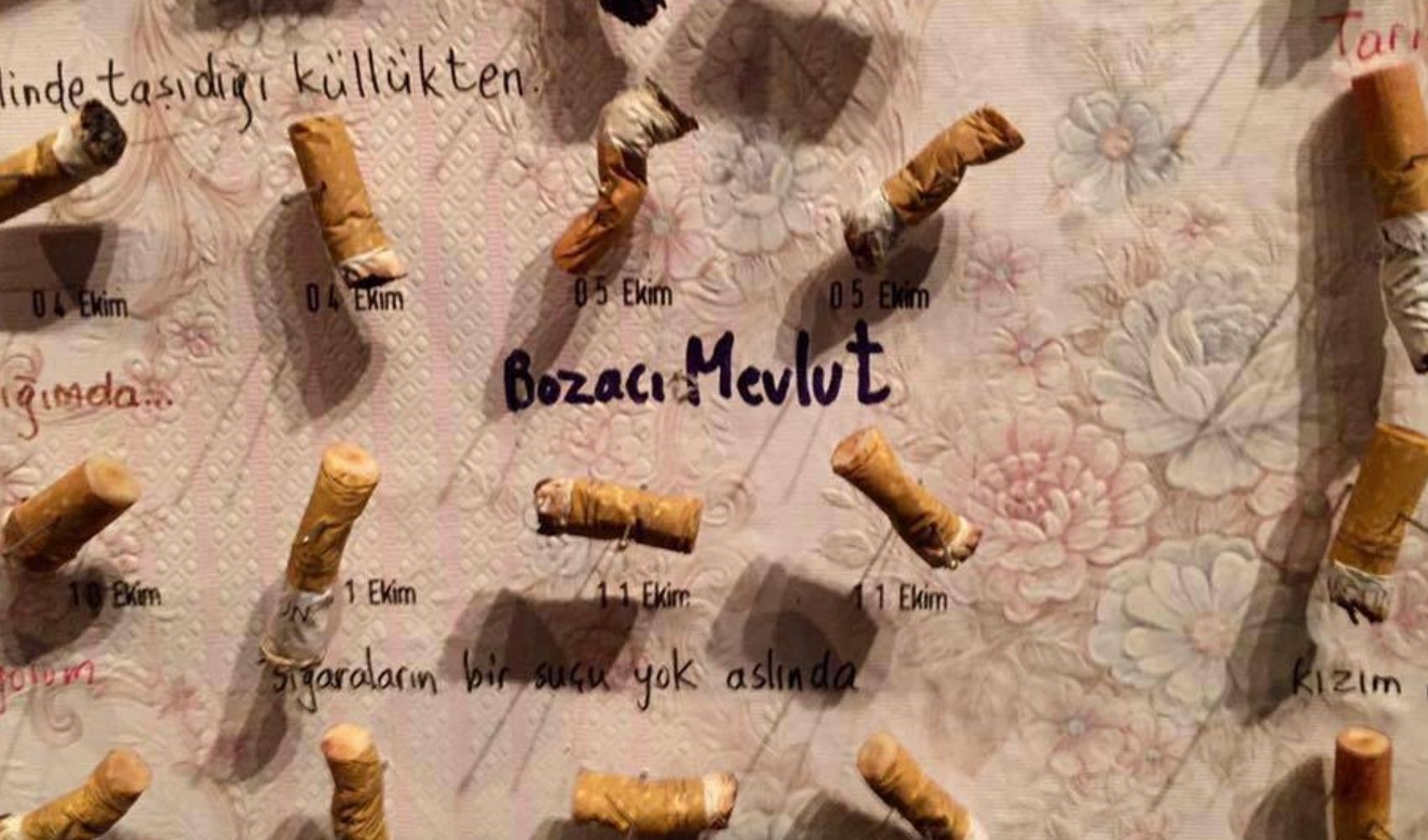
"The Museum of Innocence," which Orhan Pamuk prepared at the same time as the book, holds the distinction of being the first museum in history created based on a novel. Although the author states that the characters in this book do not exist in real life, this museum, which he created himself and constructed in a magnificent way, pushes the boundaries of the mind's dreams with its perception of reality. The objects in the museum—Füsun's earrings, cigarette butts, a child's bicycle, playing cards, quince grater, salt shakers, and many more—tell us that the author wrote this novel as if using objects instead of words. Again, Kemal's words, "Objects cast aside and forgotten sadden me greatly," imply that the character identifies himself with objects at some point.
In the film, the character of Kemal, into whose mind we almost enter, has been highly debated. Thirty years old, tall, handsome, and coming from a wealthy family, Kemal takes steps at the beginning of the story from the threshold of a highly accepted marriage in society toward his own story, his own emotional imprisonment, and a love that will last for years. In this character, we can see the feeling that no matter how beautiful a place where a person does not belong may be, it will eventually lead them on a journey. However, in the author's own definition, he is a "Middle Eastern man." Was what he found in Füsun an adventure, a passion for modernity; was it a great love felt for a woman, or was he a man in love with his own judgment, with winning; or were all these an obsession? We cannot know, but while answering these questions, perhaps we should not forget that Orhan Pamuk specifically prefers that some answers in his novels remain unique to the reader.
The character of Füsun, on the other hand, is a young girl of only eighteen, enchanting everyone with her beauty, with a childish smile on her face, excited, not always able to think of the end, but just as intelligent. Füsun searches for herself, gets to know herself, and even loses herself over the years we watch on the actor's face. She transforms. She wants to be understood, to be seen, and she no longer smiles. Her anger toward life and the men who love her gradually settles into the expression on her face; perhaps, like the birds she draws on paper, she too wants to escape her cage.
What Kemal sees in Füsun is not just a woman, but something that belongs a little to himself in her physical features, her childhood, her childhood toys, and his own secret loneliness... Perhaps this narcissistic love shows that a person is not looking for someone alone, but most of all, for themselves.
When Kemal creates his own eight-year internal imprisonment with the ache of his heart after the adventure of happiness he deemed himself worthy of, Füsun begins to search for her own freedom, for herself. How strange that the day comes when both the prison and the wings grow within the same house.
In the book, while Orhan Pamuk paints the story before our eyes like a painter with his magnificent descriptions, in the film, due to the nature of the medium, we find the words and descriptions that were removed in the eyes, gazes, and extraordinary performances of Selahattin Paşalı and Eylül Kandemir, who bring the characters of Kemal and Füsun to life.
Again, the mother's heart carried in the eyes of Tilbe Saran, who brings the character of Vecihe to life, and that deep sadness she hides in her laughter even in her shattered emotions; in the character of Mümtaz, Bülent Emin Yarar's inability to call out to his son in the regret of a father who has perhaps walked the same path, and the disappearance of his wealthy life among them as it shrinks over time to the size of an armchair and a television; in the character of Nesibe, Gülçin Kültür Şahin's weighing of the solution sought in poverty on the same scale as societal norms when necessary; in the character of Tarık, Ercan Kesal's bowing of his head as what he knows becomes too heavy for him within Anatolian norms, that dignified sadness; in the character of Sibel, Oya Unustası's sadness and acceptance as she transforms from her best days within the depiction of a well-educated, modern woman; in the character of Feridun, Bora Akın's love and transformation; and in the character of Zaim, Onur Ünsal's construction of the life he belongs to with all its pieces over time, all offer character acting to the audience in abundance with their standout performances.
Turning a novel with such strong descriptions into a film is not always easy, because such novels also carry the emotions that the reader has established between the author and the characters. At this point, the pen of screenwriter Ertan Kurtulan, who on one hand remains as faithful as possible to the novel without detaching from the original work, and on the other hand adds his own distinctiveness, also makes itself felt with his mastery.
Likewise, one must also congratulate director Zeynep Günay Tan, who highlights love, crisis, and gloom in the film with close-up shots; color choices appropriate for the scenes and the period; and who fills the place of the descriptions in the book with the actors' mimics, texts, and even their silences without losing any emotion. Another feature that distinguishes the film from the novel is hidden in the sharp feelings that transform on Füsun's face and in her emotions, in her eyes that now speak more than words, in her words, and even in what she cannot say. Again, at the end of the film, we see that Füsun's emotions are emphasized more clearly through a woman's perspective.
The film's music, bearing the signatures of Marios Takoushis and Cem Ergunoğlu, deeply processes the themes of love, search, and sadness. However, perhaps because it is a period film, or perhaps because its lyrics overlap one-to-one with the characters, the song "Seni Bana Katsam," taken out of time's chest after many years by Neco, forms the piece that crowns the music by almost integrating with the film's emotions.
Regarding the criticisms of the main characters; even though they are not real, in the case of these two sharp spirits living at the extremes, a person is neither purely good nor entirely bad on their own. Few can say that love never harms a person. Perhaps the words Kemal says in the film: "It was the happiest moment of my life, I didn't know," and the words emphasized at the end of the film, "Let everyone know, I lived a very happy life," show that the concept of happiness consists of memories sprinkled over moments in our lives that we do not notice. It must be stated that goodness, just like happiness, cannot appear before us as a distinct, absolute emotion under all conditions. This is what The Museum of Innocence reminds us of: in the helplessness of a human who can never be entirely innocent, trying to save a moment, a memory, an object for themselves within the world; sometimes carrying the bad within the good, and sometimes the good within the bad.
The character of Kemal hides everything but cannot notice the earring and the dreams of the woman he loves... This shows that love is not a story felt in the same way by two people under all conditions, but sometimes a state of emotion that is more in our own explanation, in our own minds. If we ask, "Is Kemal's feeling an obsession or love?" perhaps love, like literature, is something uncertain, sometimes unanswered.
Photo: Sercan Meriç
News Source: 12punto
Most Read

Striking picture for Özgür Özel's 'New Party'

Özgür Özel gives a dated response regarding the number of resignations

Forest fire in Antalya brought under control

The PKK opening and Özgür Özel’s path!..

How did the newspapers view Özgür Özel's farewell to the CHP?

He killed his wife by slitting her throat: Their children witnessed the moments

What did the CHP do?

Özel’s new party move in the world press

The New CHP, against CEHAPE

Fire at TUSAŞ engine factory in Eskişehir under control