

8th week of the IMM trial: What is happening in Silivri?
On the 27th day of the Istanbul Metropolitan Municipality (IMM) trial, held in the courtroom at Silivri Prison, the defense of Ekrem İmamoğlu's lawyer, Mehmet Pehlivan, was scheduled to continue. The court rejected the lawyers' motion for the recusal of the judge, and the defense turn of whistleblower Adem Soytekin was moved forward. A verbal dispute occurred over requests for release, and the panel announced that only the lawyers for the consolidated case would be granted the floor.



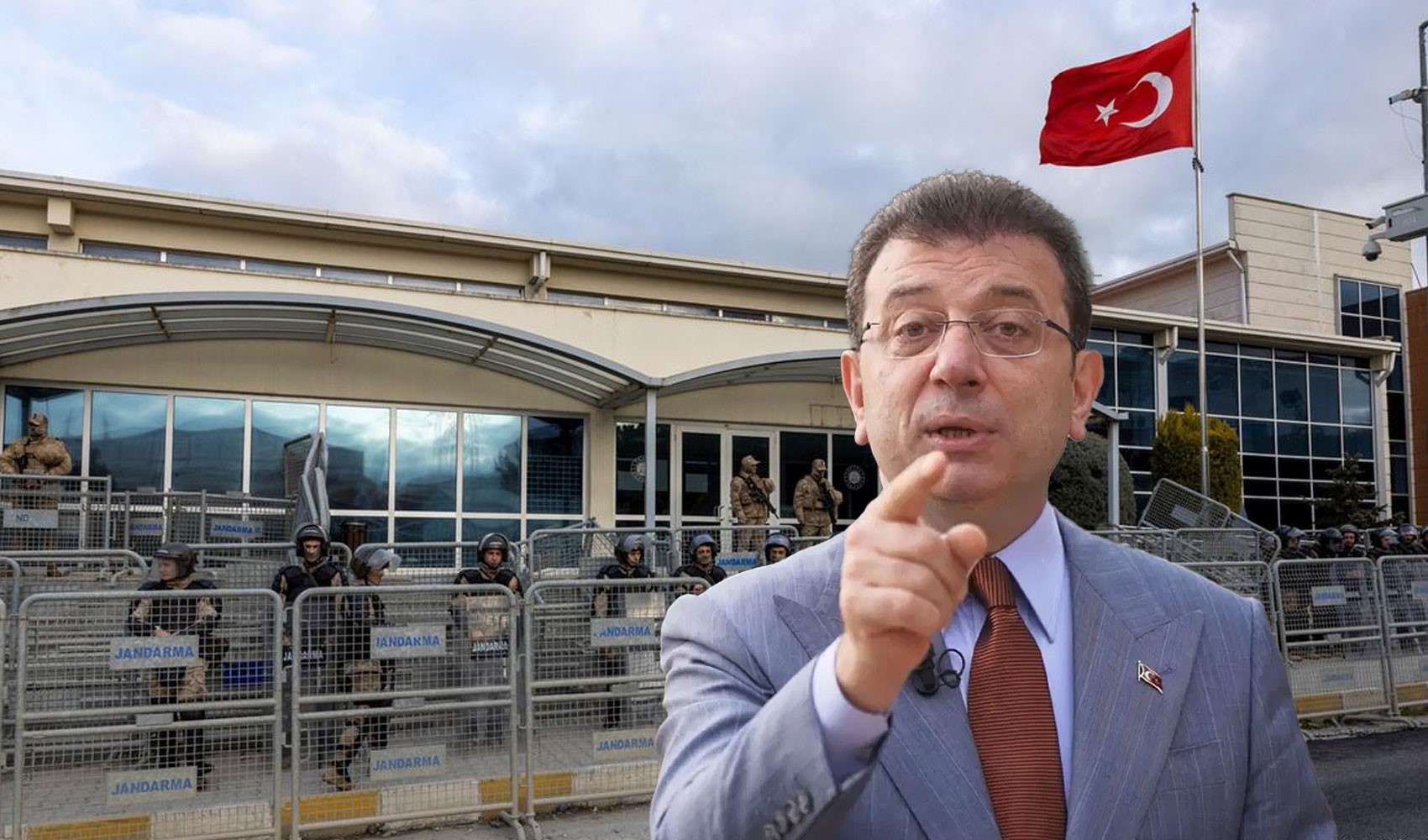
The trial process continues on its 27th day in the IMM case, in which the Republican People's Party (CHP) presidential candidate and elected Istanbul Metropolitan Municipality (IMM) Mayor Ekrem İmamoğlu is also being tried. The proceedings are being conducted by the Istanbul 40th High Criminal Court in Courtroom No. 1, located across from the Marmara Closed Penal Execution Institution.
In the trial, which held its first session on Monday, March 9, the defenses of 35 people have been completed to date. In the 27th session, the defense of İmamoğlu's imprisoned lawyer, Mehmet Pehlivan, which was left unfinished, is expected to continue. Following Pehlivan's questioning, the trial process will proceed with statements from his lawyers.
***
15:49 | LAWYER TORA PEKIN: WE LOOKED AT THE COURT OF CASSATION RULING, 'WE WILL TEACH YOU A LESSON' IS A THREAT
According to Halk TV, Lawyer Tora Pekin, who took the floor for the defense of the imprisoned Mehmet Pehlivan, stated that the 7 prosecutors who signed the indictment were rewarded. Saying, "Along with them, the chief prosecutor was also made Minister of Justice," Pekin added, "The trial prosecutor told Ekrem İmamoğlu, 'We will teach you a lesson.' We took this as a threat. We even looked at the Court of Cassation rulings; it says it is a 'threat.' According to us, it is a threat; according to the Court of Cassation, it is a threat; but according to the Ministry of Justice, it is a necessary warning. We absolutely do not accept this. No one in this courtroom can teach anyone a lesson."
15:30 | PEHLIVAN DESCRIBES THE IMPRISONED PROSECUTOR IN THE ADJACENT CELL
Pehlivan used the expression, "Most of us are spending this period of detention under the same conditions as those serving aggravated life sentences." He emphasized the following: "Actually, the prosecutors of this prosecution office need to do an internship here, to see this. Believe me, it would make a huge difference for our justice system. Because none of you can imagine, you cannot fathom what this confinement of ours is like."
He stated that a prosecutor was being held in the prison right next to him, in the Çorlu prison, and that they could not sleep for 60 hours. He explained by saying, 'Do you know why we couldn't sleep?' 'Because the prison guards waited at his door for fear that he might do something to himself. They talked to him for 60 hours.'
"Was he a member of the Court of Cassation, or from the Constitutional Court, a colleague of yours, a criminal judge, the prosecutor came. He stayed for only 60 hours. We could not sleep for 60 hours. He came to the cell two doors down from Murat. We were in the same corridor, though. We could not sleep for 60 hours. Do you know why, Mr. President? The prosecutor fell into a depression. Prison officers waited at the door of his cell for 60 hours for fear that he might harm himself, and they talked to him. So that the detained prosecutor would not harm himself. And in the end, they couldn't take it anymore; they said that a person who is monitored by camera, monitored 24/7 by camera, and who should not be left alone, should be accompanied by a, quote-unquote, 'accustomed person in custody'."
"And they are issuing arrest warrants like they are handing out snacks. It is mandatory for all those who make this decision to intern, to experience this. He said you wouldn't believe it if you knew how rapidly justice changes in the country."
Afterwards, he talked about himself, actually regarding this process. Because an interim evaluation had been made before, and a decision for the continuation of his detention had been given. You say there is a suspicion that I will obscure evidence. He asked the question, which evidence will I obscure, and furthermore, why hasn't this evidence been collected until now? He said he wanted to learn on what grounds he was not released with judicial control measures. He asked what the additional reason was for keeping me away from my daughter. Mehmet Pehlivan used the expression, 'My daughter calls me by the name of her school friend's father during open visits. Because she calls her school friend's father, father.' He concluded his words by saying, 'You are not writing the reason for this.' Then, as we just said, his lawyers are making their defenses, but on the other hand, there was another development this week. Another interim evaluation will be made within the eighth week. On Thursday, we will be able to hear who among the 92 people will be released in that interim evaluation. Before this, the lawyers stated that they wanted to convey their requests for release verbally again. When this request was not accepted, a motion for recusal of the judge came from the lawyers again. That request was evaluated and rejected. But there was still an insistence on the point that these detained names, who had previously stated their requests for release verbally, should state them in writing. The problem had actually arisen last week as well. A tension had occurred here. Adem Soytekin had written a petition. It had been said that the floor would be given regarding this. The presiding judge also spoke about this. He said, 'We evaluated your petition. If you prepare your defense, we will take you after Pehlivan, moving your turn up. Afterwards, we will write a writ so that I do not come to Bursa, to Bursa.' Ekrem İmamoğlu, who asked questions to Mehmet Pehlivan, also drew attention to these on the one hand. 'Of course, I want the release of him just as I want it for my 90 friends who are being tried in detention here. However, since he made his defense first, there will be a release, of course. I also want to take the floor before the release evaluations are made this Thursday. I have things to say,' he said. At the same time, he expressed what one of the things that is recorded as a black mark on Turkish justice is as follows: 'There are names who enter here by showing off with 5-10 bodyguards while I am going down accompanied by the gendarmerie. This is actually a black mark on Turkish justice,' he said. Then he asked Mehmet Pehlivan. 'Did I have any request from you in any way? Did I have an unlawful, illegitimate request?' After receiving the answer 'no' from Mehmet Pehlivan, he continues his defense at these hours.
15:09 | PEHLİVAN'S LAWYERS ARE PRESENTING THE DEFENSE
Following the questions directed at Pehlivan by the prosecutor and İmamoğlu, Pehlivan's lawyers Erinç Sağkan and İbrahim Kaboğlu began their defense.
14:30 | BREAK IS OVER: PEHLİVAN IS UNDER CROSS-EXAMINATION
The break given to the hearing has ended. İmamoğlu's lawyer is in cross-examination. After the prosecutor directed questions to Pehlivan, İmamoğlu began to ask questions. After the break given to the hearing, İmamoğlu stated that he wanted to express himself in the detention evaluation to be held on Thursday and that he wanted to speak during the release statements.
Emphasizing that this case is built upon him, İmamoğlu told the prosecutor, "Just a moment ago, as if to prove these feelings of mine, 4 out of the 6 questions you asked my lawyer were about İmamoğlu. And they were asked in a pointed, sarcastic manner."
EKREM İMAMOĞLU QUESTIONS HIS LAWYER MEHMET PEHLİVAN
Cross-examination between Ekrem İmamoğlu and Mehmet Pehlivan:
"WE ARE EXPERIENCING A JUDICIAL PROCESS FOCUSED ON İMAMOĞLU"
Mr. President, Honorable Panel; I wish you and all my friends here a good week. I hope we have a proper, good, positive, and productive week on behalf of the Turkish judiciary. I am saddened to be listening to my lawyer in a captive state here today. Of course, I would like to emphasize that I have listened to every sentence of the very meticulous and historic defense of my esteemed lawyer, my dear brother Mehmet Pehlivan, with great care. The participation of both the President of the Union of Turkish Bar Associations and the bar presidents of Istanbul, Tekirdağ, and other provinces here today has made me happy. Because what is being held captive today is, in fact, my right to defense. I suppose the imprisonment of my right to defense is not something to be very surprised about; because, frankly, as Turkey, we have been experiencing a judicial process focused on Ekrem İmamoğlu for over a year now.
"4 OUT OF 6 QUESTIONS WERE ABOUT İMAMOĞLU"
Mr. President, Honorable Panel; I have questions, but before my questions, I would like to share two issues with you that I find very, very important. I did not want to intervene in the process at that moment regarding some of the decisions you announced and declared both last week and this week. First of all, let me say this: On Thursday, you stated that regarding the releases, you would only take the defense of our newly joined friends, the Mayor of Beyoğlu and our friends; you stated that the others would submit written statements. I would like to remind you of this again. We actually had this debate with you on the very first day these hearings began. This case is a historic case built upon Ekrem İmamoğlu and is being attempted to be conducted through Ekrem İmamoğlu. In fact, such a case should not exist. Just a moment ago, as if to prove these feelings of mine, even the prosecution, in the 6 questions they asked my esteemed lawyer who is present here in the position of a defendant, 4 of them were actually about Ekrem İmamoğlu, and they were even about Ekrem İmamoğlu in a pointed, sarcastic way.
HE WANTED TO SPEAK ON THURSDAY
Therefore, I would like to remind you, by carefully underlining that I have the right to express my views regarding release on Thursday, both on my own behalf, on behalf of my imprisoned friends here, and on behalf of our nearly 400 friends who are not imprisoned but will be tried—most of whom are Istanbul Metropolitan Municipality employees, bureaucrats, and my political companions. This reminder is not just any reminder, Mr. President, Members of the Panel; it is a very serious one. In fact, you had already made a decision in this direction. You changed this decision and implemented such a practice. I would like to convey this request to you by also accepting the justified requests of some of our other friends. I want to say that on Thursday, I must, without fail, express everything I need to express in the presence of you and your panel, with additions, following the many events that have unfolded during this process we are experiencing and the many defense processes that have been presented.
"IT IS OF NO IMPORTANCE TO ME WHETHER ADEM SOYTEKIN IS A SLANDERER"
The second point is very, very important. This morning, I may have perceived it incorrectly because I could not hear your voice clearly, but if I understood correctly, you stated that you decided to proceed here following the petition submitted by Adem Soytekin after Mehmet Pehlivan. Of course, I do not want anyone's right to defense to be harmed in the slightest. No matter who they are. Everyone's right to defense is as sacred as mine. Of course, as I said, if you recall, when the hearings began, I tried to express my objection regarding my turn on the subject I mentioned earlier, and unfortunately, we had a long discussion period with you. You even rejected it, then thank you, you accepted it. And I stated my testimony in your presence, in the presence of our nation. Therefore, it is absolutely Adem Bey's right to make his defense at the most appropriate time and in the most appropriate way; it is of no importance whether his position is that of a confessor or, in my view, a slanderer. Let me state this.
"ADEM SOYTEKIN STOOD UP TO GREET ME EVERY TIME I CAME"
However, as far as I know—I listened very superficially, I did not read it—but Adem Bey has statements in his declaration regarding threats and being under pressure. And the addressees of these statements about being under threat and pressure are two boards, two panels. So, who could one of them be? It could be us here; he might be referring to us. In other words, he could be casting suspicion on the 90-plus people here and, frankly, the gendarmes as well. Adem Bey is kept somewhere else downstairs, he comes here, and he follows the process from the very back as an observer. I don't think he is here right now; I didn't see him this morning either. Every time he came, he stood up to greet me along with the panel here. Maybe 1-2 people didn't, but he stood up every time. When I saw him, I greeted him as well. What kind of threat or what kind of pressure? I don't know who the addressee of this is. Of course, I know that you have to ensure the safety of every defendant at the highest level; this is your duty. However, feeling the need to make such an arrangement with such a request casts suspicion on us. I vehemently reject this. I mean, I have not heard or seen any of our friends, including myself, having such a dialogue, as far as I have witnessed. In this sense, I state that your making such an arrangement in response to this statement casts suspicion on both panels, the gendarmerie force, and us.
My dear lawyer, in the lawyer-client relationship we have maintained with you, have I ever made a request or put pressure on you to continue your profession with a demand that is unlawful, contrary to the law, or illegitimate?
Pehlivan: Mr. President, the lawyer-client relationship is confidential; I cannot disclose any conversation that took place there. Even if you had given an unlawful instruction, I could not say so. But since you asked, and assuming you have given your consent, I say: No, you did not give such an instruction.
Of course, Mr. President, Honorable Panel, if you have made a decision regarding the order of the court and you are saying, 'I made such a decision for this reason,' you could put many of our friends in a difficult position in the current situation. Why, you ask? Because I am also learning and experiencing the court order here. There are very experienced masters, professors, and bar association presidents here; I do not want to be presumptuous, but I understand that when someone goes up there to present their defense, they will be asked questions, and there are preparations made accordingly, and so on. And you established an order, and according to that order, Mr. Adem was a friend of ours who, as far as I know, was going to present his defense in the final turns. Of course, there may be lawyers here who are not prepared for this, and there may be defendants who are not here today. Because you also expressed something like, 'I gave the instruction and wanted him to be brought here,' let me repeat it in case I misunderstood. This order of sequence you have announced could immediately, overnight, cause trouble here and disrupt this order.
Look, Mr. President, Honorable Panel; the court we are in is the most important court in Turkish history. I do not think that my reputation—let alone that—or your reputation, or anyone's reputation is more important than the reputation of the court. In this sense, I think that such a way of implementing a decision will create problems and cause controversy. And I am following the effort you show and the care you take very carefully. I am also following the sensitivity you show toward the right to speak and people's right to defend themselves as much as possible. Of course, I have criticisms and issues that I see as lacking; personally, not professionally, because it is not my profession. Because I see this, I am saying that this will cause many controversies. Another issue, Mr. President; I mean, Mr. Adem is being tried while in detention here today; I would want him to be tried without detention just as much as any of my friends here. While defending that every friend of mine should be tried without detention and saying from that podium, 'Please release all our friends,' I did not say to separate this or that. Because everyone has the right to be tried without detention.
In this sense, regarding a reasonable sequence, Mr. President, Honorable Panel; this could be the case: If you absolutely want to think ahead, you can make a sequence that will coincide with that time 3, 5, or 6 days later, but you would consider this in terms of court order. I repeat; no one here has behaved or would behave in a way that would make them feel under pressure. We are together; I was also separate for a while and then joined my friends. The conversations we had were conversations about Turkey. I think you can make an arrangement in this sense. This could happen, I mean, let it be ready for Thursday, maybe he can get a release or he might be released... By all means, let it be, let there be a release, let him come and testify after he has been released.
Presiding Judge: There is no need to produce such things based on intentions. We determined the sequence from the beginning.
Ekrem İmamoğlu: Fine. But look, let me explain the harms of the sequence to you... Please take this view of mine as follows: I am trying to help you, Mr. President. Do you know why? If you have a very successful trial process, we will benefit from it. If a bad process is experienced, we will be harmed by it. When I say 'we,' I mean myself, but essentially I mean the Turkish nation. In that respect, that person will be released on Thursday, I wish he would be! But I want the 90-something people here to be released and tried without detention. No one's release is ever out of my jealousy or anything... Everyone's freedom makes me happy. Look, Mr. President, it is not about you, but... Okay, I am wrapping up. It is not about you, but look, there is an issue I have witnessed both times I came down. In the end, I also come accompanied by gendarmes, like my friends, and law enforcement officers take us and put us in detention. But I mean, if a confessor is walking with 5-10 bodyguards, as if showing off, through the door we enter in that manner, opening doors, protecting his head, and walking with bodyguards beside him as if showing off, these are shameful scenes in the name of the supreme Turkish justice.
That shameful scene is already stuck right on the foreheads of those who made that decision; it will live with them, and when the day comes, they will be held accountable. But the sensitivity you have shown so far and your practices of not undermining this order in this way suit you. I am saying this clearly. Look, this clearly. But if you make this decision and different vulnerabilities arise here, you will be responsible, and of course, we will also put up our fight. Let me state again; both are connected to each other. Even the prosecution's questions, the number of the 6 or 7 questions asked, except for one, are all directed at Ekrem İmamoğlu and are actually irritating questions. But these are asked, and the lawyer answers. Mr. President, I am finishing. Therefore, I suggest that you urgently reconsider the decision currently made regarding establishing this order, and I have to speak on Thursday, I am in a position to do so, and such a release process cannot be discussed here. I have to speak. Among the 143 actions, I am a party to every subject, just like the questions asked earlier, which were riddled with holes. I am also listening to and learning 90% of it here. In that respect, I have conveyed two issues to you because I have such a position. Please consider this with sensitivity.
My dear lawyer, Mehmet Pehlivan, we have an attorney-client relationship; I am not a legal expert, I am not a lawyer. In the attorney-client relationship we maintain, it is possible that I might request something unknowingly or unintentionally that could be contrary to legal regulations or not in accordance with the status of a lawyer. Perhaps out of respect for me or my position, you may not have warned me. Have I ever made a request of you—let alone asking you to conduct your profession in a way that is unlawful, legally contradictory, illegitimate, or illegal—that would constitute a request for any such legal practice? Have I ever pressured you or done anything to make you a part of such an act or transaction? I am not aware of it, and I am asking this to underline it. I would appreciate it if you could answer this in the presence of the court.
Mehmet Pehlivan: Your Honor, the attorney-client relationship is confidential; in principle, we cannot disclose any discussions we have had. Consequently, even if you had given an unlawful instruction, I could not say that you had. The Attorneyship Law imposes a legal obligation on lawyers in this regard. However, since you asked, I am answering with the assumption that I have your consent: No, you did not give such an instruction.
Q&A BETWEEN THE PROSECUTOR AND PEHLIVAN
Prosecutor: Mr. Mehmet. There were some wiretaps reflected in the file during the investigation phase. I noticed them when I examined them. Your name does not appear in these wiretaps and it is not directly about you, but I want to ask this question because your name was mentioned in statements regarding the meetings that took place subsequently.
Your name is not mentioned in the wiretaps, but there is a meeting mentioned in the tape. There is a statement about you regarding that meeting. I want to ask a question about that. Now, in the wiretap in question, a conversation took place between Adem Soytekin and an individual named Cengiz, who claims to be from the IMM private office, on March 6, 2025, at approximately 22:42, and the individual named Cengiz says to Adem Soytekin, 'Sir, if you are available, our President would like to invite you to a one-on-one meeting at his residence tomorrow morning at 09:15,' and this is reflected in the file as a finding in the wiretaps.
Following this, in the statements taken from Adem Soytekin, he says that he went to the meeting reflected in the wiretaps on March 7, 2025, at 19:15. In his statement, he says, 'In the meeting I had with Ekrem İmamoğlu at the presidential residence, Ekrem İmamoğlu told me, "Did you take precautions? An operation will be carried out. You are also on the list. If you have money or documents that you need to entrust, entrust them to Turan Taşkın Özer."'
You have a statement that says, 'During this meeting, Lawyer Mehmet Pehlivan was also with us.' What do you say about this matter? Did you attend the relevant meeting on March 7, or if you did, did such a conversation take place?
Mehmet Pehlivan: Mr. Prosecutor, my HTS records for March 7 are present in the file and have been added to the indictment. It is clearly seen even in the HTS records—which the investigative authority attaches so much value to, though it is not that valuable—that I was not at such a meeting on March 7.
Furthermore, Adem Soytekin's defense attorney, Onur Büyükatipoğlu, also stated in his testimony given within the scope of the investigation file that such a meeting took place but that I was not present at that meeting, and he notified the investigative authorities of this in writing.
Prosecutor: Very well. So you were not at such a meeting...
Mehmet Pehlivan: I mean, I cannot know whether a meeting I did not attend took place or whether such a conversation occurred, Mr. Prosecutor.
Prosecutor: Alright, there is also a statement from Adem's son regarding the act, concerning the subject of the transfer. There is a transfer process of the Güllüce Agriculture company and the two villas within it to Ekrem İmamoğlu's companies, which is reflected in the indictment and mentioned on an action-by-action basis. Were you present during this transfer process, or did you have any involvement in the process stage?
Mehmet Pehlivan: Mr. Prosecutor, I did not add a caveat to your first question because it was based on wiretaps, but as a lawyer and a colleague, I would like to add this caveat before answering your question: Throughout my defense, I have explained that all these statements, including the statement of the defendant you mentioned, were obtained through prohibited interrogation methods. In line with the decisions of our Court of Cassation, let me state this caveat first; because I do not want to create a space for confirmation through implicit allegations regarding prohibited interrogation. This is a prohibited interrogation. Let me answer your question by first noting this: I also possess the evidence regarding the process that Nuhoğlu mentioned. If you allow me, Mr. President, I would like to show it. During the defense, we actually provided this in the correct answer section to make it more enlightening.
The mentioned Güllüce Agriculture incident exists as it is in an indictment, as it is in a statement, and as it is in reality. The version of it in reality is for the colleagues who will act as defense counsel for Mr. İmamoğlu within the scope of this case, or rather, who will make the action-based defense. It would not be appropriate for me to make a defense on their behalf. Let me explain this to you from my own perspective. Regarding the Güllüce Agriculture issue, the subject alleged in Action 14 is written on the right: There is an accusation that I prepared retroactive irregular contracts. I am correct, am I not, Mr. Prosecutor?
Prosecutor: Correct.
Mehmet Pehlivan: So, how is it in Ali Nuhoğlu's statement? As you can see on the left, it is a pro forma supplementary agreement. Now, I am asking to clarify this from a clear perspective, and I will try to explain. If there is a claim that there is a supplementary agreement—and the individual has a clear and explicit statement to this effect, taken in the presence of a lawyer—I am setting aside the issue of whether this statement constitutes an illegal interrogation for a moment, and I am asking with a caveat: why is the supplementary agreement not in the case file? Why did the investigative authorities not request this from the individual, who provided evidence supporting his statement of effective remorse? In other words, the supplementary agreement in the statement turned into a retroactive irregular contract when no supplementary agreement could be found during the indictment drafting stage, Mr. Prosecutor. I see very clearly that this is an error, and I have prepared this evidence to show it to you as well. The only process I participated in during my meeting with Nuhoğlu was the mediation process. And that was an official mediation, conducted within the framework of the individual's lawyer.
Prosecutor: On what subject was the mediation? Which process is being activated?
Mehmet Pehlivan: I conducted a mediation process regarding the share transfer agreement. That is also in your records. There is no reservation or question mark regarding the mediation process. But since this concerns both me and the client, I think it is the most important issue. There is no such thing as preparing a retroactive irregular contract. Furthermore, I would like to say this: There is a written contract, there is a written document.
The individual signed it. There is no annotation stating that he signed it outside of his free will. There is no such claim, not even an allegation in the file. His lawyer signed it. There is proof obtained through a written document. Excluding all of these, excluding all of them, the point he arrived at is this—though it has no basis either—that it was a supplementary agreement, but there is no supplementary agreement either. My criticisms of the investigative authorities during the investigation phase, Mr. Prosecutor, were based on these concrete facts. I hope I have been able to provide an answer.
Prosecutor: So, when it is a document signed with free will, we accept it as valid, is that correct? If no annotation was added or if this did not happen...
Mehmet Pehlivan: No, the individual has no claim regarding this contract... that is, the supplementary contract he mentions. It is just something he mentions, saying there is a supplementary contract. That is what I am trying to explain. He just said it, but it has turned into an accusation in this investigation.
Prosecutor: Again, in these statements by Adem Soytekin, there is the issue of the title deed transferred from the SSB Real Estate Company belonging to İmamoğlu at the Topkapı Aksoy Plaza, which has been reflected in the indictment. Adem mentions some things here. Adem claims that during this title deed transfer process, 5 million dollars were brought into the system, and that you, knowing that these funds allegedly transferred before the operation were related to invoice transactions, met with accounting, but that the transaction remained pending due to the operations. As a lawyer, did you have any process regarding your clients or invoice relationships within the scope of the file?
Mehmet Pehlivan: I mean, I am described as a lawyer in the indictment, I am not a financial advisor. I do not have the authority to have anyone issue an invoice. Let me answer by noting, as I said at the very beginning, that this statement by Adem Soytekin is an illicit interrogation. Do not think that I am confessing; I am questioning the validity of the statement. Even as Adem Soytekin describes it, the date he gave this statement is June 27. He says it was coming from Ali Nuhoğlu, and that he fixed the invoice matters there too. There is no claim that I did invoice work with Ali Nuhoğlu... I mean, Ali Nuhoğlu gives this on June 1, these statements fall into the press, Adem Soytekin hears it from there, and what we call an expanded confession under new compliance pressure develops. This is not just about me. Open page 12 of his statement dated June 16, and the sentence under heading number 24 begins as follows: "As far as I heard from the press, Selim İmamoğlu deposited 670 thousand Euros in Macedonia." He heard it from the press, it was Macedonia, and it was 670 thousand Euros. The incident in question is not Macedonia, but Croatia. It is not 670 thousand, but 380. That is how the statements are formed and constructed. I do not even have any knowledge regarding the claim in question. Let me state clearly that I do not have the authority to issue invoices.
Prosecutor: There is also the meeting process that Adem mentions up until the operation process. HTS base station records have been obtained for that in the file. There are multiple people involved, such as Adem Soytekin, Fatih Keleş, Adem Soytekin, and Hüseyin Köksal. I am looking at the date you... there is a common base station record with Adem Soytekin in Beylikdüzü on March 11, 2025. Do you have anything to say about that day? Why did you come together?
Mehmet Pehlivan: Regarding that, Mr. Prosecutor, you are not making a direct meeting match. You are mentioning a meeting on March 7, and the HTS records—which are among your files—show that I was not at that meeting. Despite this, those HTS records are cited as the justification for my detention, which is another matter entirely. There is no specific meeting characterization for March 11. In the way this investigation was constructed, HTS records have been used in this manner. HTS records between individuals are brought in, and an allegation is placed on matching dates. Let me give another example to make it concrete. In his statement, an individual claims that in 2023, Murat Erenler and Ali Kotil said, 'We met in 2023,' and develops certain allegations regarding that meeting. The prosecution obtained the HTS records, which show they only had common base stations in 2021, and the indictment reads as follows: 'Although the individuals stated that they were involved in such an incident in 2023, the HTS records indicate 2021.' In other words, it pushes it back two years. In this case, while HTS data is secondary evidence and should not be taken as evidence for a detention measure in any investigation or trial—let alone a trial—it has been attempted to be used in this manipulative way. The HTS record you mentioned and asked me about is just one of those, Mr. Prosecutor.
Prosecutor: Have you had any other meetings with Adem Soytekin, or are you acquainted with him?
Mehmet Pehlivan: I acknowledge that I know Adem Soytekin. In fact, I clearly stated in my previous interrogation that I have no hostility toward him. Beyond that, I have not made any such claims of hostility. As for whether I met with him, I am not saying I did not meet him; I did meet him, I was meeting him. He is someone I know socially. Naturally, I cannot say specifically whether I met him on that date, but I do not recall. I might have had a signal at a location, perhaps even at a restaurant, or I might have sat down and met with him. There is no contradiction or dispute regarding my meeting with Adem Soytekin. I have already explained here how much he himself was victimized, considering the extent of the interrogation processes he was subjected to within the scope of this investigation. So, besides my statements that he is not a reliable or credible party, I also explained here how much he was pressured, just like all the other confessors. Therefore, I may have met with him. If you ask what we discussed, I do not remember.
Prosecutor: There is an incident regarding Zorlu Center, and an HTS base station analysis was conducted regarding it. The analysis shows that on certain dates, Hüseyin Köksal, Murat Gülibrahimoğlu, Hüseyin Köksal, and then Ekrem İmamoğlu and Murat Kapki appear on the same base station. Since Mr. Ekrem is a deputy, I am not asking questions about those dates, but the point is: are you acquainted with Hüseyin Köksal, Gülibrahimoğlu, and Kapki?
Mehmet Pehlivan: Regarding the HTS records, I will say the same thing again. I am saying this for the sake of procedural economy in this investigation. These HTS records mean nothing on their own. Along with this, let me state the following: I have no acquaintance with Murat Gülübrahimoğlu in my life. I only know Murat Kapki because he is a partner of Hüseyin Köksal. As for Hüseyin Köksal, he is someone I know both socially, and we also have an attorney-client relationship.
Prosecutor: I understand. We have no further questions, thank you.
13:07 | HEARING ADJOURNED
The hearing has been adjourned for a lunch break. IMM Mayor and presidential candidate Ekrem İmamoğlu called out to Ceyhan Mayor Kadir Aydar, who was released, saying, "Get well soon." Cross-examination will begin after the break.
12:25 | FLASH CLAIM FROM PEHLİVAN IN DEFENSE: PROSECUTOR TOLD OTHERS I WAS A WHISTLEBLOWER
In his lengthy defense, İmamoğlu's lawyer Mehmet Pehlivan stated that while he was in custody, the prosecutor told other detainees that he was a 'whistleblower,' and that the purpose of this was to create an expectation of a confession.
"While I was in the holding cell downstairs, the prosecutor told many people who did not know me during their interrogation processes that I was a whistleblower. These people, who did not know me, say that the Prosecutor himself claimed this. There was only one purpose for this: to create an expectation of a confession. We have not forgotten the people posing as journalists who shared the information on their social media accounts on June 14, 2025, that Fatih Keleş had given a 120-page statement under the scope of effective remorse; their tweets are still there. These are also among the documents I have provided to you."
PEHLİVAN'S DEFENSE: WHERE ARE THE SUITCASES FULL OF MONEY?
Mehmet Pehlivan is continuing his defense, which was left unfinished last week.
While pro-government media engages in all kinds of defamation, even the criminal complaints of the victims are not accepted. We have seen that journalists who criticize the arbitrary and illegal practices of the prosecutor's office are targeted, heavy fines are imposed on channels, and access bans are placed on news reports. The social media accounts of Mr. İmamoğlu and Murat Ongun were shut down one after another.
The greatest effort of the pro-government media over the approximately 2-year process has been to produce hundreds of fake news stories.
We have persistently asked these questions, and we will continue to ask them: Where are the “millions buried in Florya”?
Where are the “bribes smuggled in a hearse”?
Where is the “560 billion in public loss”?
Where are the suitcases full of money?
So, where are the distributed iPhone 16 phones and tablets? ....
It is now a universally accepted fact that all these reports were fake and lies... Even the accomplices posing as journalists admitted throughout the process that they were lying...
Their goal is to plant the idea in society that opposition politicians are corrupt. This mechanism works this way in all autocracies.
For those who have become synonymous with the words corruption and graft in the public mind due to their actions over the past 24 years, exoneration was impossible at this point. Therefore, the only thing they had left was to fabricate lies claiming that opposition politicians were no different from them.
12:15 | ADEM SOYTEKİN'S DEFENSE MOVED FORWARD! HE WILL NOT RETURN AFTERWARDS
The judge, who rejected the motion to recuse, accepted the request to move up the defense turn of whistleblower Adem Soytekin. Soytekin, who was originally scheduled to present his defense in 105th place, will now present it after Mehmet Pehlivan's defense. The Presiding Judge: Adem, we have evaluated your petition. If you prepare your defense, we will move your turn up and take you after Pehlivan. We will also issue a writ so that you do not have to come back afterwards.
Following these words from the judge, Adem Soytekin left the courtroom. Soytekin is being sent back to prison.
12:13 | MOTION TO RECUSE JUDGE DENIED
The motion to recuse the judge filed by the defense attorneys was rejected by the court.
12:10 | RETURN TO THE COURTROOM AFTER THE BREAK
Following the break, presidential candidate Ekrem İmamoğlu and the other detainees were brought back into the courtroom.
11:35 | COURTROOM CLEARED
During the break, everyone in the courtroom was asked to leave.
11:23 | TENSION OVER RECUSAL MOTION
The lawyers requested the floor to voice their demands for release, but the court did not grant this request. Consequently, a motion to recuse the judge was brought to the agenda, and the hearing was adjourned for deliberation.
A dispute arose between the Presiding Judge and lawyer Uğur Poyraz after Poyraz stated that all defense attorneys should be given the floor during the detention review. The Presiding Judge stated that the evaluation for release would be conducted on Thursday.
As the lawyers continued to press their requests, the court announced that only the lawyers for the Beyoğlu case, which was merged with the IMM file, would be given the floor. Following this, the hearing was adjourned to review the motion for the recusal of the judge.
Uğur Poyraz stated, "If you are not going to grant the right to speak, it means you are not conducting a fair trial," and added, "I am recusing your panel."
11:10 | INTERIM EVALUATION AND SECURITY MEASURES
An interim evaluation for the 92 individuals detained in the case is planned for this week. With the addition of the Beyoğlu indictment to the file, it was noted that release requests have not yet been received for 3 people, including İnan Güney.
SECURITY MEASURES FOR ADEM SOYTEKİN
Whistleblower Adem Soytekin, who submitted a petition last week requesting that his turn for defense be moved forward, was brought to the courtroom under heavy security measures. Numerous chairs were placed between Soytekin and the other detainees.
11:05 | ACCOMPANIED BY APPLAUSE
Detained presidential candidate Ekrem İmamoğlu entered the courtroom accompanied by applause.
10:55 | HEARING BEGAN WITH A DELAY
It was reported that the detainees began to be brought into the courtroom as of 10:55, for the hearing that was scheduled to start at 10:00.
09:50 | MESSAGE OF SUPPORT FROM KADİR AYDAR
Adana Ceyhan Mayor Kadir Aydar, who was released last week as part of the Aziz İhsan Aktaş case, also came to Silivri to observe the hearing. Aydar stated, "We will be here until my president Ekrem and my other friends are released. I cannot leave my friends and return to Adana. I cannot pour asphalt, I cannot hold openings. I cannot continue my life as if nothing has happened!"
News Source: 12punto
Most Read

Striking picture for Özgür Özel's 'New Party'

Özgür Özel gives a dated response regarding the number of resignations

Forest fire in Antalya brought under control

The PKK opening and Özgür Özel’s path!..

How did the newspapers view Özgür Özel's farewell to the CHP?
Houthis strike Saudi-owned tanker

What did the CHP do?

Özel’s new party move in the world press

The New CHP, against CEHAPE

From self-efficacy to despair