

Breaking News: Bahçeli announces 8-point Syria plan! 'There are 3 basic options before the SDF'
MHP Chairman Devlet Bahçeli, the architect of the second reconciliation process, made a statement regarding the SDF/YPG, the Syrian branch of the terrorist organization PKK. Bahçeli stated, 'The SDF has become an obstacle in Syria.'



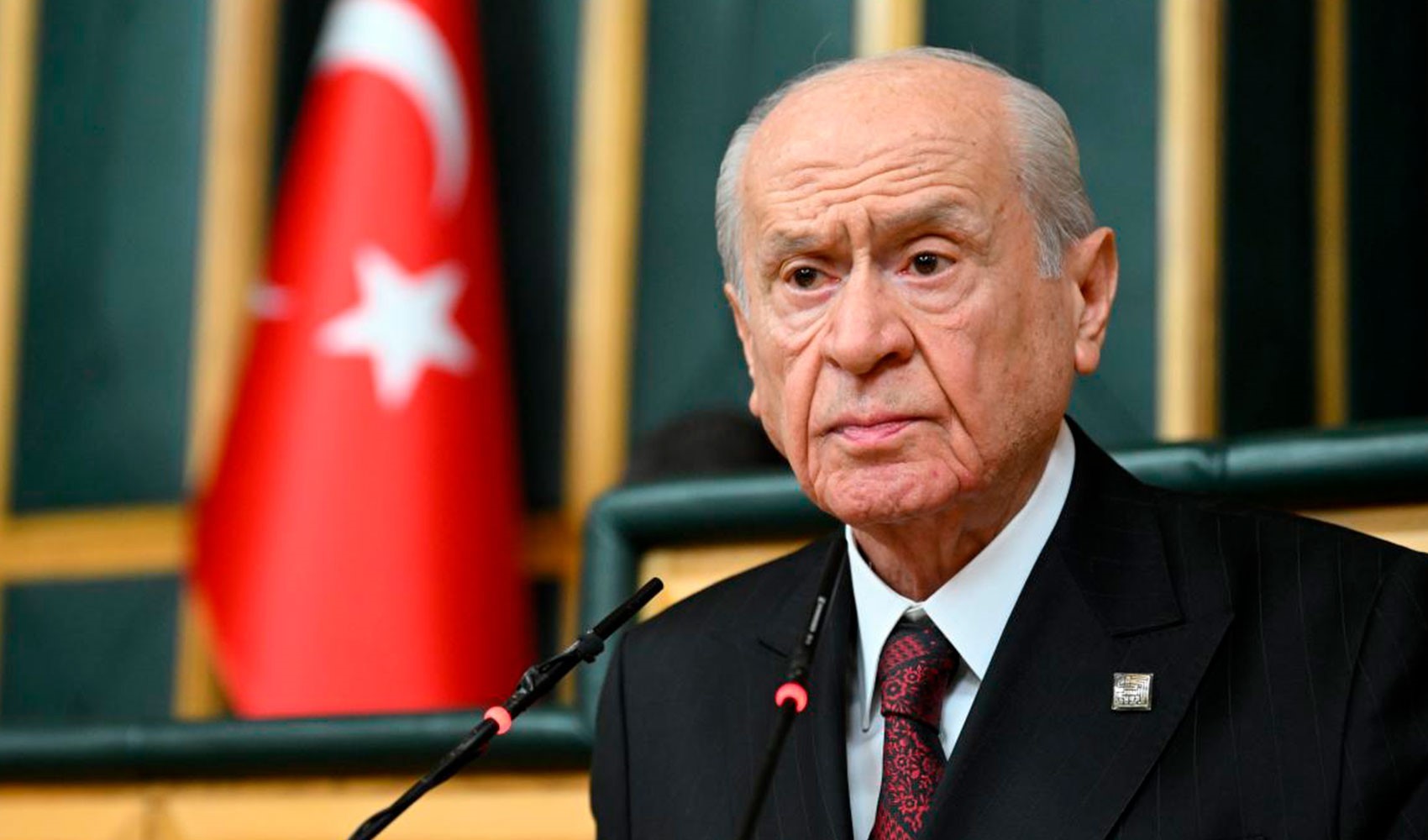
Nationalist Movement Party (MHP) Chairman Devlet Bahçeli issued a written statement regarding the SDF, the Syrian branch of the terrorist organization PKK.
Emphasizing that the SDF must be completely dissolved, Bahçeli stated, "The key to the reconstruction of Syria is the consolidation of the Syrian army under a single roof in a holistic manner. Habits remaining from the conflict period must end for the restructuring of the Syrian army. The YPG/SDF and all structures under it must be rapidly and completely dissolved and connected to the relevant institutions in a way that there is no turning back."
The full text of Bahçeli's written statement is as follows:
"The establishment of de facto control areas by the SDF in the northern and northeastern regions of Syria has become one of the most fundamental obstacles to the reconstruction and stabilization process. The new Syrian administration led by Ahmed al-Shara has set the restoration of central state authority by ending the fragmented structure as its primary priority. In this context, the agreement reached with the SDF on March 10, 2025, was evaluated as an important turning point in terms of ending the organization's armed presence and its integration into state institutions. However, in the approximately ten months that have passed, the SDF leadership has displayed an attitude that clearly contradicts the spirit and provisions of the agreement; it has tried to stall the process by keeping autonomy and federation demands on the agenda. This approach has been perceived by the Damascus administration as a clear threat to Syria's territorial integrity.
"SDF LEADER MAZLOUM ABDI DID NOT GIVE A POSITIVE RESPONSE AS A RESULT OF THE SUPPORT AND PROVOCATION HE RECEIVED FROM ISRAEL"
One of the most important factors strengthening the central government's stance in this process has been Turkey's clear and decisive support for Syria's unitary structure. SDF leader Mazloum Abdi did not give a positive response to the call of the Syrian central government to end the existence of the SDF and integrate it into the central administration in accordance with the agreed-upon consensus, as a result of the support and provocation he received from Israel. Although Mazloum Abdi attempted to obtain concessions from the Damascus administration by voicing demands for autonomy/federation, the Shara administration acted decisively in establishing political unity and border integrity in the country. Turkey's rhetoric at every opportunity that Syria should have a unitary structure also gave strength to Shara and encouraged the central government against the SDF's foot-dragging. The establishment of de facto control areas by the SDF in the northern and northeastern regions of Syria has become one of the most fundamental obstacles to the reconstruction and stabilization process. The new Syrian administration led by Ahmed al-Shara has set the restoration of central state authority by ending the fragmented structure as its primary priority.
In this context, the agreement reached with the SDF on March 10, 2025, was evaluated as an important turning point in terms of ending the organization's armed presence and its integration into state institutions. However, in the approximately ten months that have passed, the SDF leadership has displayed an attitude that clearly contradicts the spirit and provisions of the agreement; it has tried to stall the process by keeping autonomy and federation demands on the agenda. This approach has been perceived by the Damascus administration as a clear threat to Syria's territorial integrity. One of the most important factors strengthening the central government's stance in this process has been Turkey's clear and decisive support for Syria's unitary structure.
"IT ALSO EXPOSED THE FACT THAT THE SDF IS NOT AS STRONG AND EFFECTIVE AS IT CLAIMS"
SDF leader Mazloum Abdi did not give a positive response to the call of the Syrian central government to end the existence of the SDF and integrate it into the central administration in accordance with the agreed-upon consensus, as a result of the support and provocation he received from Israel. Although Mazloum Abdi attempted to obtain concessions from the Damascus administration by voicing demands for autonomy/federation, the Shara administration acted decisively in establishing political unity and border integrity in the country. Turkey's rhetoric at every opportunity that Syria should have a unitary structure also gave strength to Shara and encouraged the central government against the SDF's foot-dragging.
The SDF's failure to fulfill the requirements of the March 10 agreement caused serious reactions to rise from both Ankara and Damascus. The military activity that began in the final days of 2025 entered a new phase with the launch of operations against the SDF, which still kept its armed elements in Aleppo, and Aleppo was cleared of SDF terrorist elements and the remnants of the Assad regime that supported it in a short time.
Moving towards the east of Aleppo, the Syrian army recently took control of Maskana and 34 villages and towns after Deir Hafir, which was under SDF occupation west of the Euphrates River, and Syrian army elements began to gather their units southwest of Raqqa. On the morning of January 17, the Syrian army announced that the region west of the Euphrates had been declared a military closed zone and called on civilians in the region to immediately stay away from the positions of PKK terrorist militias and the remnants of the deposed regime, which are allies of the SDF. The superiority shown by the Syrian army on the field against the SDF/PKK not only demonstrated the Damascus administration's will to establish control over the entire country but also exposed the fact that the SDF is not as strong and effective as it claims.
"THE PICTURE SHOWS THAT TIME IS NO LONGER WORKING IN FAVOR OF THE SDF/PKK"
On the other hand, it has become clearer in this process that many Kurdish and Arab tribes living in the region controlled by the SDF are uncomfortable with the SDF's presence, prefer the sovereignty of the Damascus administration, and would side with Damascus in a possible conflict between the Syrian Army and the SDF. During the process in which the Syrian army advanced towards Raqqa on January 17 and 18, many tribes announced one after another that they were on the side of the Syrian central government. This is the correct stance, because Kurds in Syria are one thing, and the SDF is another. The SDF is a terrorist organization and does not represent Syrian Kurds. These developments have indicated that the SDF cannot keep a geography consisting mostly of Arabs under control by force of arms, and even if it wants to, the SDF will not be given an opportunity through the cooperation of Damascus and local elements opposing the SDF. This picture shows that time is no longer working in favor of the SDF/PKK.
Indeed, on January 17, Mazloum Abdi's announcement on behalf of the SDF terrorist organization that "Upon the calls of friendly countries and mediators; in order to show our good will regarding completing the integration process and in accordance with our commitment to implement the articles of the March 10 agreement; we have decided to withdraw to the east of the Euphrates" is an important stage in terms of fulfilling the March 10 agreement, even if it is within the framework of the Syrian army's deterrence. The Damascus administration is pursuing a strategy that narrows the SDF's room for maneuver by using its political legitimacy, regional balances, and the dissatisfaction of local elements without entering into a direct and comprehensive military conflict on the ground.
This approach reveals that the determination to restore central authority is not just at the level of rhetoric but is based on a gradual and controlled plan. The SDF's insistence on autonomy or federation increasingly contradicts the sociological reality on the ground. The fact that the Arab population is in the majority in most of the areas it controls, the distant approach of local tribes to the SDF administration, which they perceive as an exclusionary and ideological structure, and the discomfort arising from economic-military obligations weaken the organization's social base. This situation shows that it is not sustainable for the SDF to continue the current status quo through armed force in the long term.
"THERE ARE THREE BASIC OPTIONS BEFORE THE SDF"
On the other hand, Turkey's consistent and clear rhetoric regarding Syria's territorial integrity and unitary structure directly affects the equation on the ground. This approach by Ankara both strengthens the hand of the Damascus administration and produces a deterrent that limits the SDF's expectations of external support. This stance, which centers on Turkey's security sensitivities, also makes the SDF's search for a "protective umbrella" increasingly fragile. Viewed in this context, it can be said that there are three basic options before the SDF: These are; accepting integration with the central government and stepping back from its armed and political claims; risking increasing military and political pressure by trying to maintain the current status quo; and trying to gain time by relying on external actors.
The current regional conjuncture, the balance of power on the ground, and the developments show that the SDF/PKK is not as strong, indispensable, and alternative-free an actor as it claims; on the contrary, it is increasingly squeezed by central state authority, the stance of regional actors, and local sociological dynamics. Therefore, the only reasonable option is: to decide on the unity and integrity of Syria and to fully fulfill the requirements of the March 10 agreement. It is obvious that conflict will not benefit anyone. The key to the reconstruction of Syria is the consolidation of the Syrian army under a single roof in a holistic manner. Habits remaining from the conflict period must end for the restructuring of the Syrian army. The YPG/SDF and all structures under it must be rapidly and completely dissolved and connected to the relevant institutions in a way that there is no turning back. In the coming period, the determining factor in the Syrian field will not be armed impositions, but the reconstruction of central authority and the extent to which local elements are integrated into this process.
"A DEVELOPMENT THAT WEAKENS THE SDF'S GROUNDLESS CLAIM THAT IT IS THE 'REPRESENTATIVE OF THE KURDS'"
The statement made by Shara regarding the Kurdish language and culture and the Decree No. 13 he signed, stating that Syrian Kurdish citizens are an essential and inseparable part of the Syrian people and that their cultural and linguistic identities are an indispensable element of the Syrian national identity that carries unity in diversity, will have a positive effect on the establishment of unity and stability. The decree in question has shown that the determination to establish a unitary structure and eliminate the control areas of terrorist organizations is intended to be supported by social consensus. The decree, which is a positive step towards strengthening social reconciliation and unity, is not a concession to the SDF, but on the contrary, it has been a development that weakens the SDF's groundless claim that it is the "representative of the Kurds." The decree, which contains provisions regarding Kurds, will have effects such as strengthening the concept of "Syrian Citizenship," its adoption by wider masses, and weakening views that demand separatism on an ethnic basis.
This decree is not a situation against other ethnic elements such as "Turkmen" living in Syria, and it points out that the cultural rights of essential elements such as Turkmen cannot be ignored while preparing the new Constitution of the Syrian Republic. Because it is clear that evaluating these rights offered to Kurds as a privilege for a certain group could risk national unity and solidarity, and caution must be exercised in this regard. In this direction, making the same arrangements for other groups across the country regarding Kurds who have not been able to obtain citizenship rights and have remained stateless, as well as the Kurdish language, will ensure the formation of a democratic and inclusive cultural and political atmosphere throughout Syria.
EMPHASIS ON THE MARCH 10 AGREEMENT
However, steps must continue to be taken seriously for the implementation of the March 10 agreement with all its articles as soon as possible. It is important that the SDF has withdrawn from the west of the Euphrates, and the Syrian government will be able to fully ensure stability and normalize life in these regions in a short time. But it should not be limited to the west of the Euphrates, and the dream of pursuing a federation similar to the one in Iraq should be abandoned. Syria should not be divided by artificial, geographical, or ethnic divisions such as west and east of the Euphrates. The Syrian Government should be sovereign throughout Syria, provide services everywhere, control natural resources, and ensure stability.
Instead of any model that could be contrary to the framework of Syria's territorial integrity and political unity, it should be ensured that Syria is built as a democratic, inclusive, and conciliatory Republic that emphasizes partnerships. Shara's issuance of a decree that distinguishes Syrian Kurds from the terrorist organization SDF and expresses that the fundamental rights and freedoms of Syrian citizens of Kurdish origin are under guarantee within the constitutional framework is an important and commendable step in this sense.
The statement he subsequently made to the public was also an expression of determination and sincerity regarding Syria's unity and integrity. As the Nationalist Movement Party, we proposed that a Constitution be made in the new Syria with an understanding that is inclusive, embracing, conciliatory, unites all ethnic and religious elements in Syria's common future, integrates them in "Syrian citizenship," is democratic, stable, and based on the protection of fundamental rights and freedoms based on representation justice and free elections.
I must state in advance that Decree No. 2026/13, issued by the President of Syria on January 16, 2026, "based on the provisions of the constitutional declaration, in accordance with the requirements of high national interests, and based on the state's role and responsibility in strengthening national unity and recognizing cultural and civil rights for all Syrian citizens," has content in accordance with our thoughts and suggestions.
***
"WHAT HARM WOULD IT BE FOR SYRIA AND THE REGION IF MARCH 21 IS DECLARED AN OFFICIAL HOLIDAY AS NEWROZ FESTIVAL?"
As soon as the decree was issued, a group of self-proclaimed experts turned to a pollution that is not based on scientific data, academic and moral consistency, and facts, and entered into a race to portray this development negatively through media and social media. I ask!
What harm would it be for Syria and the region if Syrian Kurdish citizens are accepted as a fundamental and essential part of the Syrian people, their cultural and linguistic identities are an inseparable part of the multi-faceted and unified Syrian national identity; if the State protects cultural and linguistic diversity, if the right of Kurdish citizens to keep their heritage and arts alive and develop their mother tongue within the framework of national sovereignty is guaranteed, if Kurdish is accepted as a national language and allowed to be taught as an elective course or within the scope of educational-cultural activities in regions where the Kurdish population is significant, in state and private schools, and if March 21 is declared an official holiday as "Newroz Festival"?
"THE AFOREMENTIONED DECREE IS AN ACCURATE, MEANINGFUL, AND IMPORTANT STEP TAKEN AT THE RIGHT TIME"
In our opinion, the aforementioned Decree is an accurate, meaningful, and important step taken at the right time to consolidate unity and integrity in Syria. The issue of granting the right to teach Kurdish as an elective course in schools in regions where Kurds are concentrated makes it necessary to evaluate it by separating "official language" from language freedom. Every person's mother tongue is a right like mother's milk. However, speaking in a common language that everyone can understand in the public and political sphere is a requirement of public interests, the construction of different identities and social equality through one language, and unity and integrity. Separating the national language, which is expressed as a sociological and cultural definition, from the official language is also a requirement of science and reason in this sense.
Syria's ethnic and religious structure is quite diverse, and this diversity is an important element that shapes the country's complex social, political, and cultural structure. Syria's current ethnic and religious structure will play an important role in the formation of the country's political, social, and cultural conditions in the future, just as it did in the past. It is a fact that if a system that will keep differences alive is prepared, it will become difficult for Syria to get rid of its chaotic past.
For this reason, as we emphasized regarding the reconstruction and revival process of Syria; we foresee a Syria that is economically and socially stronger, building a legal and social order that embraces ethnic, religious, and similar differences in Syria, is unifying, and is based on a single Syria; and we evaluate that such a Syria is inevitable for the peace and tranquility of the region. Therefore, in the coming period, the establishment and provision of national unity by constructing Syria as an indivisible whole with its lands and population, based on a unitary structure, stands out as an urgent and non-negligible need. In this context, the most critical issue is the making of a new Constitution. It is indispensable for Syria's unity and stability that the Constitution has a nature that embraces every ethnic and religious segment living in Syria, is egalitarian, guarantees fundamental rights and freedoms, and is based on free elections, free enterprise, freedom of religion and conscience, the rule of law, and human rights.
"DISCUSSIONS THAT COULD REVIVE TERRORIST ACTIVITIES SHOULD NOT BE BROUGHT TO THE AGENDA"
A unitary structure based on the principle of the indivisible integrity of Syria with its country and nation should be established, and discussions that could revive old conflict lines and terrorist activities such as federation, confederation, and autonomy should not be brought to the agenda. All social segments should be assured that everyone who is connected to the Syrian Republic by a bond of citizenship will have equal rights, freedoms, and obligations, that ethnic or religious differences will have no importance in the eyes of the state, and that the most important common denominator will be "Syrian Citizenship."
The state should have a single official language, Arabic should be determined as the official language because the vast majority are Arabs, and compulsory basic education should be conducted in Arabic throughout the country; however, languages such as Turkish, along with Kurdish, should be included in the curriculum as elective courses, and those whose mother tongue is not Arabic should be enabled to gain proficiency in their own languages. A government structure based on a presidential system should be built; the principle of stability in administration should not be compromised, a participatory electoral system that will ensure that every segment of society is represented in parliament with multi-party life should be implemented, and the separation of powers between the legislative, executive, and judiciary should be established. Syria has been freed from the destructive effects of the Baath regime that lasted for many years, and is walking with determined steps towards stability, unity, and integrity with its new administration and the Syrians who believe and trust in them. Turkey's peace and security are closely related to Syria's security and stability.
8-POINT "SYRIA" PLAN
In our opinion; within the framework of the developments, it would be appropriate to follow the following roadmap in order to make rapid progress in the coming period in the context of Syria's peace, tranquility, unity, and integrity, and the welfare, fundamental rights, and freedoms of Syrians:
1. Implementation of the March 10, 2025 agreement with all its articles, and the complete dissolution of the SDF and derivative structures and their integration into Syrian state institutions completely and in a way that there is no turning back,
2. Removing discussions of federation, autonomy, and division from the agenda, permanently guaranteeing Syria's territorial integrity, rapidly establishing central state authority throughout the country, ensuring that the Syrian government provides sovereignty throughout the country without distinguishing between the west and east of the Euphrates, and protecting the unitary state structure by preventing artificial geographical, ethnic, or political divisions,
3. Making a new and inclusive Syrian constitution, and in this context, establishing a constitutional order that covers all ethnic and religious segments, is embracing, egalitarian, democratic, and based on the rule of law,
4. Clearly separating Kurds from the SDF, invalidating the SDF's claim that it is the "representative of the Kurds," and breaking this perception at the social level,
5. Taking into account and bringing to the agenda the cultural rights of all essential elements, especially Turkmen, such as including Kurdish as an elective course in the education system,
6. Strengthening the concept of "Syrian citizenship," making the bond of citizenship the main common denominator instead of ethnic and religious affiliations, protecting the principle of a single official language, and taking steps that will enable social reconciliation and the strengthening of national unity,
7. Ensuring stability in administration based on a presidential system, creating a stable government structure with strong executive capacity, establishing the principle of separation of powers, establishing a democratic, representation-based political system, ensuring free and fair elections, multi-party life and representation justice, guaranteeing fundamental rights, and protecting freedom of religion and conscience, free enterprise, human rights, and freedoms,
8. An economically and politically strong, integrated Syria becoming one of the main actors of regional stability.
News Source: 12punto
Most Read

Striking picture for Özgür Özel's 'New Party'

Özgür Özel gives a dated response regarding the number of resignations

Forest fire in Antalya brought under control

The PKK opening and Özgür Özel’s path!..

How did the newspapers view Özgür Özel's farewell to the CHP?
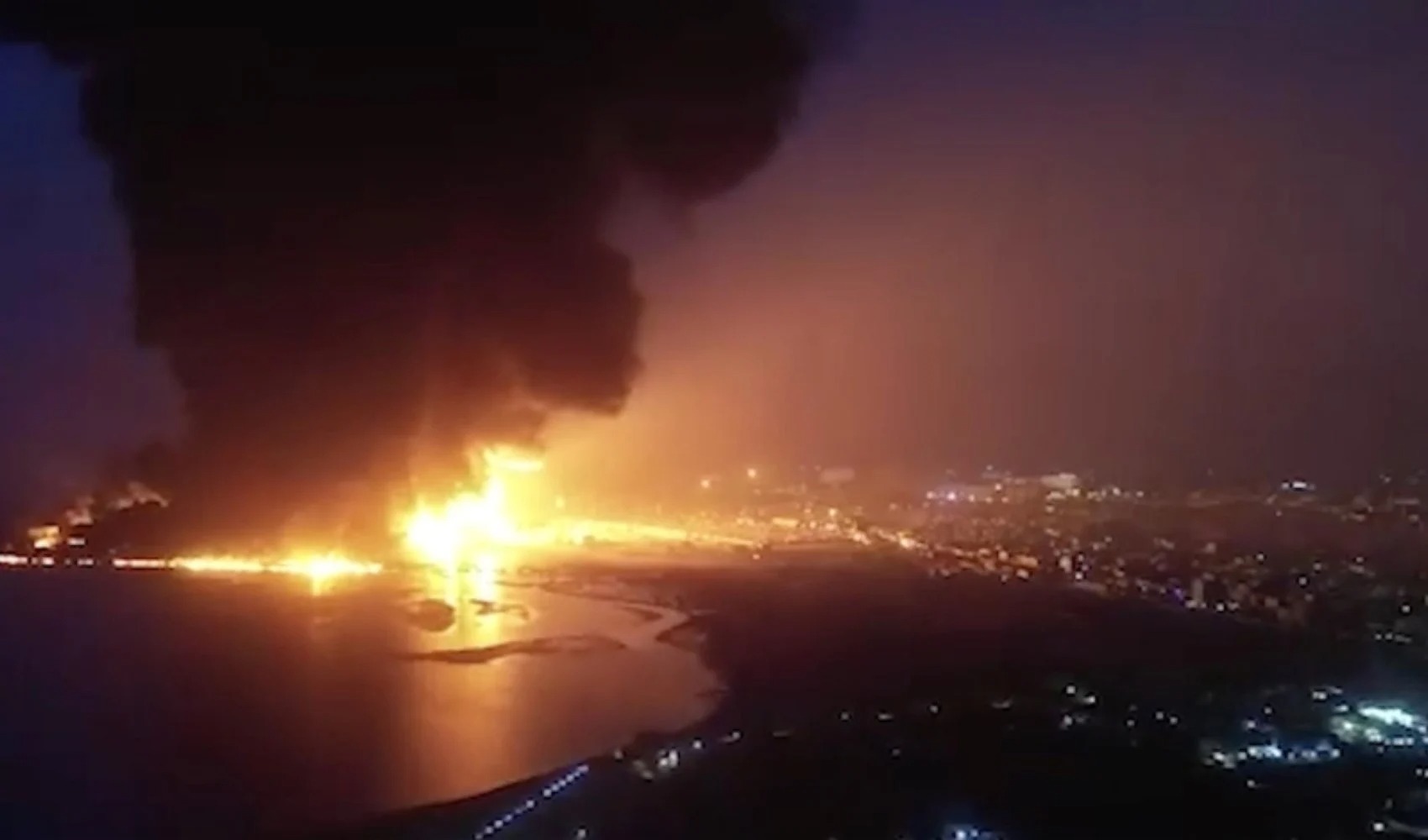
Houthis strike Saudi-owned tanker

What did the CHP do?

Özel’s new party move in the world press

The New CHP, against CEHAPE

From self-efficacy to despair