

Diyanet oversight for Quran translations! Those deemed objectionable will be recalled
A legislative proposal granting the Presidency of Religious Affairs (Diyanet) the authority to inspect Quran translations, recall those deemed objectionable, and delete them from digital platforms has been approved by the TBMM Planning and Budget Committee. While reactions are mounting against the attempt to legislate a regulation previously annulled by the Constitutional Court, independent MP Mustafa Yeneroğlu stated that the proposal violates both freedom of expression and freedom of religion and conscience, adding, "Diyanet is becoming a censorship institution."




A legislative proposal containing regulations regarding the Presidency of Religious Affairs was approved in the Planning and Budget Committee the day before yesterday. The proposal, titled 'Examining or having examined Quran translations upon the request of the Presidency, other public institutions, private individuals, and organizations, or ex officio', has sparked controversy. Accordingly, the printing and distribution of translations determined by a board to be objectionable in terms of the fundamental characteristics of the Islamic religion may be halted. Those already distributed will be recalled and destroyed. Access blocks will be imposed on those published in digital environments.
Independent Istanbul MP Mustafa Yeneroğlu expressed his reaction to the legislative proposal, which leaves Quran translations to the oversight of the High Board of Religious Affairs (DİYK) and allows for the recall and destruction of translations deemed objectionable through the courts.
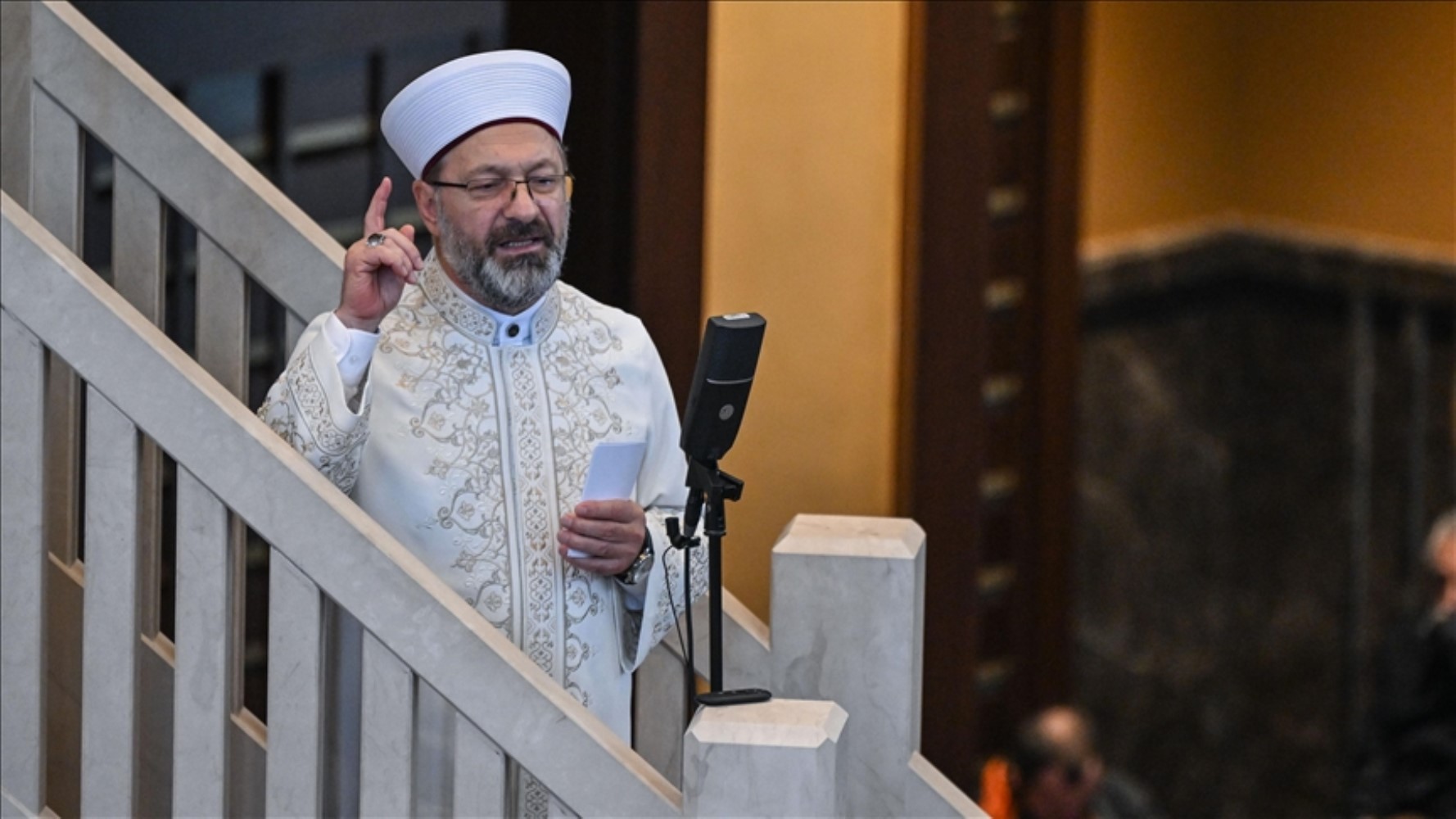
Stating that if the proposal, which consists of turning provisions introduced by Decree-Law No. 703 in 2018—but annulled by the Constitutional Court's decision dated June 4, 2024—into law with the same content, is enacted, the DİYK will conduct examinations "upon request or ex officio," Yeneroğlu reminded that it could take any translation it deems "contrary to the fundamental characteristics of Islam" to court to demand the cessation of printing and distribution, the recall and destruction of published copies, and the blocking of access on the internet.
"NO ONE HAS THE RIGHT TO CLASSIFY THE QURAN ACCORDING TO AN OFFICIAL IDEOLOGY"
Regarding the proposal, Yeneroğlu said, "You can object to the decisions within fourteen days, but until the objection is concluded, the books will be wiped from the shelves, and digital texts will be treated like a black hole. As Muslims, not only do we not need this legislative proposal, but we must specifically oppose it. The legislative proposal, prepared with a religiously extremely incorrect understanding as if religion needs to be protected by Diyanet, transforms Diyanet into a censorship institution and reveals a clergy-class mentality that is contrary to the essence of Islam."
Stating that many Quran translations were recalled in the past with this article, Yeneroğlu said, "Today we have three recall decisions; tomorrow we may witness the burning of dozens of works and their deletion from digital memory. No one has the right to classify the Quran as 'objectionable' or 'acceptable' according to an official ideology."

"THE LAW OPENLY VIOLATES FREEDOM OF EXPRESSION AND FREEDOM OF RELIGION AND CONSCIENCE"
Stating that this regulation will also damage the reputation of the Presidency of Religious Affairs, Yeneroğlu used the following expressions:
"The Presidency of Religious Affairs is neither the official representative of Islam nor the protector of the religion. With this law, a state institution that will be placed in a position to impose bans on Quran translations will become a 'censorship institution'; with its position tied to the executive and its openness to the guidance of current politics, the board, which has the authority to ban a translation that governments do not like, could target different translations in line with different governments today and tomorrow, and will force many scholars into self-censorship. With this law, prejudices that Islam is anti-freedom will also be reinforced, and Islamophobic rhetoric will find a ground for legitimacy more easily.
The law openly violates freedom of expression and freedom of religion and conscience. According to the established jurisprudence of the Constitutional Court, limitations placed on freedom of expression and belief can only be considered legitimate if they are necessary and proportionate in a democratic society. The proposal's reliance on an ambiguous concept such as 'contrary to the fundamental characteristics of Islam' also violates the principles of predictability and certainty of the rule of law, which is included in Article 2 of the Constitution. The Quran does not need anyone's protection; it cannot be entrusted to the government or bureaucracy of any era. If we allow this censorship today, we cannot predict which government will ban which translation tomorrow. We must protect both our faith and our freedoms."
News Source: 12punto
Most Read

Striking picture for Özgür Özel's 'New Party'

The PKK opening and Özgür Özel’s path!..

How did the newspapers view Özgür Özel's farewell to the CHP?

He killed his wife by slitting her throat: Their children witnessed the moments

What did the CHP do?

Özel’s new party move in the world press

Fire at TUSAŞ engine factory in Eskişehir under control

The New CHP, against CEHAPE

From self-efficacy to despair

Kılıçdaroğlu's first message on Özgür Özel's new party announcement