

39-year prison sentence requested for Engin Polat
In the money laundering case, the prosecutor's office has requested a 39-year prison sentence for Engin Polat, who is in the position of an organized crime group leader.



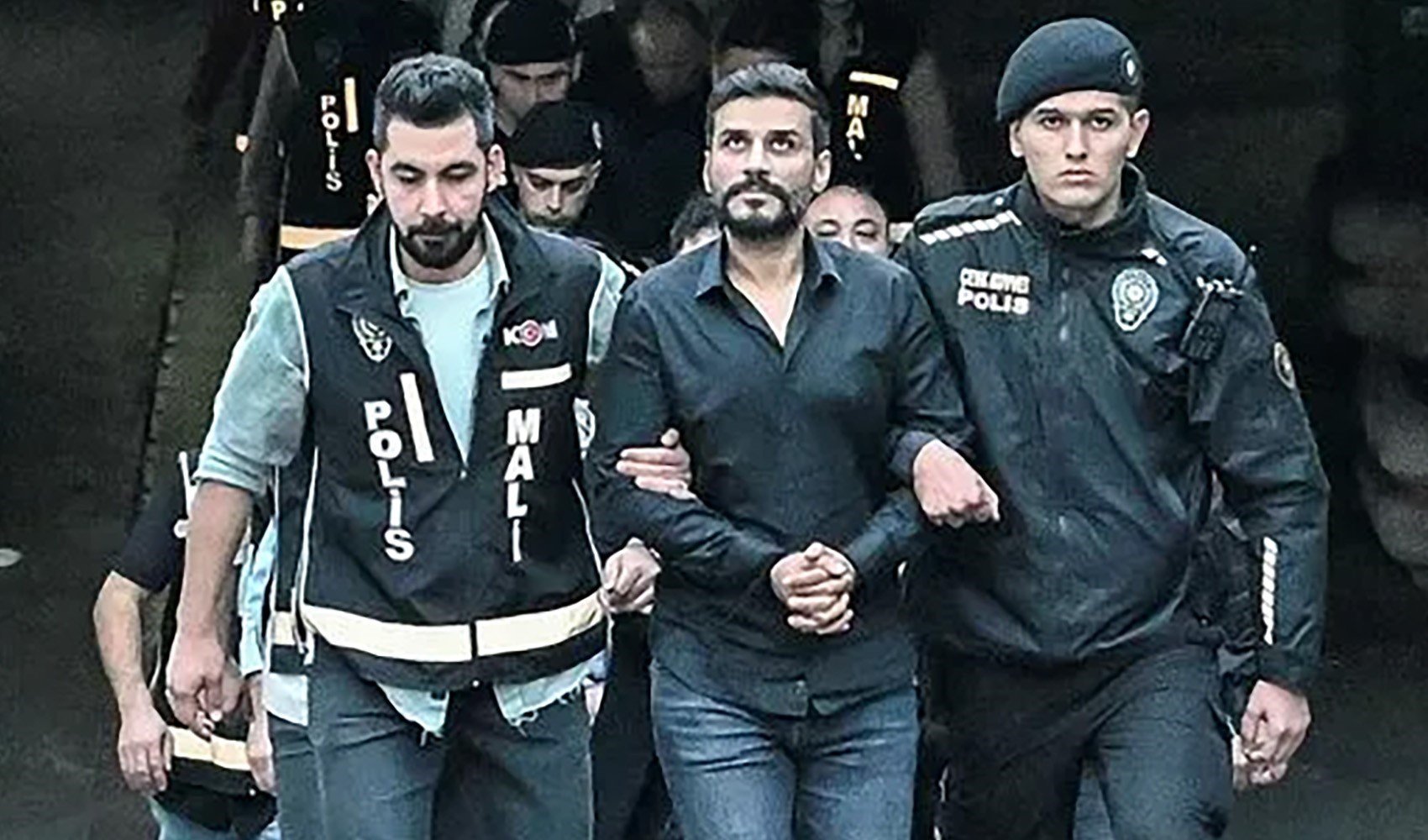
The Chief Public Prosecutor's Office had filed an objection to the return of the indictment prepared following the investigation in which social media influencer Dilan Polat and her husband Engin Polat were arrested as part of a money laundering probe.
In the Chief Public Prosecutor's objection decision, it was emphasized that the competent court could be determined based on the base sentence, and that the enhancement clause was not the basis for determining the court's jurisdiction.
In the money laundering case, the prosecution requested a 39-year prison sentence for Engin Polat, who is in the position of an organized crime group leader.
In the introduction of the 75-page indictment prepared by the Anatolian Chief Public Prosecutor's Office Terror and Organized Crime Investigation Bureau against 28 suspects, money laundering was defined, and it was stated that it was determined that a criminal organization established and operated under the leadership of the defendant Engin Polat had carried out the money laundering process by acting in unity of intent and action.
The indictment noted that the defendant Engin Polat established companies with relatives, many of whom were close family members, and that he had partnerships and management roles in these companies with his wife, defendant Dilan Polat. It was emphasized that the majority of these companies were established to operate in the fields of beauty, cosmetics, and medical services, and that the financial advisor for the majority of these companies was, remarkably, the suspect Ahmet Gün.
IT WAS STATED THAT THE COMPANIES FROM WHICH GOODS WERE PURCHASED WERE FAKE
The indictment stated that a large portion of the goods purchased by the companies of the Polat group, which were considered to be managed from a single source, were obtained from companies where Engin Polat's family members were partners or managers, or from suppliers who were somehow connected to the target individuals. However, it was noted that these suppliers were actually companies that did not have real goods transactions, did not file tax returns, had no employees, had no banking activity, and had records of issuing fake documents, and that the total of the goods purchases, which carried strong suspicion of being fake, amounted to millions of liras.
The indictment stated that Engin Polat purchased numerous luxury vehicles and real estate through the Milda Gayrimenkul Otomotiv company, and that it was determined that the amounts accumulated in the accounts of Polat and this company through cash deposits were directed toward the purchase of real estate and vehicles. The following assessments were included:
"Within the scope of our investigation file, it is understood that the criminal organization acting in an organized manner under the leadership of the suspect Engin Polat put the assets in the form of money obtained through illegal means into circulation by using the numerous companies they established as intermediaries; that they aimed to make the tracking of this money difficult through invoices issued based on non-existent sales of goods and services and actions contrary to tax legislation; that they ultimately collected the money accumulated in the companies mostly by withdrawing cash; and that as a final move, they deposited the money in cash into the bank accounts of Milda Gayrimenkul Otomotiv Sanayi ve Ticaret A.Ş., a company where Engin Polat is the sole partner and manager, where they kept the money in the cleanest way within the companies, and that they tried to complete the laundering process in this way."
The indictment stated that the money obtained through illegal means was transferred and subjected to laundering without entering the system via the "cold wallet method," and it was assessed that during these activities, the organization also engaged in some real commercial activities thanks to the fame and recognition they achieved in a short time, thereby trying to ensure the difficulty of tracking and control, which is the most prominent aspect of money laundering crimes.
SECRET WITNESS DESCRIBED THE CONNECTION BETWEEN DERKAN BAŞER AND ENGİN POLAT
The indictment emphasized that Engin Polat's connection with the illegal betting organization and group led by Derkan Başer was revealed by witness statements and evidence, and included the testimony of secret witness Mert.
Secret witness Mert stated that he served as the manager of two sites where Veysel Şahin conducted virtual betting between 2014 and 2017, and noted the following:
"Derkan Başer and Engin Polat are close friends. Derkan Başer appointed Engin as the manager of the Jasmin Bet site. The job description of Engin Polat in his capacity as the manager of Jasmin Bet is to supervise financial actions, control them, and check the risk unit of the bets placed. Engin served as the manager of the Jasmin Bet site for about 3 to 5 months. When Veysel Şahin was arrested due to the virtual betting operation, Derkan Başer took control of the business and became responsible for external finance. At the same time, he established his own finance company. When Derkan Başer raised his position and became the external manager, Engin Polat's position also rose, and Engin became one of those managing external finance. The money deposited by a site member playing virtual betting actually goes to the POS accounts of the shell companies established by Engin Polat. The member playing the bet does not know this at that moment. Later, when they look at their statement, they might learn the name of the shell company the money went to from the POS number. In other words, Engin Polat needed to establish companies to use in the virtual betting business, and that is why so many companies were established. These are my findings regarding Engin Polat's position in the virtual betting business where I worked for a period in the past. I did not see Dilan Polat in this system; I know her from social media."
The indictment emphasized that dozens of companies were established to mask the large betting organization, that these companies were also under the management and partnership of other suspects included in the investigation, and that considering that suspect Ahmet Gün carried out the organization in financial matters under the guise of a financial accountant in almost all of the Engin Polat criminal organization's companies and ensured the masking, all suspects involved in the organization committed the crime of "opposition to the Law on the Regulation of Betting and Games of Chance in Football and Other Sports Competitions" in unity of intent and action.
The indictment also explained that regarding the fraud act subject to the investigation, defendant Engin Polat reached out to some people to ensure illegal betting was conducted within the organization he established, created another source of income by taking money upfront under the name of a collateral fee, and tried to persuade third parties to use their accounts for withdrawing money coming from abroad, making promises to people in this way.
The indictment noted that defendant Engin Polat aimed to earn money from both betting and account usage businesses, and that it was understood that he did not refrain from victimizing third parties while doing these jobs. As can be inferred from the statements of the complainant Tufan Yılmaz, it was stated that Polat aimed to keep the foreign currency flow from abroad constantly alive by using the accounts of third parties, and that foreign-sourced currency, the source of which was illegal betting games, was attempted to be introduced into the country's financial system to be included in the laundering process.
AMOUNTS OF FAKE INVOICES
The indictment, which also included the report prepared by the Tax Inspection Board Istanbul Sectoral 3 Inspection Department, stated that the amount of fake invoices of the companies was 489 million 309 thousand 777 liras, that 86 million 988 thousand 913 liras of this amount corresponded to the Value Added Tax (VAT) amount, that the companies also issued fake invoices among themselves, that the amount of these was 117 million 443 thousand 863 liras, and that 21 million 28 thousand 562 liras of this corresponded to the VAT amount.
The indictment emphasized that because the companies did not keep the books required by law and kept other books in a way that would result in a reduction of the tax base, the total amount reached 214 million 786 thousand 65 liras, and it was noted that 35 million 607 thousand 842 liras of this amount corresponded to the VAT amount.
In addition, the indictment stated that it was seen that the companies made payments of 46 million 103 thousand 895 liras to companies that were outside the investigation and established solely for the purpose of issuing fake invoices, which were organized especially by Ahmet Gün to obtain fake documents.
The indictment, which included the irregularities of the companies subject to the investigation, explained that the criminal organization used fake invoices obtained from outside to show transactions that did not actually reflect real trade as if they existed, claiming to have purchased goods and services, and that fake invoices were also issued between the companies regarding goods and services that did not exist in reality.
The indictment stated that the money coming from illegal betting was attempted to be masked, that multiple companies were established to create the image that the enrichment stemmed from real trade, that fake invoices regarding non-existent business and transactions were issued and used during the activities of these companies, and that external secret records were kept in addition to the books required by law.
The indictment noted that the intent of the defendants went beyond the motive of committing tax crimes, that some real trade was also conducted to mask the wealth created with money from illegal betting, and that the fame achieved was used as an apparatus in this context by choosing the beauty center and cosmetics sector, which has a response in the public and society. It was emphasized that unfair gain was derived by not even paying the taxes that should have been paid and keeping them in their possession, and that the amounts unfairly kept in their possession should be considered as money laundering in addition to tax crimes.
The indictment, which also described the structure of the criminal organization, stated that the leader of the organization was Engin Polat, and the managers were Alper Kürşat Polat, Sezgin Polat, Ahmet Gün, Dilan Polat, Mustafa Özalp, and Sinem Sıla Doğu.
POLAT COUPLE REQUESTED TO BE SENTENCED TO UP TO 40 YEARS EACH
In the prepared indictment, the public prosecutor finally included the following statements in the assessment made within the scope of the entire file:
"As a result of our investigation, it is understood that the suspects circulated the proceeds of crime obtained from the illegal betting organization and the commission of other crimes through masked-fraudulent transactions within the numerous companies they established, as mentioned above, and finally tried to clean them in the company named Milda; that in this context, they withdrew millions of liras in cash from the companies, circulated them among the companies, and aimed to launder them through real estate and luxury vehicles to be purchased through the company named Milda by depositing cash into the company named Milda; that as another method, the act of converting the unfair gains into crypto assets and making them unrecorded after being circulated as if there were a real commercial activity by changing hands dozens of times was executed; that during these transactions, the criminal organization subject to the investigation acted through its members who performed the task specifically defined for them at each stage; that the actions were carried out with the determination to commit crimes within a structure that showed continuity over a process spread over years; and that the suspects within the organization acted within a hierarchical and organized structure as detailed above."
In the indictment, it was requested that Dilan and Engin Polat be sentenced to 20 to 40 years in prison each for a total of 3 separate crimes, including "establishing and managing an organization for the purpose of committing crimes," "laundering assets derived from crime," and "opposition to the Law on the Regulation of Betting and Games of Chance in Football and Other Sports Competitions."
It was requested that other suspects be sentenced to varying degrees for different crimes.
WHAT HAD HAPPENED?
In the operations carried out on November 1, 2023, and subsequently in 6 provinces centered in Istanbul, 24 suspects, including Dilan Polat and her husband Engin Polat, were detained.
A preliminary investigation report was prepared by the Financial Crimes Investigation Board (MASAK) regarding the suspects, including the Polat couple, whose digital materials and books were seized during searches of their companies within the scope of the investigation. The report determined that there was a 200 million lira inflow into the companies belonging to family members from 3 companies in liquidation through the method of issuing fake invoices in exchange for fake trade.
After it was determined that the money was transferred between companies belonging to family members and finally collected in the firm named Milda Gayrimenkul, owned by Engin Polat, and that real estate and numerous vehicles were purchased, the Istanbul Financial Crimes Investigation Bureau teams identified the identities of the suspects and carried out a simultaneous operation at 43 addresses in Istanbul, Ankara, Yalova, Ordu, Kırklareli, and Manisa.
The teams, continuing their work within the scope of the investigation, determined that a medical company belonging to Dilan and Engin Polat had given the naming rights to another firm in Ankara, and that 1 million 800 thousand liras in this firm's account were also being attempted to be transferred to the personal accounts of the partners.
16 of the suspects, including Dilan Polat, Engin Polat, and Sıla Doğu, were arrested. The court ruled for the appointment of trustees to 27 companies.
In the monthly detention review on June 14, the Criminal Court of Peace ruled for the release of Dilan Polat's siblings Can and Sinem Sıla Doğu, as well as Can Polat, Gökay Bekar, Halit Polat, Harun Abak, Metin Yılmaz, Mustafa Özalp, Nilgün Yılmaz, Uğurcan Ayyıldız, and Zekai Tepe by applying judicial control provisions, and decided to continue the detention of the other 5 suspects.
In the indictment prepared after the public prosecutor's office completed the investigation, it was requested that the suspects be punished for the crimes of "laundering assets derived from crime," "illegal betting," "establishing an organization for the purpose of committing crimes," and "being a member of an organization established for the purpose of committing crimes."
The indictment also requested that all assets, including real estate, vehicles, and similar items owned by the 31 companies included in the scope of the investigation, be confiscated and their ownership transferred to the public.
The indictment, approved by the Chief Public Prosecutor's Office, was sent to the Anatolian 2nd Criminal Court of First Instance.
The Anatolian 2nd Criminal Court of First Instance, which examined the indictment, determined that the competent court to conduct the trial was the High Criminal Court, considering the enhancement clauses requested for the sentences of the suspects, and returned the file to the prosecutor's office.
The Anatolian Chief Public Prosecutor's Office had objected to the return of the file by the Anatolian 2nd Criminal Court of First Instance, which evaluated the indictment prepared as a result of the investigation conducted against 16 suspects, including Dilan Polat, her husband Engin Polat, and her siblings Can and Sıla Doğu, and stated that the case should be opened in the high criminal court.
In the Chief Public Prosecutor's objection decision, it had been emphasized that the competent court could be determined based on the base sentence, and that the enhancement clause was not the basis for determining the court's jurisdiction.
With the acceptance of the prosecutor's objection, the file was accepted by the Criminal Court of First Instance. The trial of the defendants is expected to begin in the coming days.
News Source: 12punto
Most Read

Striking picture for Özgür Özel's 'New Party'

Özgür Özel gives a dated response regarding the number of resignations

Forest fire in Antalya brought under control

The PKK opening and Özgür Özel’s path!..

How did the newspapers view Özgür Özel's farewell to the CHP?

He killed his wife by slitting her throat: Their children witnessed the moments

What did the CHP do?

Özel’s new party move in the world press

The New CHP, against CEHAPE

Fire at TUSAŞ engine factory in Eskişehir under control