

Earthquake letter from Gezi prisoner Tayfun Kahraman: He lists 13 proposals
City planner Tayfun Kahraman, who is being held in Silivri Prison due to the Gezi Park trial, wrote a letter on the anniversary of the February 6 earthquakes. Kahraman listed his proposals in 13 points.



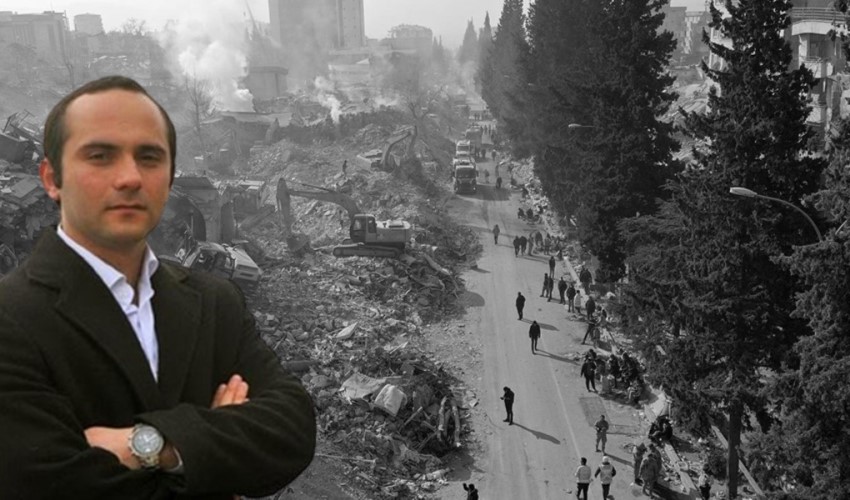
Gezi prisoner and city planner Tayfun Kahraman wrote a letter from Silivri Prison on the anniversary of the February 6 earthquakes.
Kahraman listed his proposals regarding earthquakes in 13 points.
In the article he wrote for BirGün, Kahraman stated the following:
"IT HAS BEEN REVEALED ONCE AGAIN THAT THE MAIN CONCERN IS RENT"
"As you know, I have been in my temporary residence at Silivri Prison for nearly 2 years as a result of the well-known case that has occupied Turkey's agenda for a long time. In addition to my identity as a city planner and academic, I have served as a professional chamber executive and as the Head of the Earthquake Risk Management and Urban Improvement Department at the Istanbul Metropolitan Municipality (IBB), which are the reasons for my being here. For this reason, as a professional and an expert, earthquakes have always been my most important field of work. Unfortunately, I faced the February 6 earthquakes while in captivity, and this was the most difficult experience for me here. Watching tens of thousands waiting under the rubble and not being able to lift even a single stone, not being able to give a bowl of soup to children shivering in the cold, and just watching was truly difficult. My professional dignity and conscience make me responsible for preparing the country for earthquakes. No matter what conditions I am under, this is my debt to our lost lives.
Although it is a source of sadness that I can only convey my experience and knowledge through letters while in captivity, this is what I can do. The reality of earthquakes, which we have forgotten even before a year has passed since today, is actually the greatest threat we face. When we look at what has been done in the face of this reality that we all know, we see that despite this painful experience, the ministry still has not put a comprehensive program before us and continues to recite clichés that have proven unsuccessful. Although the ministry tries to stall the public by saying that it will solve this problem by constantly producing more housing, we know that this cannot be a solution. After February 6, with these same clichés, changes were first made to Law No. 6306 on the Transformation of Areas Under Disaster Risk, and the dose of threats to the right to property, which was already under threat, was increased. By gathering all powers in the newly established Urban Transformation Presidency, it was revealed once again that the main concern is rent."
"WHILE JAPAN DOES NOT EVEN LOSE 200 PEOPLE..."
"Yet, we had experienced the same scenario after the Van Earthquake and had experienced that the law presented as a cure did not produce a solution. The promises made to date could not be kept either. While new buildings cannot be built in place of the ones destroyed in the earthquake zone, there are problems even in meeting the basic needs of earthquake victims. We saw with pain how unprepared we were in the measures that should be taken before the earthquake to prevent collapse, as well as in the intervention during the earthquake and in the steps that need to be taken to get back on our feet after the earthquake. Unfortunately, we could not learn our lesson. Our country still does not have a comprehensive, holistic action plan or program against the reality of earthquakes. The problems and technical deficiencies in the building inspection processes still continue. On January 1, 2024, an earthquake occurred in Japan with a magnitude close to the February 6 Earthquakes. It was a more severe earthquake due to its proximity to the surface. While the Japanese did not even lose 200 people in this earthquake, we experienced the disaster with great pain on February 6 and lost 53 thousand of our lives according to official figures.
‘Where are we going wrong?’ It is high time to ask this question again. We have neither time nor excuses left. We have a lot of work ahead of us. I would like to share my 13 concrete proposals that I see as priorities among these work items with the public:
13 PROPOSALS FROM TAYFUN KAHRAMAN
1- Holistic plan: There are approximately 10 million structures in Turkey, and 80% of them were built before the 1999 earthquake according to old regulations. Since 70% of our country is in an earthquake zone, with a simple calculation, we have a building stock consisting of approximately 6 million structures that need to be made earthquake-safe. We need a large resource and a long time to intervene in this stock. Therefore, we must look at the big picture and prepare a rational program to use financial resources and time efficiently for resilient cities.
2- Risk-prioritized, not rent-prioritized: To produce real solutions, we must rapidly scan the entire building stock under threat, make assessments regarding their earthquake safety levels; then, by preparing an intervention plan with prioritization, we must start the work of strengthening and renewal, starting from the most risky structures and areas in line with our capacity.
3- Based on the right to life: With a public-oriented transformation approach, we must offer all citizens the right to live in resilient housing as a fundamental right and put disaster-prioritized transformation on the agenda. Instead of urban/rent-based transformation, which becomes a real estate development activity that increases existing density in cities by producing new urban plots, we must design disaster transformation.
4- Correct legislation: By throwing away the Disaster Law No. 6306, which is based on a wrong calculation and solely on increasing rent value and building density, and which I have long experienced as not working; we must regulate a program based on risk assessment, prioritization, and rational use of limited resources, and a legal framework based on public benefit.
5- Micro-zoning: Before implementing structural measures, we must carry out micro-zoning studies that include detailed soil analyses in settlements across the country; we must revise zoning plans according to the results, and thus update construction restrictions.
6- State inspection: We have painfully experienced through the collapse of newly built buildings that setting strict rules in building production is not enough, and that even if the legislation is sufficient, the buildings built are inadequate. For this reason, we must take the inspection away from the private sector and give it back to the public administration, and in this context, we must eliminate the deficiencies in the zoning legislation and renew it.
7- Continuous effective control: It is obvious that there are problems in the contracting and engineering systems alongside building inspection. We must define technical responsibilities with a mandatory legal framework for individuals and firms that will engage in contracting. We must increase the effectiveness and supervision of public institutions and professional chambers in engineering and architectural services.
8- New solutions for strengthening: We must implement gradual strengthening by regulating the legislation for building strengthening. Thus, we can provide temporary solutions for buildings that cannot be rebuilt because they are illegal, are not classified as priority, or cannot be strengthened due to economic reasons or disputes. We can create conditions that will allow our people to exit buildings safely, even if the buildings become unusable due to an earthquake that occurs after this intervention.
9- More public resources: We must mobilize public resources and capacity to produce remedies for the problems of citizens who cannot intervene in their buildings due to economic problems but do not feel safe against earthquakes. Let us not forget that the right to live in healthy and resilient housing is a Constitutional right. In this context, we must provide the opportunities and conditions that will enable everyone, without distinguishing between homeowners and tenants, to volunteer for the transformation mobilization, either free of charge or within their means, using public resources.
10- Disaster response plan: The earthquakes showed that we also failed in disaster management. The management of the chaos that will occur after a disaster refers to a planned, reflexive, horizontally organized, coordinated system that takes action without waiting for orders. For this, we must transform our disaster management system into a model that is re-planned from the national scale to the neighborhood scale, where everyone from volunteers to officials has defined duties, provides coordination, and is reinforced by drills, and which acts spontaneously after a disaster.
11- Volunteer organization: We must encourage the organization of citizen networks that want to participate in post-disaster interventions as volunteers at the neighborhood scale; we must establish organizations that will carry out initial interventions through disaster volunteers by providing simple search and rescue and emergency aid training to volunteers.
12- Disaster education in schools: Since it is very likely that every citizen living in our country will encounter at least one destructive earthquake during their lifetime, we must make disaster education mandatory in primary education. In addition to this, we must increase disaster education for adults and raise awareness about the seriousness of structural problems.
13- Supra-political earthquake boards: Finally, to carry out the tasks in this long list effectively and successfully; we must become a whole, leaving aside our differences, identities, and belongings, as a society, all central and local institutions, public and private sectors in every city scale. Especially with the active participation of citizens, we must build a unity where the whole city, with its institutions and individuals, owns the process, based on common sense and scientific knowledge, with structures that take on decision-making and auditing powers by establishing Earthquake Councils and Unions in every city under the coordination of the Ministry. With these unions, we must prepare short, medium, and long-term plans regarding social, spatial, and structural works according to the unique conditions of the cities, define the duties of each institution, and audit the implementations.
RATIONAL POLICIES
The right to life is at stake, so we have no chance to waste time. Without further delay, we must implement rational policies against earthquakes and ensure a disaster-focused transformation that prioritizes the right to life, not rent, with a public-oriented approach. Of course, what we will do in the face of an earthquake will not be limited to these. Just before the local elections, I think that insisting on real and populist solutions and rational policies to avoid experiencing the same pains again will increase social awareness. I wish us success in this mobilization we will create, and I offer my love and respect from Silivri.
News Source: 12punto
Most Read

Striking picture for Özgür Özel's 'New Party'

The PKK opening and Özgür Özel’s path!..

How did the newspapers view Özgür Özel's farewell to the CHP?

He killed his wife by slitting her throat: Their children witnessed the moments

What did the CHP do?

Özel’s new party move in the world press

The New CHP, against CEHAPE

Fire at TUSAŞ engine factory in Eskişehir under control

From self-efficacy to despair

Kılıçdaroğlu's first message on Özgür Özel's new party announcement