

Minister Fidan: Our expectation from Iraq is that the same fight is waged against the PKK
Foreign Minister Hakan Fidan made important statements regarding the agenda to the Iraq-based television channel UTV. Minister Fidan said, "At the point we have reached with Iraq in the fight against terrorism, our expectation is that just as Iraq fought against DAESH, the same fight should be waged against the PKK."



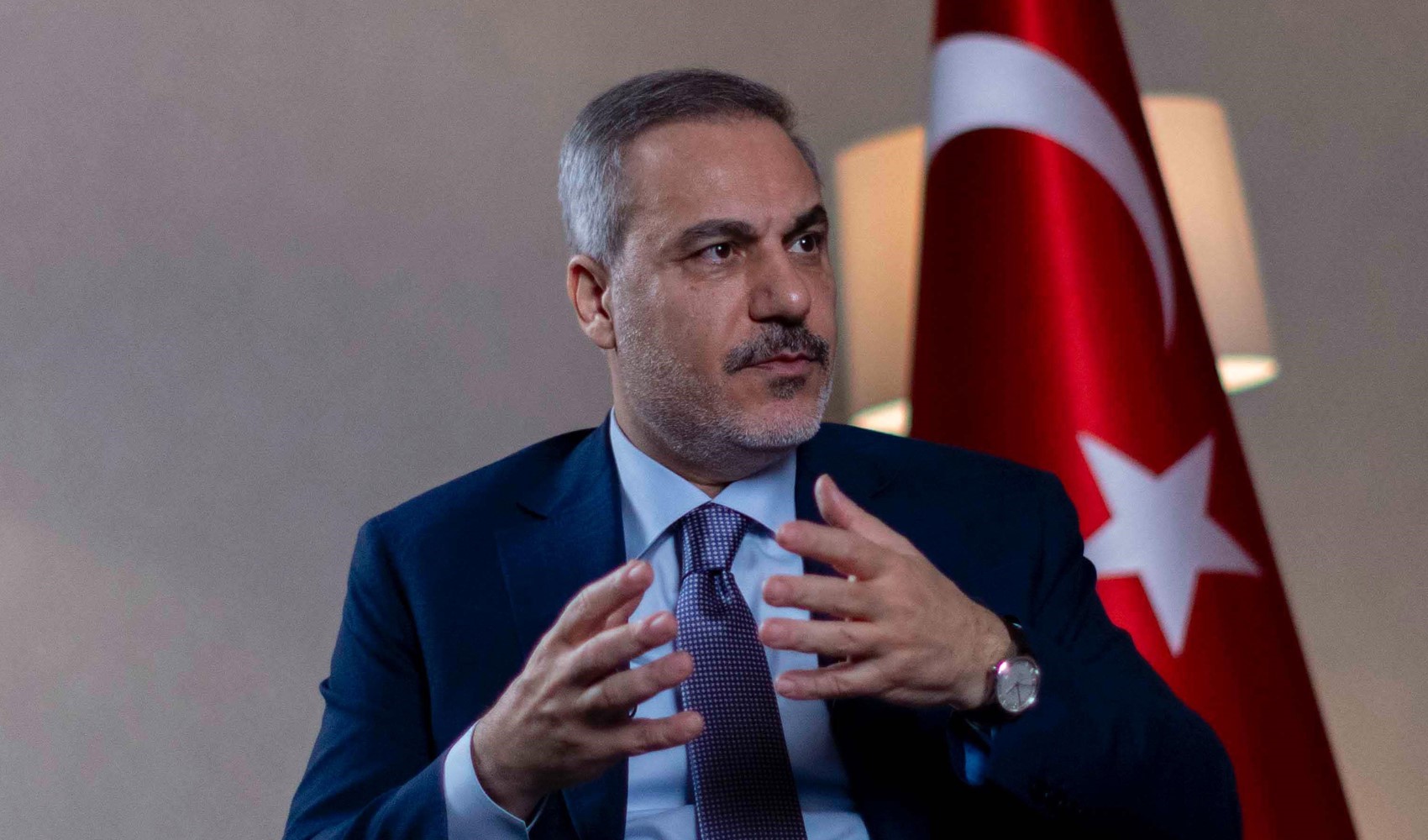
Foreign Minister Hakan Fidan made statements regarding the agenda to the Iraq-based television channel UTV.
Stating that the relations between the two countries carry an indispensable dimension and importance because the history, geography, culture, and faith of Turkey and Iraq are now intertwined, Fidan said, "Our relations with our border neighbors Syria, Iraq, and Iran are fundamental relations. Something that happens there affects us. Something that happens to us affects them. Therefore, we always wish for the situation in Iraq to be exceptionally good and for all its economic, political, and security problems to be resolved."
Fidan expressed that Turkey has been trying to stand by Iraq, especially within the perspective put forward by President Recep Tayyip Erdoğan over the last 20 years, stating, "Because Iraq has truly gone through very difficult periods in the last 20 years. There was an occupation, a civil war, and a fight against terrorism. There are various ongoing struggles. This constantly keeps Iraq in a state where it cannot reach the capacity it should use. Therefore, as Turkey, we ask ourselves, what can we do to help solve Iraq's problems more, how can we help, how can Iraq's sovereignty, independence, territorial integrity, internal peace, and development continue? We have policies aimed at this."
Recalling that 27 agreements were signed during President Erdoğan's visit to Iraq last year, he noted that they support the efforts of Iraqi Prime Minister Mohammed Shia al-Sudani to develop services such as infrastructure in his country.
The presence of the terrorist organization PKK in Iraq
Stating that dozens of meetings have been held at various levels regarding water, energy, security, trade, and the Development Road project following the 27 agreements signed between Turkey and Iraq, Fidan pointed to the work of Prime Minister al-Sudani and Iraqi Foreign Minister Fuad Hussein. Fidan stated that they are continuing their work in many areas such as energy, agriculture, irrigation, and transportation in a way that will be to the benefit of both countries.
Sharing that they want an Iraq that has achieved its internal peace, is free from international and environmental problems, and uses its own energy resources with its own independent will, Fidan expressed that Iraq is a rich country with many resources and can contribute to itself and the region.
Underlining that the PKK is a terrorist organization that threatens Turkey and that it occupies many lands in Iraq, especially Sinjar, Fidan said, "Now, of course, it is important for the Iraqi government to develop certain measures against the PKK, both for its own security and for regional security."
Emphasizing that it is in no one's interest for Iraq to become a place that turns into a sectarian proxy war, Fidan noted that this should be overcome with maturity and that Iraq should achieve stability.
Fidan stated, "Iraq belongs to all Iraqis; whether they are Shia, Sunni, Turkmen, Kurd, or Yazidi, it belongs to all Iraqis, and we support this policy of Mr. Sudani. But of course, some conflicts and disagreements that have emerged in recent years still fuel certain sentiments. We hope, as Turkey, our entire intention is to see both Iraq's own development and to see it overcome its own problems through a constructive policy."
Expectation from Iraq is the clearing of the PKK
Responding to the question, "Do you not think the role the Iraqi government has undertaken to oppose terrorist organizations is sufficient? As far as I know, the Iraqi government is working as much as possible to keep these terrorist groups under control or to stop them. Can we say this: Should the cooperation between Turkey and Iraq in the fight against terrorism be further developed?", Fidan stated that the cooperation mechanism between the two countries has developed in recent years based on security, and that Turkey has opened its own market and capabilities in the defense industry to Iraq.
Pointing out that President Erdoğan has instructed the defense industry in Turkey, the Ministry of National Defense, and other security-related institutions to assist Iraq, Fidan noted the following:
"But on the other hand, of course, at the point we have reached with Iraq in the fight against terrorism, our expectation is that Iraq should wage the same fight against the PKK as it did against DAESH. But at the point we are at now, there is first a step taken regarding the legal definition of the PKK as a threat. We welcome this. We hope that the Iraqi government—and I believe the patriots of Iraq—will wage the necessary fight against the PKK, which occupies Iraq's lands, both in the Kurdish region and the Arab region. Just as the children of Iraq cleared DAESH, they will also clear the PKK, this terrorist organization that sleeps and wakes up with many international organizations whose source of orders is unknown, from Iraqi soil."
Fidan assessed that not clearing the PKK would harm Iraq, saying, "I have thankfully handled the part that concerns me by fighting, but who will handle the part that concerns Iraq? Unfortunately, some think: 'This terrorist organization was established for Turkey, let us leave it to fight.' This is a wrong way of thinking. As I said, there is nothing on our side; it causes harm to Iraq. There is arms smuggling, heroin smuggling, and they have tied up customs with bribery. They are forcibly recruiting people, and they are uncontrolled armed groups. Iraq is an independent, sovereign national state. It has national military elements, power, police, and intelligence, but beyond all these, there is an armed PKK that is in contact with Iraqi elements and does not take orders from Iraq."
Call for the terrorist organization to lay down arms
Responding to a question about whether he has doubts that the terrorist organization PKK will not lay down its arms following the call made from Imrali, Fidan stated, "Following the latest call, we hope, we wish, and we want this call to be heeded, and for the organization to convene a congress and take the decision to dissolve itself and lay down its arms, just as its own leader requested. If it does this, the Kurds and the peoples of the region in Iraq, Turkey, and Syria will truly benefit greatly. A terrorist element would have transformed itself into a different structure. Now, the organization must understand this: We are ready to accept all non-armed stances in Iraq, Syria, and Turkey, but no one can allow it when there is armed terrorist violence. My belief and wish is that, hopefully, this will be done. But if it is not, then what has been done so far will continue, but frankly, I expect a development soon."
Fidan answered a question about the state of Turkey's relations with the Shiite formation in Iraq by recalling that President Erdogan said, "I am neither Shiite nor Sunni, I am a Muslim," during his visit to Iraq nearly 10 years ago. Describing this stance of Erdogan as "historic," Fidan expressed that the political division created over Shiite-Sunni lines in Iraq must be eliminated.
Stating that it is unacceptable for some groups to target Turkey and place the country into a different classification, as well as to develop policies and alliances accordingly "due to Turkey's Sunni identity," Fidan said, "Both our official stance and our activity on the ground show that we are ready to develop relations with all of Iraq's political parties and children in the same way. We have expressed this many times. In other words, it does not matter if they are Turkmen, Arab, Sunni, Kurd, or Shiite, but there can be some groups that have problems with the intention of developing relations with us. We will hopefully overcome this as well with mutual trust."
Fidan assessed, "We have good relations with Erbil, yes. Mr. Masoud Barzani is truly trying to provide constructive solutions to both the problems in the region and the problems in Iraq as much as he can. We have experienced this with him many times; we see that he is currently making serious efforts, whether it is regarding the fight against terrorism or energy issues. The whole region knows how constructive and contributing a person Mr. Nechirvan Barzani is. He is someone who is truly searching for how he can solve the region's problems in a constructive way in all matters. As the regional Prime Minister, Mr. Masrur Barzani is struggling with how he can solve the infrastructure and superstructure problems in the Kurdish region and how he can handle them. In other words, everyone is busy serving the people where they are. Now, when we see this, we are happy with it. A place where no one is hostile to each other, where they want to serve, and where there is mutual interest is the place we want. As you know, we do not say the same thing for Sulaymaniyah. We hope that our PUK friends in Sulaymaniyah will also move to a ground where they are busy only with the well-being of their own people by cleansing themselves of the terrorist organization, just like in Erbil."
Turkmen in Iraq
Pointing out that there are Turkish minorities in all countries that share a border with Turkey following the dissolution of the Ottoman Empire, he said that these communities have never been involved in separatist movements and have played a constructive role.
Minister Fidan said, "Therefore, we think it is essential that all the rights that Turkmens deserve as respectable children of Iraq are granted to them. Just like the rights granted to all peoples."
Fidan stated that the demographic exile of Turkmens due to historical reasons and their weakening in the places where they are located due to political concerns is "a structure that targets Turkey, not the Turkmens," and added, "But we always say: 'Look, the steps you will take by trying to overcome a relatively smaller community there with such small games will not lead you to victory; on the contrary, you will attract more of Turkey's wrath. Instead, you can use the existing Turkmen population to strengthen ties with Turkey.'"
Emphasizing that Turkmens have never been a source of separatism, terrorism, or crime in Iraq, Fidan stated that it is unacceptable for certain groups to treat Turkmens differently; he conveyed that they have communicated their concerns regarding this to the necessary authorities and have discussed them intensively.
Syria-Iraq relations
Fidan shared that Jordan, Turkey, Iraq, Lebanon, Saudi Arabia, the United Arab Emirates, Qatar, and Egypt came together to determine their expectations from the new administration in Syria and conveyed these to the administration, saying, "What are these (expectations): You will not pose a threat to your neighbors; there will be no affiliation with terrorist organizations, on the contrary, they will be fought against; minorities will be treated with respect, and sensitivity will be shown for the protection of the country's independence and territorial integrity. Mr. (Syrian President Ahmed) Shara said 'yes' without hesitation on this matter, and what we have seen and documented to date is that these promises are being kept."
Pointing out that there are some problems stemming from recent history between Iraq and the new administration in Syria, Fidan said that Syrian President Shara and Iraqi Prime Minister Sudani should show maturity, leave these problems behind, and examine how a more integrated future can be established for their countries.
Underlining that the steps being taken in the region for the fight against DAESH, economic cooperation, and border security are important, Fidan noted that regional countries should resolve disputes in good faith without threatening one another. Fidan stated, "I see that Shara does not pose any threat and has no intention to do so. Likewise, groups in Iraq must also stop viewing Syria as a threat."
Events in the coastal region of Syria
Answering the question, "The Iraqi government has concerns in its recent statements regarding the border, security issues, and the new government in Syria treating certain minorities preferentially. So, how can these concerns be overcome by Turkey? How can Iraq's concerns be overcome? What should the Syrian government do here?" Fidan expressed that they would establish a platform in the region for border security and counter-terrorism, and that on this platform, the parties would ask each other to take measures against groups they perceive as threats.
Fidan stated that no smuggler, terrorist organization, or criminal group is stronger than the combined power of the Turkish, Syrian, and Iraqi governments in the region, and that there is no group that cannot be crushed when they come together in good faith.
When asked for his assessment regarding the incidents in the coastal region, Fidan said the following:
"Unfortunately, there is some sectarian tension there among the public. Because there is a Sunni-Alawite tension that emerged in the recent past due to the wrong policies of (Syria's ousted leader) Bashar al-Assad. But thank God, the administration that came to power in Damascus after December 8 (2024) was very knowledgeable about this issue and did not allow any provocations. However, we saw that those remaining from the old regime, when they could not see a ground for provocation from state organs, from Mr. Shara and his colleagues, to turn this existing tension among the public into a conflict, they created it themselves. Now, when they ignited this fuse of provocation, there was mutual social tension and some undesirable incidents, and we, of course, condemn civilian massacres. Whether they are Sunni or Alawite, these are unacceptable things."
Touching upon the importance of the Damascus government not taking sides in these events, trying to calm the situation, and establishing a commission for potential perpetrators, Fidan said, "It is normal for Alawites, I repeat, to have concerns within themselves, saying 'The era has changed this time, the Sunni majority will oppress us,' due to the crushing pressure exerted on the Sunni majority during the Assad era. Precisely for this reason, all kinds of discrimination, violence, and ill-treatment against Alawites must be prevented. I saw great awareness regarding this in Mr. Shara and his colleagues."
Pointing out that attempts are being made to stir up sectarian or ethnic conflict to destabilize Syria, Fidan noted that such games should not be allowed in the region; he added that they have obtained intelligence reports regarding which countries have a role in these events and are examining them.
The growing Israeli threat in the region
Responding to the question, "Israel is, so to speak, provoking and crossing the lines. There are now territories occupied by Israel. Do you think these provocations will continue? Can Israel hold these lands for a long time? Is there such a scenario? Or can an agreement be reached on this matter?", Fidan said that Israel is engaging in mind-reading on this issue.
Pointing out that Israel is pursuing a policy of provocation in Syria, Fidan expressed that this policy of Israel also poses a major threat to itself.
Stating that Syrian President Shara's policy of not posing a threat to any of the regional countries also includes Israel, Fidan noted the following:
"In my opinion, if Israel perceives a security issue regarding itself, it should state the parameters related to this in a way that respects the sovereignty and territorial integrity of a state. Otherwise, saying 'I have read their intentions; they are not a threat now, but perhaps in 15 years they will be. I will go and occupy those places now, or do this from here.' Then someone else will come and do the same to you. Therefore, I think this needs to be handled in a professional manner. It is important for Israel to act more responsibly here. An occupation policy is a policy that does not serve Israel's security at all. It is a policy that will backfire. It is a policy that has the structure to further destabilize Syria."
In response to the television host's criticism that "Arab countries are not taking a role in this matter (Israel-Syria) and their criticisms are weak," Fidan said, "Frankly, I see that our Arab brothers are bringing forward serious criticisms and objections. I honestly appreciate their sensitivity on this issue. Especially Saudi Arabia, Jordan, and Egypt are expressing very serious reactions. Qatar and the United Arab Emirates as well."
Emphasizing that Israel does not listen to the reactions regarding Gaza, the Al-Aqsa Mosque, and the West Bank, and continues its expansionist policy in the region with the "unlimited support behind it," Fidan stated that they want to see a structure where no one's security, including Israel's, is threatened, no country's territorial integrity is violated, and Palestinians are also granted their own state.
Fidan noted that this vision is shared by the Arab and Muslim world as well as all countries except Israel, and pointed out that this reality could lead to other consequences in the region.
Emphasis on "Israel could disrupt the agreement between the PKK/YPG and Syria"
Minister Fidan answered the question, "As you know, sir, there is an agreement between the PKK/YPG and the Syrian government. They will lay down their arms and dissolve themselves within a year. Do you think Israel might see this agreement as a danger and try to disrupt it?" by saying, "It is possible."
Stating that while one think tank group in Israel wants to make Israel more secure by developing relationships based on respect, love, and mutual interaction with the region, the other group wants to keep regional countries weak and in internal turmoil to make Israel secure, Fidan emphasized that Israeli Prime Minister Benjamin Netanyahu belongs to the second group. Fidan said, "It is precisely because of this perspective that I do not think an approach that supports separatist groups within Syria—that is, let's say, the PKK continuing its occupation in Syria or the emergence of other internal conflicts—is a healthy approach. This brings with it other unforeseen problems. Not just for the region, but for Israel as well. I think they need to be much more careful when formulating these policies."
Cooperation between Turkey and Iraq
Fidan assessed that many potential projects, including energy projects that have not been utilized in Iraq so far, could be brought to life.
Underlining that the Development Road Project is an important and visionary project, Fidan said, "It is truly commendable that for the first time in many years, Iraq is coming to the fore not with a security-related issue, but with a project related to development and prosperity that covers the entire region. Our President also supports this very much. This is exactly what Turkey wants to see. That (Iraq) is being associated with an issue related to prosperity rather than conflict and division."
Fidan stated that the construction of energy and pipelines would come to the agenda with the Development Road Project, and said, "As you know, we can currently only transport oil and gas deposits in northern Iraq to world markets. Those in the south do not really go to Europe via Turkey. Those in the south go to other places by ship. In fact, if the oil deposits in the south could also be connected to Europe via pipelines through Turkey, a very large market would open up for Iraq."
Pointing out that there are gas deposits in some regions of Iraq, including the Kurdish region, that have not been sufficiently used or invested in, Fidan said, "As a clean energy source, gas is currently a very fashionable energy source. It is actually necessary to invest in this. As long as the current stability prevails in Iraq, I think international investors will come here and invest."
Fidan mentioned that Turkey is ready to invest in energy resources in Iraq and to be a market for the resources there, stating that Turkey has to import approximately 90 percent of its oil and natural gas, and that they are ready to receive the energy that will come from Iraq.
Stating that Iraq can send energy, oil, and natural gas to international markets using Turkish territory, Fidan said, "As you know, there is an existing pipeline. This pipeline is currently not working. There is an agreement that needs to be reached between Erbil and Baghdad right now. As you know, the Mosul-Ceyhan pipeline is currently not working. It has not been working for about a year and a half." Noting that the pipeline not working actually causes a great loss of financial income for Iraq, Fidan said, "I hope they solve this."
In response to the question, "There is talk of the possibility of Syria joining the Development Road Project. Is this possible?", Fidan replied, "I think it is possible. It would also be good. I think Syria could be a part of this project with certain formulas."
News Source: AA
Most Read

Striking picture for Özgür Özel's 'New Party'

Özgür Özel gives a dated response regarding the number of resignations

Forest fire in Antalya brought under control

The PKK opening and Özgür Özel’s path!..

How did the newspapers view Özgür Özel's farewell to the CHP?

He killed his wife by slitting her throat: Their children witnessed the moments

What did the CHP do?

Özel’s new party move in the world press

The New CHP, against CEHAPE

Fire at TUSAŞ engine factory in Eskişehir under control