

Özel’s Erdoğan critique in The Economist: Democracy in Turkey faces a tougher test
Writing for The Economist, CHP leader Özgür Özel drew parallels and distinctions between Hungary and Turkey, citing the end of the Viktor Orbán era in Hungary as an example. Özel stated, "The struggle for democracy in Turkey is harder than in Hungary; not only because Turkey is outside the institutional framework of the EU, but also because it is a larger, more complex country divided by geopolitical fault lines."



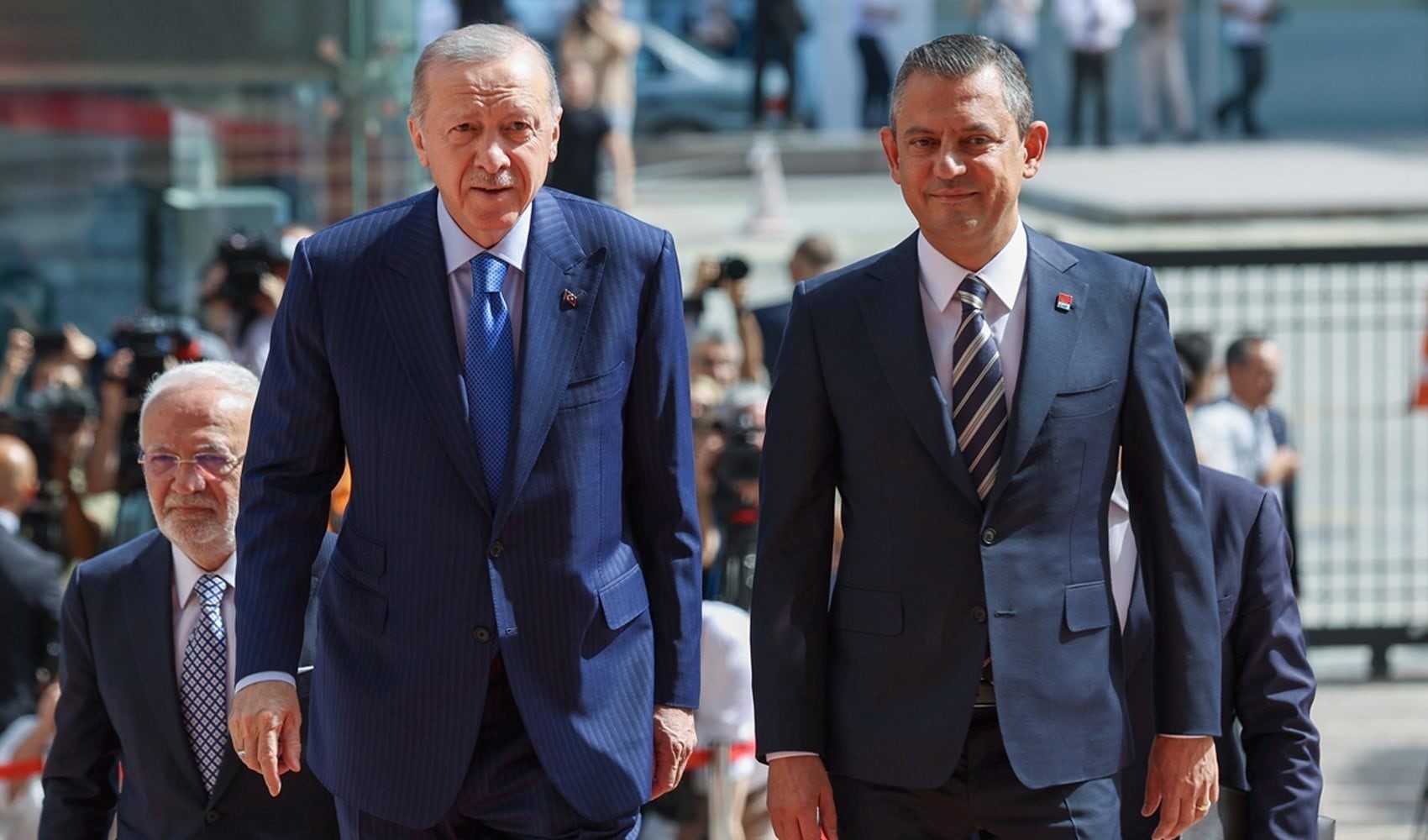
Republican People's Party (CHP) Chairman Özgür Özel has penned an article for the British-based magazine The Economist titled "Turkey’s struggle for democracy is like Hungary’s, but harder."
In the article, where he recalls Peter Magyar ending Viktor Orbán's rule in the Hungarian general elections, Özel wrote: "Our presidential candidate, Istanbul Mayor Ekrem İmamoğlu, defeated the candidates personally chosen by Erdoğan twice in 2019 and once more in 2024, and was preparing to run against Erdoğan. Because of this electoral success, he and his colleagues were imprisoned on baseless and politically motivated charges of corruption, espionage, and aiding terrorism"
The full text of the article Özel wrote for The Economist is as follows:
"Democrats across Europe, including in Turkey, have been encouraged by voters rejecting Viktor Orbán in the recent Hungarian elections. Orbán’s long tenure as prime minister had become a case study in “illiberal democracy.” Elections were held, but the ecosystem around them was increasingly bent: media was concentrated in one hand, courts were constrained, civil society was suppressed, and economic power was intertwined with political loyalty.
Much of this resonates far beyond the Danube. Turkey has also witnessed an increasingly illiberal leadership and the gradual narrowing of the competitive democratic space. President Recep Tayyip Erdoğan came to power in 2003 with popular support and a strong discourse on democracy. However, over time, he shifted toward an increasingly authoritarian line: he took control of the media, built networks of loyal businesspeople, silenced civil society, and used the judiciary as a weapon against the opposition, including the Republican People's Party, which is the second-largest party in parliament after Erdoğan’s Justice and Development Party. In both Turkey and Hungary, by the late 2010s, politics had shifted from open competition to managed competition; election results were not predetermined, but were increasingly steered by the ruling party.
"THERE ARE STRIKING SIMILARITIES BETWEEN THE DEMOCRATIC OPPOSITION IN BOTH COUNTRIES"
There are also striking similarities between the democratic opposition movements in both countries. In the 2022 elections in Hungary and the 2023 elections in Turkey, broad opposition alliances consisting of six parties tried to defeat authoritarian regimes. However, in both cases, these alliances struggled to create a genuine opposition movement because they focused more on strengthening ties between the elites of the constituent parties and other establishment figures than on growing grassroots support. What later succeeded was a new political approach that went beyond official party alliances: politics based on popular mobilization, disciplined messaging, and credible leadership.
Following the defeats in 2022 and 2023, opposition movements in both countries learned from their losses and began to look beyond the traditional understanding of alliance-building. In Turkey, the CHP, under my leadership, defeated the AKP in the 2024 local elections. Since then, we have been preparing for the next general and presidential elections. In Hungary, the opposition led by Peter Magyar won the general election held last month, securing a parliamentary majority large enough to amend the constitution.
"HUNGARY IS EXPERIENCING A PEACEFUL TRANSFER OF POWER"
However, there is a critical difference. Hungary is a member of the European Union and is currently experiencing a peaceful transfer of power. Orbán ensured that the last election was an unfair fight. For example, he rewrote election rules to suit his own interests and led a disinformation campaign aimed at smearing the opposition. In Turkey, Erdoğan followed the same path, but dared to go much further, using loyal elements within the judiciary to suppress the opposition.
Our presidential candidate, Istanbul Mayor Ekrem İmamoğlu, defeated the candidates personally chosen by Erdoğan twice in 2019 and once more in 2024, and was preparing to run against Erdoğan. Because of this electoral success, he and his colleagues were imprisoned on baseless and politically motivated charges of corruption, espionage, and aiding terrorism. Erdoğan is now attacking my party’s mayors through fabricated cases; he aims to paralyze our party and create an opposition he can control. Since 2024, approximately 25 CHP mayors have been arrested, sent to prison to await trial, and effectively removed from office through judicial and administrative measures.
Yet, as in Hungary, the resistance shown against the Erdoğan administration in the streets, coffeehouses, and courtrooms has triggered a new democratic awakening in Turkish society. My party embraces grassroots mobilization and argues that economic decline and democratic backsliding are deeply intertwined. We are bringing voters together across parties, social groups, ideologies, and ethnic identities.
"THE AKP'S GOAL IS TO TAME THE OPPOSITION"
The AKP’s goal is not to eliminate the opposition, but to tame it: allowing it to enter elections and even govern metropolitan cities, while forcing it to operate within increasingly narrow boundaries. This is not just a transition from democracy to authoritarianism; it is a transition from free competition to containment politics. Therefore, the CHP’s task is not only electoral but also civic: to regenerate democratic trust and restore citizens' sense of agency.
Turkey’s situation is further complicated by the issue of identity. Turkey is a country with a majority-Muslim population, but one that is constitutionally secular, socially pluralistic, and has a long history of parliamentary democracy. In this respect, Turkey serves as a critical test for the universality of democracy, the rule of law, the separation of powers, and accountability. While Hungary offers a strong example in terms of the post-communist experience, Turkey—with a population about nine times larger, a regional power, a hub for migration, an energy corridor, and a key NATO member (as well as an EU candidate)—carries broader significance for democracy from Europe to North America and beyond.
The Kurdish issue makes Turkey even more distinct. Today, there is a new peace process between the government and the PKK. The CHP supports this process not for tactical or electoral calculations, but in the name of a broader democratic vision. Peace and democracy are inseparable. This understanding is of critical importance for the Middle East, where issues of pluralism, representation, citizenship, and coexistence remain central to a peaceful future.
"TURKEY'S STRUGGLE IS HARDER THAN HUNGARY'S"
The struggle for democracy in Turkey is harder than in Hungary; not only because Turkey is outside the institutional framework of the EU, but also because it is a larger, more complex country divided by geopolitical fault lines. The stakes are higher, the conditions are tougher. Magyar was able to enter and win elections in Hungary. But our presidential candidate has been in prison for over a year.
The democratic struggle in Turkey is no longer limited to parliament or the ballot box. The struggle is being waged on many fronts: in mass rallies, in the daily life of the streets, with legal defenses in courtrooms, and on social media with the intelligence, creativity, and digital skills of young people. The opposition victory in Hungary has energized the debate on democratic backsliding in the world. A democratic breakthrough in Turkey would transform that debate."
News Source: 12punto
Most Read

Striking picture for Özgür Özel's 'New Party'

The PKK opening and Özgür Özel’s path!..

How did the newspapers view Özgür Özel's farewell to the CHP?

He killed his wife by slitting her throat: Their children witnessed the moments

What did the CHP do?

Özel’s new party move in the world press

Fire at TUSAŞ engine factory in Eskişehir under control

The New CHP, against CEHAPE

From self-efficacy to despair

Kılıçdaroğlu's first message on Özgür Özel's new party announcement