

10 years ago, the PKK massacred 36 lives in the heart of the capital... But neither the 'solution process' supporters nor its opponents remembered...
On the 10th anniversary of the March 13 Güvenpark attack, grieving families at the memorial ceremony for the 36 lives lost demanded justice, opposing the pardoning of the killers and any negotiations with them. The families called for legal accountability and more effective security measures.



Müyesser YILDIZ
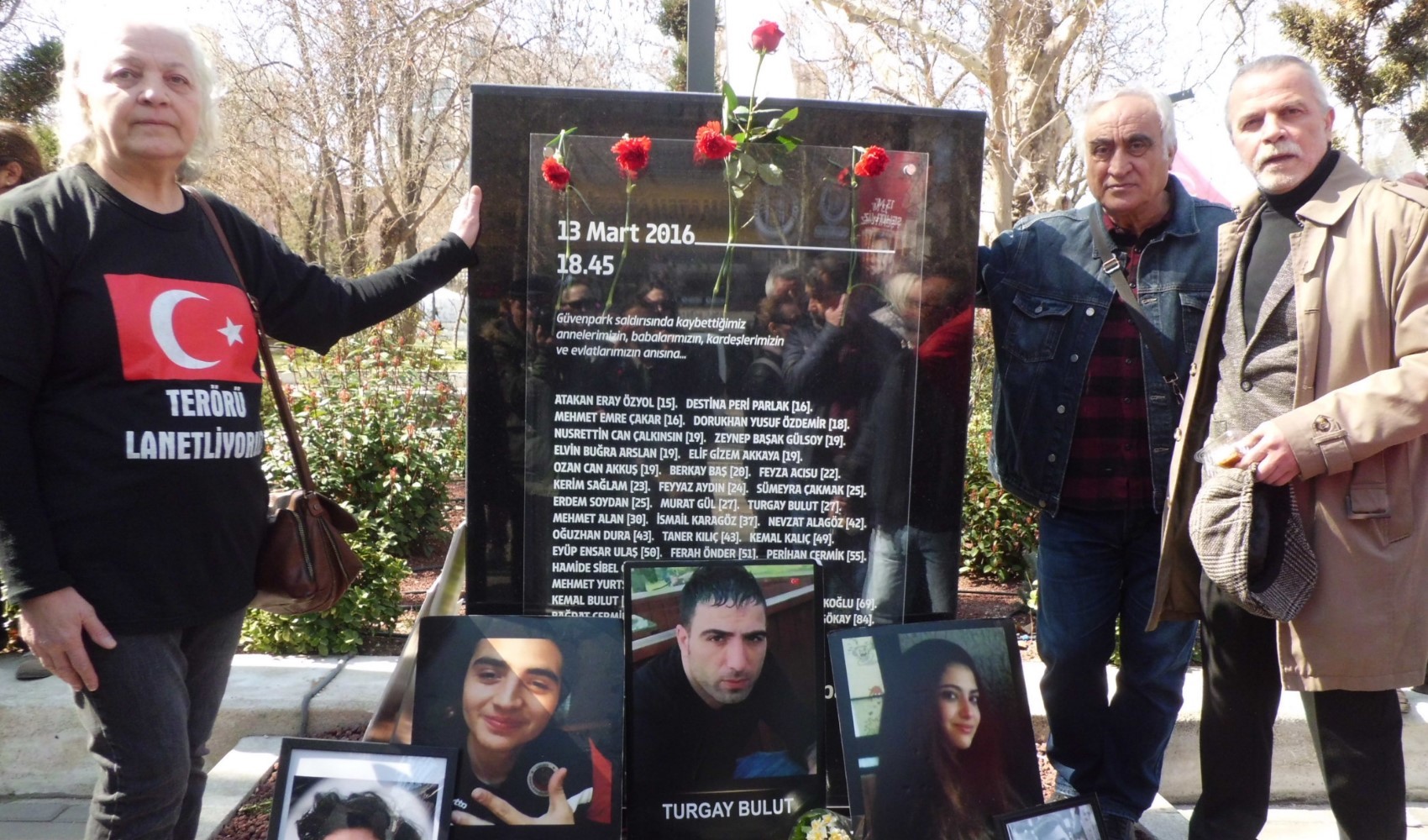
It has been exactly 10 years since the separatist terrorist organization PKK massacred 36 of our people, including 13 high school and university students, in an attack on Güvenpark in Kızılay, the heart of Ankara. This year, the grieving families—who were once again forgotten by the government, the opposition, and non-governmental organizations—shouted, "We do not accept the pardoning of the killers of our loved ones, nor do we accept negotiations with them." They also expressed their reaction to the fact that the attack, which is accepted as a "planned and protracted terrorist act" in criminal proceedings, was evaluated by the administrative judiciary as a "social risk."
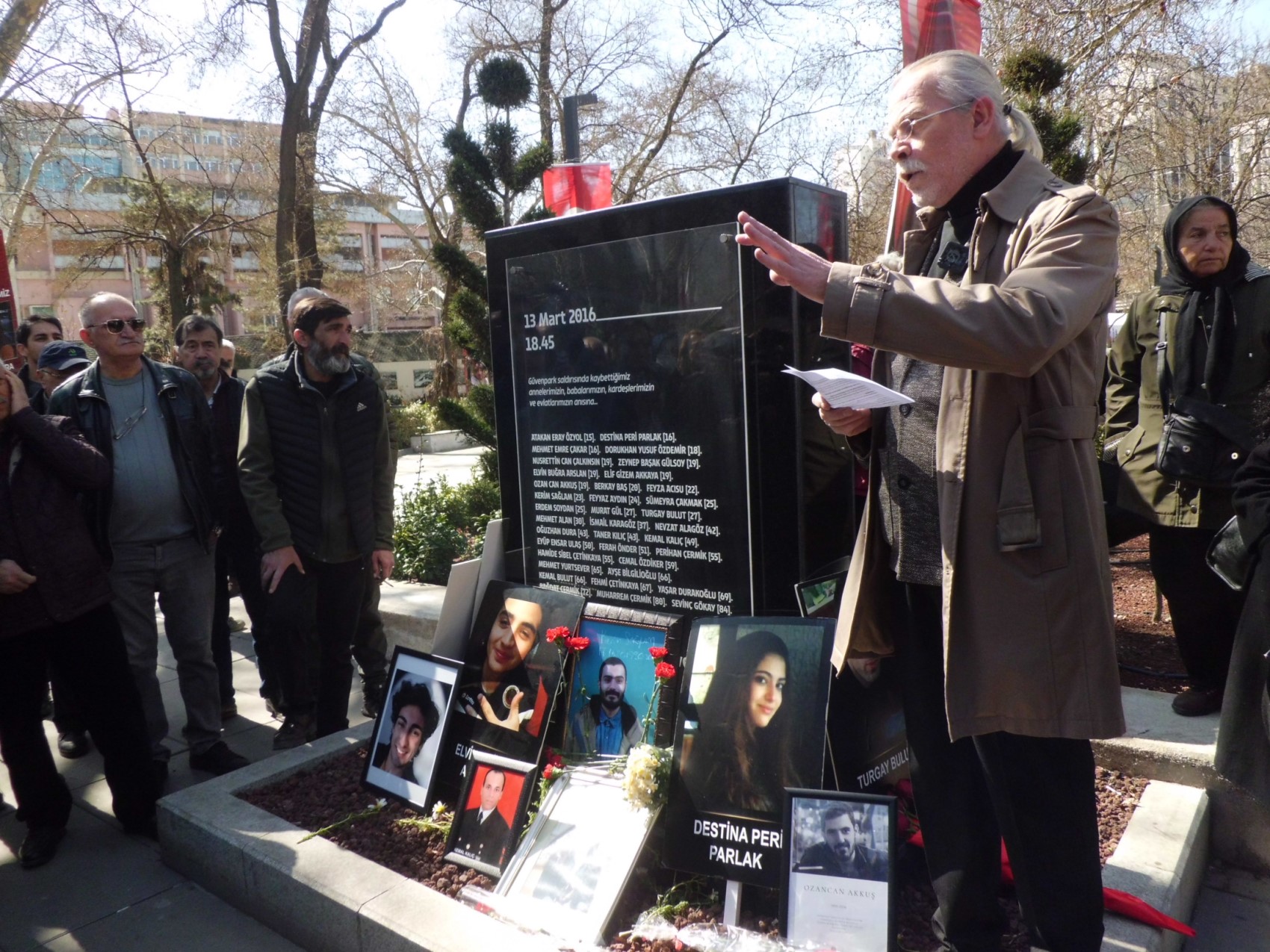
Continuing their struggle under the name of the March 13 Güvenpark Platform, the grieving families gathered in Güvenpark as they do every year and adorned the monument, which was commissioned last year by Ankara Metropolitan Municipality Mayor Mansur Yavaş, with photographs of their lost relatives and carnations.
At the memorial ceremony, which was not attended by a single official other than the police officers taking security measures, and where even passersby in Kızılay did not turn to look and ask, "What is happening here?", retired Colonel Faruk Dinç, who lost his 20-year-old nephew Elvin Buğra Aslan in the Güvenpark massacre, gave a speech on behalf of the Platform.
''THEY BECAME DEFENDANTS IN THIS ATTACK THEY NEGOTIATED WITH''
Starting his words by saying, "The reason we are here is not just to commemorate the lives we lost. We are also here to remind, question, and draw lessons for the future regarding the 'responsibility to protect the right to life,' which is one of the most fundamental obligations of the state," Dinç emphasized the following in summary:
"This painful event has revealed that not only the dark face of terrorism but also the administrative functioning, security understanding, and legal approaches need a serious reckoning. We have three fundamental findings in our 10-year search for justice. First; terrorist acts are not a moment, but a process. In legal evaluations, terrorist attacks are often defined as sudden and unavoidable events. However, technical data and lived experiences show the opposite. A terrorist attack is not limited to the moment of the explosion; it is a protracted process consisting of preparation, planning, movement, and reaching the target. This tragedy, which occurred under the heavy security conditions of 2016, has clearly shown that security can be provided not only with physical measures but with a continuous and dynamic risk analysis approach. It is an important condition for preventing similar pains in the future that the administration evaluates such events not as 'instant misfortunes' but as predictable risk processes. Second; technical capacity only gains meaning with effective coordination. A modern state promises security to its citizens with its advanced security systems, intelligence networks, and technological capabilities. However, when the preparation process of the March 13 attack and the route of the vehicle used are examined, the following question inevitably arises: if technical capabilities can identify the perpetrators after the event, why could a preventive reflex not be produced before the event? This question is not an accusation, but a public question that needs to be answered. Third; integrity must be ensured in legal evaluations. The justice system cannot produce two separate truths about the same event. It is a situation that should be discussed in terms of a state of law that an attack, which is accepted as a planned and protracted terrorist act in criminal justice, is evaluated only with the concept of 'social risk' in administrative justice and the responsibility of the administration is completely excluded. Leaving responsibility only to abstract concepts also eliminates the possibility of public administration learning from its own mistakes and improving itself. Today, we stand here with the heavy silence of 10 years. The police officers who ensure our security are performing their duties with great devotion. However, we wish that the same devotion, the same attention, and the same protective reflex had been valid for every citizen who was in this square 10 years ago. Our words here are not a call for anger, but a reminder of conscience. Because we know that the greatness of a state is revealed not only in its power, but in its meticulousness in protecting the right to life of its citizens and its courage to face its own mistakes when necessary. Our greatest debt to the lives we lost is not just to mourn. Our debt to them is to build a future where justice, responsibility, and public accountability function perfectly. As citizens of this country, we say this: We will not forget those we lost. We will not give up our demand for justice. We will not allow public responsibility to be made invisible."
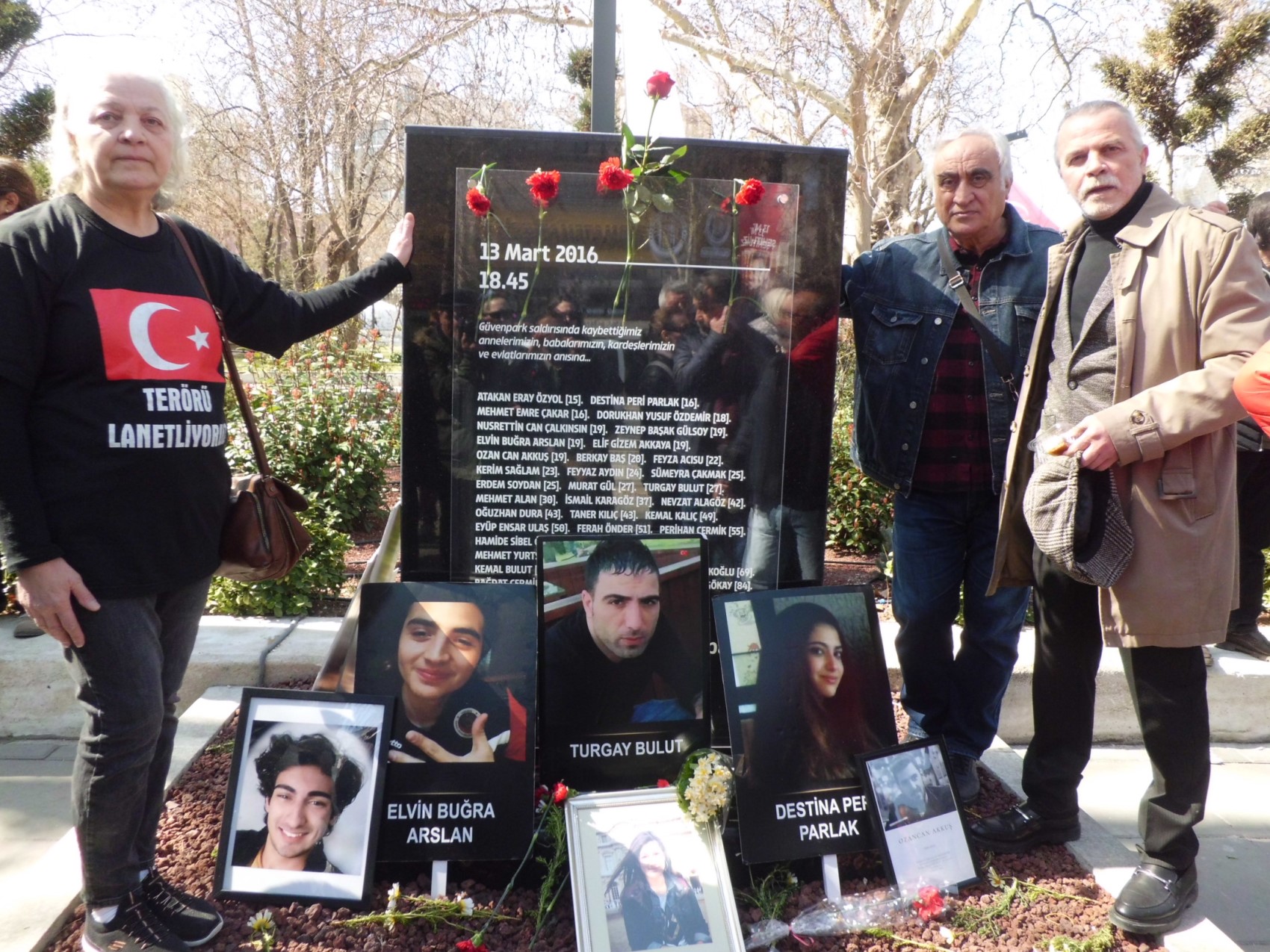
Retired Colonel Faruk Dinç, who thanked Ankara Metropolitan Municipality Mayor Mansur Yavaş for having this monument built, which at least ensures that passersby in Kızılay ask, "What is this?", concluded his speech as follows:
"For 10 years, we have become a family regardless of our origin or belief. We can be such a family as all of Turkey. Our only condition is; we do not consent to the pardoning of the killers of our loved ones, nor to negotiations with them. Those terrorists, with whom negotiations were held 5 years before the attack, became defendants in the case of our loved ones."
The grieving families supported these statements of Dinç with slogans of, "We absolutely do not accept the pardoning of the killers, nor negotiations with them."
Attorney Tülay Bekar, who follows the cases on behalf of the families but could not attend this year's memorial for the first time because her mother is ill, said in the message she sent, "Our lost loved ones only want to be remembered and talked about, and those who remain want their hands to be held. Even if we are left alone, we will continue the struggle."
News Source: 12punto
Most Read

Striking picture for Özgür Özel's 'New Party'

Özgür Özel gives a dated response regarding the number of resignations

Forest fire in Antalya brought under control

The PKK opening and Özgür Özel’s path!..

How did the newspapers view Özgür Özel's farewell to the CHP?
Houthis strike Saudi-owned tanker

What did the CHP do?

Özel’s new party move in the world press

The New CHP, against CEHAPE

From self-efficacy to despair