

Mandatory overtime is high at Prison Inc., while wages are rock bottom
Many companies, including major brands, have production carried out in prisons. Those who refuse to work face exile. Wages are at most 165 TL per day.



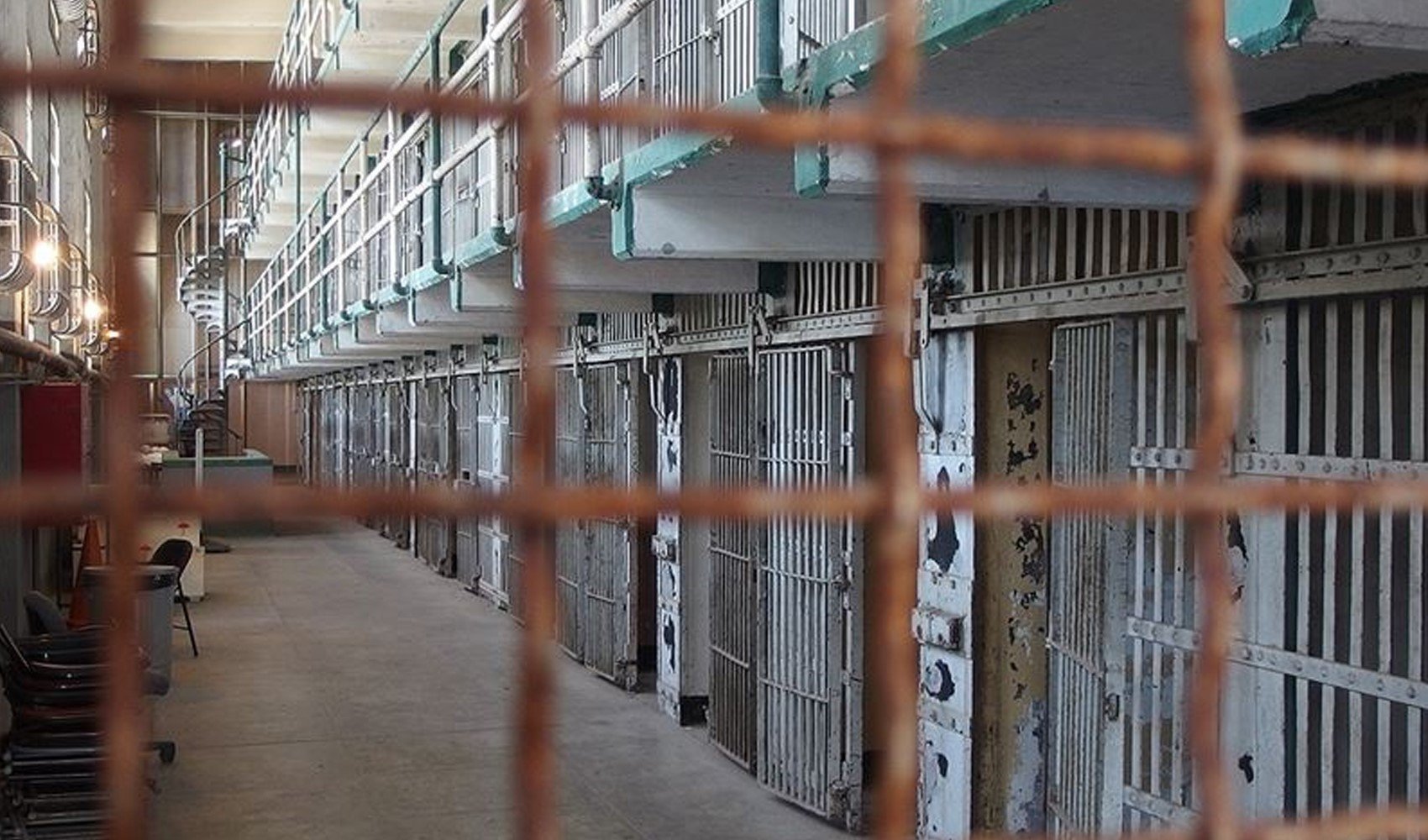
Someone's captivity is becoming someone else's wealth. The report by Eylem Nazlıer from the newspaper Evrensel, which was featured on the front page under the headline "not a prison but a labor camp," reveals the distortions of the voluntary work system in prisons.
According to the report, as of 2023, there are 403 penal execution institutions in Turkey. According to April 2024 data, the number of male, female, and child prisoners is 322 thousand 780. According to the 2023 activity report of the Penal Execution Institutions and Detention Houses Workhouses Institution, a total of 50 thousand 98 prisoners were employed in various fields ranging from furniture to textiles, and from greenhouse cultivation to jewelry making in 2023. The number of employed prisoners was 28 thousand 439 in 2022 and 19 thousand 873 in 2021. The economic value of the products produced per prisoner working in the workhouse in 2023 was 45 thousand TL. The budget allocated to the institution from the central budget is 16.5 billion TL. In contrast, the wages given to prisoners whose labor is exploited under the name of rehabilitation are laughably low. In 2024, prisoners employed with master status are paid 165 TL per day, those with journeyman status are paid 158 TL, those with apprentice status are paid 150 TL, and trainee prisoners are paid 143 TL. Overtime pay is 6 TL. Prisoners who refuse to work are threatened with exile or the revocation of their sentence reduction.
In 2023, contract manufacturing was carried out for many companies by prisoners working in the Detention Houses Workhouses Institution. Under 85 different protocols called "private sector cooperation," 3 thousand 326 convicts and detainees were employed. The protocol value was 219 million 231 thousand 949 TL. The institution's 2028 target is to increase the number of contracts made with private companies to 270.
Major companies that have signed protocols for contract manufacturing to date include monopolies such as Lacoste, Kiğılı, Chakra, and Vakko.
THE MANDATORY 'VOLUNTEER' SYSTEM
What are the working conditions at the Detention Houses Workhouses? Heval Zelal Avcı, the Labor Thematic Area Officer at the Civil Society in the Penal System Association (CİSST), answers this question. Listing the accounts of prisoner workers who applied through the letter and consultation line, Avcı says, "They have no job security. Sick prisoners say they are made to work in heavy jobs. Wages are insufficient." Avcı states that there are no occupational safety experts or workplace physicians in the workhouses.
Gülseren Yoleri, President of the Human Rights Association (İHD) Istanbul Branch, explains that for prisoners staying in open prisons, working has turned into a kind of obligation. Stating that prisoners are made to work long hours under harsh conditions, Yoleri adds, "On the other hand, some are insured, but the premiums paid for insured workers are not valid for retirement. Therefore, it has no effect on the retirement of people who have worked in prison for many years."
Pointing to Article 18 of the Constitution, which states, "No one shall be forced to work. Forced labor is prohibited," Avcı says, "Paragraph 1 of Article 29 of the Law on the Execution of Penal and Security Measures No. 5275 states, 'Convicts who do not have a profession and are determined to be mentally and physically healthy by the institution physician, and willing convicts who have a profession, may be employed in workshops or workhouses in return for a wage determined according to the possibilities of the institution.' In this context, if there is no health problem and the convict does not have a profession, it is mandatory for a prisoner to work in prison. Paragraph 2 of the same article states that the purpose of employment in prison is to ensure that prisoners learn professions and arts that will enable them to sustain their lives after being released and to strengthen their desire to produce."
'THERE IS NOT A SINGLE PRISONER RECEIVING MINIMUM WAGE'
Stating that prisoners are forced to work despite the constitutional regulation, Yoleri says, "There are applications stating that those who do not want to work are threatened with being sent to a closed prison. Therefore, prisoners are forced to accept the conditions offered to them in order not to live in prison under worse conditions."
Explaining that some prisoners who cannot receive money from their families have their requests rejected even though they want to work, Avcı said, "Especially the work requests of prisoners sentenced to aggravated life imprisonment, LGBTI+ prisoners, and foreign national prisoners who want to work were rejected."
Stating that prisoners also have problems regarding social rights and benefits, Avcı said, "The article of the regulation stating, 'The utilization of convicts from social rights and benefits is determined by taking into account the legal status of the employer belonging to the public or private sector,' creates a situation in favor of the employer and leaves an open door for prisoners not to benefit from social rights and benefits. In the work we have carried out as an association to date, we have not encountered a single prisoner who receives the minimum wage and whose insurance is paid in a way that covers old-age insurance."
THE HAND OF WORLD-FAMOUS BRANDS IS THERE
Reminding that many of the world's famous brands have contract manufacturing done in prisons, Yoleri pointed out the following: "It appears much more clearly, especially in the textile field. Prisons have been turned into places where the contract work of large firms is done, and we know that they are trying to develop this. This system is also being tried to be made more functional in Turkey."
The exploitation of prisoner labor is carried out through a tender organized between prisons and companies that want to have contract manufacturing done. This process is operated according to the Tender Regulation for Revolving Fund Institutions. After the tender, an employment contract is made with the administration and relevant units in accordance with the Workhouses Regulation.
Drawing attention to the lack of supervision in this process, Yoleri says, "This has turned into a serious area of rent-seeking. Therefore, there is work in many subjects and many business lines in prisons, from textiles to carpentry. Therefore, we are talking about a very large exploitation of labor, a forced labor."
Products produced by detainees and convicts were previously only offered for sale in courthouse and prison canteens. However, after the increase in production through pressure, sales points were also established in city centers for the sale of produced goods and services. Today, these products are offered for sale in 79 retail stores in addition to 31 social facilities belonging to the ministry.
HOW ARE WAGES DETERMINED?
Explaining the way the wages given to prisoner workers are determined, Yoleri says, "A board authorized for this determines this wage. The board is defined in the workhouses regulation. For example, that board determines how much a prisoner working in 'A open prison' or 'B job' will receive."
Avcı from CİSST said that in 2024, prisoners employed with master status were paid 165 TL, those with journeyman status were paid 158 TL, those with apprentice status were paid 150 TL, and trainee prisoners were paid 143 TL per day. Avcı explained that the overtime pay paid to prisoners is 6 TL. According to these data, a master prisoner who works for a month without any rest is paid 4 thousand 950 TL.
Heval Zelal Avcı, CİSST Labor Thematic Area Officer, lists her suggestions regarding this area as follows:
The basic needs of prisoner workers should be met, taking into account occupational health and safety
The insurance of working prisoners should be reorganized to include retirement
The wages received by prisoner workers should be redetermined with the participation of unions
Working should not be mandatory. A status difference should not be created between a working prisoner and a non-working prisoner.
The exploitation of cheap labor in prisons is also included in the government's 12th Development Plan. The plan states, "Children staying in prison will be encouraged to learn a profession."
THE MINISTRY'S GOAL IS TO INCREASE THE NUMBER
The Ministry of Justice's 2024-2028 Strategic Plan includes the expansion of cheap labor exploitation under the name of new workshops that do contract manufacturing for monopolies under the name of new prisons and vocational training courses. Some of the items in the plan are as follows:
The institutional structure and capacity of the General Directorate of Prisons and Detention Houses will be strengthened.
Development of the capacity of penal execution institutions
Opening of penal execution institutions
Vocational training programs will be developed for convicts and detainees.
According to the Ministry of Justice Strategic Plan, it is aimed to increase the number of prisoners participating in vocational training courses by year.
While the number of prisoners participating in the courses in 2023 was 33 thousand 700 and in 2024 it was 36 thousand 200, the targeted number by year is as follows:
38 thousand 700 prisoners in 2025
41 thousand 200 prisoners in 2026
43 thousand 700 prisoners in 2027
46 thousand 200 prisoners in 2028
News Source: 12punto
Most Read

Striking picture for Özgür Özel's 'New Party'

Özgür Özel gives a dated response regarding the number of resignations

Forest fire in Antalya brought under control

The PKK opening and Özgür Özel’s path!..

How did the newspapers view Özgür Özel's farewell to the CHP?

Houthis strike Saudi-owned tanker

What did the CHP do?

Özel’s new party move in the world press

The New CHP, against CEHAPE

From self-efficacy to despair