

Sırrı Süreyya Önder's doctor speaks out: 'Even if the chance of recovery is slim...'
The doctor of Sırrı Süreyya Önder, who is continuing his treatment in intensive care, has spoken. His doctor, Prof. Dr. Ertan Sağbaş, stated, "Even if the chance of recovery is slim, we have hope."



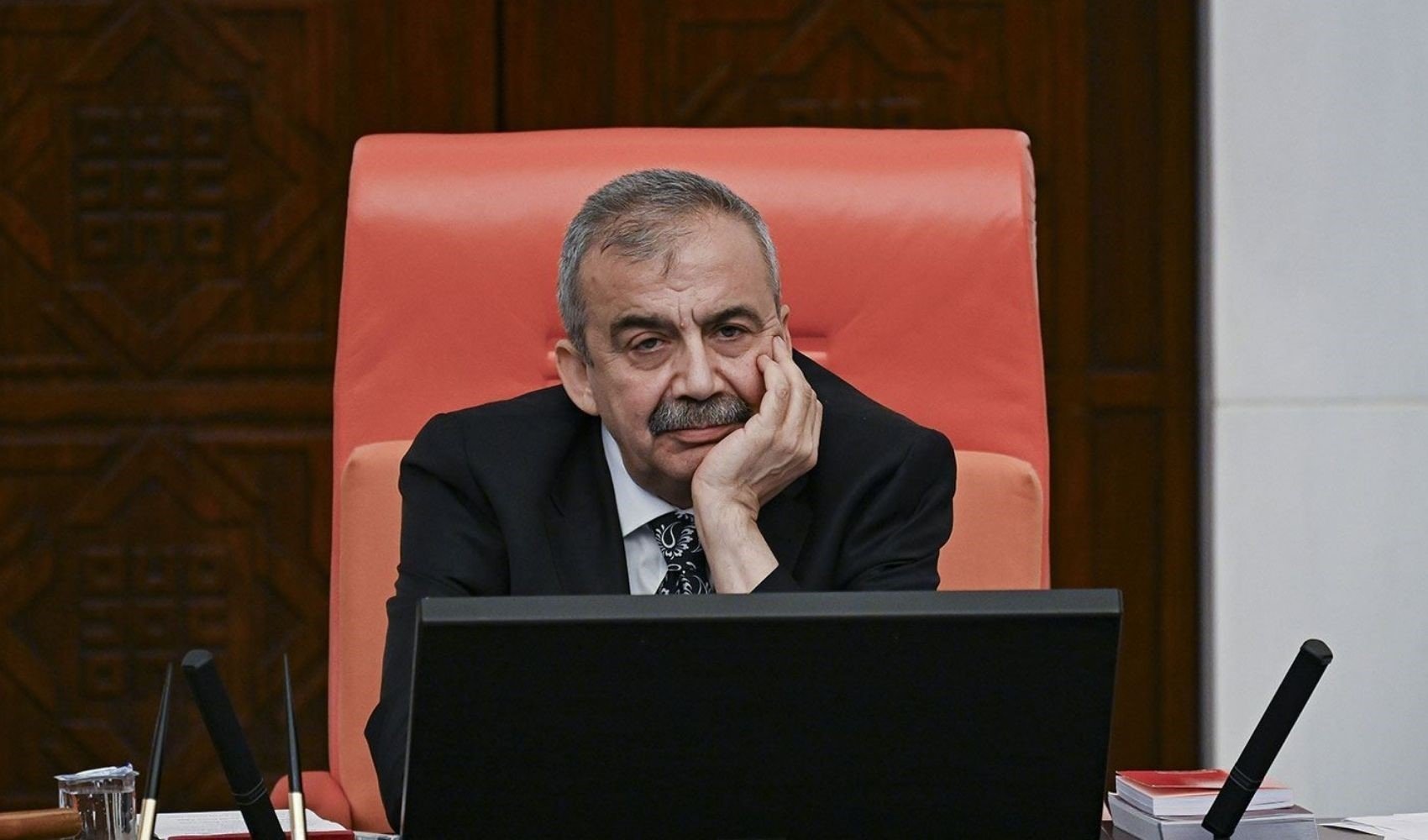
Prof. Dr. Ertan Sağbaş, the doctor of DEM Party MP and Imralı Delegation member Sırrı Süreyya Önder, who was hospitalized due to a heart condition and has been under treatment since April 15, has provided detailed explanations regarding the treatment administered and the current stage of his recovery.
Describing the events throughout the treatment process, Sağbaş said, "It is a great miracle that he has reached this point. Even if the chance of recovery is slim, we have hope." Stating that Önder has not been given sedatives for days but has still not woken up, Sağbaş added, "What is the reason for this? Edema. Hopefully, it is edema. (The brain) may have also been deprived of oxygen. We cannot say for sure what the issue in his brain is right now. More accurately, the neurologists cannot say."
The interview conducted with Sağbaş by Mehmet Aslan and Melik Çelik from MA is as follows:
How did Önder come to you, and what was the initial intervention?
We had finished our normal shift that day. I had a surgery. I completed my surgery. Before leaving, another emergency patient arrived. There was a tear in the aorta (main artery). We performed an endostent (placing a stent inside the torn aortic region) on him. Afterward, another patient of ours developed cardiac tamponade (fluid accumulation). We intervened in that as well. I left the hospital and went home around 21:30. Just as I was resting, a specialist colleague called and said there was a patient with dissection (aortic tear) and that they were performing resuscitation (CPR). I first asked if he was conscious. I received the answer that he was unconscious. But at the same time, resuscitation had been continued without interruption from the very first moment. Therefore, a more optimistic picture was painted regarding the brain. I asked for the team to be assembled and set off for the hospital. I arrived at the hospital in about 20-25 minutes. I had no idea who the patient was. While on the way, I learned that the patient was Mr. Sırrı Süreyya. There were some speculations that special professors were gathered. Let everyone be sure of this; I did not know who the patient was, and if it had been another patient, we would have gone out as the same team and performed this surgery.
What kind of intervention did you first perform on Önder?
The breathing reflex is not occurring. He does not wake up or open his eyes even though he is not receiving sedatives. The neurological situation seems more negative. This is not my prediction; it is the prediction of the neurologists. Neurologists are the professionals in that field.
Around the 5th or 10th minute of his arrival, his heart started working for a while. During that time, my colleagues performed an ECHO (heart ultrasound). In the ECHO, they saw the dissection flap (signs of a tear) in the aortic part. That is, bleeding occurs within the layers of the aorta. It pushes the innermost layer toward the center, and when blood enters that space, a structure like a septum appears there. This ECHO is also pathognomonic (diagnostic). In other words, when you see this, you call it a dissection. Therefore, the diagnosis was clear. That was very important for the intervention. Performing that ECHO and naming it was very important. Without wasting any time, we spoke directly with the patient's relatives, obtained their consent, and took him directly to the operating room while continuing resuscitation.
Immediately afterward, you took him into surgery, and this surgery lasted about 12 hours. What kind of decisions and interventions did you make at this stage?
We took him to the operating table while performing CPR. With CPR, we first switched to the heart-lung machine through the groin artery and vein. We relieved the circulation. Then we stopped the CPR. Then we opened his chest and repaired the aortic aneurysm and dissection. The right coronary, that is, the heart has a 3-vessel coronary system. The one on the right remained within the dissection line. The blood flow in the false lumen of that dissection had collapsed (closed) the mouth of this right coronary. It squeezed it inward, as if pinching it, and blocked the opening. This prevented blood from reaching the heart muscle. And a heart attack had also begun to occur. So, our patient had both a dissection and a heart attack. There were two severe pathologies. Seeing this situation, I decided on a bypass. We removed a vein from his leg and performed his bypass there, and we completely corrected the pathology. Then we rested the heart a little. Because the heart had been very battered and tired. Then we tried to come off the heart-lung machine, but we couldn't. Since we anticipated this, we had also prepared ECMO (an artificial circulation device that replaces the lungs and heart).
We came off ECMO support. We switched to the heart-lung machine through the groin artery and vein. It is a kind of heart-lung machine. It provides blood circulation in the body. It can replace both the lungs and the heart. Therefore, the heart rests during that time. We have been resting the heart for days. The one that provides the main body circulation is ECMO. We came off with ECMO support. We only closed the subcutaneous tissue. Since the heart was edematous, we did not join the bone either. We came out this way.
After the surgery, you made statements that the right side of the heart was not contracting. Later, you shared that it started to contract. How do you evaluate this?
We waited 2-3 days after the surgery. Then we took him into surgery again. This time, we both cleaned the inside and looked at and observed the heart. We saw that the right side, which did not contract in the first surgery, had started to contract. This is a very good thing. This was something we aimed for. We wanted to rest the heart so that the right heart could recover itself and start contracting. This was what we wanted. That made us very happy.
Was this situation a normal development that you expected and aimed for?
Actually, this is a stunning situation. Stunning is a condition that occurs due to tissues being deprived of oxygen. Stunning normally starts to resolve after five or six days. It made us very happy that it started to resolve on the third day. However, there is also this: We closed the chest, but the uncertainty regarding the brain was there from the first day. The answer to the question of whether the brain of a person who has had CPR for about 1 hour was deprived of oxygen or not is very important. In the meantime, as a pathology, we had stated that we corrected the tear when we saw it. We also saw that this tear was progressing toward the right carotid artery. In other words, the brain might not have been perfused due to this tear while CPR was being performed. However, we do not know anything for sure. There is such an uncertainty.
How are Önder's treatment stages progressing?
We are continuing ECMO support. We closed his chest. We were able to perform imaging regarding the brain and took a tomography.
Is this the first time you have performed such imaging?
This is quite recent. We were able to do it 3 days ago in the evening hours. There is intense brain edema there. Neurologists say the edema needs to resolve. However, we can only speak clearly then. That uncertainty still persists. The breathing reflex is not occurring. He does not wake up or open his eyes even though he is not receiving sedatives. The neurological situation seems more negative. This is not my prediction; it is the prediction of the neurologists. Neurologists are the professionals in that field.
What kind of treatment method are you applying for the edema in the brain?
We started anti-edema treatment from the very first moment. We suspected that the brain was edematous. This is one of the biggest problems in patients who have undergone resuscitation with CPR. With the recommendation of our neurologist colleagues, we started anti-edema treatment from the first moment. We are continuing it now. When we saw the situation in this tomography, we saw that we were on the right track. Because there is very intense edema. Plus, we are drawing fluid from the body. Thus, we are trying to reduce the edema. By drawing fluid, we are trying to increase what we call intravascular oncotic pressure and make the protein density inside the vessel higher, thereby drawing fluid from the tissues and the brain. In other words, we are continuing drug therapy and anti-edema treatment. Our expectation is that the edema will be cleared as soon as possible, and we can say that it has decreased now. We will wait to see what will emerge from underneath and what kind of situation will arise.
Do you have a prediction about how long these procedures will take?
We cannot give a time. They ask us this a lot. What day will he be taken off the ventilator? What day will he wake up? What day will his heart recover? What day will he come off ECMO? We are always asked to give such a time. However, it is not possible for us to say anything short, medium, or long term for such patients. When will this edema dissipate? It is not possible for us to say this. When will he wake up? When will we take him off ECMO? When will the heart recover itself? It is difficult to say this. In Mr. Sırrı's case, there is no disease. There is a patient. That is, there was both a dissection and a heart attack. Therefore, there is no standard thing. We are trying to draw a roadmap by adjusting the treatment with real-time data.
Are you getting positive results from the treatment you are doing to end the edema?
Of course. For example, we remain in the negative in terms of daily fluid balance. We are measuring this. That is, we are constantly measuring the amount of fluid entering and leaving the body. We are reducing the edema. We are reducing it day by day. So, we can say that we are getting results toward our goal. But there is still too much edema.
Did you observe a situation that triggered or caused the problem Mr. Sırrı experienced?
We investigated this too. He already had a previously diagnosed aortic aneurysm. There is a 4.6-centimeter aneurysm (45-46 millimeters). 45-46 millimeters is an aneurysm that requires a decision to follow up for a person of that height, but there is no necessity for intervention. However, there is also this; there was also aortitis, that is, vasculitis, as a facilitator. The durability of the aorta had decreased due to connective tissue disease. The clear cause is the aneurysm and the dilation. There is a situation that leads this dilation to rupture. For that reason, in aortic aneurysms, we replace that area and insert an artificial vessel.
In this case, is the rupture of the vessel a situation that can be considered natural?
Statistically, the annual rupture probability of a 45-millimeter vessel is around 1-2 percent. However, aortitis made this a bit easier. Perhaps this situation may have increased the statistical percentage. But when this rupture exceeds 50 millimeters, the risk of rupture statistically exceeds the risk of surgery. For example, the annual rupture rate becomes 5 and 10 percent. Then we recommend the patient to have surgery. Because the risk of surgery is 2 percent.
What kind of treatment method will you apply from now on?
This is a multi-faceted treatment. We are giving heart-supporting medication and nitric oxide. Actually, we are giving these drugs to lower the pressure in the pulmonary vascular bed and reduce the load in front of the heart. Cortisone is given so that there is no problem in the aorta again due to aortitis. Again, we are giving cortisone to reduce brain edema. We are giving antibiotics so that infection does not occur in a broad spectrum. One of the things we fear most is infection. We are giving blood thinners so that blood circulation is provided well. So, this is a treatment with many legs and many parameters. Many of our colleagues are participating in and undertaking this treatment. We are carrying it out in the form of a team effort.
There is also the issue of sedation. When will you wake him up?
He is not receiving any sedative medication at the moment. He has not been receiving anything sedative for days, but he is not waking up. What is the reason for this? Edema. Hopefully, it is edema. He may have also been deprived of oxygen. We call it anoxic brain. That can also happen during this resuscitation. We cannot name this right now. We cannot say for sure what the issue in his brain is right now. More accurately, the neurologists cannot say.
News Source: 12punto
Most Read

Striking picture for Özgür Özel's 'New Party'

The PKK opening and Özgür Özel’s path!..

How did the newspapers view Özgür Özel's farewell to the CHP?

He killed his wife by slitting her throat: Their children witnessed the moments

What did the CHP do?

Özel’s new party move in the world press

Fire at TUSAŞ engine factory in Eskişehir under control

The New CHP, against CEHAPE

From self-efficacy to despair

Kılıçdaroğlu's first message on Özgür Özel's new party announcement