

Turkey's population revealed: Increased by 292,567 people compared to the previous year
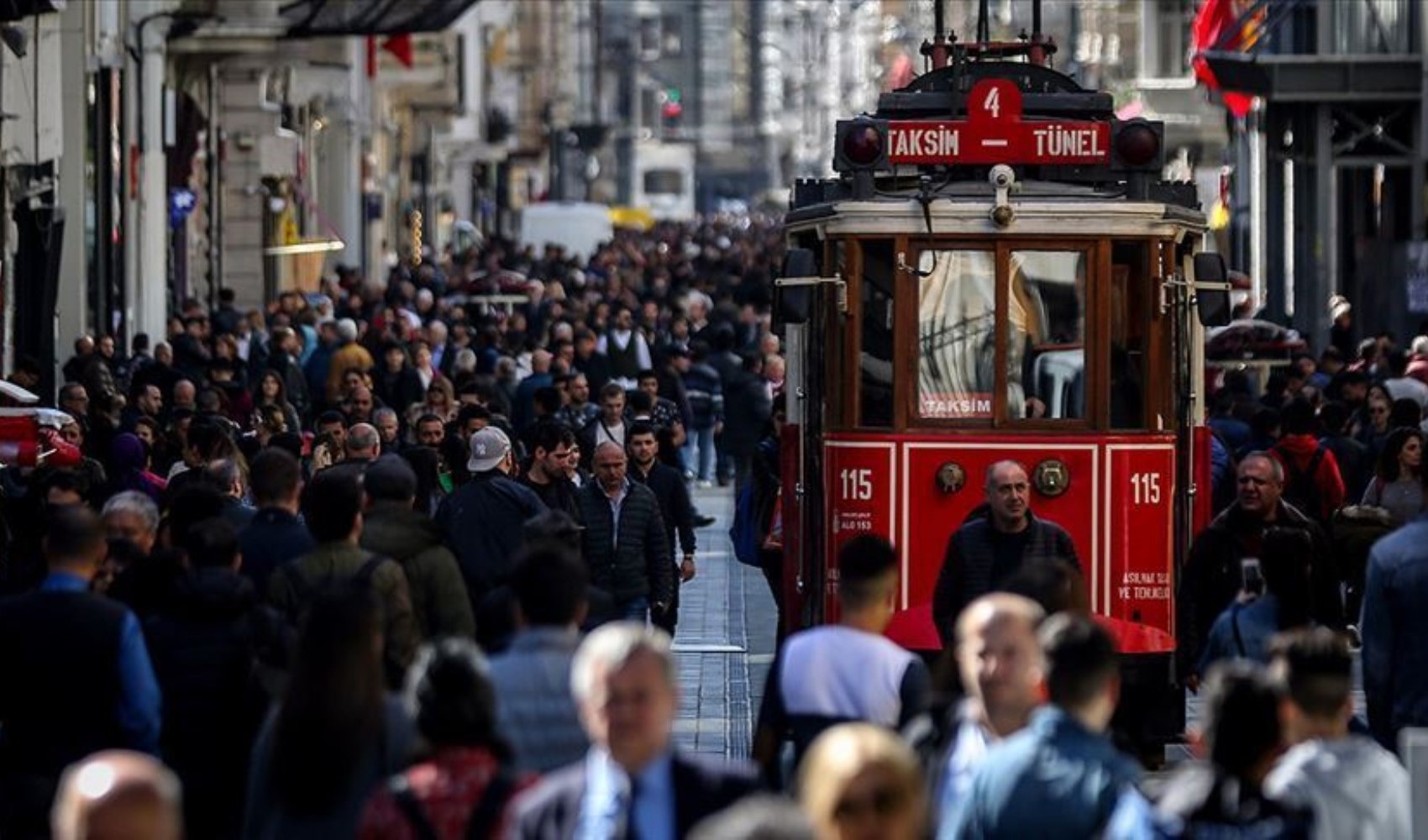
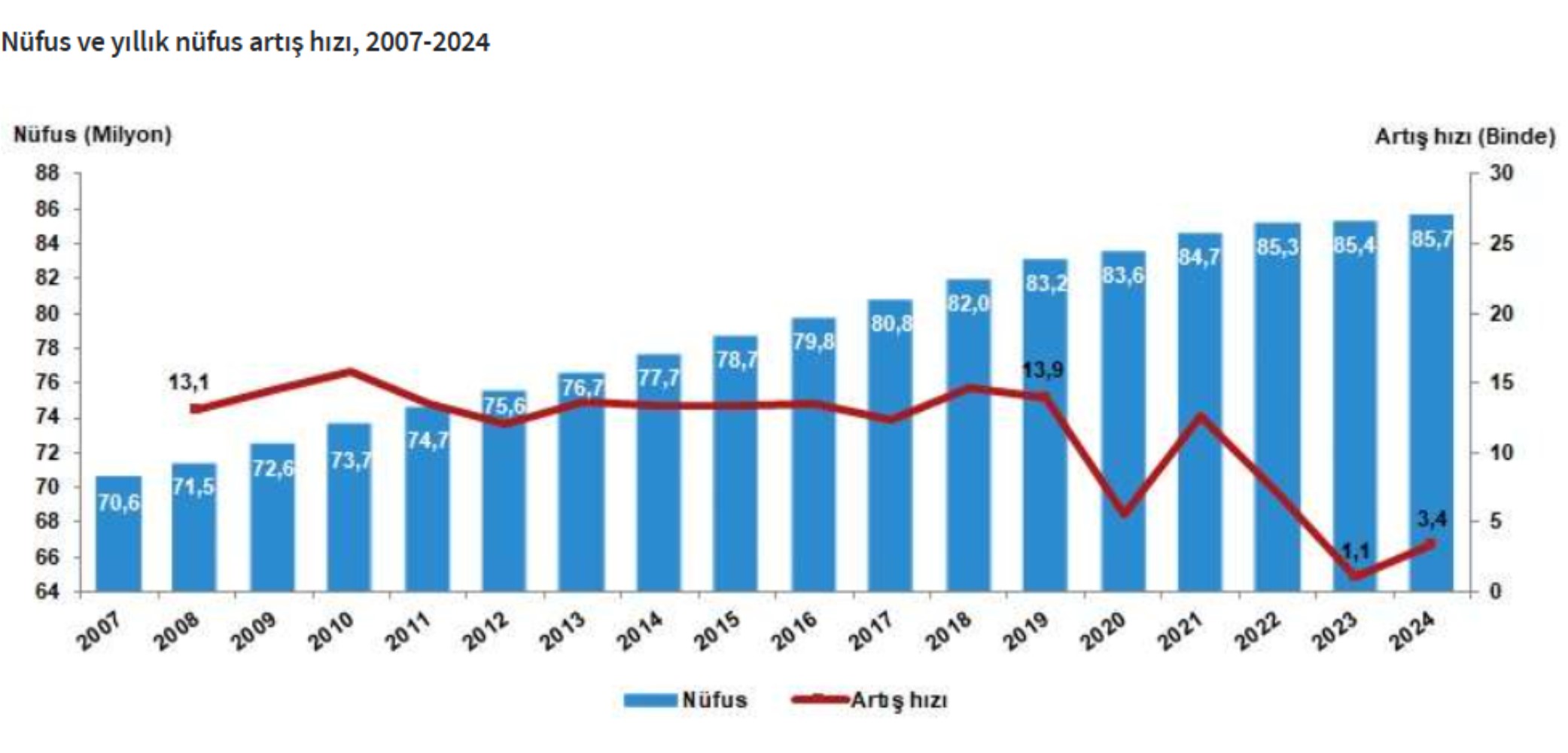
Turkey's population has been announced as 85 million 664 thousand 944 people. While the ratio of the male and female population is almost equal, the proportion of those living in city centers rose to 93.4%. In 2024, when the population growth rate was 3.4 per thousand, Istanbul remained the most populous province with a population of 15 million 701 thousand.



According to the statement made by TURKSTAT, the male population was 42 million 853 thousand 110, while the female population was 42 million 811 thousand 834. In other words, men accounted for 50.02% of the total population, and women accounted for 49.98%.
According to the results of the Address Based Population Registration System (ADNKS), the foreign population(1) residing in our country decreased by 89 thousand 996 people compared to the previous year, reaching 1 million 480 thousand 547. Men made up 48.3% of this population, and women made up 51.7%.
POPULATION GROWTH RATE WAS 3.4 PER THOUSAND
While the annual population growth rate was 1.1 per thousand in 2023, it was 3.4 per thousand in 2024.
THE PROPORTION OF THOSE LIVING IN PROVINCE AND DISTRICT CENTERS WAS 93.4%
The proportion of those living in province and district centers in Turkey, which was 93% in 2023, became 93.4% in 2024. On the other hand, the proportion of those living in towns and villages fell from 7% to 6.6%.
Those residing in places classified as dense urban areas made up 67.2% of our population.
With the start of the use of the Spatial Address Registration System (MAKS), a new classification has been created that more accurately reflects the actual urban-rural structure, divided into "dense urban, medium-dense urban, and rural"(2).
According to this classification, it was observed that 67.2% of Turkey's population lives in settlements classified as dense urban, 15.5% in medium-dense urban, and 17.2% in rural areas.
THE POPULATION OF 40 PROVINCES IN TURKEY DECREASED
While a decrease was observed in the population of 10 provinces in our country in 2023 compared to the previous year, it was observed that the population of 40 provinces decreased in 2024.
Istanbul's population reached 15 million 701 thousand 602
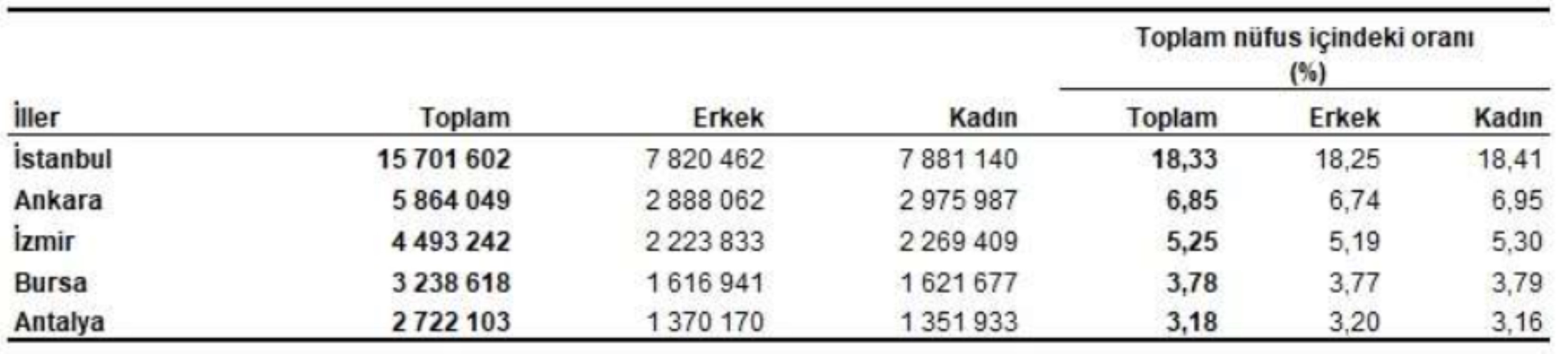
Istanbul's population increased by 45 thousand 678 people compared to the previous year, reaching 15 million 701 thousand 602. Istanbul, where 18.3% of Turkey's population resides, was followed by Ankara with 5 million 864 thousand 49 people, Izmir with 4 million 493 thousand 242 people, Bursa with 3 million 238 thousand 618 people, and Antalya with 2 million 722 thousand 103 people.
Distribution of the top 5 most populous provinces by gender, 2024
THE LEAST POPULOUS PROVINCE WAS BAYBURT WITH 83 THOUSAND 676 PEOPLE
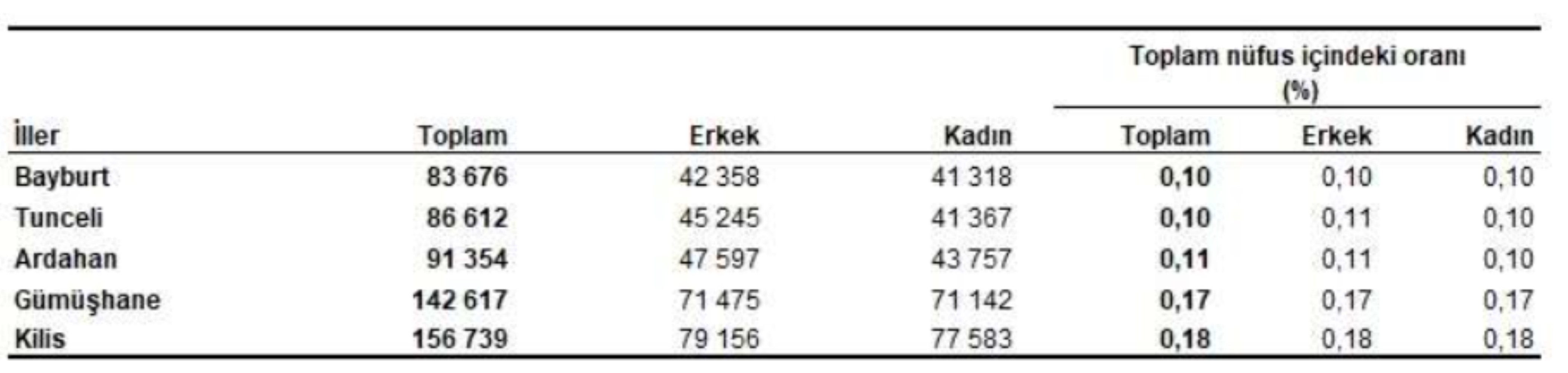
Bayburt was the least populous province with 83 thousand 676 people. Bayburt was followed by Tunceli with 86 thousand 612 people, Ardahan with 91 thousand 354 people, Gümüşhane with 142 thousand 617 people, and Kilis with 156 thousand 739 people.
Distribution of the top 5 least populous provinces by gender, 2024
STRUCTURAL CHANGE IN THE POPULATION PYRAMID CONTINUED
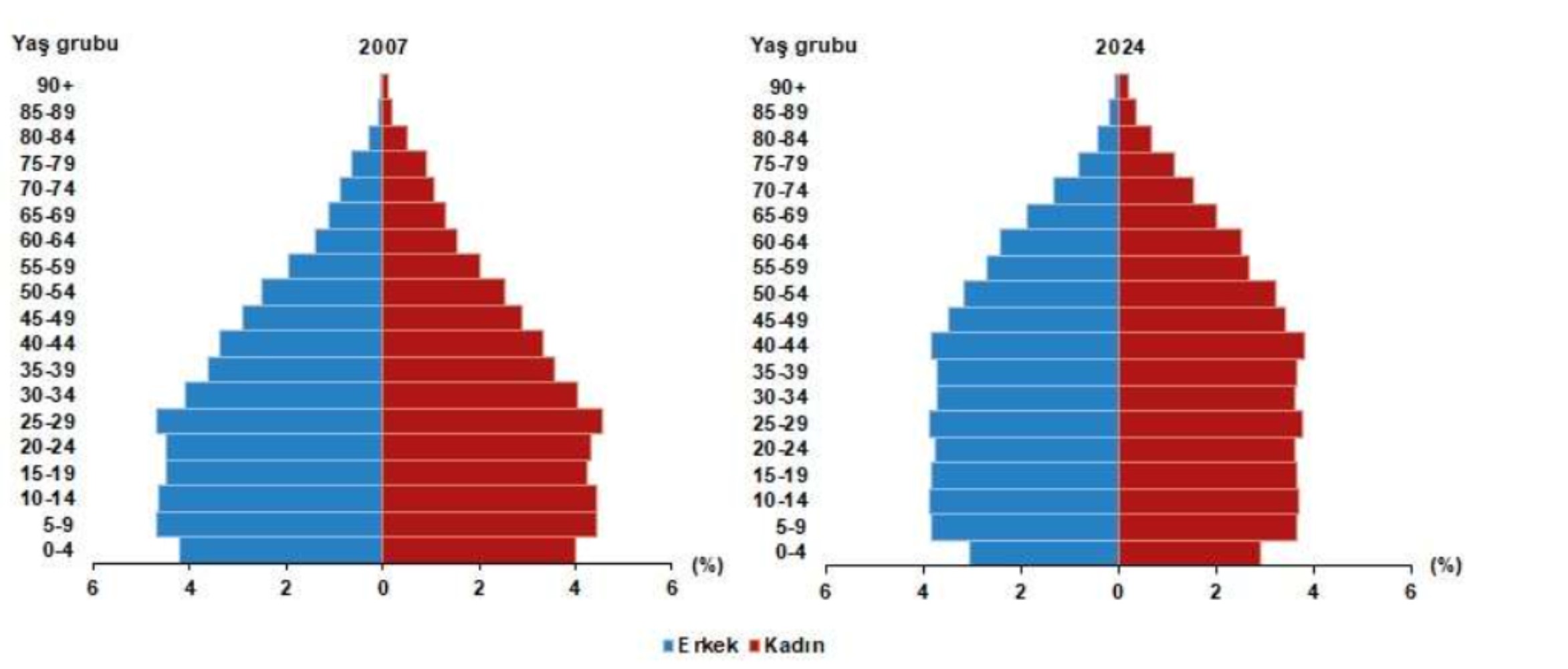
Population pyramids are defined as graphs showing the change in the age and gender structure of the population. When Turkey's 2007 and 2024 population pyramids are compared, it is seen that due to the decrease in fertility and mortality rates, the elderly population has increased and the median age has risen.
Population pyramid, 2007, 2024
THE MEDIAN AGE OF TURKEY'S POPULATION ROSE TO 34.4
The median age is the age of the person in the middle when the ages of the people making up the population, from newborn babies to the oldest, are ordered from smallest to largest. The median age is also one of the important indicators used in interpreting the age structure of the population.
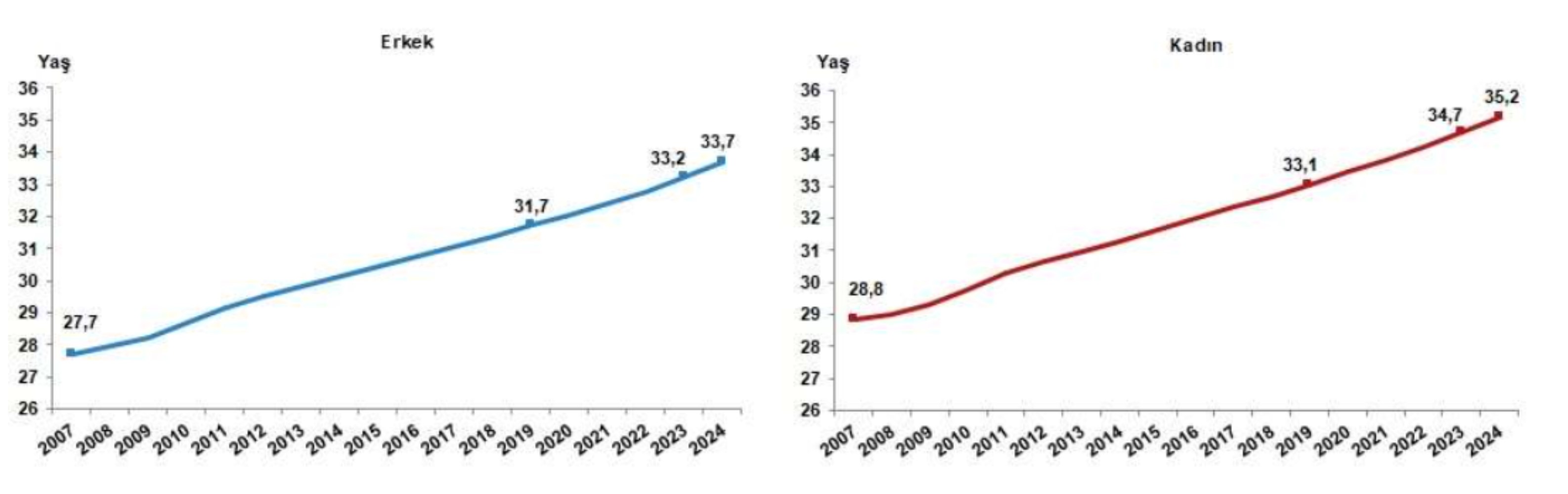
The median age in Turkey, which was 34 in 2023, rose to 34.4 in 2024. When examined by gender, it was seen that the median age rose from 33.2 to 33.7 for men and from 34.7 to 35.2 for women.
Median age by gender, 2007-2024
THE PROVINCE WITH THE HIGHEST MEDIAN AGE WAS SINOP, AND THE LOWEST WAS ŞANLIURFA
When looking at the distribution of the median age by province, it was seen that Sinop was the province with the highest median age value at 43.4. Sinop was followed by Giresun and Kastamonu with 42.9. On the other hand, Şanlıurfa was the province with the lowest median age at 21.4. Şanlıurfa was followed by Şırnak with 23, and Ağrı and Siirt with 24.5.
SINOP WAS THE PROVINCE WITH THE HIGHEST MEDIAN AGE FOR BOTH WOMEN AND MEN
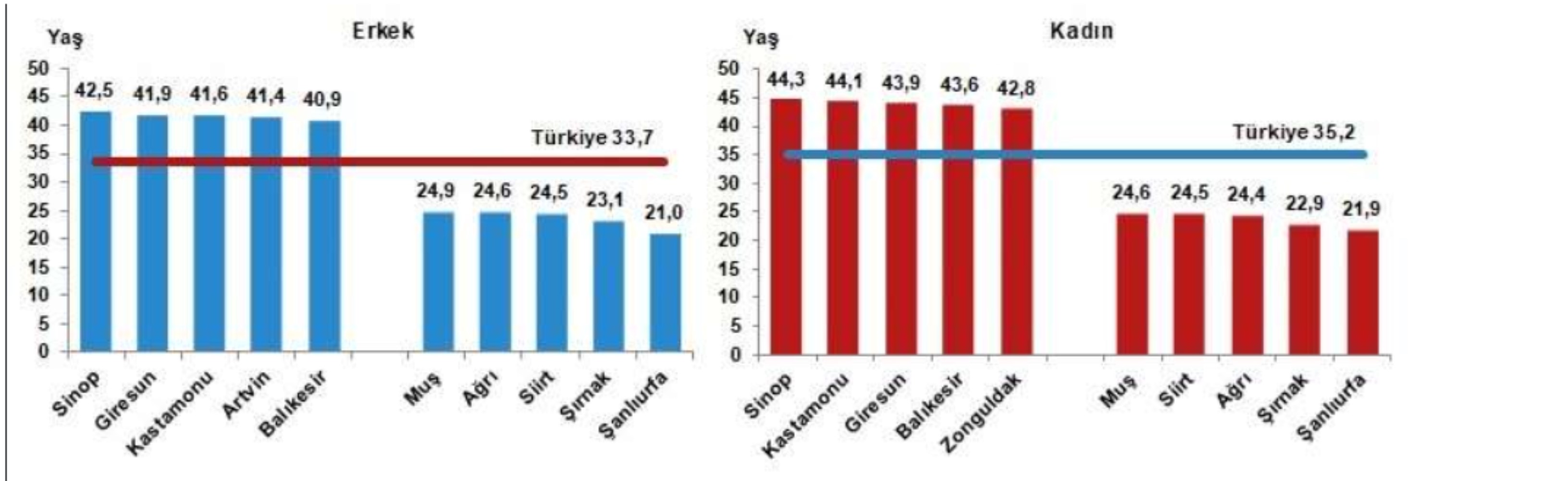
When the distribution of the median age by province and gender was examined, Sinop was the province with the highest median age for men at 42.5, while Şanlıurfa was the province with the lowest median age at 21. For women, Sinop was again the province with the highest median age value at 44.3, while Şanlıurfa was the province with the lowest median age value at 21.9.
Distribution of the top 5 provinces with the highest and lowest median age by gender, 2024
IT WAS OBSERVED THAT THE PROPORTION OF THOSE WHO NEVER MARRIED WAS HIGHER AMONG MEN
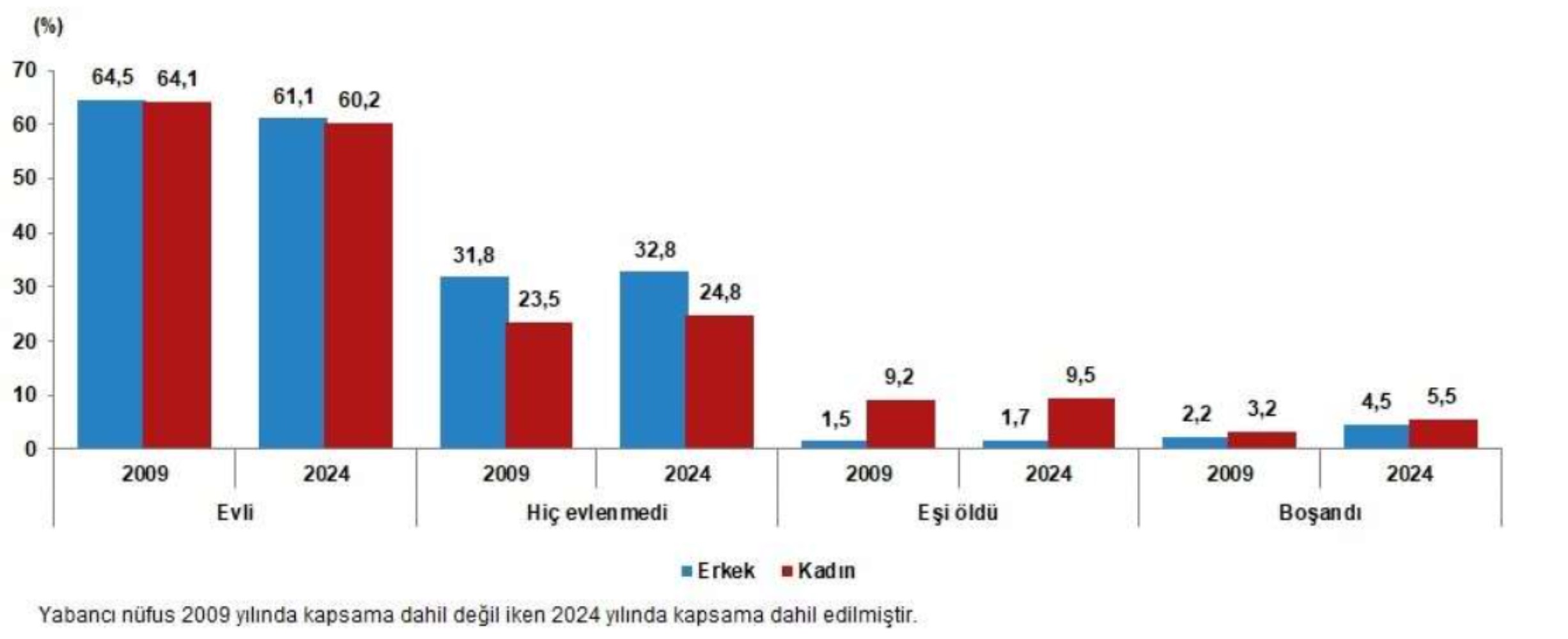
When the distribution of marital status by gender in our country in 2009 and 2024 is examined, it was observed that the proportion of those who never married was higher among men than women, and the proportion of those whose spouse died and those who were divorced was higher among women than men. On the other hand, it was observed that the proportion of married people, who make up the vast majority, was close to each other in both genders in 2009 and 2024.
Population ratio by marital status and gender, 2009, 2024
THE PROPORTION OF THE WORKING-AGE POPULATION WAS 68.4%
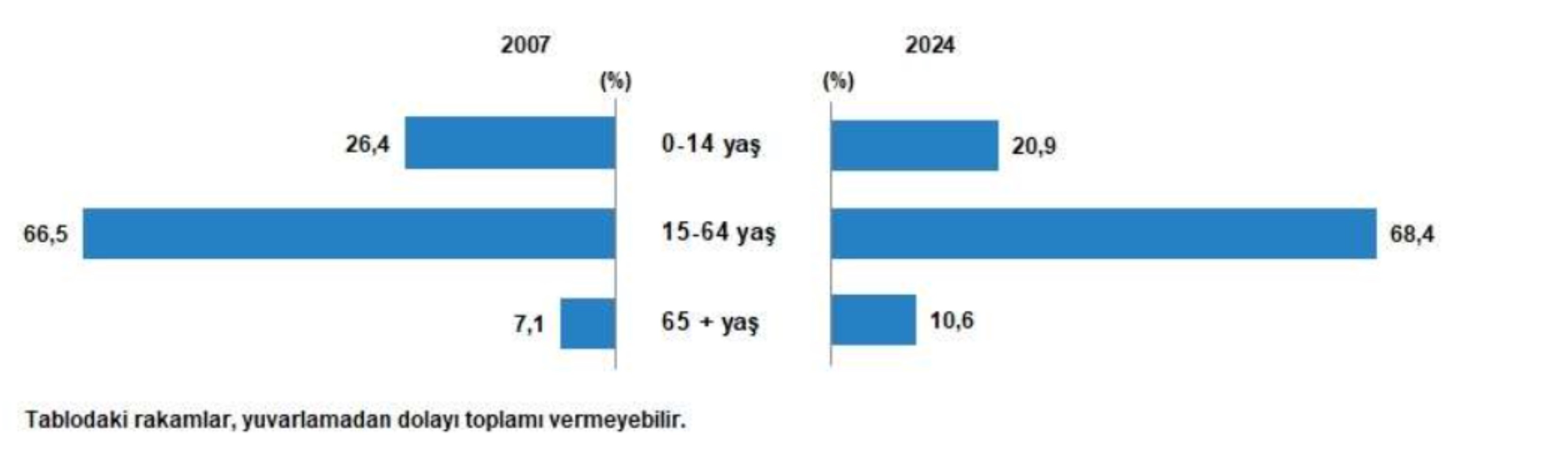
The proportion of the population in the 15-64 age group, defined as the working age, was 66.5% in 2007 and 68.4% in 2024. On the other hand, while the proportion of the population in the 0-14 age group, defined as the child age group, fell from 26.4% to 20.9%, the proportion of the population aged 65 and over rose from 7.1% to 10.6%.
Population ratio by age groups, 2007, 2024
TOTAL AGE DEPENDENCY RATIO DECREASED
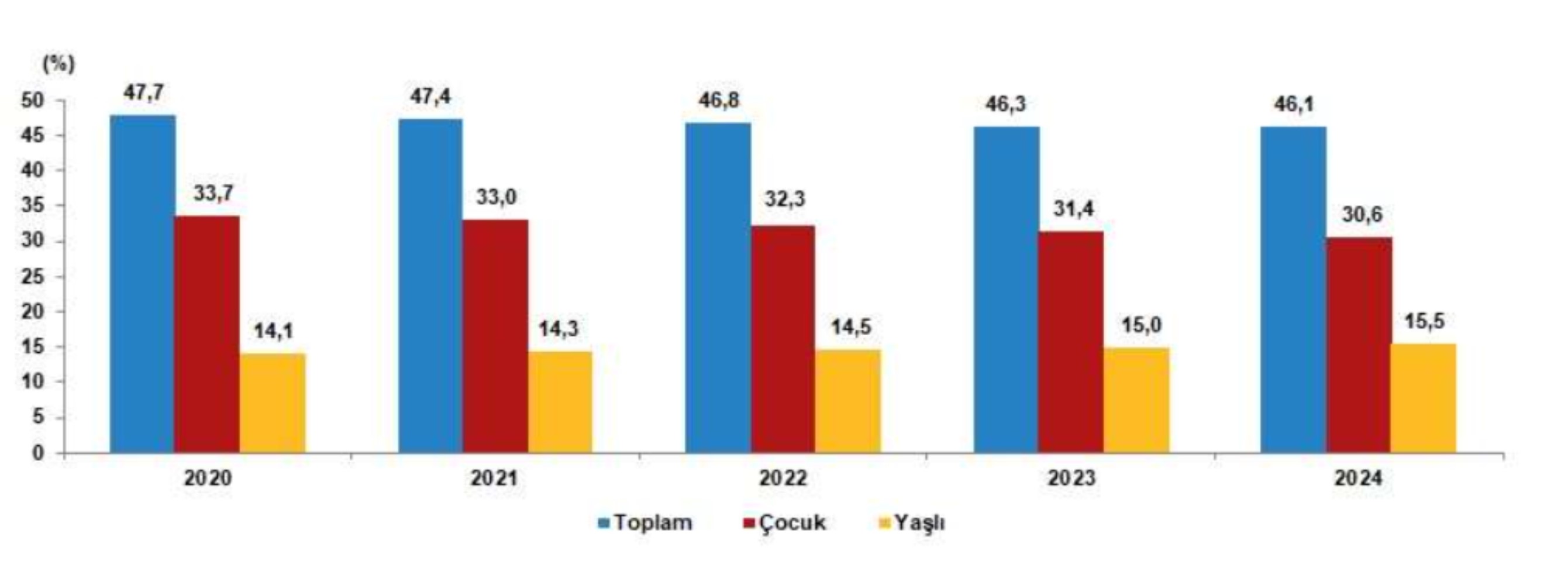
The total age dependency ratio, which shows the number of children and elderly individuals per working-age individual, fell from 46.3% in 2023 to 46.1% in 2024. While the child dependency ratio, which expresses the number of children per working-age individual, fell from 31.4% to 30.6%, the elderly dependency ratio, which measures the number of elderly individuals per working-age individual, rose from 15% to 15.5%. In other words, in Turkey in 2024, every 100 people of working age are supporting 30.6 children and 15.5 elderly people.
Age dependency ratios, 2020-2024
WHILE THERE ARE 111 PEOPLE PER SQUARE KILOMETER IN TURKEY, THERE ARE 2 THOUSAND 934 PEOPLE IN ISTANBUL
The "number of people per square kilometer," defined as population density, was 111 people across Turkey. Istanbul was our province with the highest population density with 2 thousand 934 people per square kilometer. Istanbul was followed by Kocaeli with 623 people and Yalova, the province with the smallest surface area, with 390 people.
The province with the lowest population density was Tunceli, as it was in the previous year, with 11 people per square kilometer. Tunceli was followed by Ardahan with 19 people and Erzincan and Gümüşhane with 21 people. On the other hand, the population density of Konya, which ranks first in terms of surface area, was 59.
News Source: 12punto
Most Read

Striking picture for Özgür Özel's 'New Party'

The PKK opening and Özgür Özel’s path!..

How did the newspapers view Özgür Özel's farewell to the CHP?

He killed his wife by slitting her throat: Their children witnessed the moments

What did the CHP do?

Özel’s new party move in the world press

The New CHP, against CEHAPE

Fire at TUSAŞ engine factory in Eskişehir under control

From self-efficacy to despair

Kılıçdaroğlu's first message on Özgür Özel's new party announcement