

Uğur Mumcu's final 36 hours and the fate of the unknown Turin File
One of the most striking details regarding the final 36 hours of investigative journalist and author Uğur Mumcu before he was murdered was the documents referred to as the "Turin File." 12punto columnist Bahadır Selim Dilek emphasized that the file contained significant allegations regarding the European connections of the PKK terrorist organization, its drug trafficking, and the international network of relations extending to these webs, but noted that the fate of this file remains unknown following Mumcu's assassination.



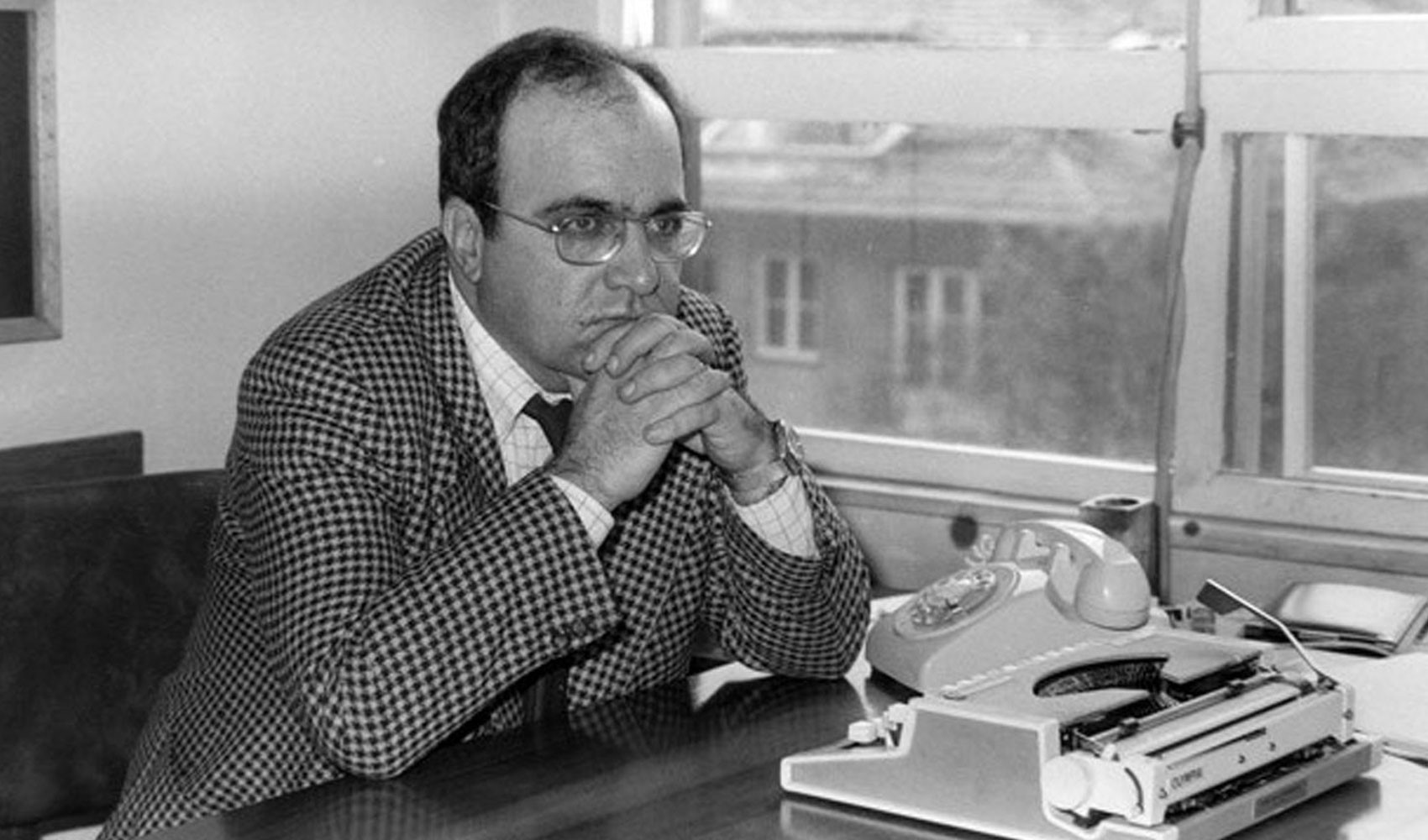
Investigative journalist and author Uğur Mumcu was murdered in Ankara 33 years ago today. Mumcu, a doyen of investigative journalism, was remembered at the site of his home on Karlı Street in Ankara and through memorial ceremonies held across the country.
12punto columnist Bahadır Selim Dilek, in his article titled “36 hours before Uğur Mumcu was killed...” written on January 24, 2024, drew attention to a critical file Mumcu was working on.
Dilek stated that Ünal İnanç had given him documents, referred to as the “Turin File,” to be delivered to Mumcu, which contained striking information regarding the PKK terrorist organization's structure in Europe, its drug trafficking, and the extensions of these networks in Turkey. He expressed that after Mumcu was murdered, the file never came to the agenda again and its fate remains unknown.
The relevant part of Bahadır Selim Dilek's article is as follows:
"On the evening of January 22, 1993, just as I was preparing to leave work, Ünal İnanç called me into his office.
In front of him were three folders that could be described as thick.
He said, you know where Uğur's house is, right?
Yes, I said.
- Alright then, take this file, get in a taxi, and go to Uğur's house. Give this file to him personally. If Güldal opens the door, ask for Uğur. Make sure you give it to him yourself.
Ünal İnanç was a magnificent police reporter whom everyone in the Ankara market respected greatly. As a journalist who had dedicated years to this field, he acted with extreme caution. He would split hairs and leave no stone unturned in his work. He had spent a lifetime with police, gendarmerie, military, MIT agents, and JİTEM members. He had incredible news sources. Information and documents flowed to him. Even if what he said didn't make sense to me—which it often didn't—I would say, “He must know something,” and I wouldn't push it.
After he handed me the file, he continued to instruct me.
- Don't take a taxi from here, from Mithatpaşa; go and hail a taxi on the Boulevard. Don't stop on the way; as soon as you get in the car, lock the door. If you notice someone following you, don't go to Uğur's house; get off in a crowded place on the way. Don't give the file to anyone!
Everyone called Ünal İnanç “Baba” (Father). With his appearance, his demeanor, his habits, and his attitude, he certainly lived up to this title.
I thought to myself, “Baba must be having one of his days again.”
I left without asking anything. Just as he said, looking left and right, I walked from Mithatpaşa Street to Atatürk Boulevard. Without getting caught up in the biting Ankara frost, the mud on the roads, or the rush of people trying to get home, I hailed a taxi in front of Güven Park, said “Köroğlu Street,” locked the door, and opened the cover of the file.
It had “Turin File” written on it in Turkish.
I flipped through the pages; it was in Italian. As far as I could understand, it was the minutes of a drug case in Italy. It also contained assessments from the security bureaucracy in Turkey.
It had been distributed to the MGK (National Security Council) General Secretariat, the General Staff, the Prime Ministry, and the Presidency, along with a cover note and the opinions of the relevant units.
Inside, there were notes taken in English and Turkish. Looking carefully, I realized these were translations from Italian.
Taking advantage of the slow-moving traffic, I started reading.
In summary, it described the PKK's drug trafficking in Europe. It emphasized that after the drugs entered Iraq and Turkey via Afghanistan and Iran, they were brought to Europe by the PKK. There was also detailed information regarding drug production in Southeastern Anatolia. Some names who had held critical positions in Turkey and some businessmen were also mentioned in the file.
But the detail that caught my attention the most was that the secret services of the leading European countries were also involved in this business. The secret services of these countries were taking a cut from the drug traffic and using this money to fund various operations they were conducting in countries in the Middle East and Africa.
Some political murders and assassinations were also related to these. A money trail of hundreds of millions of Marks was involved.
It was as if everyone wanted a piece of this pie.
The PKK also knew the power it held, used it politically, and was gaining ground in Germany, France, Belgium, and the Netherlands. Europe, in turn, was ignoring the PKK's terrorist acts.
I was horrified by every line of the file I could read.
After an hour that felt like a few minutes, I arrived at Uğur Mumcu's house. I knocked on the door of his modest apartment below the ground floor. He opened it and invited me in. I gave him the file, and Mrs. Güldal offered me a quick coffee.
Did you look at it, he asked.
Yes, I said.
This Europe, he said, "still hasn't digested the War of Independence. It supports all kinds of inhumane activities against our country. That is exactly why we have to be strong. That is why full independence is so important..."
As those who knew him would recognize, he excitedly explained the connection between terror and drugs once again, saying that if this were not prevented, the countries that supported terror, even if indirectly, would become targets after a while.
15-20 minutes later, I left him, got on the bus, and went home. The next day, I noted down what I remembered from the Turin File and what Uğur Mumcu had said in my black-bound notebook.
I was off on Sunday.
The phone rang; our intern Emel was calling. I couldn't understand what she was saying before her sobs. She seemed to be choking from crying, then she stopped for a moment and was able to say that they had killed Uğur Mumcu.
I was frozen...
I didn't know what to say or what to do.
I got up and went to the street where his house was; it was like doomsday. They hadn't even removed his body, which had been torn apart by the explosion.
What did I feel; a great shock, a great sadness, but a very great anger!
The rest is already written in detail in the books of recent history.
A magnificent funeral ceremony, politicians' statements that “his blood will not remain on the ground,” and so on and so forth...
We would understand much later that some people had carried out an inhumane clearing of the area to pave the way for the Political Islamist mentality on the road to the dystopia we live in today.
Actually, these murders had started earlier.
The enlightenment-minded, republican, Atatürkist intellectuals of this country—Muammer Aksoy, Çetin Emeç, Turan Dursun, Bahriye Üçok—all of them had been murdered within the year 1990.
Three years later, Uğur Mumcu, and in 1999, Ahmet Taner Kışlalı...
For the Political Islamist mentality to become dominant, the Kemalist intellectuals and leaders of this country were killed one by one.
After Uğur Mumcu's murder, the Turin File never came to the agenda in this form. I don't know what the fate of the file was. But in the following years, details were written and drawn about the PKK's place in drug trafficking, that the organization financed its actions with drug money, and that it bought off many influential and authorized names in Europe.
Even though the situation manifests in a highly unfavorable manner within the conditions and circumstances of today, let us emphasize once again that we do not have the luxury of losing hope before the cherished memory of our republican, enlightenment-minded, Atatürkist intellectuals who gave their lives for this country. Despite all this, let us put a period to our article by saying, “As long as we breathe, there is hope.”
Our final word is for the fake patriots, the word-jugglers, the empty talkers who show themselves here and there on his death anniversary, winking at both the Palace and the opposition, waiting in ambush to see what they can snatch from which CHP municipality, and feeding on reputation rent. Before they say fancy words about Uğur Mumcu, they must absolutely, definitely rinse their mouths."
News Source: 12punto
Most Read

Striking picture for Özgür Özel's 'New Party'

The PKK opening and Özgür Özel’s path!..

How did the newspapers view Özgür Özel's farewell to the CHP?

He killed his wife by slitting her throat: Their children witnessed the moments

What did the CHP do?

Özel’s new party move in the world press

Fire at TUSAŞ engine factory in Eskişehir under control

The New CHP, against CEHAPE

From self-efficacy to despair

Kılıçdaroğlu's first message on Özgür Özel's new party announcement