

What are the 'Atatürk' debates in Germany capable of? There is an opera, there is a crisis, but there is no libretto
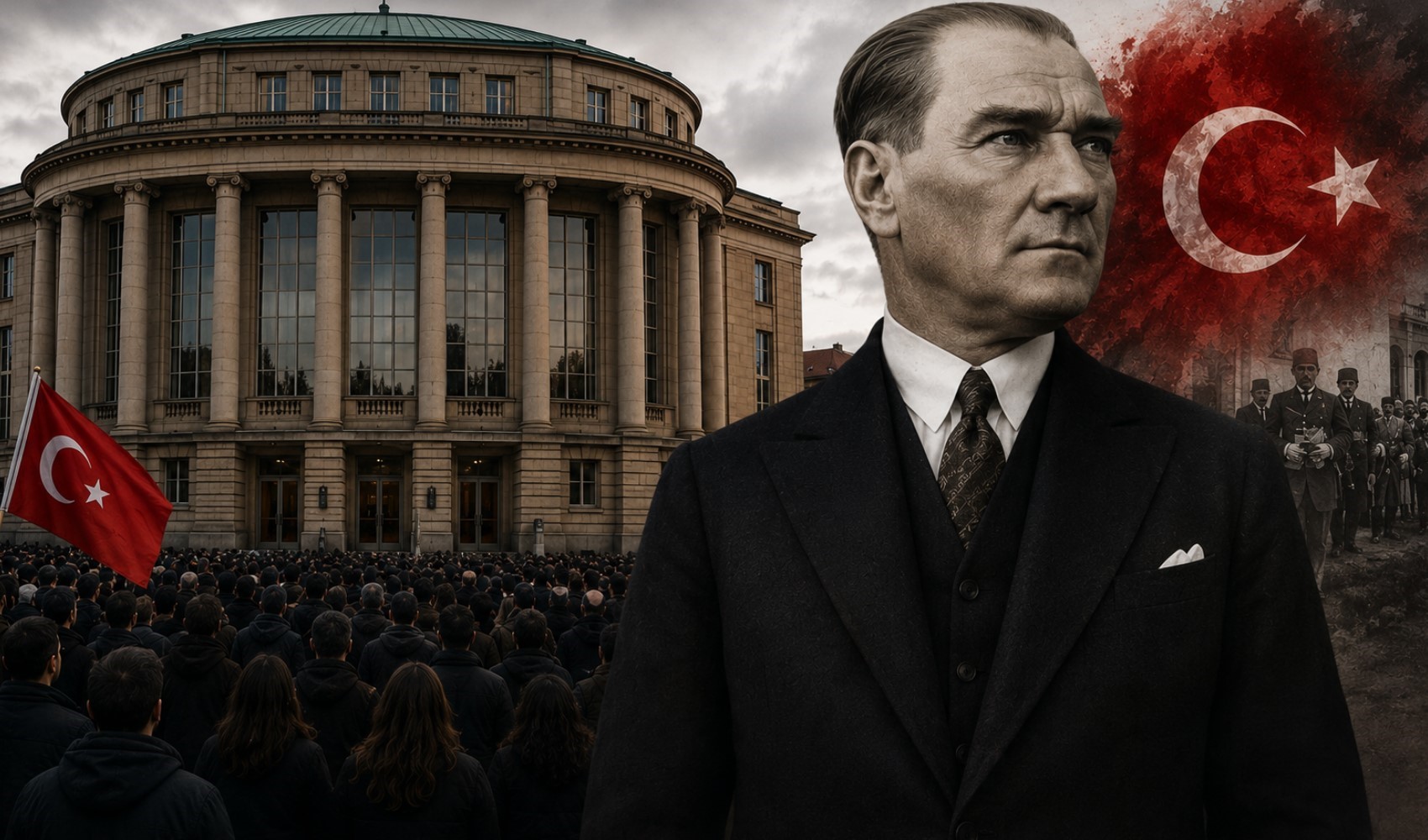
The Atatürk opera, which the Stuttgart State Opera plans to stage in 2027, has turned into a political and social debate in Germany despite its incomplete libretto. While the views of Armenian and Pontic circles are receiving significant attention, the objections of the Turkish community are not being heard sufficiently.



IŞIN ERTÜRK
There is an opera text that has not yet been completed...
Strangely enough, there is also a growing crisis at hand.
There is a joint objection from 34 Turkish non-governmental organizations.
There is a letter sent to the opera management by Turkish lawyer Özgür Dobruca, pointing to the possibility of legal proceedings.
There are successive statements from Kurdish circles.
There are objections from the Armenian community.
There are criticisms from Pontic Greek organizations.
There is intense contact traffic by the opera management.
There are statements from the Baden-Württemberg state government that it is closely monitoring the process.
And after weeks of silence, there is the first assessment by Baden-Württemberg State Premier Cem Özdemir.
However, the libretto at the center of all this debate is still nowhere to be found.
And this is exactly where the biggest contradiction of the debate begins.
What is happening around the opera “Atatürk – Die Legende von Mustafa Kemal” (Atatürk – The Legend of Mustafa Kemal), which the Stuttgart State Opera plans to stage in the 2027 season, has long since exceeded the boundaries of a debate over an art project.
Moreover, it is not just about how Atatürk will be portrayed.
Who will tell Atatürk's story...
Which sources will be utilized...
Who will be listened to...
And who will be left out are also being questioned.
Furthermore, as all this is happening, another reality is emerging.
The views of Kurdish circles are finding wide coverage in the German press.
The assessments of the Armenian community are being reported in detail.
The statements of Pontic Greek organizations are being included.
The opera management is preparing for contacts with these segments.
The Baden-Württemberg government is monitoring the process.
The Premier is also speaking.
However, the views of millions of people of Turkish origin in Germany, who are the most direct stakeholders in the debate, remain largely invisible.
For this reason, the question is not limited to “How will Atatürk be portrayed?”
The question of “Why is the primary stakeholder not being listened to?” is also growing.
CLAIMS OF “PRESSURE FROM THE TURKISH SIDE” HAVE BEEN DEBUNKED
On the other hand, according to reports in the German press, a meeting was held between Stuttgart State Opera General Manager Viktor Schoner and the Republic of Turkey's Consul General in Stuttgart, Makbule Koçak Kaçar. It was later observed that the reports in question were removed from the newspaper's website. Opera spokesperson Sebastian Ebling stated that the meeting was part of a broader dialogue process being conducted for the new work, but in the meantime, he also let it slip that “the libretto is still in the writing stage.”
Meanwhile, the Baden-Württemberg Ministry of Science, Research and the Arts also announced that it was aware of the process. The ministry further reported that there were no findings regarding political interference from abroad.
This point is important.
Because when we look at the picture that has emerged so far, the authorities are not confirming the claims made by some circles that the Turkish side is exerting political pressure on the opera.
As we have previously reported in news analyses on the subject, let us recall: “The presentation of Mustafa Kemal Atatürk in the opera's promotional texts alongside concepts such as 'violence,' 'authoritarianism,' 'nationalist ideology,' 'historical crimes,' and 'oppression' is causing a major backlash in the Turkish community in Germany.”
It is in this environment of growing debate that the opera management appears to be trying to establish contact with different segments.
WHOSE KNOWLEDGE IS THE LIBRETTO BEING WRITTEN WITH?
However, the question at the center of the entire debate remains unanswered.
What sources is the libretto based on? What is the status of the “text” of this controversial opera?
Whose opinions are being sought?
Is there any contribution from Turkish historians?
Moreover, the community of Turkish origin in Germany stands on a much greater intellectual and cultural heritage than is thought today.
Thousands of names come to mind in such a source debate. A few examples that come to mind first?
Nâzım Hikmet...
Hasan İzzettin Dinamo...
Korkut Boratav...
Yalçın Küçük...
Zafer Toprak...
Today, the works of young-generation historians, researchers, and intellectuals are being added to these.
Tens of thousands of books, articles, and research papers have been published on the founding of the Republic, the War of Independence, secularization, educational reforms, women's rights, the struggle for independence, and Turkey's modernization journey.
If this opera is to be the work of an independent and well-intentioned effort, here are the guides.
Let us continue to ask.
Are experts working on Republican history involved in the process?
Will the founding process of the Republic of Turkey be brought to the stage only through critical perspectives?
For example, with what weight will the great revolutionary Mustafa Kemal Atatürk's struggle for modernization and enlightenment and his revolutions be treated?
Or is the work being placed into a pre-determined political framework from the very beginning?
The questions are multiplying.
The answers, however, are not yet visible.
CEM ÖZDEMİR BROKE HIS SILENCE BUT...
Let us come to one of the most striking topics of the debate.
Baden-Württemberg State Premier Cem Özdemir spoke for the first time regarding the Atatürk opera debate that has been going on for weeks.
Özdemir stated that he “would not say anything about an opera that has not yet been staged at all.”
He said that Atatürk is a subject of “very different and sometimes diametrically opposed assessments” even today for many people living in Baden-Württemberg.
The Premier also emphasized freedom of art, stating, “Freedom of art means that art can deal with historical figures and controversial topics.”
This statement clearly shows that Özdemir will not interfere with the content of the opera. This approach is an understandable stance in terms of freedom of art.
However, the debate is no longer limited to the content of a stage work.
It is a broader debate concerning the Turkish, Kurdish, Armenian, Alevi, and different social segments in Baden-Württemberg.
For this reason, the expectation is not for the Premier to tell the artist what to do, but to present a clearer political framework regarding how this growing tension in the state will be managed on the basis of social peace and dialogue.
Yes, Özdemir spoke.
However, his statement has not entirely eliminated the questions regarding how this growing debate in Baden-Württemberg will be managed, how different segments will be listened to equally, and how the concerns of millions of people of Turkish origin will be addressed.
On the other hand, during the same days, Premier Özdemir shared a post on social media for the 10th anniversary of the German Bundestag's recognition of the 1915 events as “genocide” and recalled his intense efforts to ensure this decision was passed as follows:
“What I am about to say is particularly important to me. Exactly today, ten years ago, the German Bundestag finally recognized the genocide against the Armenians and other Christians in the former Ottoman Empire. This process cost me about a year and required intensive persuasion efforts. The German Empire was an ally of the Ottoman Empire at that time. Therefore, it was important to talk about our shared responsibility. I wish that one day the relationship between Turkey and Armenia will resemble the relationship between Germany and France today.”
The timing of this post, made precisely during the days when heated debates were taking place due to the Stuttgart State Opera's Atatürk project, also deserves to be noted.
WHAT DO KURDISH, ARMENIAN, AND PONTIC CIRCLES SAY?
In reports in the German press, the concerns of Kurdish, Armenian, and Pontic Greek circles stand out.
Avra Emin, one of the representatives of the German-Kurdish Forum, criticizes the contact traffic conducted by the opera management, arguing that Kurdish circles are not sufficiently involved in the process.
Diradur Sardaryan, the spiritual leader of the Armenian Community of Baden-Württemberg, states that he is uncomfortable with the phrase “The Legend of Mustafa Kemal” in the title of the work, arguing that the opera should act more carefully regarding historical sensitivity.
Similarly, Pontic Greek organizations and some academics and activists are demanding that Atatürk's historical role be addressed critically.
Their common point is the same:
They want to have a say in a work whose libretto has not yet been completed.
SO WHERE IS THE TURKISH SIDE?
While all this is happening, another situation that draws attention emerges.
There are those speaking in the German press.
Kurdish representatives are speaking.
Armenian communities are speaking.
Pontic Greek organizations are speaking.
The opera management is speaking.
The ministry is speaking.
The Premier is speaking.
So where are the Turks?
They are right here.
They are writing letters.
They are objecting.
They are talking about legal processes.
Despite this, the statements of 34 Turkish non-governmental organizations are not finding the same visibility in the German public opinion. Precisely for this reason, the debate has now exceeded the boundaries of just an opera project. The question can no longer be limited to just “How will Atatürk be portrayed?”
The question of “Who is speaking in this debate, who is being given the floor, and who is not being heard?” is also coming to the agenda more loudly.
The fact that representatives of the Turkish community are not given enough of a voice makes the debate even more problematic.
THE LANGUAGE IN THE GERMAN NEWSPAPER DREW ATTENTION
On the other hand, another element that fueled the debate was the assessment titled “Das kontroverse Erbe von Mustafa Kemal Atatürk” (The Controversial Legacy of Mustafa Kemal Atatürk) published in the Stuttgarter Zeitung on May 31.
The article argues that Atatürk is seen on one hand as a symbol of secularization and modernization, and on the other hand, is evaluated as an authoritarian leader. Extensive space is given to the Dersim events, minority policies, and legal regulations in Turkey that protect the memory of Atatürk.
The article also draws attention by defining the War of Independence on the axis of the “war waged against Greece.” The article does not address the founding process of the Republic of Turkey from the perspective of a comprehensive struggle for independence against occupation and partition.
The same article also includes “criticisms” that Atatürk is being “heroized.”
THE PERFECT TIME FOR THE ATATÜRK ORATORIO: WILL CULTURE BE RESPONDED TO WITH CULTURE?
Will opera institutions in Turkey be involved in the process?
Could the Op. 13 Atatürk Oratorio, composed by Nevit Kodallı based on Cahit Külebi's work titled “Atatürk in the War of Independence,” which is among the most important musical creations of the Republican era, be brought to Germany, and specifically to the same opera stage, for example?
Would new cultural projects that tell the story of the Republic, the War of Independence, educational revolutions, women's rights reforms, and Atatürk's place in world history emerge?
No one knows today what we will see on the stage of the Stuttgart State Opera.
The debate that has started around the Atatürk opera has turned into one of the toughest cultural and political files of Baden-Württemberg long before the curtain opens in 2027.
The libretto has not yet been written, the curtain has not yet been raised...
While Atatürk is being discussed on European stages, who will truly hold the right to tell the story of the Republic?
Perhaps what should really be discussed today is not the opera, but which Turkey story Europe wants to listen to.
News Source: 12punto
Most Read

Striking picture for Özgür Özel's 'New Party'

Özgür Özel gives a dated response regarding the number of resignations

Forest fire in Antalya brought under control

The PKK opening and Özgür Özel’s path!..

How did the newspapers view Özgür Özel's farewell to the CHP?

He killed his wife by slitting her throat: Their children witnessed the moments

What did the CHP do?

Özel’s new party move in the world press

The New CHP, against CEHAPE

Fire at TUSAŞ engine factory in Eskişehir under control