

Will Russia and Ukraine finally sit at the table?: Negotiations continue with 4 countries, including Turkey
Ukrainian President Volodymyr Zelensky has announced that negotiations are ongoing with Turkey, Switzerland, Qatar, and Saudi Arabia as part of the planned second peace summit to end the Russia-Ukraine war.



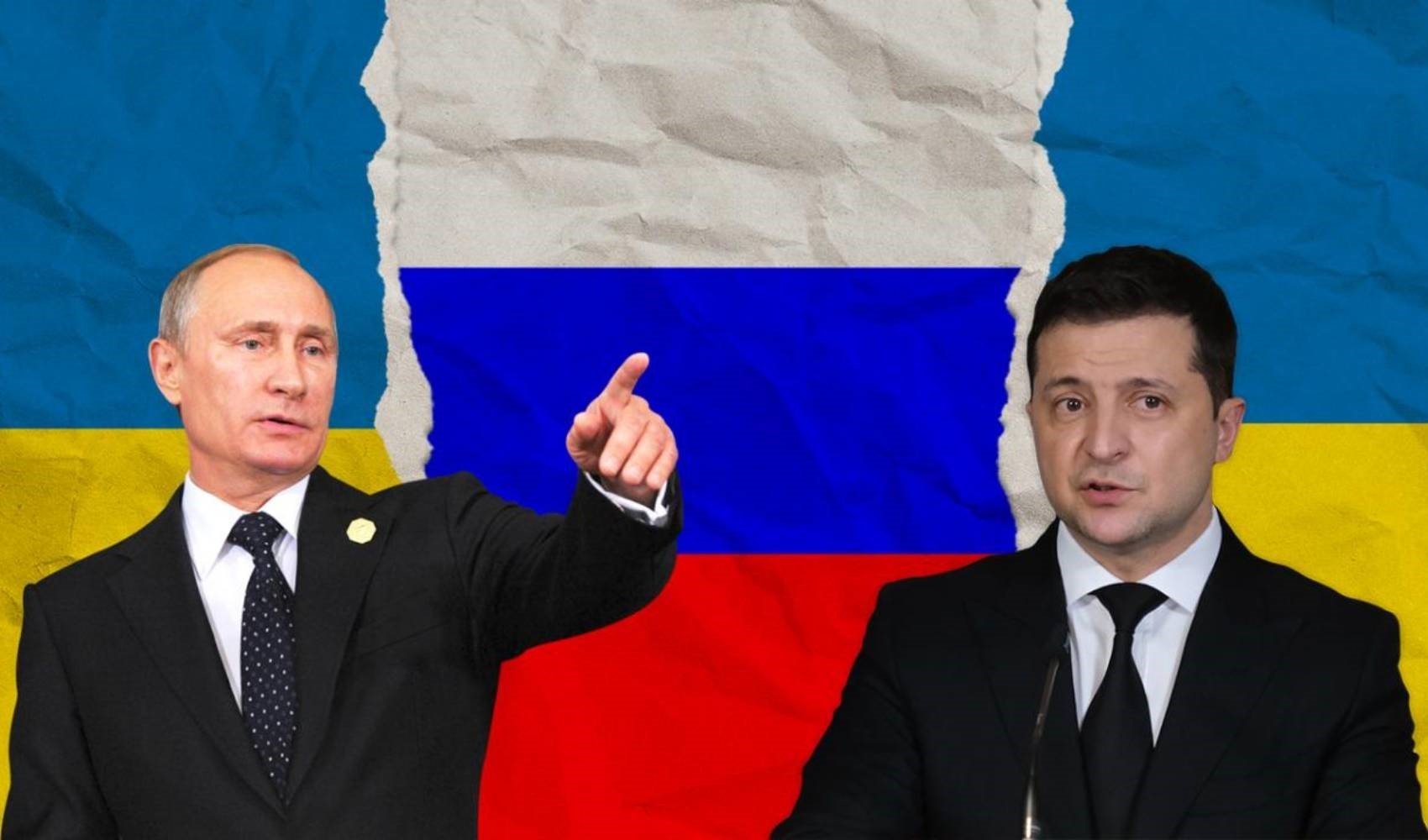
The Russia-Ukraine war, which began with Russia's attempted invasion of Ukraine in February 2022, has now passed the 2-and-a-half-year mark. Although the war continues, with thousands having lost their lives and millions forced to flee their country, the issue of a ceasefire occasionally comes to the agenda.
According to the Reuters news agency, Zelensky stated in an interview with Indian journalists that his country could support holding the summit in India, but emphasized that Ukraine could not organize it in a country that did not sign the declaration of the first summit.
Indian Prime Minister Narendra Modi paid a historic visit to Ukraine on August 23 and told Zelensky that he was ready to play a personal role in achieving peace.
The hug between the Indian leader and Russian President Vladimir Putin during his official visit to Moscow last month was criticized by Zelensky. The Ukrainian leader said he felt "deep disappointment" watching it.
The 73-year-old Modi stated that he told Putin that problems cannot be solved on the battlefield.
In a statement following the meeting in Kyiv, Modi said, "Both sides will have to come together and look for ways to get out of this crisis."
The Indian leader argued that his country was never neutral in the Russia-Ukraine war, saying, "From the first day, we have been on the side of peace."
India has never condemned Russia's invasion of Ukraine and has maintained its trade relations with Moscow. Delhi surpassed China last month to become the largest importer of Russian oil.
PEACE NEGOTIATIONS WERE HELD IN ISTANBUL
Modi and Zelensky also discussed Ukraine's ongoing incursion into Russian territory, but the content of this closed-door conversation is unknown.
The New York Times (NYT) newspaper published the draft peace agreement that was agreed upon during the negotiations held in Istanbul between Russia and Ukraine with Turkey's mediation between February and April 2022. The newspaper included the March 17 and April 15, 2022, versions of the draft text, as well as the joint declaration accepted at the meetings held in Istanbul on March 29, in 'pdf' format.
All documents were published in full in Russian and English, and their authenticity was confirmed by those who participated in the negotiations.
According to the March 17 agreement, of which Kyiv showed the English version to Western countries, Ukraine requested international security guarantees that allies would come to its aid in the event of a second attack (including closing the airspace) and that the agreement would cover the country's 'internationally recognized borders'.
Russia demanded the lifting of sanctions imposed since 2014, the recognition of Crimea as part of Russia, and the independence of the Donetsk and Lugansk people's republics within the administrative borders of Ukraine's Donetsk and Lugansk oblasts, as well as the banning (with criminal liability) of 'all forms of glorification and propaganda of Nazism and neo-Nazism', including public demonstrations and marches, the erection of monuments and memorials, and the renaming of streets.
LIMITS ON THE NUMBER OF TANKS, WARSHIPS, AND WARPLANES
The first draft imposed limits on the scale of the Ukrainian Armed Forces and the number of tanks, artillery batteries, warships, and warplanes the country could keep in its arsenal.
The NYT stated that the Ukrainians were willing to accept these limits but were trying to raise the upper threshold. US officials were alarmed by the conditions imposed, and a senior American official told his Ukrainian counterparts, "This is unilateral disarmament."
According to a European diplomat who spoke to the newspaper, Poland was worried that Germany or France might try to persuade the Ukrainians to accept Russia's conditions.
A few days later, on March 29, representatives of Russia and Ukraine met in Istanbul. According to the newspaper, the Russian side 'placed less importance on territorial demands' at this meeting.
Ukraine summarized the proposed agreement in a two-page document titled the 'Istanbul Communiqué'. According to this:
PROMISE ON CRIMEA
The status of Crimea was to be determined within 10-15 years, and Ukraine was to promise not to attempt to retake the peninsula by force,
Volodymyr Zelensky and Vladimir Putin were to meet in 2022 to finalize a peace agreement and reach an agreement on how much of Ukrainian territory would remain under Russian control,
Mandatory security guarantees for Ukrainians; these guarantees included agreements to be made with a number of countries such as the UK, China, Russia, the US, France, Turkey, Germany, Canada, Italy, Poland, and Israel,
The guarantor states would have to agree that in the event of 'any attack, armed attack, or any military operation against Ukraine', each would provide assistance to Ukraine after immediate and prompt consultation.
According to an unnamed member of the Ukrainian delegation, 'Putin was reducing his demands'. The NYT also noted that Moscow was 'sending mixed signals to the public about whether the Kremlin was truly ready to sign the agreement'.
DRAFT AGREEMENTS VIA WHATSAPP
For this reason, Moscow and Kyiv returned to negotiations via online meetings, sharing draft agreements via WhatsApp.
In April, Roman Abramovich also became involved in the negotiations. Allegedly, Putin 'urged the negotiators to focus on key issues and resolve them quickly'. On April 15, the Russian delegation sent a 17-page draft agreement to Putin.
The newspaper emphasized that the parties 'appeared to have common ground' in the first pages of the agreement. According to these articles:
The parties agreed on Ukraine consolidating its neutral country status and being allowed to join the EU; Russia abandoned its demand for Ukraine to immediately recognize Crimea as Russian territory,
One of the controversial points was the range of weapons Ukraine was allowed to use: Russia wanted Ukraine's missiles to be limited to 40 kilometers, while Ukraine wanted 280 kilometers (enough to hit targets in Crimea),
Russia still wanted Ukraine to repeal laws related to language and national identity and to withdraw Ukrainian soldiers to 'places of permanent deployment or places agreed upon with the Russian Federation'.
THE BIGGEST PROBLEM IS ARTICLE FIVE
The NYT pointed out that the biggest problem with the agreement for Ukraine's 'guarantor countries' (the UK, China, Russia, the US, and France) was related to the fifth article.
Russia added a clause to the agreement requiring that retaliatory measures in the event of an attack on Ukraine be approved 'on the basis of a decision agreed upon by all guarantor countries'.
On the other hand, Kyiv considered the second article a violation of the terms of the peace agreement. According to the NYT, this article essentially meant that Russia 'could invade Ukraine again and then veto any military intervention'.
A member of the Ukrainian negotiating delegation pointed out that Kyiv walked away from the negotiating table after this change.
Foreign Affairs magazine wrote that Ukrainian officials did not consult the US before reaching an agreement in the meetings held with Russia in Istanbul, and Russian leader Putin also listed the conditions necessary for stopping the clashes in Ukraine.
These conditions include the withdrawal of Ukrainian troops from the Donetsk, Lugansk, Kherson, and Zaporizhzhia oblasts, the recognition of these regions as Russian territory, and Ukraine adopting a status of neutrality.
Ukrainian leader Zelensky described Putin's proposals as an 'ultimatum' and said that Kyiv could not trust them.
News Source: 12punto
Most Read

Striking picture for Özgür Özel's 'New Party'

The PKK opening and Özgür Özel’s path!..

How did the newspapers view Özgür Özel's farewell to the CHP?

He killed his wife by slitting her throat: Their children witnessed the moments

What did the CHP do?

Özel’s new party move in the world press

The New CHP, against CEHAPE

Fire at TUSAŞ engine factory in Eskişehir under control

From self-efficacy to despair

Kılıçdaroğlu's first message on Özgür Özel's new party announcement