

CBRT: Monthly inflation will rise in January due to wage adjustments, primarily the minimum wage
The Central Bank has shared the summary of its latest Monetary Policy Committee meeting. The summary states that monthly inflation will rise in January due to the impact of wage adjustments, primarily the minimum wage, and items with a high tendency for time-dependent price setting.



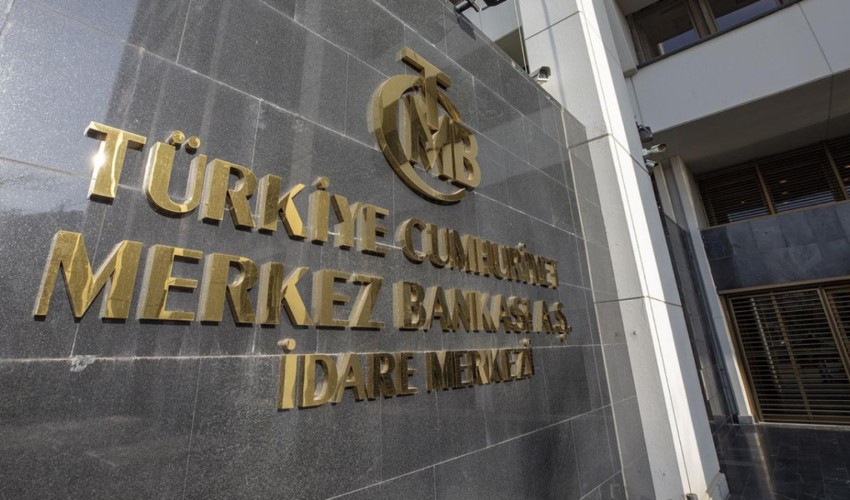
The Central Bank of the Republic of Türkiye (CBRT) has published the summary of its December Monetary Policy Committee (MPC) meeting. It was noted that while global inflation has shown a decline in the recent period, it still remains above long-term averages and the targets of central banks.
Although commodity prices have recently shown a widespread decline, the summary stated that geopolitical risks, financial conditions, and supply-side factors have led to continued volatility in oil prices, noting, "While Brent crude oil prices per barrel have fluctuated in the 73-83 USD band since the previous MPC meeting, a downward trend has been observed in the TTF (Title Transfer Facility), which is the benchmark for European natural gas prices. The current level of the Commodity Price Index is 25.6 percent above the ten-year average. The index has declined by 29.0 percent from the peak it reached last year. Similarly, the Agricultural Commodity Price Index, which has recorded a 15.9 percent decline from its peak last year, is 10.1 percent above the ten-year average. This situation continues to have an impact on inflation due to the high share of food in the consumer basket," it was stated.
It was noted that the impact of the natural gas item on monthly consumer inflation, following the exceeding of the free usage limit (the first 25 cubic meters), occurred in line with forecasts at 1.01 points, and the text stated, "Excluding the natural gas effect, the deceleration trend in the consumer price increase rate has continued. While exchange rates have remained stable, global energy prices have continued to decline from the levels reached at the end of September. On the other hand, the current level of domestic demand, rigidity in service prices, and geopolitical risks keep inflationary pressures alive," it was stated.
It was stated that monthly inflation rose in January due to the impact of wage adjustments, primarily the minimum wage, and items with a high tendency for time-dependent price setting. It was estimated that this increase in monthly inflation, which has also been reflected in the Inflation Report forecasts, will slow down in February and thereafter, and will follow a path close to the decline in the underlying trend of inflation in the first half of the year.
DEMAND AND PRODUCTION
The summary included the following important statements: "Indicators regarding the recent period indicate that the rebalancing in domestic demand continues with the reflection of monetary tightening on financial conditions. Consistent with this, while the import trend is weakening, the foreign trade balance is showing a relatively positive outlook. On the other hand, price discounts and campaigns have been factors limiting the decline in demand.
In October, the retail sales volume index, adjusted for seasonal and calendar effects, increased by 2 percent on a monthly basis. The annual growth of retail sales volume decreased by 0.5 points to 13.7 percent, while on a quarterly basis, retail sales remained flat following the 0.6 percent increase in the third quarter. In November, when campaigns intensified, the rise in card expenditures continued. Seasonally adjusted leading indicators, however, are showing signs of a renewed slowdown in the growth rate of card expenditures in December. It is observed that the seasonally adjusted registered domestic market orders of manufacturing industry firms recorded a decline in the fourth quarter. When evaluated according to main product groups, it is observed that this decrease is more pronounced in the durable goods group. Firm interviews also imply that price discount campaigns and the motive of pulled-forward demand in that period limited the loss of momentum in domestic sales. Although the rebalancing that began with the monetary tightening process continues, it is assessed that demand may show resistance in January with wage updates. In this context, the current level of demand continues to be seen as a risk factor for inflation.
In the restaurant and hotel sub-group, which is significantly affected by developments in food, wages, and tourism, monthly price increases show a persistent appearance. Food services prices have recently continued to drive the restaurant and hotel sub-group through the food prices channel. In November, while the monthly price increase in food services in the restaurant-hotel group slowed down, the decline in accommodation prices continued, thus the sub-group inflation showed a more moderate outlook compared to the previous month.
Certain service items, primarily rent, education, health, and entertainment-culture, exhibit price-setting behavior oriented toward past consumer inflation, causing inflationary effects to spread over a long period. While communication services, where there are contractual price rigidities, have a similar effect, it is observed that price increases in this sub-group continue their strong trend. Considering recent consumer inflation realizations, there is a risk that inflation in certain service sector items will remain high for some time.
MONETARY AND FINANCIAL CONDITIONS
With the effect of monetary and quantitative tightening and simplification decisions, the levels reached in loan interest rates are assessed to be consistent with the targeted level of financial tightness. Between the week of the previous MPC meeting, when the policy rate was raised by 5 percentage points, and the last meeting week, commercial loan interest rates and consumer loan interest rates showed a flat outlook with changes of 0.2 and 0.92 points. In the same period, deposit interest rates increased by an average of 4.04 points across all maturities and by 6.1 points for 3-month deposits, strengthening monetary transmission.
Housing loan interest rates, which have remained flat since the week of the previous MPC meeting, stood at 42 percent. While vehicle loan interest rates decreased by 750 basis points to 32.8 percent due to the effect of year-end sales campaigns, consumer loan (excluding Overdraft Account-KMH) interest rates realized at 61.7 percent as of December 15, 2023, with a moderate increase. On the other hand, Turkish Lira commercial loan interest rates followed a flat course and realized at 51.8 percent.
Normalization in loan growth and composition has continued. As of December 15, 2023, compared to the end of 2022, the individual loan balance increased by 141.7 percent in credit cards, 85.0 percent in vehicle loans, 41.1 percent in consumer loans, and 21.8 percent in housing loans, for a total increase of 67.4 percent. Individual loans, which entered a slowdown trend with monetary tightening and other steps taken, showed a slight increase in their average 4-week growth rates since the week of the previous MPC meeting due to the effect of year-end expenditures, realizing at 3.33 percent. This rate is at 2.29 percent and 2.10 percent for vehicle loans and consumer loans, respectively. In individual credit cards, this rate realized at higher levels at 6.26 percent. On the other hand, the average 4-week growth rates of Turkish Lira and foreign currency commercial loans, adjusted for exchange rate effects, realized at 2.18 percent and 0.02 percent, respectively, in the same period.
With the aim of ensuring the continuity of price stability, technological transformation that will improve the current account balance, strategic investments that will contribute to supply continuity, and exports continue to be supported. Programs implemented in this context are being developed to include both access to credit and financing costs, while also observing macro-financial balance. The Investment Commitment Advance Loan (YTAK) program, which aims to use long-term and low-cost resources in areas that will support macro-financial stability, is implemented in a framework where the contribution to price stability and the technological added value and strategic nature of investments are highlighted. Furthermore, while general loan growth is normalizing, it is assessed that with the regulatory changes made in export and foreign exchange-earning services rediscount loans, the commercial loan composition will be of a nature that will contribute to the current account balance.
The international reserves of the Central Bank of the Republic of Türkiye (CBRT) continue the strong upward trend they entered in June. The CBRT's gross international reserves, which declined from 128.8 billion USD at the end of 2022 to 98.5 billion USD at the end of May, rose to 142.5 billion USD as of December 15, 2023. The upward trend in reserves has gained momentum recently, and a significant increase of 8.1 billion USD has been observed since the previous MPC period.
MONETARY POLICY
The Committee decided to raise the one-week repo auction rate, which is the policy rate, from 40 percent to 42.5 percent. The Committee will continue to determine its policy decisions in a way that will provide the monetary and financial conditions that will reduce the underlying trend of inflation and reach the 5 percent target in the medium term, also taking into account the cumulative and delayed effects of monetary tightening.
The Committee has slowed the pace of monetary tightening, assessing that the level of monetary tightness required for the establishment of disinflation has been significantly approached. The Committee anticipates completing the monetary tightening steps as soon as possible. It was assessed that the monetary tightness required for the permanent establishment of price stability will be maintained as long as necessary.
The Committee is simplifying the current micro- and macroprudential framework in a way that will increase the functionality of the market mechanism and strengthen macro-financial stability. Impact analyses regarding the regulations made by the CBRT are carried out by evaluating them with a holistic perspective, together with their reflections on inflation, interest rates, exchange rates, reserves, expectations, securities, and financial stability for all components of the framework in question. In this context, it was assessed that a significant stage has been reached in the simplification process with the decisions taken."
News Source: 12punto
Most Read

Striking picture for Özgür Özel's 'New Party'

Özgür Özel gives a dated response regarding the number of resignations

Forest fire in Antalya brought under control

Houthis strike Saudi-owned tanker

4 drones shot down near US Consulate General in Erbil

Özel’s new party move in the world press

Famous director Ezel Akay and his brother have been detained

The new rule of the field: Attrition

'Papers with spells and curses' operation: 'Master, my spouse filed for divorce'

Key figure in Epstein files found dead at home