

China announces action plan
China has announced that over the next 10 years, the Belt and Road Initiative (BRI) will shift its focus from large-scale infrastructure investments toward smaller, innovation-driven projects, while prioritizing the increased use of the national currency, the yuan, in financing these investments.



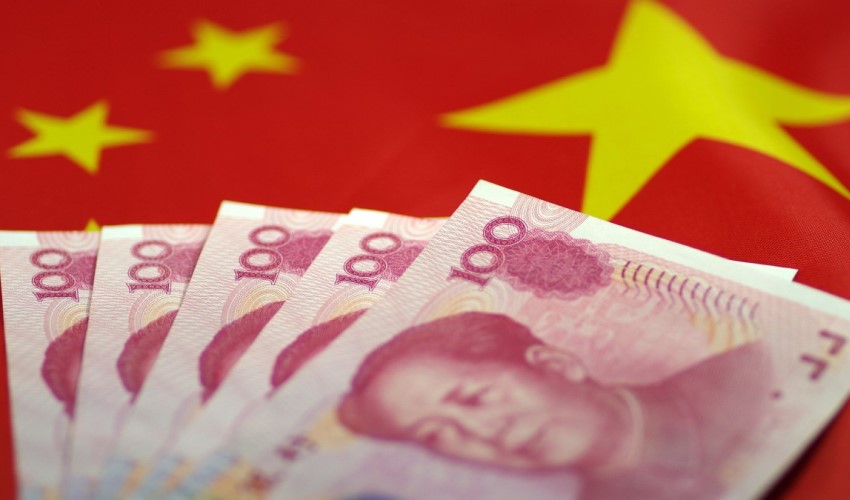
The Chinese government's Leading Group on the matter has announced its vision and action plan for the development of the "Belt and Road Initiative" over the next 10 years.
The plan states that China will continue to contribute to the development of global free trade through connectivity projects over the next decade. It notes that in this new era, the scope of cooperation will expand beyond transportation and infrastructure to include innovation-driven projects in the digital economy, green development, and healthcare.
The plan indicates that priority will be given to using China's national currency, the yuan, for project investments, signaling an increase in the use of yuan-based financial instruments.
Reiterating the goals expressed in the 8-point action plan announced by Chinese President Xi Jinping at the 3rd Belt and Road Forum held in Beijing in October, the document emphasizes that the "Belt and Road" will continue to be a significant "international cooperation platform" and a "global public good" over the next 10 years.
The plan identifies the development of policy coordination, infrastructure connectivity, unimpeded trade, financial integration, people-to-people bonds, and cooperation in new areas among participating countries as "key areas of action."
According to a report published by the State Council of China on the 10th anniversary of the "Belt and Road," the trade volume between China and the countries participating in the initiative reached 19.1 trillion dollars between 2013 and 2022, with an average annual growth of 6.4 percent.
During this period, two-way investments reached 380 billion dollars, with 240 billion dollars of this amount undertaken by China.
The Belt and Road Initiative was first announced by President Xi during his visit to Kazakhstan in 2013. More than 150 countries and international organizations have joined the project, which was launched with the goal of reviving East-West trade along the historic Silk Road route.
The infrastructure, energy, transportation, communication, and other connectivity projects carried out across a geography covering two-thirds of the world's population have become the foundation of China's global strategy as a rising power.
News Source: 12punto
Most Read

Striking picture for Özgür Özel's 'New Party'

Özgür Özel gives a dated response regarding the number of resignations

Forest fire in Antalya brought under control

The PKK opening and Özgür Özel’s path!..

Houthis strike Saudi-owned tanker

How did the newspapers view Özgür Özel's farewell to the CHP?

What did the CHP do?

Özel’s new party move in the world press

The New CHP, against CEHAPE

From self-efficacy to despair