

COVID-19 caused the greatest economic crisis since the Great Depression
Four years later, the world is only just beginning to overcome the effects of the crisis caused by the novel coronavirus (COVID-19), which was nearly the largest economic crisis seen in the last century.



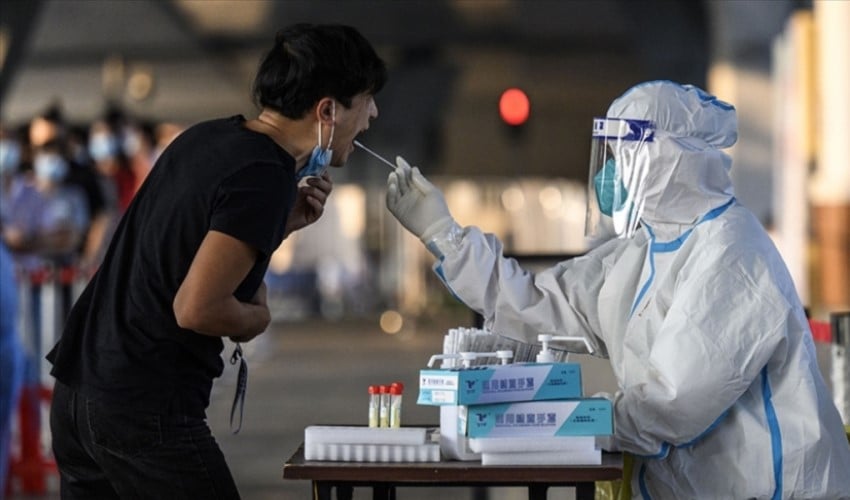
After the first COVID-19 case was detected in the Chinese city of Wuhan at the end of 2019 and rapidly spread worldwide, most countries first closed their borders to protect their citizens, and then implemented various restrictive measures domestically.
While the world economy came to a standstill starting from the first months of 2020 due to various measures taken against COVID-19, economic activity was largely suspended, except for certain sectors identified as critical in fighting the crisis, primarily health, as well as food, agriculture, and transportation.
The severe halt in production and daily life due to the pandemic disrupted the global economy and trade, as countries focused on public health-oriented policies and confined their citizens to their homes.
The financing of policies implemented to address the loss of production and employment, as well as wage issues caused by the pandemic, also reached serious proportions.
While countries with stronger public finance and financial resources were able to protect their people financially from the crisis to some extent through various support policies, weaker and more fragile countries felt the crisis deeply.
National interests took precedence over global approaches
COVID-19 pushed global approaches in trade, which had been promoted for many years, into the background.
Many countries that normally act together turned toward national interests and selfish behaviors during the crisis, and protectionist winds gained weight in trade.
The inability to determine a common or similar stance worldwide on how to emerge from the economic stagnation caused by the pandemic, combined with the widespread suspension of economic activities, further weakened countries, especially those with more sensitive and fragile economies.
Although cases and deaths decreased in countries thanks to strict lockdown and quarantine rules, efforts to return to normal life to overcome the effects of the economic crisis were repeatedly interrupted by the emergence of new waves and variants.
Despite experiencing periods of slowdown before, the world economy had never reached this level of a "complete standstill."
The world economy shrank
According to World Bank (WB) data, while the world economy grew by 2.6 percent in 2019, the pre-pandemic period, the global economy shrank by 3.1 percent in 2020.
A contraction of this magnitude had not been encountered since the Great Depression of 1929, the largest economic crisis ever experienced in the world.
While 6 percent growth was achieved globally in 2021 due to the easing of the pandemic's impact and the low base effect, this rate stalled at 3.1 percent in 2022. For this year, the economic growth expectation is projected at 2.7 percent.
Unemployment rose
The pandemic also caused unemployment to rise worldwide. According to United Nations (UN) data, while youth and female employment rates, in particular, increased rapidly, the global unemployment rate reached 6.9 percent in 2020, an increase of 1.36 percent compared to the previous year.
In 2020 alone, the first period of the pandemic, the number of unemployed people in the world increased by 33 million, reaching 220 million.
While global unemployment fell to 6.2 percent in 2021 and 5.77 percent in 2022, it remained above the pre-pandemic level of 2019 during this period.
Global trade declined
The pandemic also negatively affected global trade. According to World Trade Organization (WTO) data, global trade in goods and products decreased by 9 percent in 2020, and a decline of this magnitude had never been recorded during the period when data was collected by the institution.
According to information compiled by an AA reporter, global merchandise exports, which were at the 19 trillion dollar level in 2019, fell to 17.6 trillion dollars in 2020. Total merchandise and product exports rose to 22.3 trillion dollars in 2021 and 24.9 trillion dollars in 2022.
COVID-19 caused disruptions in supply chains, leading to shortages of goods and higher prices. COVID-19-related supply chain issues increased consumer prices while also making it difficult to find some products. This played a leading role in the rise in inflation.
With the pandemic, there were delays in production, especially in Asian countries, and problems occurred in the transportation of products carried by sea. Consequently, freight prices also peaked. For this reason, the costs of products to be transported, especially over long distances, increased rapidly, and supply delays emerged as a significant problem.
With the easing of the pandemic and economic recovery, new problems became evident in global trade, which had been disrupted by COVID-19.
In the face of increasing demand with the opening of economies, interruptions and problems began to be experienced in production and supply chains, particularly focused on Asian countries.
Due to the exponential increase in transportation costs over long distances, many foreign international firms found closer, stable, and strategic countries like Turkey attractive in terms of investment and production.
Turkey drew attention with its logistics and production capabilities
In the pandemic and the subsequent period, Turkey attracted the attention of many international companies operating in fields such as furniture, textiles, pharmaceuticals, and packaging with its logistics infrastructure and production capabilities, while Western firms accelerated their investment plans for Turkey.
Aviation and tourism struggled to survive
Restrictive measures such as closing borders and travel bans with COVID-19 plunged the service sector, primarily transportation and tourist accommodation, into an unprecedented crisis.
With the banning of non-essential travel, demand for air travel decreased significantly. While air traffic came to a standstill due to the pandemic, flights in some regions declined by nearly 90 percent compared to pre-pandemic levels.
In aviation, where capital intensity is extremely high and cash flow and continuous operation are of critical importance, the grounding of aircraft was described as the "death" of the sector.
Many countries struggled to save their airlines from the crisis process caused by the pandemic.
The aviation sector was only able to reach pre-pandemic flight and passenger levels again in 2023.
It took 4 years for the tourism sector to recover and overcome the crisis. While accommodation and tourist businesses, which were brought to the point of closure due to the restrictions implemented because of COVID-19, only recovered gradually, customer numbers were only able to reach pre-pandemic levels again in 2023.
The strategic importance of food
COVID-19 and the various measures that came into effect ensured that the strategic importance of food security and agriculture was highlighted once again.
The pandemic also had significant consequences for the global agricultural sector. COVID-19 revealed once again how critical agriculture and livestock are for economies.
As citizens flocked to markets due to the restrictions that came into effect in many countries, people raced against each other to buy pasta, rice, flour, and various legumes and canned goods. Due to the pandemic, this generation had to face empty shelves in markets for the first time.
From the beginning of COVID-19, all elements in agricultural production and the food chain were listed as critical sectors, and they were allowed to continue their operations with minimal interruption. Numerous measures and permits were also put into effect to ensure that food shipments were not disrupted.
During the pandemic period, some countries also began to impose various restrictions on the export of agricultural products and food to protect themselves from the risk of potential famine. This situation revealed the necessity of determining new strategies against restrictions on food and agriculture in global trade.
News Source: 12punto
Most Read

Striking picture for Özgür Özel's 'New Party'

The PKK opening and Özgür Özel’s path!..

How did the newspapers view Özgür Özel's farewell to the CHP?

He killed his wife by slitting her throat: Their children witnessed the moments

What did the CHP do?

Özel’s new party move in the world press

The New CHP, against CEHAPE

Fire at TUSAŞ engine factory in Eskişehir under control

From self-efficacy to despair

Kılıçdaroğlu's first message on Özgür Özel's new party announcement