

Expectations of price hikes for agricultural products rise in markets as El Nino approaches
As the El Nino weather phenomenon prepares to increase its impact in the summer of 2026, warnings are being issued regarding potential price increases and supply shortages in agricultural commodity markets. Global price hikes are on the agenda for many agricultural products, particularly cotton, cocoa, palm oil, and rice.



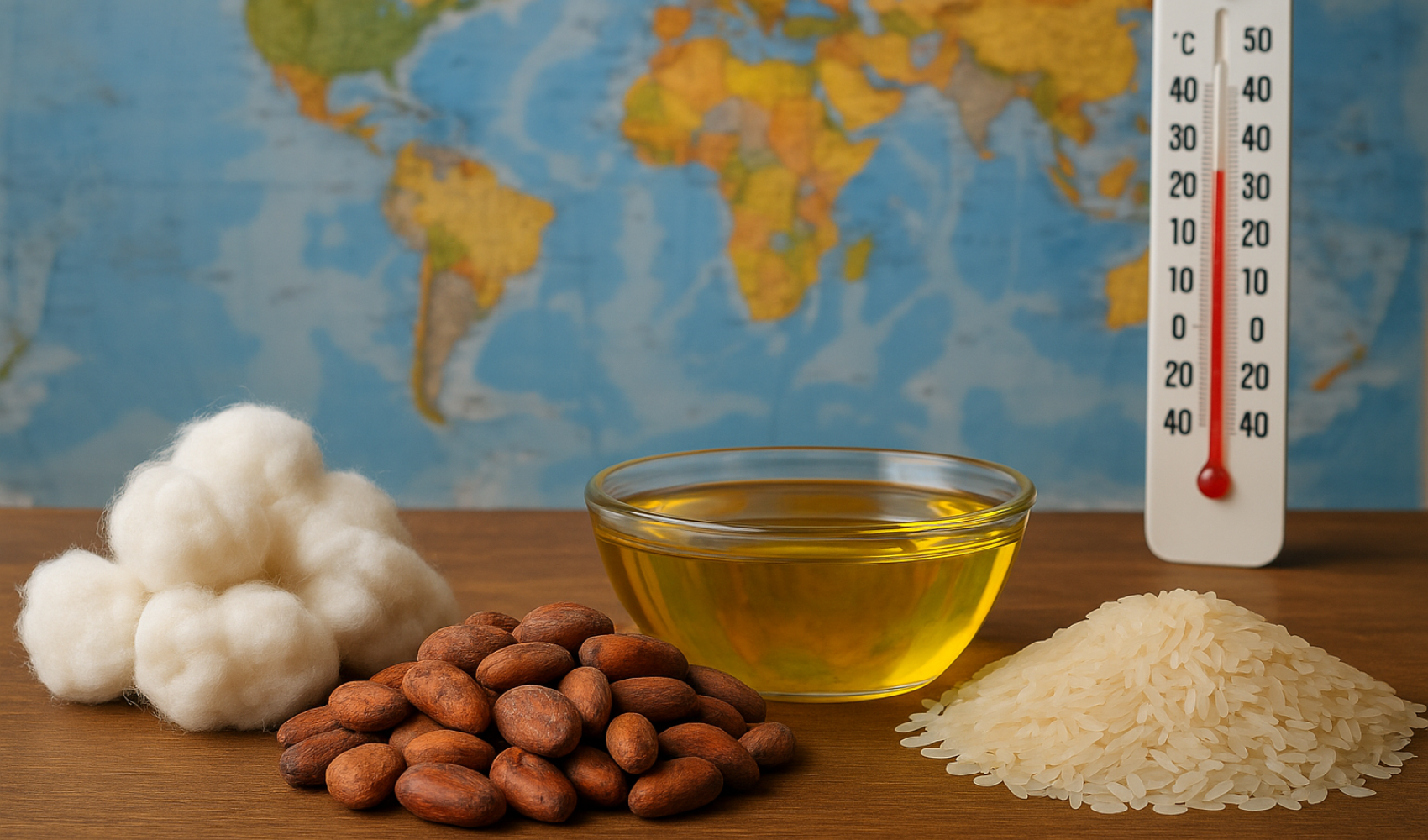
With the expected changes in global weather conditions, El Nino has brought concerns back to the surface, particularly in the agricultural sector and various other industries. While recent data indicates that the impact of this weather phenomenon will become evident starting from July 2026, experts have turned the markets' attention toward El Nino.
Experts predict that El Nino will spread from the Pacific Ocean, causing temperatures to rise and precipitation patterns to change across the globe. This weather event could lead to drought for producers, especially in regions where production is already difficult, and it is stated that it could trigger supply shortages in areas such as palm oil in Southeast Asia, cocoa in West Africa, and rice fields in Asia.
Expectations that potential production decreases in staple agricultural products such as palm oil, cocoa, cotton, and rice could drive prices upward are unsettling the market. It is also shared that other vegetable oil varieties, such as soy and sunflower, could be affected by this process.
According to experts studying climate fluctuations, the El Nino effect is estimated to occur with a probability of over 80% for the remainder of the year. This rate is expected to exceed 90% during the winter months.
“According to our estimates, the probability of El Nino strengthening as of July is quite high. We observe that this probability increases significantly during the winter months,” said Futures and Commodity Markets Expert Zafer Ergezen, who made the following statements: “When we look at this, the models also show us that the El Nino effect will be seen. So, to explain what El Nino is very briefly, it stems from temperature changes in the ocean. When we look at it, the warming of the world's oceans and, in particular, the decrease in winds blowing toward America increase water temperatures in the Pacific Ocean toward America. This means a bit more drought. We can say that a warmer period is being experienced. Especially on the American side. We can see that the Asian side is also warming and its precipitation is decreasing. On the American side, on the contrary, there can be more floods and rain. So, in such a period, we can actually expect this: rains will decrease and droughts will begin in Asia and Australia. On the American coasts, we can say that precipitation will increase, on the contrary. We can also say that the timing of seasons is being disrupted in Africa and India.”
Regarding cotton, it is pointed out that high temperatures, combined with the delay of monsoon rains on the Indian Subcontinent, could increase the risk of insect damage, and significant volatility could be observed in cotton prices. Similarly, a drought in West Africa could lead to a squeeze in cocoa supply and cause prices to rise further in 2027.
In another critical product, rice, it is stated that there could be new price shocks due to insufficient rainfall in major producing countries Vietnam and Thailand. “Now we have talked about all the negatives, but if we look at it from the other side, for example, we can say that there will be an increase in soybeans, because when we look at previous periods, soybean production has always increased in these regions, whether it be America or Argentina. We can see this again,” says Zafer Ergezen.
Experts also say that how the monsoon season passes in India will play a key role in determining the course of strategic commodities such as cotton, sugar, rice, and palm oil. It is emphasized that if the monsoon is weak, the El Nino effect will strengthen even further in the coming period.
In this period when uncertainties are increasing in agricultural commodity markets, producers and industry representatives are closely monitoring the next few months. El Nino conditions, combined with the impact of global warming in particular, could bring new price shocks to the markets.
News Source: 12punto
Most Read

Striking picture for Özgür Özel's 'New Party'

The PKK opening and Özgür Özel’s path!..

How did the newspapers view Özgür Özel's farewell to the CHP?

He killed his wife by slitting her throat: Their children witnessed the moments

What did the CHP do?

Özel’s new party move in the world press

Fire at TUSAŞ engine factory in Eskişehir under control

The New CHP, against CEHAPE

From self-efficacy to despair

Kılıçdaroğlu's first message on Özgür Özel's new party announcement