

Fed Chair Powell gives time for 'easing'
Federal Reserve (Fed) Chair Jerome Powell made remarks regarding monetary policy in a speech at Spelman College in Atlanta.



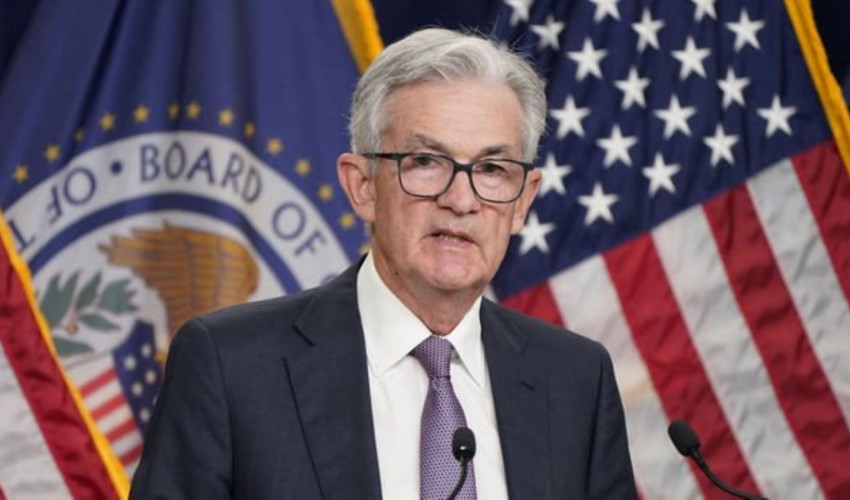
Powell stated that it would be premature to confidently conclude that a sufficiently restrictive stance has been reached in monetary policy or to speculate on when policy might ease, adding that they are prepared to tighten policy further if necessary.
Stating that they expect growth in spending and production to slow next year as the effects of the COVID-19 pandemic wane and restrictive monetary policy exerts pressure on aggregate demand, Powell emphasized that they are strongly committed to bringing inflation down to 2 percent over time and to keeping policy tight until they are confident that inflation is moving toward that target.
Powell said, "It would be premature to conclude with confidence that we have achieved a sufficiently restrictive stance, or to speculate on when policy might ease. We are prepared to tighten policy further if it becomes appropriate to do so."
"CORE INFLATION IS WELL ABOVE TARGET"
Noting that labor market conditions remain quite strong, Powell said the economy has returned to a better balance between labor demand and supply. Powell noted that the pace of new job creation in the economy remains strong but is slowing toward a more sustainable level, adding, "This gradual cooling has come in part from the Fed's efforts to slow the economy to help bring inflation down."
Pointing out that wage growth remains high, Powell noted, however, that it is gradually moving toward levels more consistent with the 2 percent inflation target over time, and that real wages are rising again as inflation falls.
Recalling that inflation, which had been below 2 percent for over a decade, rose sharply in the U.S. and many countries around the world in 2021, Powell explained that the Fed responded strongly starting in early 2022 by raising the policy rate and reducing the size of its balance sheet to help slow the economy and lower inflation.
Noting that inflation fell to 3 percent on an annual basis in October, Powell stated, however, that core inflation, which excludes volatile energy and food prices, is at 2.5 percent, well above the bank's 2 percent target.
DREW ATTENTION TO STRONG STEPS
Stating that core inflation has run at an annual rate of 2.5 percent over the 6 months ending in October, Powell emphasized that while the decline in inflation over the past few months is welcome, further progress is needed to reach the 2 percent target.
Stating that high inflation was initially driven by constrained supply in the face of very strong demand due to the COVID-19 pandemic, Powell expressed that the normalization of supply and demand conditions, along with the significant tightening in monetary policy and overall financial conditions over the last 2 years, has been seen to play a critical role in the decline in inflation so far.
Powell said, "The strong steps we have taken have moved our policy rate into restrictive territory, which means that tight monetary policy is exerting downward pressure on economic activity and inflation."
Noting that monetary policy is thought to affect economic conditions with a lag and that the full effects of the tightening have not yet been felt, Powell stated that the strong response to inflation has also helped preserve the Fed's hard-won credibility and has ensured that expectations for future inflation remain firmly anchored.
Reiterating that the Federal Open Market Committee (FOMC) is proceeding carefully as the risks of under- and over-tightening become more balanced, Powell noted that uncertainty regarding the economic outlook is unusually high as the pandemic-related effects on demand and supply continue to fade.
News Source: AA
Related News
Most Read

Striking picture for Özgür Özel's 'New Party'

The PKK opening and Özgür Özel’s path!..

How did the newspapers view Özgür Özel's farewell to the CHP?

He killed his wife by slitting her throat: Their children witnessed the moments

What did the CHP do?

Özel’s new party move in the world press

The New CHP, against CEHAPE

Fire at TUSAŞ engine factory in Eskişehir under control

From self-efficacy to despair

Kılıçdaroğlu's first message on Özgür Özel's new party announcement