

First rise in Germany's industrial production in four months
Industrial production in Germany exceeded expectations in July, recording its first increase since March.



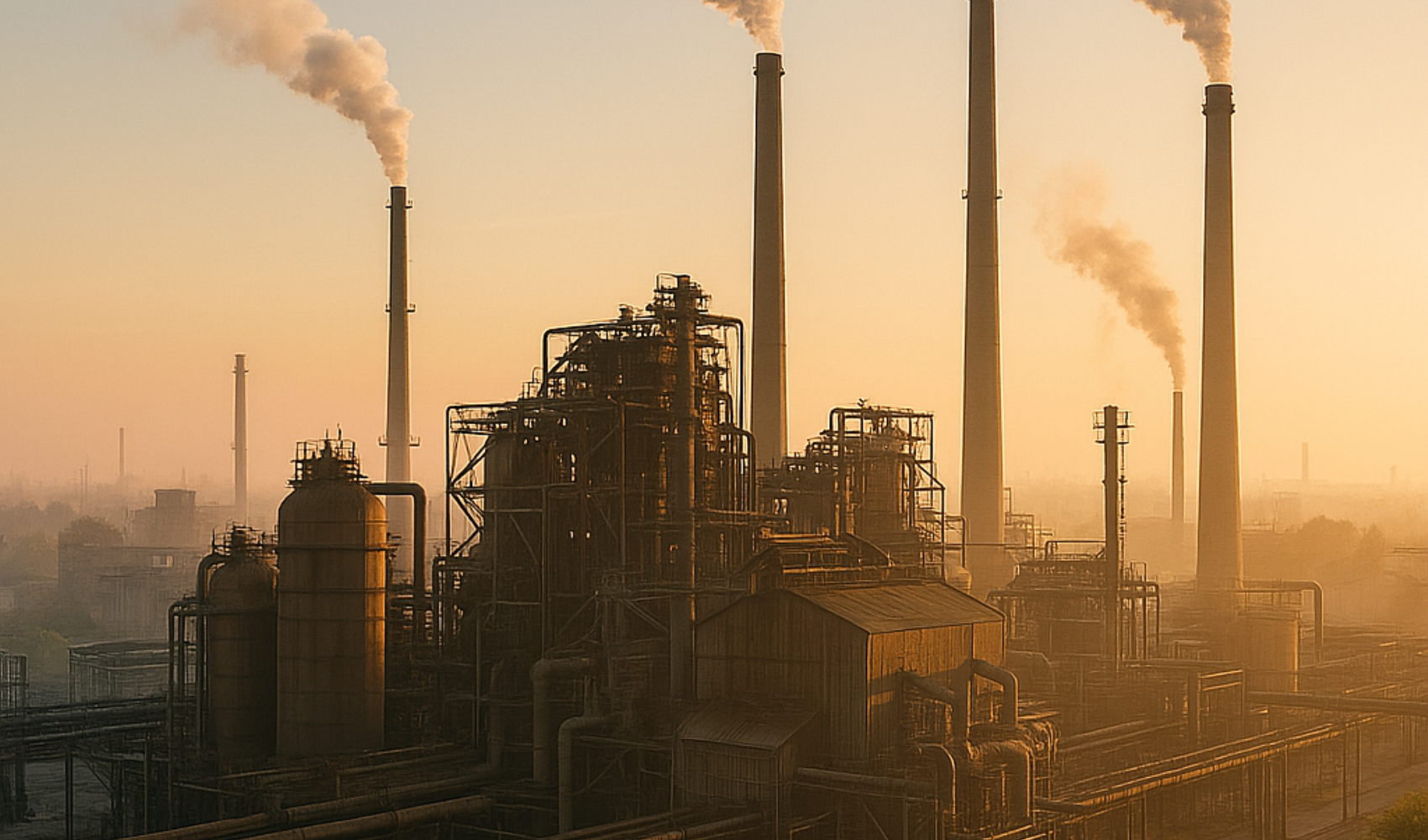
According to the latest data released by the German Federal Statistical Office, industrial production in the country rose by 1.3 percent in July compared to the previous month, and by 1.5 percent compared to the same period last year. This marks the first monthly growth in the industrial sector since March.
Experts state that this increase, which came in above the 1 percent forecast by economists in a Bloomberg survey, provides positive signals.
The machinery and equipment sector, along with manufacturing, mining, energy, and construction, stood out as the leading areas in this recovery. In particular, these sectors played a major role in compensating for the decline experienced in previous months.
Industrial production data for June was revised. The June data, which was previously announced as a 1.9 percent decrease, was updated to a 0.1 percent decline following late-reported figures from a major automotive company.
SEARCH FOR STABILITY IN EUROPE'S LARGEST ECONOMY
Experts note that this rise in industrial production indicates that Europe's largest economy made a strong start to the summer months. The goal is to overcome the economic difficulties that accelerated following the Russia-Ukraine war in 2022, particularly through a revival in the production sector.
An assessment from the German Ministry of Economy emphasized that the current data shows the industrial economy has entered a slow and steady recovery process. However, Bloomberg economist Martin Ademmer shared his forecast that despite the increase in industry, activities will remain weak in the coming months. Ademmer stated, "Tariffs imposed by the US and sluggish domestic demand continue to pressure the sector. However, expansionary fiscal policies next year could provide support for German industry."
In July, Germany's exports fell by 0.6 percent compared to the previous month to 130.2 billion euros, while imports also fell by 0.1 percent to 115.4 billion euros. Consequently, the foreign trade surplus fell to 14.7 billion euros, the lowest level recorded in the last nine months.
MOST EXPORTS OUTSIDE THE EU GO TO THE US, BUT THE DECLINE CONTINUES
A significant portion of Germany's exports went to European Union countries, reaching 74.8 billion euros in July. Among countries outside the EU, the US ranked first in exports. However, due to customs tariffs that began in recent months, exports to the US saw a sharp decline of 7.9 percent, amounting to 11.1 billion euros. Imports from the US also fell by 10 percent to 7.8 billion euros.
In the first seven months of the year, total exports reached 916.1 billion euros, while imports amounted to 796.6 billion euros. Thus, Germany's foreign trade surplus rose to a total of 119.5 billion euros in the first half of the year.
How the German economy will perform in the coming period will become clearer with the sustainability of the recovery in the industrial sector and developments in foreign trade.
News Source: 12punto
Most Read

Striking picture for Özgür Özel's 'New Party'

Özgür Özel gives a dated response regarding the number of resignations

Forest fire in Antalya brought under control

The PKK opening and Özgür Özel’s path!..

Houthis strike Saudi-owned tanker

How did the newspapers view Özgür Özel's farewell to the CHP?

What did the CHP do?

Özel’s new party move in the world press

The New CHP, against CEHAPE

From self-efficacy to despair