

Germany announces its new industrial strategy
German Minister for Economic Affairs and Climate Action Robert Habeck has announced the country's new industrial strategy in a 60-page presentation. Habeck stated, "We want to preserve Germany as a strong industrial hub in all its diversity."



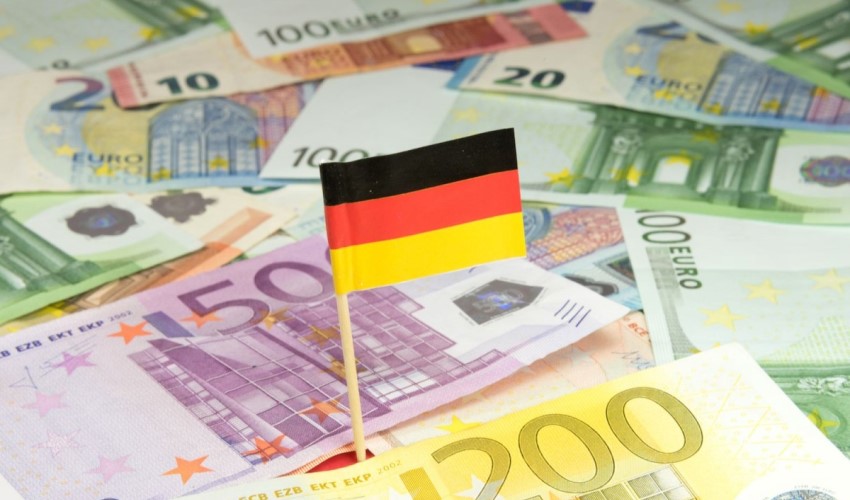
With its new industrial strategy, the German government aims to strengthen the country as an industrial hub by doubling energy price subsidies. German Minister for Economic Affairs and Climate Action Robert Habeck presented Germany's new 60-page industrial strategy at a press conference in Berlin. Stating that Germany is known as a strong industrial nation, Habeck remarked, "We want to preserve Germany as a strong industrial hub in all its diversity. To ensure that Germany continues to be an economically successful country in the future, we must develop our greatest strength, which is our industry, and consequently our ability to develop and produce world-class products."
While incentives for energy-intensive sectors stand out as a key element in Germany's new industrial strategy, a 50 billion euro tax cut is planned over the next four years to help industrial companies better cope with high energy prices. In addition to financing programs, the strategy focuses on energy transition, accelerating planning, and the migration of skilled workers. The rapid expansion of renewable energy, the power grid, the hydrogen industry, and infrastructure is included in the strategy, and it is also stated that an infrastructure "renewal offensive" will be carried out for railways, bridges, and roads.
INCENTIVE PROPOSALS FOR EXTENDING WORKING LIFE
The strategy, which includes new trade agreements and raw material partnerships with other countries, points to the establishment of German and European production facilities for critical products such as semiconductors, clean energy, hydrogen, and batteries for electric vehicles. Among the proposals in the strategy, which suggests incentives for extending working life, is that the employer's contribution to statutory unemployment and pension insurance be paid directly to employees after they reach the legal retirement age.
Meanwhile, as German industry faces increasing pressure due to the Russia-Ukraine War, energy prices that are high compared to other countries are straining energy-intensive raw material sectors such as chemicals and steel. While production data for these sectors has been weak since last winter, there is growing evidence that some sectors are shifting part of their production abroad and, in particular, choosing to plan their new investments in other countries, primarily the United States. Debates among politicians in Germany regarding how much of this industrial change should be prevented have been ongoing for months.
News Source: 12punto
Most Read

Striking picture for Özgür Özel's 'New Party'

The PKK opening and Özgür Özel’s path!..

How did the newspapers view Özgür Özel's farewell to the CHP?

He killed his wife by slitting her throat: Their children witnessed the moments

What did the CHP do?

Özel’s new party move in the world press

Fire at TUSAŞ engine factory in Eskişehir under control

The New CHP, against CEHAPE

From self-efficacy to despair

Kılıçdaroğlu's first message on Özgür Özel's new party announcement