

The global energy crisis will continue even if the Iran war ends. So why will the crisis persist?
Although it is hoped that energy prices will return to normal once the war in the Middle East ends, experts warn that uncertainty in oil and natural gas markets will last for years. Supply shortages, damaged infrastructure, and rising costs are cited as the primary factors determining the course of the global energy crisis.



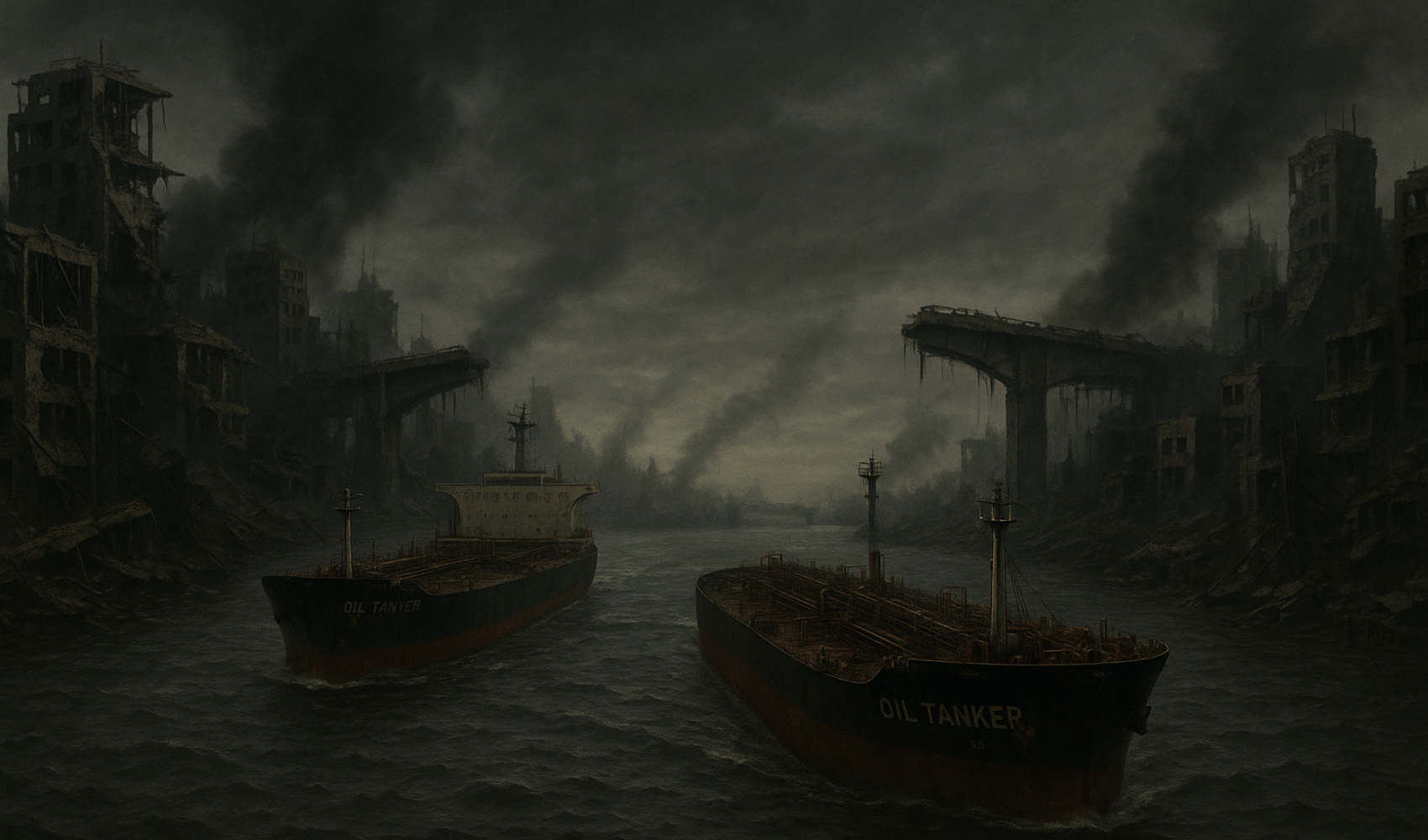
The end of the war in the Middle East, whether through a ceasefire or a complete conclusion, will not provide the expected relief in oil and natural gas markets. There are a series of obstacles preventing prices from returning to their previous levels.
Production in the oil market remains limited. Because the journey of tankers carrying oil from the Persian Gulf takes a long time, the effects of the war have only now begun to reflect on global refineries. Experts state that even if the Strait of Hormuz were to reopen and shipping were to resume, the resulting supply deficit could not be resolved in the short term. According to data from the US Department of Energy, it is likely that the global oil supply shortage will persist until the end of 2026.
However, the primary concern is natural gas. The significant damage to Qatar's liquefied natural gas production has made it nearly impossible to meet current global gas demand. The inability to divert LNG originating from Qatar to another route by sea is deepening the supply shortage. International Energy Agency (IEA) Executive Director Fatih Birol, who made a statement on the subject, drew attention to the seriousness of the situation by saying, "The reputation of the gas industry has been damaged. Liquefied natural gas was positioned as a reliable, affordable, and flexible option. But first there was the Russian gas crisis in 2022, and now there is the Qatar gas crisis."
Dozens of oil and gas facilities damaged during the war are further delaying the recovery of energy production. The fact that a significant portion of one of the world's largest LNG facilities at the Ras Laffan complex in Qatar is out of commission does not just require repairs; it also brings with it comments that the process will take years. During this period, similar infrastructure losses have occurred in regional countries such as the UAE, Kuwait, and Iraq.
The economic effects of the war do not end there. While regional countries previously planned investments to increase their production capacity, they are now spending their resources on repairing damaged infrastructure and on defense. For consumer countries, in addition to rising energy bills, there is now a necessity to invest in alternative sources. These developments are laying the groundwork for prolonged fluctuations in energy prices.
Attempts by Western countries to compensate for the deficit by releasing crude oil from their strategic petroleum reserves provide only a short-term solution. The need to refill these strategic reserves will create pressure on prices in the coming months.
The continuation of geopolitical risks, uncertainties in energy supply routes, and the increase in costs are indicators that the energy crisis will be permanent. In summary, IEA Executive Director Fatih Birol's warning is: "We are entering the greatest energy crisis in history."
News Source: 12punto
Most Read

Striking picture for Özgür Özel's 'New Party'

The PKK opening and Özgür Özel’s path!..

How did the newspapers view Özgür Özel's farewell to the CHP?

He killed his wife by slitting her throat: Their children witnessed the moments

What did the CHP do?

Özel’s new party move in the world press

The New CHP, against CEHAPE

Fire at TUSAŞ engine factory in Eskişehir under control

From self-efficacy to despair

Kılıçdaroğlu's first message on Özgür Özel's new party announcement