

Mahfi Eğilmez explains the reason for the rise in the dollar: 'This time it was the exact opposite'
Economist Mahfi Eğilmez, who examined the rise in the dollar/TL exchange rate, listed the reasons for the increase in the rate, stating, "This time it was the exact opposite."



While the dollar exchange rate fell to 32.11 TL towards the end of May, it began to rise before the Eid al-Adha holiday.
Economist Mahfi Eğilmez wrote an article regarding why the dollar/TL exchange rate began to rise. Eğilmez drew attention to the rise in the rate with a trend that started just before the holiday and is still continuing.
"Under normal conditions, the exchange rate falls before and during holidays," Eğilmez stated, explaining the reasons for the rise in the rate by saying, "This time it was the exact opposite."
Dr. Mahfi Eğilmez's article titled 'Why is the exchange rate rising?' is as follows:
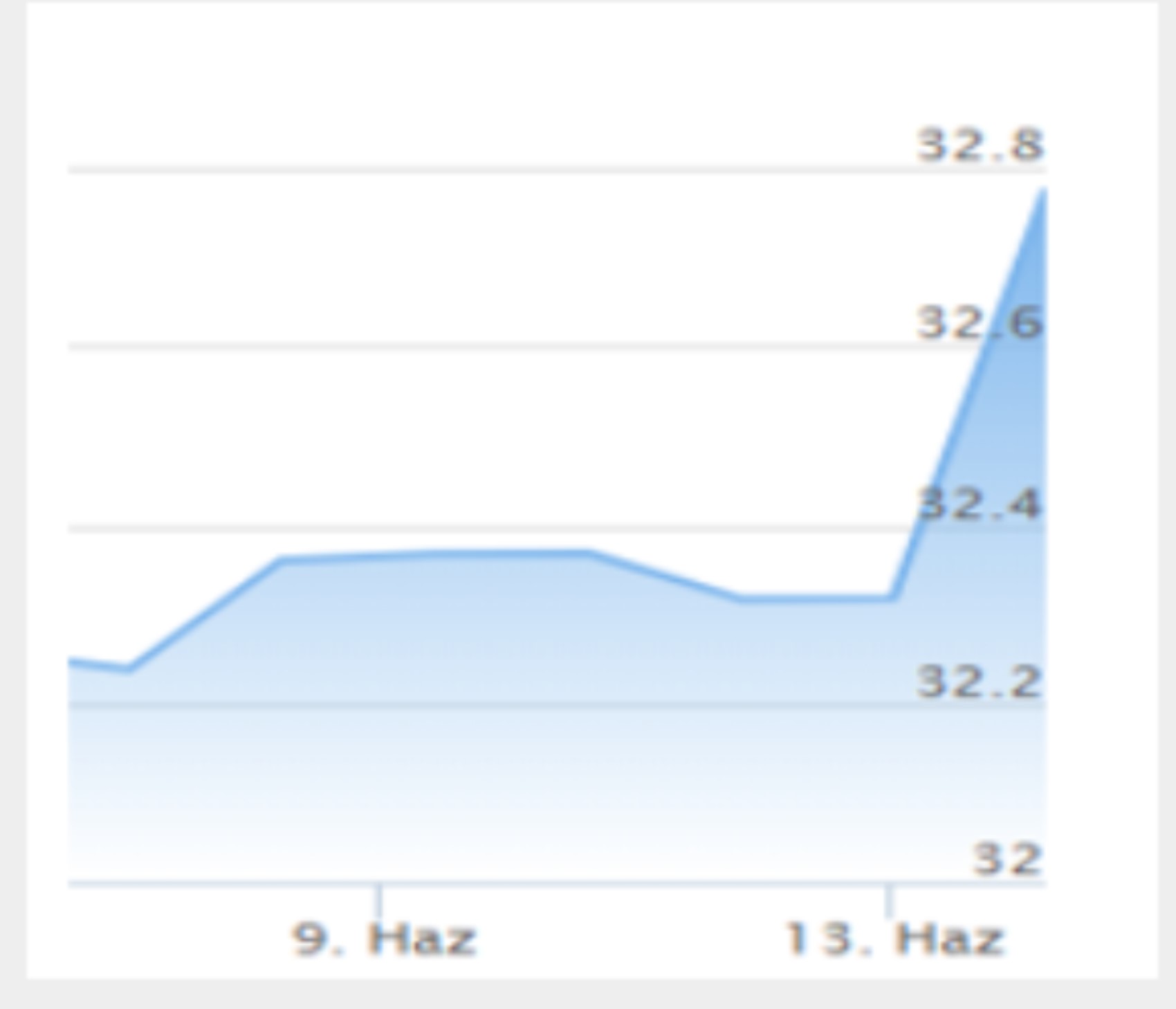
The USD/TL exchange rate has started to rise with a trend that began just before the holiday and is still continuing.
The ten-day chart below shows this:
"Under normal conditions, the exchange rate falls before and during holidays. This is because people who want to go on vacation or sacrifice an animal during the holiday, and therefore need Turkish Lira, exchange the foreign currency they hold or have in their bank accounts. Since this action increases the demand for Turkish Lira and decreases the demand for foreign currency, the USD/TL exchange rate falls and the Turkish Lira gains value. After the holiday, those who have obtained these Turkish Liras then demand foreign currency, and the rate rises again. This is what happens under normal conditions. This time it was the exact opposite. The USD/TL exchange rate, far from falling, began to rise. This means that developments occurred outside of normal conditions.
First, let me briefly summarize the current mechanism once again. For several months, Turkey has been under the influence of a phenomenon called carry trade. Funds that find and bring resources from abroad at low interest rates convert their foreign currency into Turkish Lira here at a rate of 1 USD = 32 TL and open short-term (between 1 and 3 months) TL deposits or buy government bonds. After deducting bid-ask spreads and taxes, they earn roughly 40 percent net annual interest (3.75 percent monthly, 11.25 percent quarterly) on these deposits. When we accept that real inflation is far above the announced inflation, we can say that this interest rate is in a negative real interest position relative to both current and future inflation. On the other hand, if the exchange rate remains at this level, when the Turkish Lira interest and principal obtained at the end of the term are converted back into dollars, this interest turns into a dollar interest rate more or less. It is impossible to find such high interest rates for dollar deposits in such a short term anywhere else in the world. Those who keep foreign currency in bank safes or in safes at home are doing a similar thing. They also exchange dollars to open Turkish Lira deposits, and when they take the interest at the end of the term and convert it back to foreign currency, they earn the same dollar interest rate. The government does not object to this development; in fact, it supports it. Because thanks to this, the exchange rate does not rise, the impact of the exchange rate on inflation is suppressed, banks sell the foreign currency they receive to the Central Bank, and thus the Central Bank's reserves are increasing rapidly. The biggest risk of this method is that the exchange rate rises and the interest that those who invest in Turkish Lira will receive at the end of the term cannot cover the loss that will occur in the exchange rate.
The opinion given by several major investment banks about Turkey, stating that it is "time to invest in Turkey," was influential in foreigners bringing money to Turkey within the framework of carry trade. Foreigners brought money here, and Turks also exchanged their foreign currency and turned to Turkish Lira deposits and/or government bonds; as a result, while the demand for Turkish Lira increased, the demand for foreign currency decreased. At this stage, the most basic law of economics began to operate, and the Turkish Lira gained value against foreign currencies. In fact, if the Central Bank had not also been trying to protect exporters on the other hand, the exchange rate would have gone even lower.
This was the first development that occurred before the holiday and pushed the rate up
A few days before the holiday, Citibank withdrew its investment recommendation for Turkey given to investors. With this development, an exit from TL assets began, albeit slowly, and the exchange rate also started to rise slightly. This was the first development that occurred before the holiday and pushed the rate up.
On Saturday, the President also made the following sentence in response to a question: “The whole issue comes back to the interest rate matter. Hopefully, with the steps we will take on interest rates, we will have moved inflation to a much more positive position in the last quarter.”
These words were understood in the market as a sign that interest rate cuts would be made in the autumn. This is because the cause of inflation had previously been shown as interest rates, and interest rate cuts had been made. This is the second reason behind the rise in the exchange rate. Thus, the “September Expectation,” which had been whispered from ear to ear for a long time, began to be spoken about openly. Since lowering the interest rate will undoubtedly reduce the profit to be obtained in this way, it brings up the debate of whether it is worth the high risk taken. However, it is not possible for the Turkish Lira deposit interest, which turns into dollar interest through the mechanism I described above, to continue in this way for a long time.
Unfortunately, at the stage we have reached today, the inflation problem has ceased to be a problem that can be solved by interest rates alone, or even by economic measures that include them. The solution to this problem lies in being able to create positive expectations for the future. After the 2001 crisis, Turkey solved the high inflation problem by creating positive expectations for the future. When the solution came in this way, growth was not negatively affected either. The things done to correct expectations in that period were banking reform, ensuring public fiscal discipline (reducing the budget deficit), and entering into full membership negotiations with the EU. Today, there is a much greater need for much more comprehensive structural reforms than there was then. The longer we delay, the more interest we pay."
News Source: 12punto
Most Read

Houthis strike Saudi-owned tanker

4 drones shot down near US Consulate General in Erbil

It never ends: Another FETÖ memory

Famous director Ezel Akay and his brother have been detained

A mind fixated on leggings...

'Papers with spells and curses' operation: 'Master, my spouse filed for divorce'

He announced which municipalities will join the 'New Party', the Istanbul detail drew attention

The official, rumored to be switching to the AKP, has begun a persuasion tour

A critical distinction in the claim about eating out

CHP's mass SMS move in response to Özel's new party decision