

Manufacturing sector sees weakest performance in eight months in June
The Turkey Manufacturing PMI, announced by the Istanbul Chamber of Industry, fell to 46.7 in June, marking its lowest value in the last eight months and signaling that the sector is going through a challenging period.



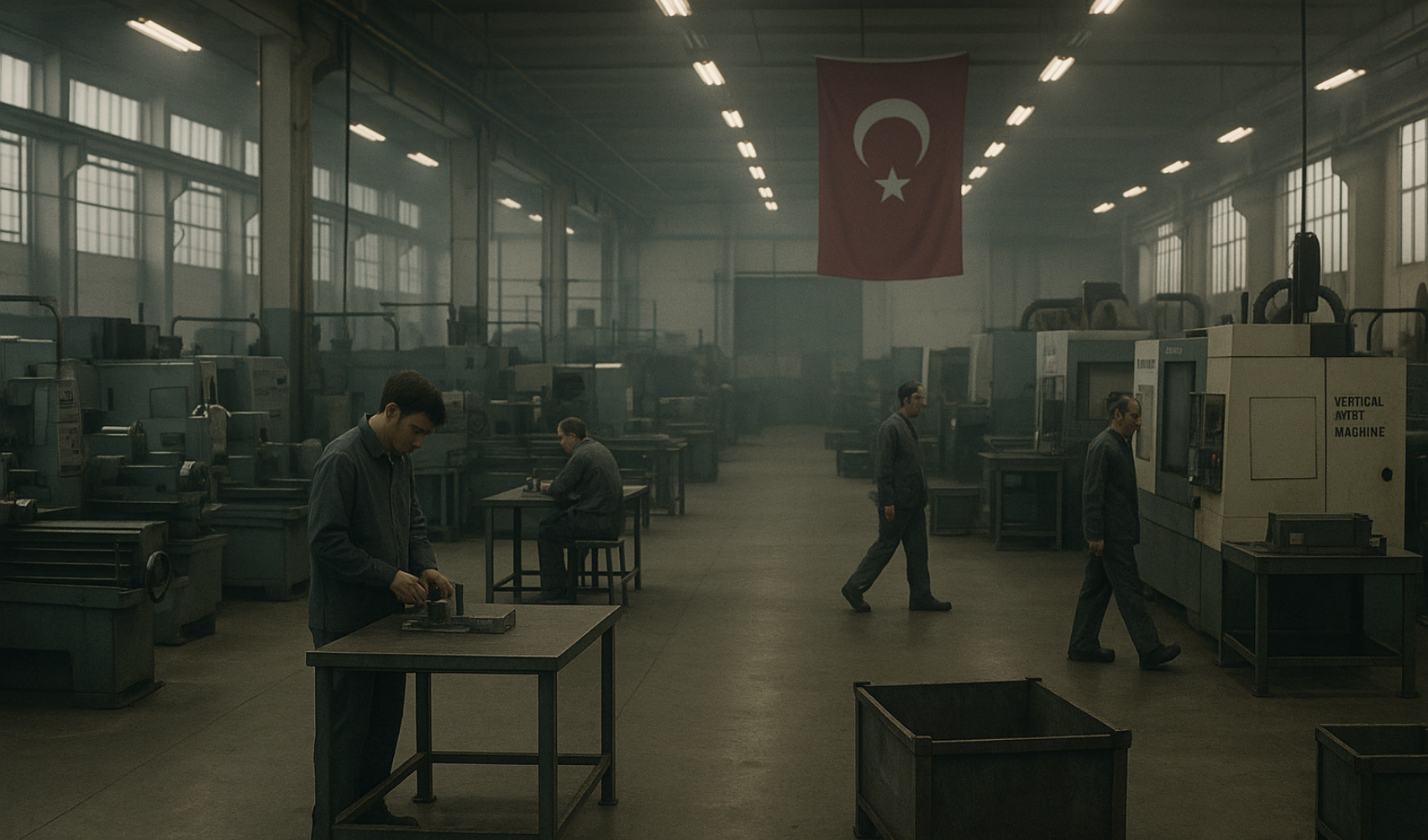
The Purchasing Managers' Index (PMI), which measures economic conditions in the manufacturing industry, continued to decline in June 2025. According to the latest data published by the Istanbul Chamber of Industry, the PMI, which remained below the 50.0 threshold, fell from 47.2 in May to 46.7 in June, reaching its lowest level recorded since November 2024. With this development, the deterioration in the operating environment for manufacturers has continued uninterrupted since April 2024.
In parallel with the slowdown in economic activity, the weakening in domestic demand led to a decline in new orders for the second consecutive year, while the decline in exports also became more pronounced. The contraction in new export orders and the drop in domestic orders in June were recorded as the fastest slowdown in the last three months. The contraction in production occurred at the fastest pace since October 2024.
These declines also caused significant drops in employment and raw material purchases. In June, the employment level in factories showed the most significant decrease in the last nine months. Purchasing activities experienced their sharpest decline since September 2024. While decreasing new orders and production led companies to consume their input stocks, unsold product stocks rose for the first time in the last three months.
Input costs showed a slight increase in June. Among the reasons for this increase are the depreciation of the Turkish lira and inflationary pressures stemming from developments in Iran. The increase in final product prices was more limited and fell to its lowest level since the beginning of the year. Although some firms are trying to reflect cost increases in their sales prices, weak demand reduces pricing flexibility. Regarding the supply of materials from suppliers, an increase in delivery times was observed for the first time in four months. Companies stated that the main reason for the delays was difficulties in raw material supply.
S&P Global Market Intelligence Economics Director Andrew Harker said the following after the announcement of the PMI data:
“Turkish manufacturers remained under pressure in June due to increasingly difficult demand conditions. For this reason, it was observed that firms resorted to limiting their operations and production contracted at the highest rate since October of last year. Despite this, there was an excess of finished product stocks at firms, and these stocks showed an increase for the first time in the last three months. Thus, while the first half of the year was completed in a difficult environment, it is hoped that conditions will improve in the second half of 2025.”
PRODUCTION DECLINE AND PRICE INCREASES BY SECTOR
The Istanbul Chamber of Industry's sector-based report also revealed that production decreased in all 10 main manufacturing sectors in June. While areas such as clothing, leather, and non-metallic mineral products entered a decline again; in new orders, only machinery and metal products experienced a slight increase. New export orders improved in only four sectors, with the most significant growth recorded in machinery and metal products.
In employment, there are two sectors that diverged positively: basic metal industry and electrical & electronic products. It was observed that the need for employees decreased in all other sectors, especially in machinery and metal products, where the number of personnel showed the fastest decline in recent years. This sector also witnessed the highest increase in input prices in the last 15 months. Although the cost increase was significant in general, the most moderate rise was observed in clothing and leather products. Excluding textile products, most sectors increased their product prices; however, general inflationary pressure slowed down in many sectors compared to May.
There were also bottlenecks on the supply chain side in June; delivery times, which shortened in May, shortened in only two sectors in June, and the signal that there were disruptions strengthened.
News Source: 12punto
Most Read

Striking picture for Özgür Özel's 'New Party'

The PKK opening and Özgür Özel’s path!..

How did the newspapers view Özgür Özel's farewell to the CHP?

He killed his wife by slitting her throat: Their children witnessed the moments

What did the CHP do?

Özel’s new party move in the world press

Fire at TUSAŞ engine factory in Eskişehir under control

The New CHP, against CEHAPE

From self-efficacy to despair

Kılıçdaroğlu's first message on Özgür Özel's new party announcement