

Mustafa Aşkın: The primary motivation for investing in crypto is the investor flow process created by the virtual world
Economist Mustafa Aşkın evaluated the trend of IPOs for companies and investors for 12punto.com.tr.



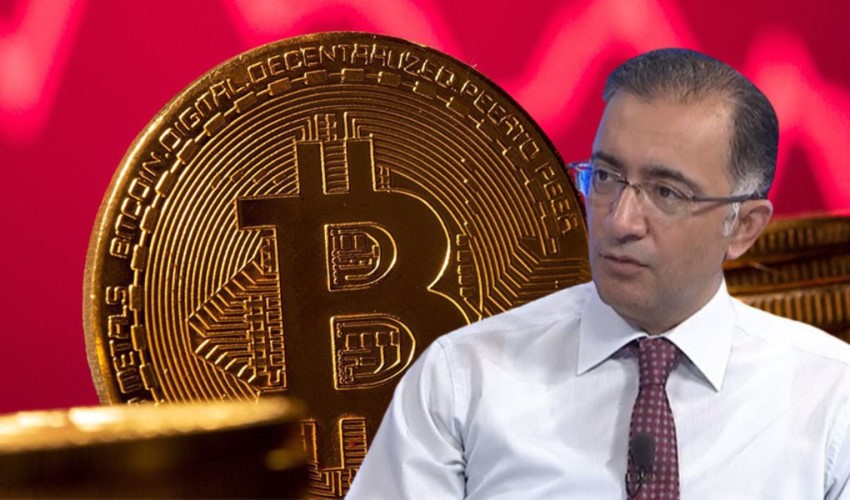
Kübra Karasu-12punto
Small investors are moving away from traditional investment vehicles. While interest in cryptocurrencies continues to grow, IPOs have emerged as a popular investment option in recent times. So, what is the primary motivation here? How should the government protect small investors? Economist Mustafa Aşkın evaluated these questions for 12punto.com.tr.
-How do you evaluate the recent shift of people towards cryptocurrencies and IPOs rather than traditional investment vehicles like the dollar, euro, and gold?
In countries where inflation is high and the real return obtained from interest is low or negative, individuals' investment preferences are channeled into financial areas where they can easily close this gap. Although the two mentioned vehicles carry significant risks, a community formed especially by small investors creates a kind of self-feeding Ponzi scheme as they see that they are obtaining higher returns compared to their small savings.
THIS PONZI SCHEME RESULTED IN MANY PEOPLE GOING BUST IN CRYPTOCURRENCIES
In recent years, this Ponzi scheme resulted in many people going bust in cryptocurrencies. A striking point is that approximately 8 million people in Turkey have engaged in transactions in these crypto markets, placing the country among those with the highest number of transactions globally. Whether cryptocurrencies, which have significant regulatory and legal loopholes, are an asset or a currency remains a subject of debate.
Many countries around the world are introducing new regulations and restrictions, primarily regarding taxation. A significant amount of Turkey's savings is also held in these types of assets within a system that lacks much oversight. From what we understand from reports in the press, it seems that some regulations regarding these markets, especially in taxation, will be introduced in our country in the near future.
THE PRIMARY MOTIVATION IS THE INVESTOR FLOW PROCESS CREATED BY THE VIRTUAL WORLD
In IPOs, the primary motivation is the investor flow process created by a virtual world where the shares offered to the public are constantly rising. The sustainability of this frenzy, which is led by small investors acting on hearsay rather than financial literacy, is a significant subject of debate.
According to data from the MKK (Central Securities Depository), up to 80 percent of investor portfolios belong to small investors with less than 50 thousand TL. When small investors were deprived of the chance to obtain returns in invested areas such as interest, real estate, cars, and the like with a portfolio of this size, interest in IPOs increased exponentially. This resulted in share values rising very rapidly, like a self-fulfilling prophecy. However, both share valuation, the large number of companies going public, and some technical deficiencies and glitches in the pricing/distribution process may have been viewed as a gap to be exploited from time to time by both large fund holders and other stakeholders. Similar processes had been experienced in our stock market in past years, but they were not sustainable.
There are 8 million 598 thousand investors in the stock market, and IPOs are increasing this number. This process, which can essentially be seen as the democratization of capital, can also contain risky elements. The number of investors coming indirectly through pensions and funds is 31 million 447 thousand people.
THE MAIN FACTOR IN COMPANIES TURNING TO IPOS IS THE PROVISION OF LOW-COST FUNDS
The main factor in companies turning to IPOs is the goal of obtaining long-term funds that will enter the company as equity at a much lower cost, instead of borrowing at high costs through conventional credit processes. In the last 3-year period, the fact that demand was lively for the reasons I explained above meant there was no concern about share sales, which triggered the IPOs.
Another element is that it has provided former company partners with the opportunity to sell their own shares at a very good price through the IPO. In some companies that went public, the fact that former partners sold large amounts to stock market investors also led to this path being preferred by partners. The number of IPOs has increased rapidly in the last few years, and the demand vitality in the domestic conjuncture has been utilized by those making the offerings.
-What kind of policy and approach should the government pursue regarding this?
There are actually many studies being conducted on financial literacy, but these studies are carried out at the institutions' own initiative and in a very fragmented structure. When international examples are examined, it is seen that institutions related to financial literacy are established, and coordinated activities from a single source are shaped, ranging from media to activities aimed at all stakeholders of the system. Our country also needs such an independent institution and a good staff to work in this institution.
THE LIFELONG LEARNING PROCESS IS INDISPENSABLE FOR THIS STRUCTURE
On the other hand, the lifelong learning process is also indispensable for this structure. For this purpose, it would be extremely appropriate to include basic courses in primary school curricula up to high school. Although there have been studies on the subject in past years, there is a need to increase their effectiveness and for them to be coordinated by an institution.
Another regulation that would greatly ease many processes in financial markets could be as follows. Many experienced, educated, and licensed individuals who have worked in the financial sector since 1986 are either busy with jobs outside the sector or cannot use this knowledge effectively.
IMPLEMENTING THIS CLASSIFICATION COULD BE A STRUCTURAL SOLUTION THAT RELIEVES ALL STAKEHOLDERS
For this purpose, there is a need for a regulation that can perform many activities, from IPO processes to independent board memberships, and from portfolio management to investment consultancy. The experience and training of the personnel in question only carry meaning when they work in a single institution and are considered a unique profession. However, just as with independent accountants, financial advisors, and sworn-in financial advisors, a legal regulation that makes the following classification for people with three-stage different working periods, licenses, and training could be a structural solution that relieves all stakeholders in the system.
A. Independent Capital Markets Specialist: With at least 5 years of actual market experience, a CMB (Capital Markets Board) license level 1 certificate, and on the condition of passing the training (exam) to be brought to life by the chamber structure to be created, the ability to perform investment consultancy and investor relations expertise in publicly traded companies, which is currently also within the body of the CMB (Capital Markets Board).
B. Capital Markets Advisor: At least 10 years of actual experience, at least an undergraduate degree, a CMB (Capital Markets Board) license level 2 certificate, and the regulation of having the authority to appear in the media, provide training, write reports, be an investor relations manager, and manage portfolios.
C. Capital Markets Consultant: At least fifteen years of experience, an undergraduate or graduate degree, a CMB (Capital Markets Board) license level 3 certificate, the inclusion of derivative instruments and all jobs in the first two stages along with other licenses, approval of written capital market reports, management of all kinds of investment funds, being an angel investor and consultant, being an independent board member, providing risk management services to companies with certain turnover/foreign trade figures, and the obligation to be employed as a consultant in all kinds of IPOs.
News Source: Kübra Karasu
Most Read

Striking picture for Özgür Özel's 'New Party'

Özgür Özel gives a dated response regarding the number of resignations

Forest fire in Antalya brought under control

The PKK opening and Özgür Özel’s path!..

How did the newspapers view Özgür Özel's farewell to the CHP?

He killed his wife by slitting her throat: Their children witnessed the moments

What did the CHP do?

Özel’s new party move in the world press

The New CHP, against CEHAPE

Fire at TUSAŞ engine factory in Eskişehir under control