

Prof. Erinç Yeldan: The state should produce whatever is necessary
Evaluating Turkey's globalization process within the economic developments of the 100-year history of the Republic, Prof. Dr. Erinç Yeldan stated that after 100 years, the country is quite far from the strong and independent economy envisioned by the founding cadres.



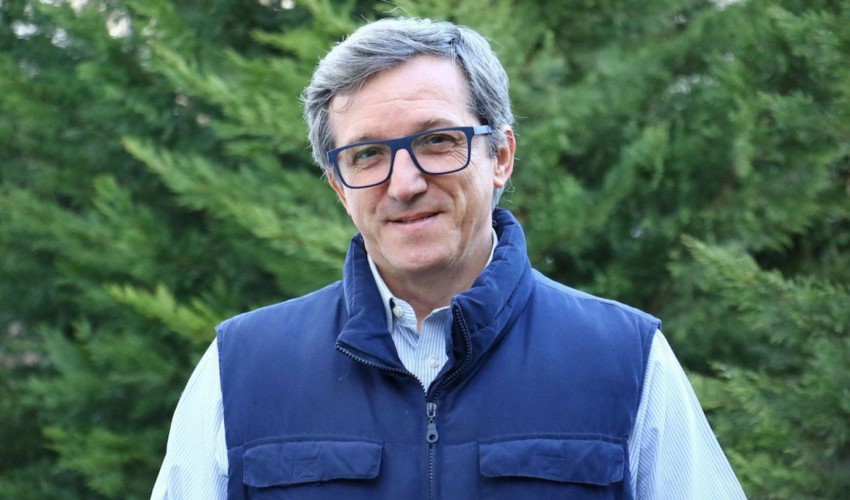
Founded in the midst of a worn-out geography with scarce resources and essentially a scene of fire, the Republic of Turkey achieved significant economic progress in a relatively short time. In a 100-year process marked by ups, downs, and crises, the country, where industrialization began to become prominent in the 1950s following steps taken in the 1930s, also saw the emergence of familiarity with international capital and economic institutions in the 1970s.
The responses and evaluations provided by Prof. Dr. Erinç Yeldan to our questions regarding the globalization process in the 100-year history of the Republic, the country's relations with the European Economic Community, the European Union, the IMF, and rating agencies over different periods, as well as what it has gained and lost, are summarized as follows:
EUROPE ACCELERATED TOWARD CAPITALISM, THE OTTOMAN EMPIRE REMAINED BEHIND
To briefly summarize the environment the young Republic entered: the Anatolian geography was worn out, devastated, and exploited to its core. England had experienced the industrial revolution, and then the war for colonies began. With the Balkan Wars and the First World War, our surroundings were a scene of fire. If we go back a bit, yes, the Ottoman Empire reached Vienna. Yes, the Mediterranean became an Ottoman lake, but while all this was happening, especially in the 1500s during the period we call the Magnificent Suleiman, Europe was accelerating toward capitalism through new technological inventions and the development of money and trade, while the Ottoman Empire remained behind. By the 1850s, the Ottoman geography as a whole was an economy on the periphery of capitalism. Therefore, it was under the control of transnational monopolies. There were small city-states, small city economies. Istanbul was the only region with contact with the international world.
And when the young Republic took over such a structure, it was a stagnant, stunted agricultural industry that could not even produce basic consumer goods, constantly exporting their raw materials and squandering the income obtained from abroad.
Under the name of free trade, the trade monopolies and norms of England, the Netherlands, France, Italy, and Germany had suppressed their own rationalities within the Ottoman geography.
Under these conditions, we would not enter a Soviet-style socialist and planning path to create production and a bourgeois class through the state, but rather a mixed economy. The essence of this was that the state would produce, but while producing, it would also prepare the ground to allow for the birth of a national bourgeoisie class. This system would express itself much more clearly, especially after the 1950s and 60s. However, two major shocks disrupted the entire design.
MORE OF A CITIZENSHIP PROJECT THAN AN INDEPENDENT ECONOMIC PROJECT IS BEING IMPLEMENTED
In the early years, the founding cadres of the Republic were able to demonstrate the rationality and the will to spread industry across Anatolia in a way they desired and planned, without feeling the pressure of transnational monopolies, transnational corporations, or transnational geopolitics, and above all, while maintaining their independent policies. It is very clear that this was not just an economic project, but a project to bring citizenship to Anatolia. They were able to implement this design independently and with ease.
They were able to break through the pricing conditions imposed on Turkey by global imperialism and the pressure of world prices, and develop a pricing system based on their own principle of social benefit.
However, this understanding, this design, and this civilization project—which we could call Turkey's encounter with the Renaissance—faced great resistance not only from external shocks but also from conservative large landowners and the feudal structure. So much so that the biggest obstacle to the closure of the Village Institutes, the development of industrial investments in the eastern provinces, and the formation of a civic consciousness through the enlightenment of those regions, was the landowners.
Globally, there was also a conjuncture after World War II that turned in favor of agricultural goods.
The country was industrializing, but agriculture and agricultural prices were outpacing industrial prices. Agricultural output was much more valuable, larger, and a phenomenon that generated rent. The landowners of Anatolia took full advantage of this.
THE SEEDS OF 'GETTING RICH QUICK' WERE SOWN IN THE 1950S
In the world shaped after the world war, Turkey clearly and directly took its place alongside NATO and American-style capitalism. The idea of becoming a 'Little America' and the unique model of Turkey based on a mixed economy did not sit well with the leaders of this statist state under the conditions of that period. Capital, technology, profitability, finance, and credit were in the Western world. And gradually, the first fruits of that 1980 neoliberal transformation—the seeds of the 'let's get rich,' 'let's make a killing' mentality—were sown in the 1950s.
Within international geopolitics, it was clearly structured as an army on the side of American imperialism. In economic relations, the IMF was to be established. The US saw that there was a need for international finance and a currency in the international arena, and they did not want to leave this to the hegemony of any single country. They decided to establish an international organization; the name IMF, or International Monetary Fund, had not even been fully shaped yet. Later, they established the IMF. Turkey became very engaged with this idea; conferences were held in 1944 and 1947. Turkey was one of the first members of the IMF, with the expectation that we were on the side of the civilization front in a world where the American dollar reigned, and that cheap credit would be provided to us through the IMF, and indeed, cheap credit was provided.
The imposition on Turkey that 'you do not need technology or production; you should market your army, engage in small businesses and agricultural production, and buy the necessary goods from us' aligns very well with the ideology of the Anatolian landed gentry.
The idea is that you do not need industrial investment or large-scale industries; you have the money, so you can just buy them. When you cannot buy them, the IMF will be right there to open credit lines and provide support for you.
TURKEY IS TURNING INTO A DEMAND WAREHOUSE
Following that, the European Economic Community, which started as a coal union and would later become the European Union, was established.
We are following Greece; they join NATO, we join NATO; they try to enter the European Union, we try to enter. It is not even entirely clear what we are pursuing.
The desire is to be European, to be American, and to have access to cheap credit. In Europe, of course, the geography was reshaped and industries were re-established; European industry would run through Germany and France, while Turkey would serve as a source of cheap labor and a consumption warehouse, or rather, a surplus demand warehouse. Thus, the goods produced with high productivity in Europe are sold to us.
However, the 1960 coup d'état triggered a brand new awakening in Turkey. National industry came back onto the agenda. Within the OECD and among the European intelligentsia, the idea of a strategy to be constructed not through free trade or unregulated markets—though it was not yet called neoliberal—but within the framework of a directive development plan, began to prevail.
News Source: 12punto
Most Read

Striking picture for Özgür Özel's 'New Party'

The PKK opening and Özgür Özel’s path!..

How did the newspapers view Özgür Özel's farewell to the CHP?

He killed his wife by slitting her throat: Their children witnessed the moments

What did the CHP do?

Özel’s new party move in the world press

Fire at TUSAŞ engine factory in Eskişehir under control

The New CHP, against CEHAPE

From self-efficacy to despair

Kılıçdaroğlu's first message on Özgür Özel's new party announcement