

The effects of the oil shock that began in the Strait of Hormuz are moving toward the West
As a historic crisis unfolds in energy markets, the oil shock triggered by developments in the Strait of Hormuz is causing serious concern in Western countries following its impact on Asia. Price hikes and supply contractions are threatening the global economy.



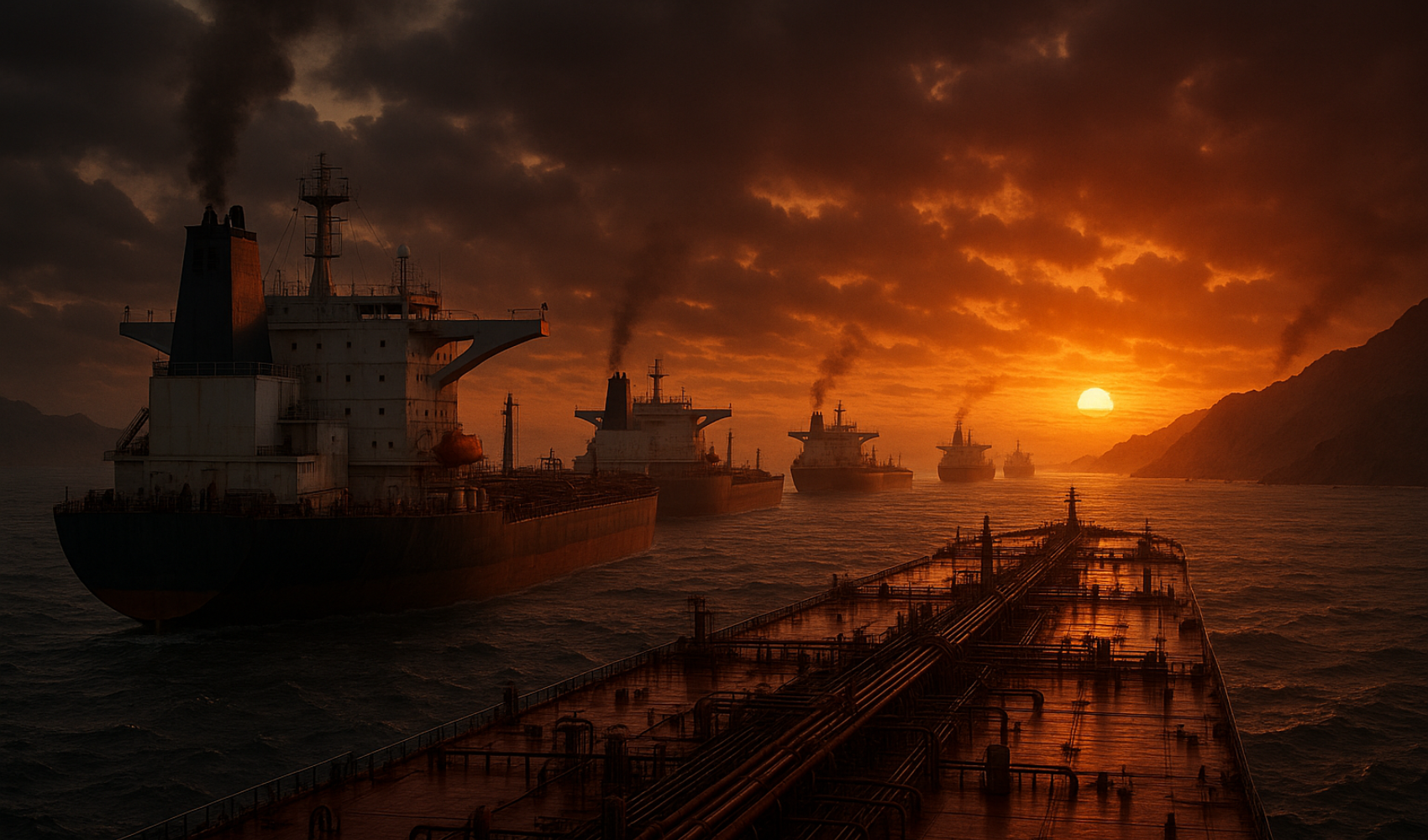
The oil supply shock, which has been ongoing for a month, has now caused alarm bells to ring in Europe and America following fuel shortages in Asian countries, particularly Thailand and Pakistan. Experts warn that this crisis has not yet been fully felt and that there may be shortages of diesel and other petroleum derivatives in the West in the coming period.
In discussions with leading brokers, traders, and consultants in the energy sector, the view prevails that the blockage of the Strait of Hormuz carries the risk of producing consequences that could even overshadow the oil crises of the 1970s. Europe, in particular, is facing high prices, potential diesel shortages, and concerns over supply security. If the crisis deepens, both consumers and businesses could face severe restrictions; for example, less driving, reduced flights, and a major drop in spending.
Statements on the matter indicate that demand has already fallen in some Asian countries, stocks are rapidly depleting, and rationing systems have been introduced. Meanwhile, U.S. officials and financial experts have begun making assessments based on scenarios where oil prices could reach 200 dollars per barrel.
TotalEnergies SE CEO Patrick Pouyanne, in his speech at the CERAWeek conference held in Houston, stated, "If this crisis lasts another three to four months, the world faces a systemic problem." Pouyanne emphasized that the inability to use 20 percent of the oil and LNG capacity exiting the Gulf would have serious and unsustainable consequences for global energy.
LNG SUPPLY ALSO AT RISK
Alongside the oil crisis, risks are also growing in the liquefied natural gas (LNG) markets. The Strait of Hormuz hosts one-fifth of the world's LNG supply, and disruptions are emerging in shipments from the Middle East. Unlike oil, there are no alternative routes available for LNG in the short term, and global strategic stocks are quite limited. Iran and the conflicts in the region also directly threaten energy facilities. QatarEnergy officials announced that repairs to damage at the world's largest LNG facility could take five years.
Although the U.S. can relatively protect its domestic market with its massive LNG export volume, the situation is becoming increasingly critical for the global market. Furthermore, the rise in oil prices is increasing the cost not only of fuel but also of by-products such as plastics, which are widely used in industry.
The continued closure of the Strait of Hormuz means a disruption of nearly 11 million barrels in daily global oil supply. This is a deficit that exceeds the total oil consumption of the EU's largest economies. As the crisis drags on, temporary solutions provided by emergency reserves also risk being exhausted.
According to data from Bloomberg Economics, the U.S. consumer price index for March rose to 3.4 percent, which is a reflection of rising fuel costs. If the steady increase in oil prices continues, inflation in Europe is expected to slow by 1 point, and economic growth by 0.6 percent.
HOW HIGH WILL PRICES GO?
Greg Sharenow, head of the commodity portfolio investment team at Pimco, stated that it is difficult to predict how high prices will climb in the oil market. "When you start talking about what that price is going to be, you're heading into the unknown. If that's the adjustment the market needs to make, you're going to experience the pain the hard way," he said.
The price of a barrel of oil has been hovering around 112 dollars as of last week. Although this represents a 55 percent increase compared to pre-war levels, it is still below the 2008 peak of 147.5 dollars. The increase in European natural gas prices has reached 70 percent. However, levels seen during the 2022 energy crisis have not been reached. Investors are delaying the spread of panic by assuming that the current U.S. administration can take swift action against economic impacts.
While there is no consensus on what levels prices need to reach to suppress demand, if the Strait of Hormuz remains closed for a long time, uncontrolled rises in oil prices could trigger global stagflation and change both central bank policies and political balances.
EMERGENCY MEASURES AND INSUFFICIENT SOLUTIONS
Although oil redirected by Saudi Arabia and the United Arab Emirates through pipelines that bypass the Strait of Hormuz partially alleviates the supply deficit, these measures are not enough to solve the crisis. Western countries, including the U.S., have begun to release record amounts of oil into the market, but it is not exactly clear how quickly these stocks can be deployed.
Additionally, the temporary suspension of some oil sanctions on Russia and Iran has briefly increased supply in the market. However, Japan's request for an additional coordinated reserve release from the International Energy Agency indicates that the measures taken are insufficient. In the European Union, the view that a new decision to release reserves should only be put on the agenda in the event of a real supply shortage is gaining prominence.
American Petroleum Institute CEO Mike Sommers stated, "The plan we have right now is quite limited."
Prices for diesel and jet fuel, which are critical for refineries, are rising sharply in Europe as well as in Asian markets. As demand begins to contract significantly, the possibility of implementing rationing in Western countries in the coming period is on the agenda.
News Source: 12punto
Most Read

Striking picture for Özgür Özel's 'New Party'

The PKK opening and Özgür Özel’s path!..

How did the newspapers view Özgür Özel's farewell to the CHP?

He killed his wife by slitting her throat: Their children witnessed the moments

What did the CHP do?

Özel’s new party move in the world press

The New CHP, against CEHAPE

Fire at TUSAŞ engine factory in Eskişehir under control

From self-efficacy to despair

Kılıçdaroğlu's first message on Özgür Özel's new party announcement