

The Euro is 26 years old
The euro, the official currency of 20 European Union members, is 26 years old. Introduced electronically in 1999 and physically in 2002, the euro serves 350 million people.



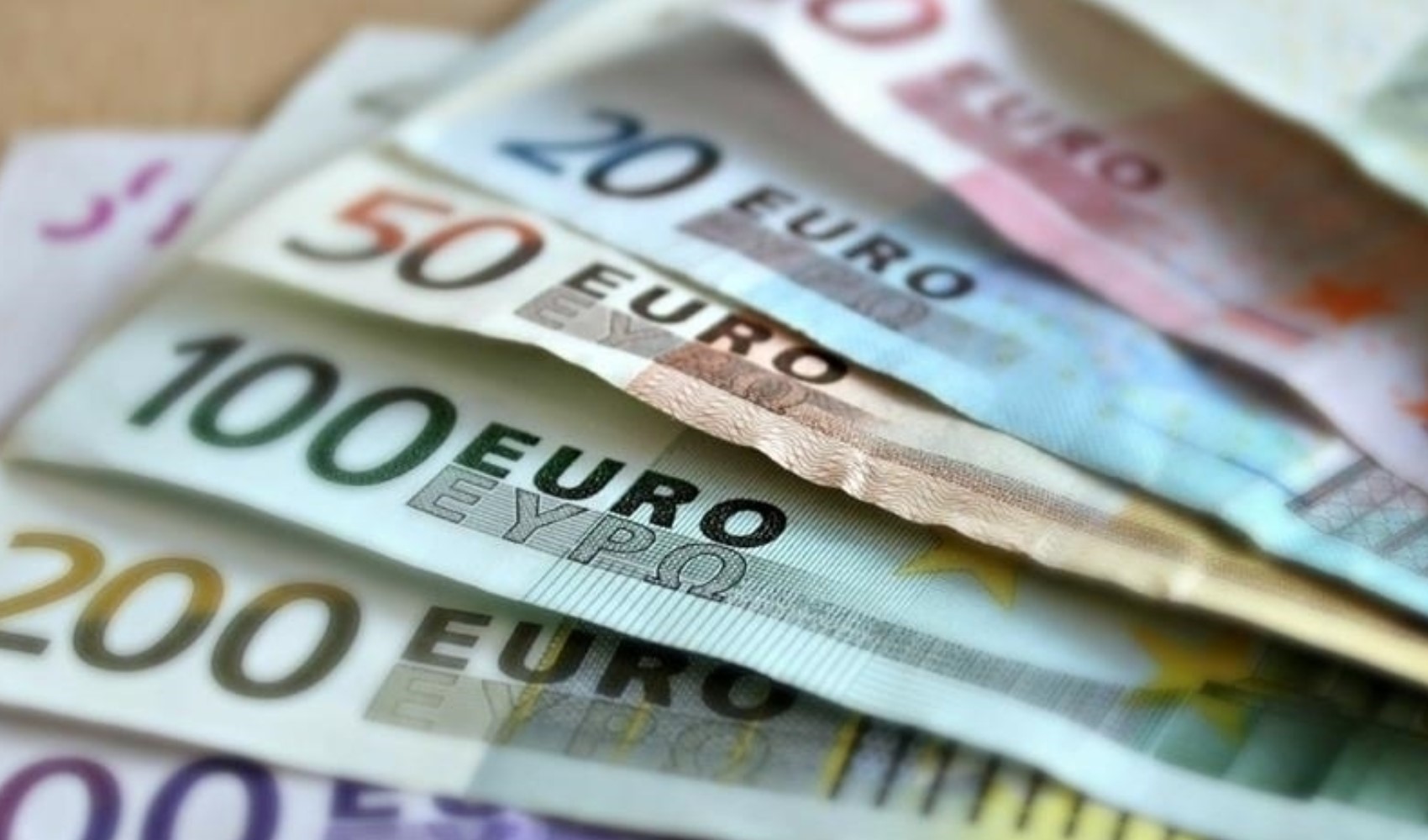
The euro, the currency used in European Union (EU) countries, has entered its 26th year.
Used as the official currency of 20 of the 27 EU member states, the euro was introduced in 1999 as an accounting currency for electronic payments. On that date, the euro was introduced to global financial markets.
Following a 3-year transition period, the euro was introduced into daily life, entering circulation as banknotes and coins on January 1, 2002, and began to be used in daily transactions.
USED BY 20 COUNTRIES
Currently, the euro is used by 20 EU member states: Germany, Austria, Belgium, Estonia, Finland, France, the Netherlands, Ireland, Spain, Italy, the Republic of Cyprus, Latvia, Lithuania, Luxembourg, Malta, Portugal, Slovakia, Slovenia, Greece, and Croatia.
The monetary policy of these countries, referred to as the "Eurozone," is managed by the "Eurosystem," which consists of the European Central Bank (ECB) and the central banks of the member states.
The mandate of the Frankfurt-based ECB is defined as maintaining price stability in the Eurozone, which consists of the EU member states that use the euro as their currency.
The ECB's primary objective is to maintain price stability in the Eurozone by ensuring that inflation does not exceed 2 percent in the medium term; it controls price increases by raising interest rates to discourage spending or lowering them to encourage consumption.
ECB interest rate decisions are made by the bank's Governing Council, which consists of the 6 members of the Executive Board and the governors of the national central banks of the 20 member countries.
USED BY APPROXIMATELY 350 MILLION PEOPLE
While the euro is known as the world's second most important currency after the US dollar, it is used by approximately 350 million people in Europe.
The European currency, also referred to as the "ecu" and "euro," is in circulation in 7 different denominations of banknotes—5, 10, 20, 50, 100, 200, and 500—and coins of 1, 2, 5, 10, 20, and 50 cents, as well as 1 and 2 euro coins, all of which come in various colors and sizes.
The printing of the 500-euro banknote, which has the highest value, was discontinued in 2019 due to the fight against terrorist financing and money laundering.
Although they cannot be used in daily life and shopping, 500-euro banknotes can be deposited into bank accounts and exchanged at banks.
All EU countries except Denmark are required to adopt the euro currency once they meet the necessary criteria.
Denmark, which rejected adopting the euro in a referendum, remains distant on the matter despite meeting all economic and convergence criteria as required by EU treaties.
The most recent addition to the euro was Croatia on January 1, 2023, and Bulgaria is expected to join within a few years.
DEPRECIATION
When it was launched in 1999, 1 euro was at the level of 1.17 dollars. After this date, the euro depreciated rapidly against the dollar. In October 2000, the euro fell to 0.83 dollars.
The euro gained value against the dollar in the period from 2002 to 2008. In 2008, 1 euro reached 1.60 dollars, setting a record.
In 2024, the euro/dollar parity was pressured by Donald Trump's plans for customs duties on EU products following his victory in the US elections, fewer interest rate cuts in the US, and a weakening economic outlook.
The euro/dollar parity, which was 1.10 at the beginning of 2024, is hovering around 1.04 as of December 31.
DIGITAL EURO
The ECB is preparing to launch a digital version of its currency.
In the face of the evolving financial landscape, the ECB is considering launching a "digital euro" as a complement to traditional cash.
The ECB began its project for the creation of a digital euro in 2021, taking steps to research the issuance of digital currency.
The bank announced that a 2-year "preparation phase" for the digital euro issuance project would begin in November 2023.
On the other hand, the ECB also aims to counter US companies that dominate the digital payments market in Europe with the digital euro.
News Source: 12punto
Most Read

Striking picture for Özgür Özel's 'New Party'

The PKK opening and Özgür Özel’s path!..

How did the newspapers view Özgür Özel's farewell to the CHP?

He killed his wife by slitting her throat: Their children witnessed the moments

What did the CHP do?

Özel’s new party move in the world press

The New CHP, against CEHAPE

Fire at TUSAŞ engine factory in Eskişehir under control

From self-efficacy to despair

Kılıçdaroğlu's first message on Özgür Özel's new party announcement