

The HVAC sector in Turkey continues to be a rising power in exports
The HVAC sector in Turkey is drawing attention with its steady growth in exports and is increasingly gaining strategic importance alongside the green transition. The capacity of domestic production and investments in innovation within the sector are proving effective in moving our country to a more competitive position in the global arena.



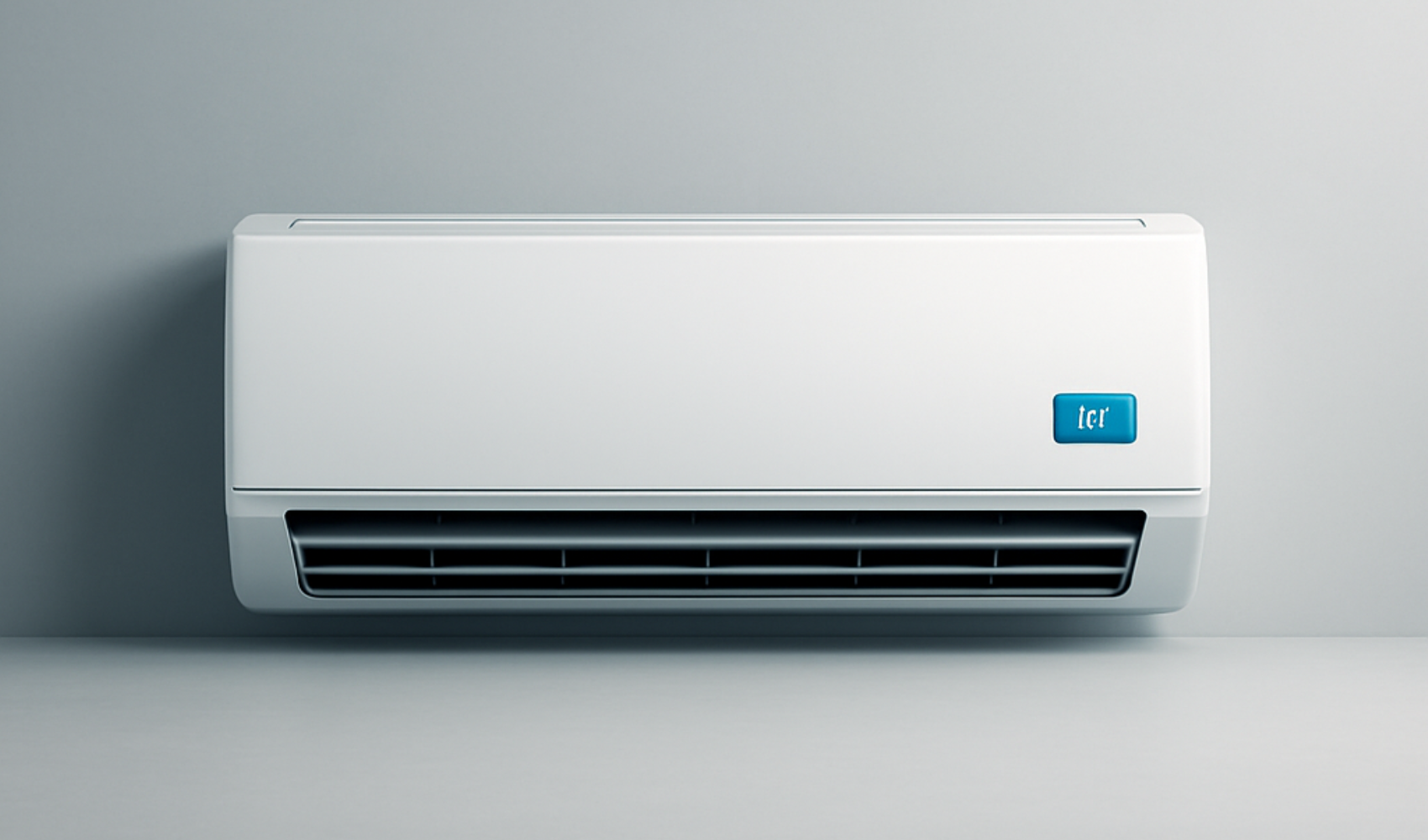
The HVAC sector, which encompasses heating, cooling, ventilation, and climate control systems, stands out as an industry aimed at ensuring comfort and efficiency in living, working, and production spaces. Known as HVAC (Heating, Ventilation and Air Conditioning), this field takes on critical roles in the fight against global climate change and is among the sectors where expectations for energy efficiency are highest. In Turkey, the sector's investments in R&D centers and the leadership of domestic brands in technology are paving the way for us to become an effective actor in the global market.
Once preferred solely to improve quality of life, climate control systems are now being reshaped in line with goals such as energy savings, sustainability, and low carbon emissions. The rapidly growing global market has reached a volume of approximately 220-280 billion dollars in 2024-2025, driven by accelerating urbanization and increased demand due to extreme temperature fluctuations. This figure is projected to approach 400 billion dollars in the 2030s.
ATTRACTING ATTENTION WITH MIDDLE EAST DEMAND
While the Asia-Pacific region is the locomotive of growth on a global scale due to its increasing population and developments in the construction sector, Europe and North America are turning specifically toward energy-efficient and smart technologies. The Middle East and Africa, meanwhile, are drawing attention with high cooling demand due to climatic conditions.
Legal regulations and energy efficiency-focused initiatives are enabling the sector to rapidly transform worldwide. Smart home systems, AI-supported control infrastructures, refrigerants with low environmental impact, and digitalization are becoming the fundamental elements of the transformation of the HVAC market.
Turkey, thanks to its strong industrial infrastructure and proximity to Europe, is a significant production and supply hub for many HVAC products, particularly air conditioners. In 2024, our sector's export value exceeded 7 billion dollars, while imports amounted to approximately 10 billion dollars. Despite the foreign trade deficit, the increase in exports is seen as encouraging for the sector's emergence on the global stage. Although Turkey is not yet among the market leaders, it has assumed a respected supplier role in European, Middle Eastern, and North African countries.
One of the sector's biggest goals is to make innovation and value-added growth sustainable in 2025 and beyond. Increasing R&D investments, strengthening university-industry collaborations, and gaining more visibility for Turkish brands abroad stand out among these objectives.
However, there are also challenges facing the sector. Rising energy costs negatively affect the competitiveness of domestic producers, while the shortage of qualified labor is frequently mentioned both in Turkey and globally.
Looking to the future, it is anticipated that electric and efficient systems will come to the fore in line with the net-zero energy target, and that low-GWP refrigerants and environmentally friendly designs will become standardized. The widespread adoption of HVAC systems that work integrated with smart buildings and automation systems, and the expectation that digitalization will lead to radical changes in business processes, are also anticipated.
In addition, the shift from business models based on product sales to service-oriented approaches that offer maintenance, performance tracking, and long-term solutions is gaining importance for the future of the sector. Turkey's efforts to increase market diversity in exports, turn toward rapidly growing regions such as the Middle East and Africa, and encourage the export of value-added products will be among the defining strategies of the coming years.
News Source: 12punto
Most Read

Striking picture for Özgür Özel's 'New Party'

The PKK opening and Özgür Özel’s path!..

How did the newspapers view Özgür Özel's farewell to the CHP?

He killed his wife by slitting her throat: Their children witnessed the moments

What did the CHP do?

Özel’s new party move in the world press

The New CHP, against CEHAPE

Fire at TUSAŞ engine factory in Eskişehir under control

From self-efficacy to despair

Kılıçdaroğlu's first message on Özgür Özel's new party announcement