

The situation regarding air pollution in Istanbul has reversed
The particulate matter rate measured in Istanbul in March decreased by 24 percent compared to last year. Measurements taken across the city revealed that air quality has improved significantly in some regions.



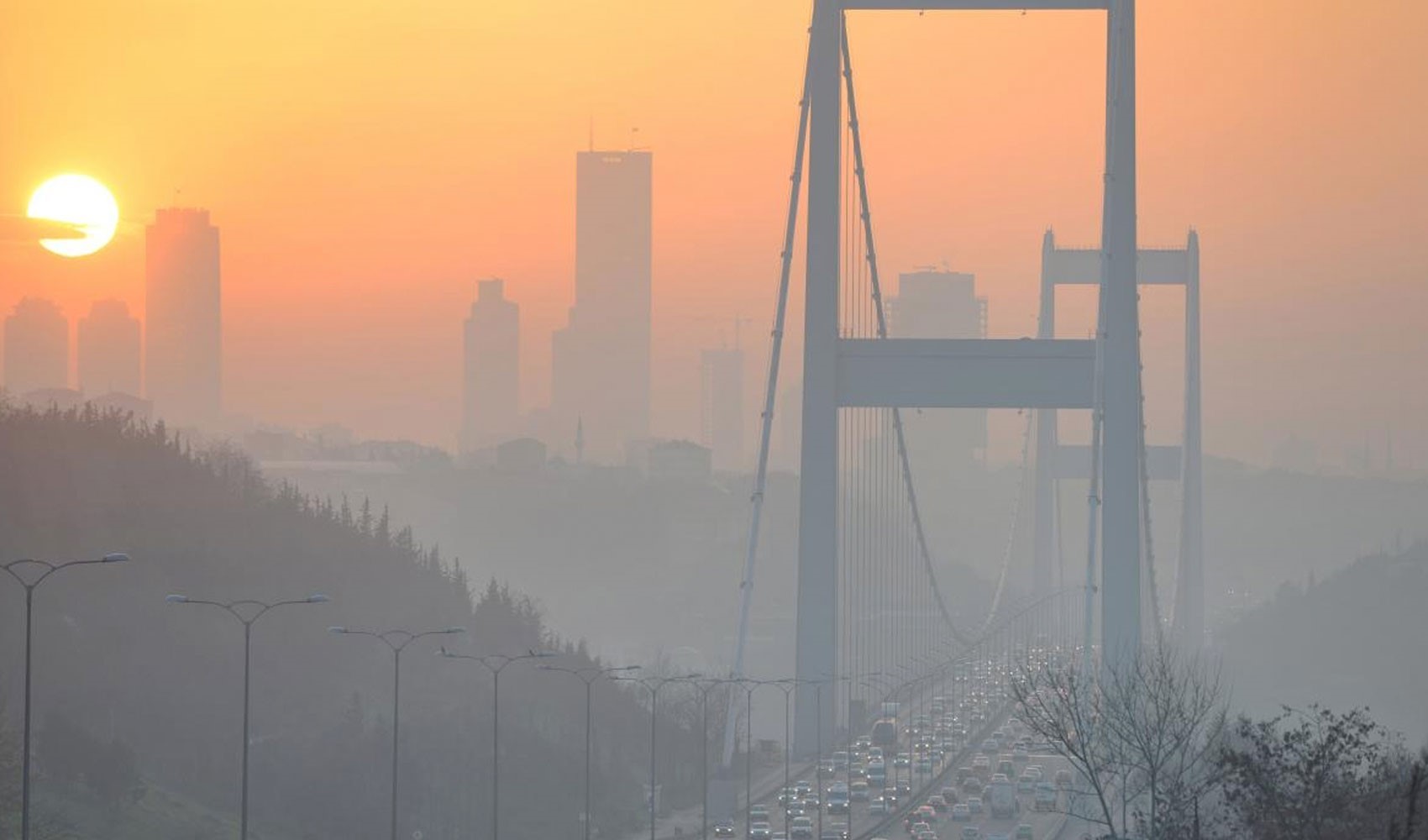
Air quality research conducted in Istanbul has shown a significant decrease in particulate matter (PM10) concentration in March. The PM10 level, which was measured at an average of 40.3 micrograms per cubic meter in March 2025, fell to 30.6 micrograms in the same period of 2026, based on data from 24 stations. Thus, there was a 24 percent decrease in air pollution caused by particulate matter over a one-year period.
In the study led by Istanbul Technical University faculty member Prof. Dr. Hüseyin Toros, PM10 data obtained from stations belonging to the Ministry of Environment, Urbanization and Climate Change and the Istanbul Metropolitan Municipality were analyzed in detail.
According to the March 2026 data, the point with the highest amount of particulate matter was recorded as the Sultangazi 3 station with 59.5 micrograms per cubic meter. This was followed by Kağıthane with 54 micrograms and Sultangazi 2 with 46.9 micrograms, while the location where air pollution was detected at the lowest level was the Sultangazi 1 station; the measurement result here was reported as only 9.2 micrograms. Among the other stations with low PM10 values, Büyükada (16.9 micrograms), Kumköy, and Ümraniye 1 (18.1 micrograms each) stood out.
In general, a decrease in the amount of particulate matter was detected at 19 of the 24 air quality measurement points in Istanbul. However, an increase was observed at 5 stations compared to the previous year. In particular, the Sultangazi 1 station experienced a remarkable improvement with an 81 percent decrease in the PM10 level within one year. Ümraniye 1 (48 percent decrease) and Beşiktaş (47 percent decrease) were also regions that stood out with positive changes in air quality.
On the other hand, it was observed that there was an increase in air pollution in some regions. In the comparison based on January, a 74 percent increase was recorded at the Arnavutköy station compared to the same period last year, and a 46 percent increase was recorded in Sancaktepe.
While the results show that air quality has improved in many parts of Istanbul in general, the increase in pollution at some points has once again revealed the importance of local factors and environmental measures.
News Source: 12punto
Most Read

Striking picture for Özgür Özel's 'New Party'

The PKK opening and Özgür Özel’s path!..

How did the newspapers view Özgür Özel's farewell to the CHP?

He killed his wife by slitting her throat: Their children witnessed the moments

What did the CHP do?

Özel’s new party move in the world press

Fire at TUSAŞ engine factory in Eskişehir under control

The New CHP, against CEHAPE

From self-efficacy to despair

Kılıçdaroğlu's first message on Özgür Özel's new party announcement