

Turkey did not sign the renewable energy pledge
118 countries have joined a pledge to triple global renewable energy capacity and double the rate of progress in energy efficiency.



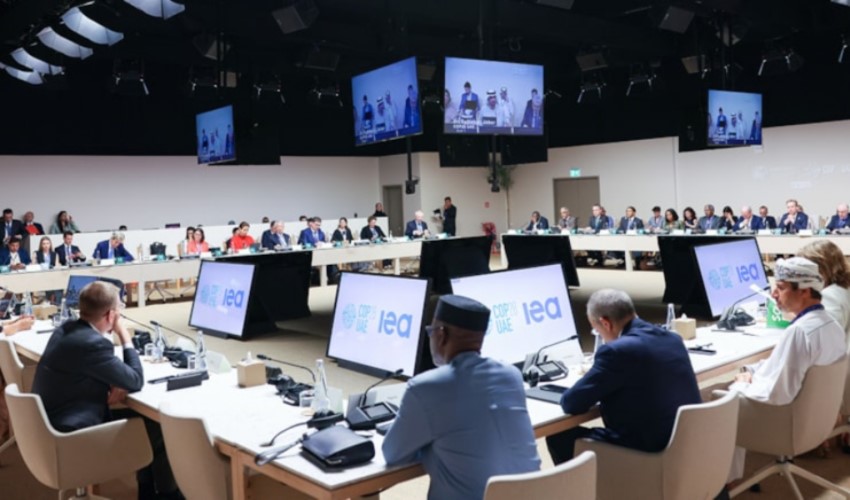
The Global Decarbonization Accelerator initiative was announced as part of the 28th Conference of the Parties (COP28) to the United Nations Framework Convention on Climate Change, which is being chaired by the United Arab Emirates this year.
Under the initiative, 118 countries committed to tripling global renewable energy capacity and doubling the rate of progress in energy efficiency by 2030.
Countries that signed the pledge include the United Arab Emirates, the US, Brazil, Japan, the UK, Mexico, Poland, Germany, Australia, Canada, Denmark, France, Kenya, the Netherlands, Nigeria, and Spain.
TURKEY'S DECISION DRAWS ATTENTION
Turkey, China, India, and South Africa have not yet signed the pledge.
Tripling global renewable energy capacity means increasing it from the current 3.4 terawatts in 2022 to 11 terawatts by 2030. These two targets are among the five key steps announced by the International Energy Agency before COP28 to ensure the success of the summit.
Additionally, as part of the initiative, 50 companies representing more than 40 percent of global oil production signed the Oil and Gas Decarbonization Charter (OGDC).
1 BILLION DOLLAR PLEDGE
Within the framework of the initiative, a commitment was also made to provide one billion dollars in funding for methane emission reduction projects.
COP28 President Sultan Ahmed Al Jaber called on more countries to sign the pledge to triple global renewable energy capacity and double the rate of progress in energy efficiency at the meeting where he announced the initiative.
Describing the launch of the OGDC as a "great step," Al Jaber said, "While many national oil companies have adopted net-zero emission targets for 2050 for the first time, I know that they and others can do more. We need the entire industry to set stronger targets to make keeping global temperature rise to 1.5 degrees Celsius reachable."
Global Wind Energy Council Head of Policy and Projects Joyce Lee stated in her assessment of the initiative that it reflects a consensus that tripling global renewable energy capacity by 2030 is the "most effective lever" in the fight against climate change.
Pointing out that this increase in renewable energy capacity must be combined with the phase-out of fossil fuels, Lee said, "What is important now is for countries to urgently translate this target into policy, regulation, and investment action."
Dave Jones, Global Insights Lead at the London-based think tank Ember, pointed out that tripling global renewable energy capacity and doubling the rate of progress in energy efficiency is critical for the goal of limiting global temperature rise to 1.5 degrees Celsius, saying, "If the efficiency target is achieved, for the first time in history, economic growth will decouple from the growth in global energy demand. These two targets will not only ensure that oil, coal, and gas demand peaks by 2030, but could also lead to a meaningful decline in demand."
"TURKEY SHOULD HAVE BEEN THERE TOO"
Ümit Şahin, Coordinator of Climate Change Studies at the Sabancı University Istanbul Policy Center, stated that Turkey should have been among the countries that signed the initiative, saying:
"Turkey's National Energy Plan aims to increase the total installed capacity of wind and solar energy to 51 gigawatts by 2030. At the end of 2022, the total installed capacity of wind and solar was at the 21-gigawatt level. These figures show that Turkey aims to double its wind and solar energy installed capacity. The declaration at COP28 is also about capacity. As a country that aims to pave the way for renewable energy, Turkey should sign this declaration as soon as possible and show that it is pursuing a constructive climate and energy transition policy."
OIL AND GAS INDUSTRY PLEDGES ARE INSUFFICIENT
Murray Worthy, Senior Oil and Gas Researcher at the research organization Zero Carbon Analytics, found the targets in the OGDC insufficient and made the following assessment:
"This does not go beyond the commitments the oil industry has made before and has not yet fulfilled. Most importantly, it does not require companies to deal with the burning of these fuels, which is the main cause of emissions from fossil fuels. These commitments only cover production process emissions, which make up a very small part of the problem. While it is noteworthy that the United Arab Emirates has managed to get some national oil companies to make new commitments, what matters is whether these commitments will lead to a real reduction in the sector's total emissions, which this voluntary commitment will not ensure even if implemented."
News Source: AA
Most Read

Striking picture for Özgür Özel's 'New Party'

The PKK opening and Özgür Özel’s path!..

How did the newspapers view Özgür Özel's farewell to the CHP?

He killed his wife by slitting her throat: Their children witnessed the moments

What did the CHP do?

Özel’s new party move in the world press

Fire at TUSAŞ engine factory in Eskişehir under control

The New CHP, against CEHAPE

From self-efficacy to despair

Kılıçdaroğlu's first message on Özgür Özel's new party announcement