

A personalized era in water consumption: Everyone's needs are different
Experts emphasize that the long-recommended "2 liters of water per day" rule is outdated and that the correct amount varies based on age, weight, and body characteristics. New criteria for water consumption have emerged for both children and the elderly.



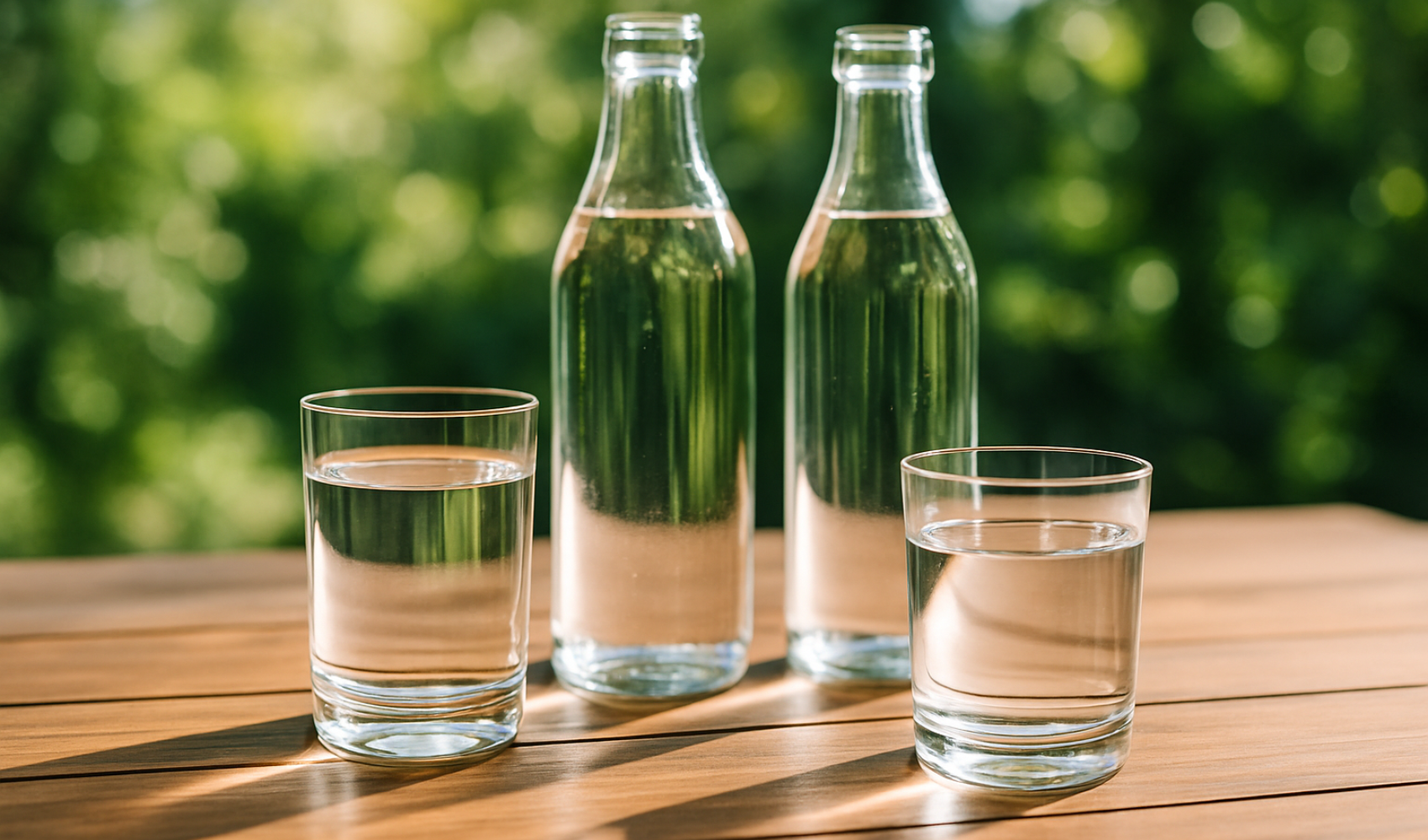
Healthy living habits, which have been shaped for years by the advice to "drink 8 glasses of water a day," are being re-evaluated in light of scientific data. Instead of standard amounts, a new approach focusing on individual requirements is now coming to the fore. Experts emphasize the decisive role of age, weight, and physical condition in water needs.
Warnings regarding the water needs of infants are of vital importance, especially for parents. It is stated that, contrary to traditional approaches, giving water to infants under six months old can be harmful and may even lead to serious health problems. This is because this age group is in a period where their kidneys have not yet reached the maturity to filter pure water. For this reason, the warning is given that "for the first six months, breast milk alone is sufficient, and infants should not be given even a teaspoon of water."
WATER AMOUNT IN ADULTS DEPENDS ON BODY WEIGHT
The 8-glass rule is no longer considered sufficient when determining the water needs of adults. Calculating based on body weight forms the basis of new scientific approaches. According to experts, multiplying your weight by 0.035 is enough to find your personal water requirement. For example, while the recommended daily water amount for someone weighing 70 kilograms is approximately 2.45 liters, the need for a 90-kilogram individual can exceed 3 liters.
In advanced age, monitoring water balance becomes more complex. This is because as age progresses, the region of the brain that triggers the sensation of thirst weakens. Therefore, elderly individuals may not realize they are thirsty even if their bodies are dehydrated. This condition is called "silent dehydration" and can cause serious health problems; for example, issues such as blood pressure fluctuations and mental confusion can occur. Experts advise the elderly to develop the habit of drinking water regularly without waiting to feel thirsty.
TEA AND COFFEE DO NOT REPLACE WATER
The common belief in society that "tea or coffee also meets water needs" is considered incorrect. On the contrary, these two beverages have a diuretic effect, leading to water loss in the body. Experts recommend consuming an extra glass of water with every cup of tea or coffee consumed.

Finally, one of the most practical ways to understand whether the body is getting enough water is to look at the color of the urine. If the urine is dark yellow, this means the body needs more water. Urine being transparent or light yellow indicates that sufficient water is being consumed.
It is now accepted in medical circles that every age group has different water needs and that this need cannot be met with fixed amounts. It is recommended to take personal characteristics into account for proper water consumption and to avoid unnecessary risks.
News Source: 12punto
Most Read

Striking picture for Özgür Özel's 'New Party'

The PKK opening and Özgür Özel’s path!..

How did the newspapers view Özgür Özel's farewell to the CHP?

He killed his wife by slitting her throat: Their children witnessed the moments

What did the CHP do?

Özel’s new party move in the world press

Fire at TUSAŞ engine factory in Eskişehir under control

The New CHP, against CEHAPE

From self-efficacy to despair

Kılıçdaroğlu's first message on Özgür Özel's new party announcement