

Humanity's most common nightmares: What do being chased and feeling breathless tell us?
Nightmares, which affect millions of people around the world, actually carry hidden messages from our subconscious. The root causes and scientific explanations of the two most common types of nightmares are drawing attention.



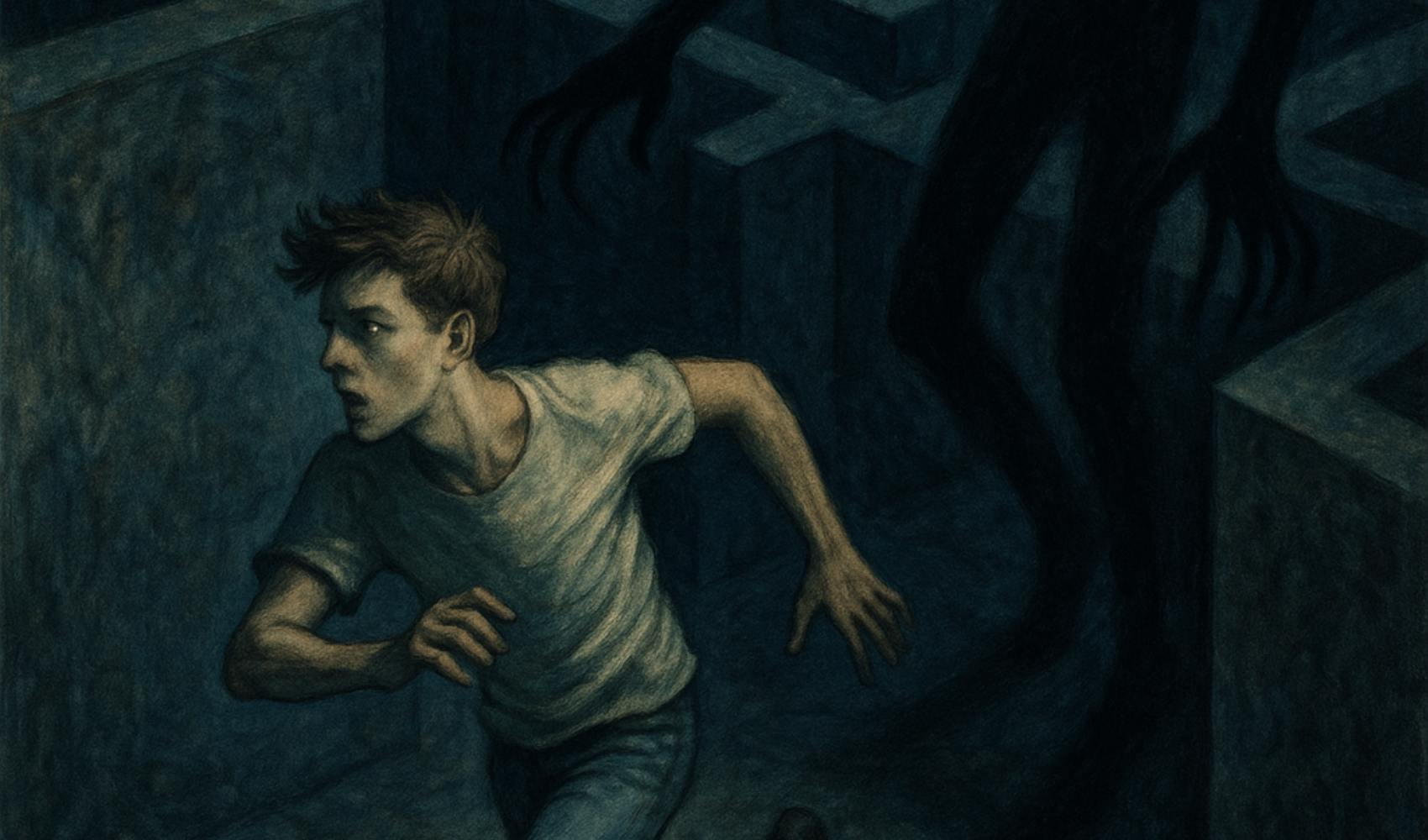
Nightmares often cause us to wake up in a panic in the middle of the night. However, recent research suggests that these disturbing dreams do not occur by chance and carry signals from the depths of human psychology that need to be recognized.
According to scientific studies, two types of nightmares stand out in particular: being followed/chased and moments of fear experienced with the sensation of being unable to breathe. Experts state that through these experiences, our brain processes not only fear but also the social or physical pressures we face in real life.
CHASE NIGHTMARES AND SOCIAL ANXIETY
In studies, one of the most common nightmares people have is running away from someone or something unidentified. In these nightmares, the person tries to escape from a threatening entity that is constantly felt behind them, whose face is often not even visible, but they never succeed.
Scientists say these recurring dreams are not just about fear, but about the re-simulation of "flight and survival" reflexes during sleep. Our ancestors were forced to be on alert against wild animals or enemy attacks in prehistoric times. Although such physical dangers have decreased today, for modern humans, conflicts in social environments, mobbing, financial difficulties, or relationship problems have become the psychological reflection of the same threat.
According to experts, running away from a monster or an unknown force in a dream points to an unresolved problem in the subconscious or a desire to escape from a difficult person one wishes to avoid.
DREAMS CAUSING SHORTNESS OF BREATH AND PHYSICAL HEALTH
Another common type of nightmare is being suffocated, unable to breathe, or feeling pressure on the chest. Some people wake up in a sweat during such nightmares, even showing symptoms similar to a panic attack. Clinical research on the subject indicates that there is a two-dimensional explanation for these dreams.
The first dimension is biological: In individuals suffering from health problems such as airway obstruction, asthma, or sleep apnea during sleep, the brain can trigger a nightmare scenario when oxygen levels in the blood drop. This mechanism, which acts like an alarm saying "your breath is being cut off, wake up immediately!", aims to protect the person from physical danger.
As for the second, psychological reasons come to the fore. The responsibilities life places on us, chronic stress, unfinished work, or emotional pressures can appear in dreams as symbols of suffocation or constriction. During sleep, the subconscious can express this intense distress through the feeling of suffocation.
In addition, sleep paralysis, known as 'karabasan' (old hag/night demon) among the public, is a factor that strengthens this experience. In the short-term paralysis experienced when the brain is awake but the body cannot move, the feeling of shortness of breath and an entity sitting on the chest can frighten many people. However, experts emphasize that this is entirely due to body physiology and temporary muscle paralysis.
Nightmares do not just cause fear-filled nights; they can also be harbingers of important messages coming from our bodies and minds.
News Source: 12punto
Most Read

Striking picture for Özgür Özel's 'New Party'

The PKK opening and Özgür Özel’s path!..

How did the newspapers view Özgür Özel's farewell to the CHP?

He killed his wife by slitting her throat: Their children witnessed the moments

What did the CHP do?

Özel’s new party move in the world press

The New CHP, against CEHAPE

Fire at TUSAŞ engine factory in Eskişehir under control

From self-efficacy to despair

Kılıçdaroğlu's first message on Özgür Özel's new party announcement