

12punto writer Aydın Tonga, who has released his first short story book: 'The more a person reads, the more their desire to write grows'
Aydın Tonga, known for his academic work on Islamic history and the history of religions, has stepped into the literary world with his first short story collection, "Menevşe" (Violet). Tonga spoke to 12 Punto about the process of creating his book, his stories, and his journey as an author.



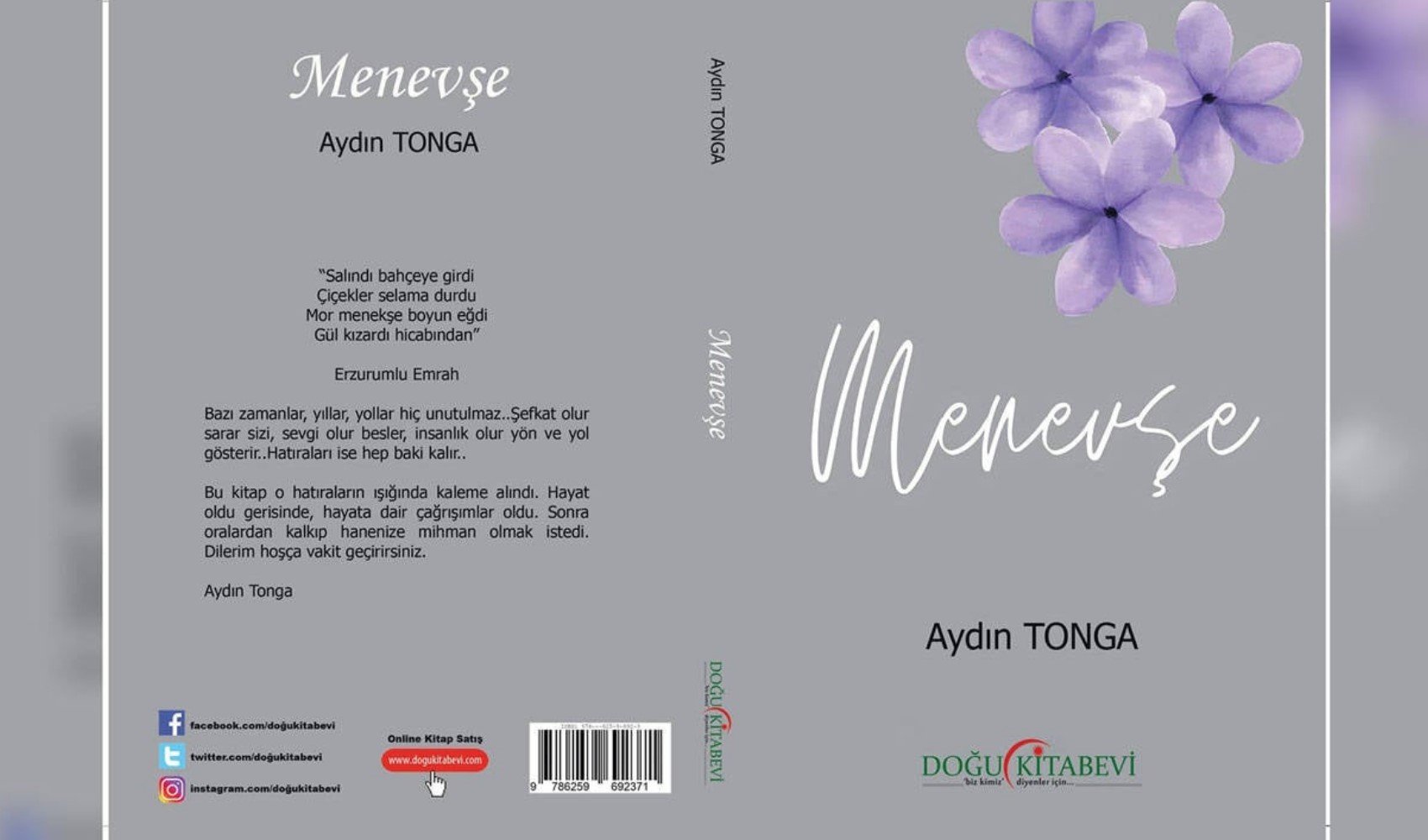
The first short story book by 12punto writer Aydın Tonga, titled "Menevşe," has met its readers. Tonga answered questions about his book for 12punto.
Here is that interview:
Question: We know you for your work in the fields of Islamic history and the history of religions. I believe you haven't had a work in the field of literature before. Could you share with us how the idea for a short story collection came about?
Aydın Tonga: First of all, thank you for giving me this opportunity. As you stated, I have generally worked on theological topics. Specifically, I have studied the early periods of Islam. On the other hand, I can say that I have had a good relationship with books since my childhood. My childhood was spent in a village. We didn't have much access to books, but I still tried to read as much as I could. In the following years, my reading practice developed, and I strove to read books of all kinds and get to know different writers. I said all this for this reason: The more a person reads, the more their love for books and the need to produce that love with their own pen grows. At least, that's how it was for me.
Question: So, how did your short story writing process develop, and how did you decide to produce a work in this genre? Honestly, I see this as a task that requires some courage.
Aydın Tonga: It was about five years ago, I think. It might have been the early days of the pandemic. Like many people, I had caught the Covid illness. On one of those nights when I couldn't sleep, with an idea that suddenly developed, I wrote the story titled "Azap" (Torment), which is also included in the book. However, it wasn't a story I wrote with the intention of publishing it. I wrote it entirely under the psychology of that moment. Afterward, I shared the story with a few close friends whose opinions I value. The feedback was very positive. They even compared it to some writers whose style I also admire. Later, my friends suggested that I write short stories. Honestly, these thoughts stayed in my mind, but let's say it was destined for the book to be published today. Ultimately, the story of "Menevşe" dates back to those days.
Question: The book consists of 16 stories, but the story that gives the book its name is "Menevşe." Does this story have a special meaning for you? Why Menevşe?
Aydın Tonga: Let me put it this way: it doesn't have a special importance for me personally. In other words, "Menevşe" was not a story I wrote based on an event that actually happened. So, why this story? I believe in the magic of love. Like friendship, love is a magnificent bond established between two people, and I think there is no state of existence that can replace this bond. Within this bond, there are feelings/thoughts of compassion, mercy, respect, empathy, love, and many more. Love is like a unique gift... Nothing can replace it—not money, fame, or power. Therefore, as best as I could, I wanted to make this feeling visible through a love story. The fundamental thought behind the name stems from this.
Question: Did you have a specific selection method when determining your stories, and how did the stories evolve from you into writing?
Aydın Tonga: I didn't have a specific selection method, but I wanted to cover different topics that left a mark on me in some way. Faith is at the forefront of these topics. My stories such as "Ahmet Efendi," "Abdullah and His Son," and "Religion in the Shadow of the Gun" were shaped within the theme of faith. I can say that some events I witnessed or experienced influenced the writing of these stories. In fact, the other stories came to life in the book in a similar way, with the same feelings.
Question: In your story "Tears in the Tomb," you also address the relationship between faith and human life, and examine the effect of faith on human life. Ultimately, does Selim undergo a transformation in the name of faith at the end of the story? What exactly is happening here?
Aydın Tonga: Whether it's called a transformation or a change, I want the reader to decide what point Selim has reached. However, for me, the issue is about our perspective on events and the results created by this perspective. That is, the wider the angle from which this perspective is established, the richer its results can be. In this respect, Selim had a fixed perspective in the name of faith; in this respect, the matter was over for him. However, both the events he experienced himself and the incident he witnessed, specifically regarding his mother, may have caused Selim to re-evaluate himself. As a result, the Selim before coming to the tomb and the Selim after the tomb were no longer the same.
Question: You also touch upon quite striking events in your story titled "Waste Facility." We won't go into the details of the story here, but why do people find it difficult to change sides politically? What are your thoughts on this?
Aydın Tonga: As you said, the story "Waste Facility" contains striking details. The truly striking aspect is that this actually happened in reality. Of course, ultimately this is fiction; the characters, dialogues, and flow were produced by me. But as a result, a similar version of this story actually happened. As for your question, it's a difficult question. I think that before political views, people don't want to change the cluster, group, belonging, and that identity as a whole that they are a part of. The truly difficult part is here. Because on one hand, there is a spiritual investment made in that identity over the years, and on the other hand, that identity has a position and discourse against other identities over the years. Of course, just as the powerful effects and traces of that discourse are embedded in human memory, they are also passed down from generation to generation. As a result, the identity dynamic, which is shaped under the influence of culture, media, and similar social dynamics over the years, does not change all at once. This story also constitutes an example of the situation we are describing. On the other hand, as I stated, there are of course other reasons for this situation that can be discussed in a broader timeframe.
Question: Finally, who are your favorite short story writers?
Aydın Tonga: I think I can write Chekhov at the very top. Dostoevsky, Gogol, Kafka... Also from our own lands, Aziz Nesin, Osman Şahin, Mahmut Şevket Esendal, Sabahattin Ali, and from the recent period, Sema Kaygusuz, Behçet Çelik, Zehra Çelenk, Yalın Gündüz, and Yücel Balku, whom we lost at a young age. The list goes on.
Thank you.
Aydın Tonga: Thank you, and I wish you ease in your work.
News Source: 12punto
Most Read

Striking picture for Özgür Özel's 'New Party'

Özgür Özel gives a dated response regarding the number of resignations

Forest fire in Antalya brought under control

The PKK opening and Özgür Özel’s path!..

How did the newspapers view Özgür Özel's farewell to the CHP?

He killed his wife by slitting her throat: Their children witnessed the moments

What did the CHP do?

Özel’s new party move in the world press

The New CHP, against CEHAPE

Fire at TUSAŞ engine factory in Eskişehir under control