

After HMS Bristol: Are the most dangerous ships being dismantled in Aliağa?
The arrival of the British Navy's iconic warship, HMS Bristol, in Aliağa for dismantling has once again turned eyes toward ship recycling facilities in Turkey. The high asbestos content and environmental risks associated with military vessels are raising concerns.



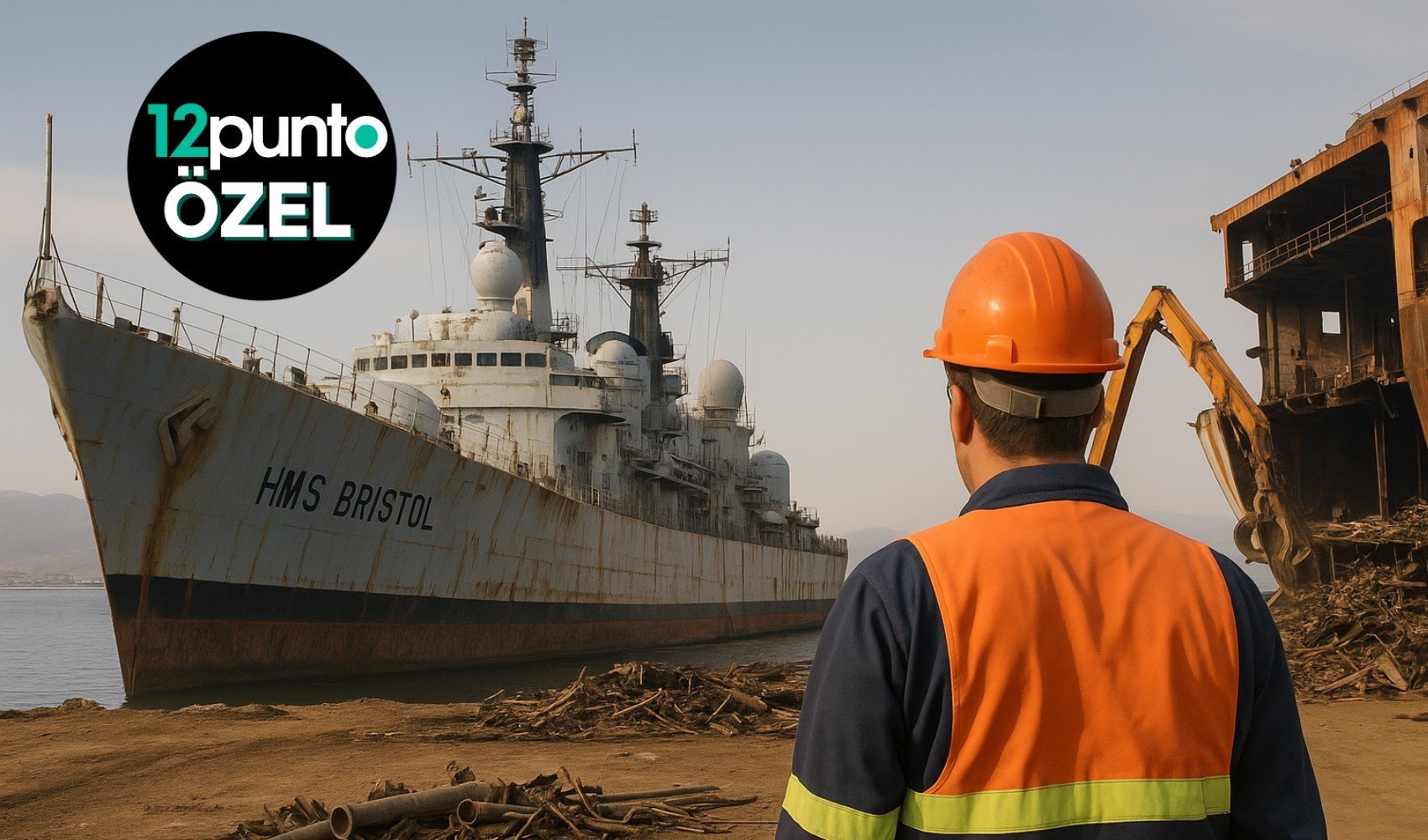
The arrival of the British Navy's flagship, HMS Bristol, in Aliağa for dismantling has reopened the debate surrounding the ship recycling sector in the region. Warships contain significantly higher amounts of asbestos compared to other vessels. In a statement released in March, the Aliağa Municipality reported that 1,004 ships had been dismantled in Aliağa over the last 10 years.
The British warship HMS Bristol has been brought to Aliağa to be dismantled. The ship was built in 1967 and was, for a time, the best-armed and most well-equipped vessel in the fleet.
IT WAS THE FLAGSHIP IN A FAMOUS WAR
HMS Bristol served as the flagship during the Falklands War, which began after the Leopoldo Galtieri regime in Argentina invaded the Falkland Islands. According to the book The Shock Doctrine by Canadian journalist Naomi Klein, British Prime Minister Margaret Thatcher used the authority she gained during the war to initiate a period of intense anti-democratic measures.
AT LEAST 1,004 SHIPS DISMANTLED IN ALİAĞA IN THE LAST 10 YEARS
The Aliağa Municipality issued a statement in March following the acquisition of ship recycling facilities by the municipal company, Aliağa Belediyesi Petrol A.Ş. The statement noted that 1,004 ships had been dismantled in Aliağa over the past decade.
Among these vessels are warships, which are considered more dangerous than commercial ships due to the quantity of hazardous materials they contain.
ARE THE MOST DANGEROUS SHIPS BEING DISMANTLED IN ALİAĞA?
According to a report published by the BBC, 25 of the 31 British naval vessels retired between 2009 and 2024 were sent to Aliağa. According to the report, the UK Ministry of Defence argued that this choice offered both financial advantages and served the goal of "responsible disposal."
According to Dr. Sefer Anıl Günbeyaz from the Department of Naval Architecture at the University of Strathclyde in Scotland, labor and environmental costs in Turkey are the deciding factors in this preference(1).
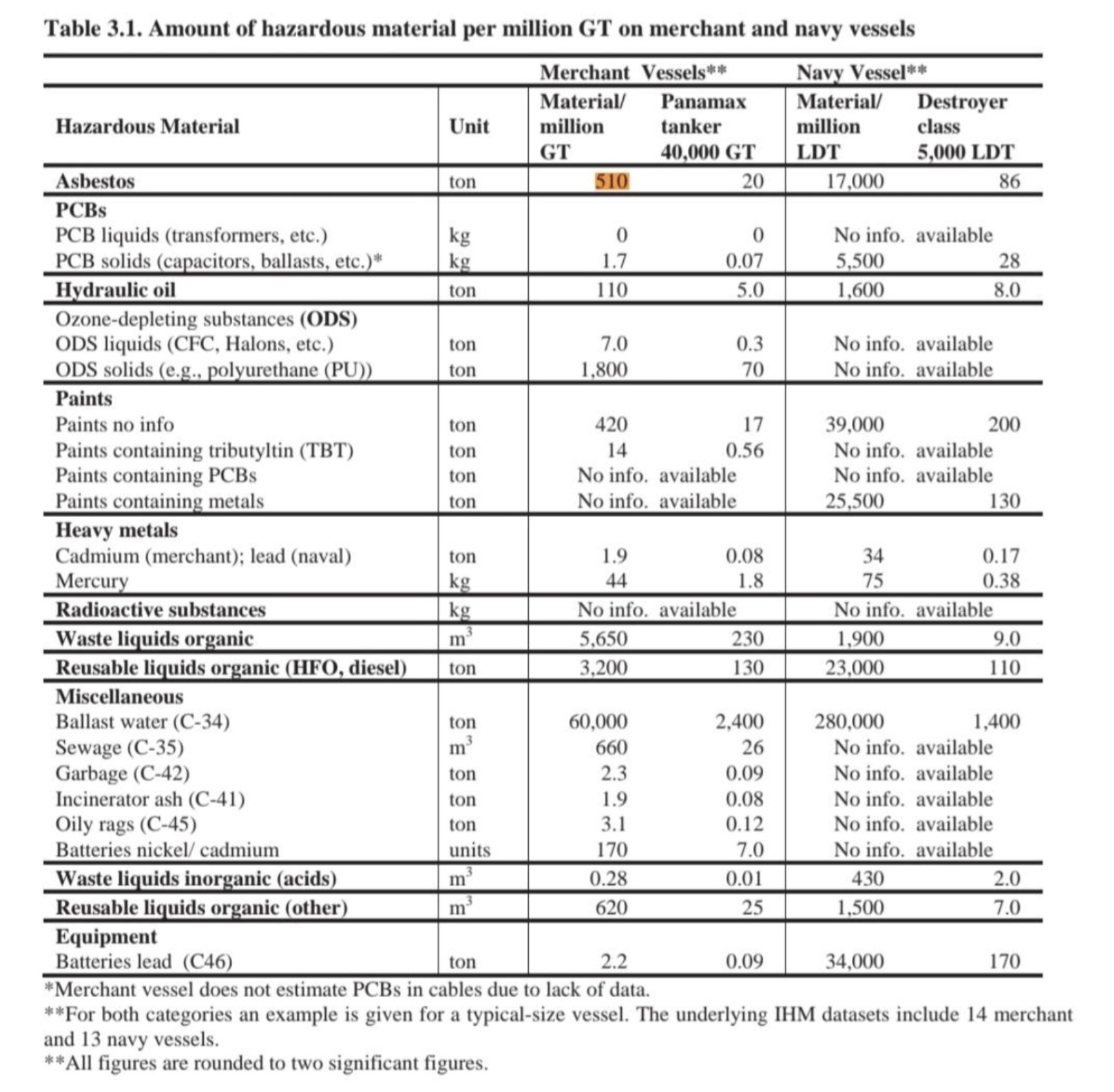
Due to their missions and the way they are constructed, warships can contain more hazardous materials than other vessels. According to the 2010 World Bank report titled "Ship Breaking and Recycling Industry in Bangladesh and Pakistan," military vessels have different characteristics than merchant ships to prevent fire and explosion risks, and therefore have a higher proportion of hazardous materials. While asbestos usage in commercial ships can reach up to 510 tons, it can reach up to 17,000 tons in military vessels.
According to NGO Shipbreaking, while commercial ships may contain up to 10 tons of "asbestos-containing material," it is estimated that this figure can reach up to 900 tons in military vessels such as the Nae Sao Paulo or the Clemenceau(2).
Although the samples the organizations work on, their working methods, and the breadth of their inventories create a very large difference between the data, both studies emphasize that military vessels are much more dangerous compared to other ships.
THEY SEND THEM TO TURKEY TO AVOID FREIGHT COSTS
Stating that the HMS Bristol is 195 meters long and that many ships of this size come to Turkey, former labor inspector and Dokuz Eylül University Public Health Professor O. Alp Ergör said, "Although the UK has the facilities to dismantle these ships itself, it sends them to Aliağa. To avoid freight costs, it prefers Aliağa over Bangladesh, India, and
Pakistan. At a meeting held in Ankara recently, officials from the European Commission, in response to our question, stated that such ships are not dismantled in European Union countries in places without dry docks. So why are these ships sent to Aliağa, which lacks a dry dock? Why does the EU grant certification to places without dry docks?"
In 2022, EU certifications were revoked for two of the 22 total ship recycling facilities in Aliağa, reducing the number of certified facilities to 9.
“IT IS LIKELY THAT ASBESTOS IS PRESENT BETWEEN ALL COMPARTMENTS”
Emphasizing that dangers and risks must be managed correctly during the dismantling of hazardous ships, and that operations in Aliağa are driven by time and profit, Ergör used the following expressions:
"In military ships like the HMS Bristol, it is likely that asbestos is present between all compartments to prevent fire hazards. During the removal of asbestos, in general terms, the locations of the asbestos must first be identified, then these compartments must be isolated, the asbestos must be removed and disposed of, and only then should the isolation be removed. In Aliağa, however, everything on the ship is dismantled first. Then, exceptionally skilled cutters slice the ship like a loaf of bread."
Stressing that ships may also contain radioactive materials that have not yet been removed, Ergör also expressed his doubts regarding risk assessment.
“IF YOU THINK WITH A FOCUS ON LIFE, YOU CAN CONTROL ASBESTOS”
On the other hand, Ergör added that the sector's assessment should be made by considering the entire process rather than the characteristics of individual ships. Finally, Ergör said, "All ships over a certain age contain asbestos, and the correct methods are not being followed as a whole in terms of environmental health, public health, and labor safety. Warships have a high asbestos load, but if you think with a focus on life rather than profit, you can control an asbestos load of this magnitude." he said.
UNCERTAINTY PREVAILS IN BANGLADESH AND PAKISTAN: WILL IT REFLECT ON TURKEY?
Other countries with large ship recycling sectors where insecurity prevails are Bangladesh and Pakistan. In international publications in December 2024, it was stated that Gadani, located in Pakistan and once one of the world's largest ship recycling facilities, could become unusable. The reason for this was emphasized as Gadani's failure to comply with the Hong Kong Convention adopted in 2009(3).
NGO Shipbreaking Policy Officer Ekin Sakin said there is still no clarity on whether the facilities in Bangladesh and Pakistan will continue to operate. Sakin stated, “There is great uncertainty about this. However, the facilities in South Asia have already been operating for years in violation of both the Basel Convention and their own national laws.”
Bangladesh claims it has a two-year time limit to improve itself. However, they have not clearly explained what path they will take regarding this matter.
On the other hand, when we look at the effects of the Hong Kong Convention in Turkey, it is possible to say the following: The Hong Kong Convention is an agreement that legitimizes the practice of beaching for ship dismantling in South Asia. It is a convention entirely supported by the ship dismantling and shipping industry, designed to legalize activities there. Instead of raising existing standards, it lowers them. In this context, beaching becomes legitimized.
Therefore, we cannot say that it will provide any gain for Turkey.”
Sakin added that it is too early to evaluate the reflection of the uncertainty in Bangladesh and Pakistan on Turkey.
THE RATE OF SHIPS DISMANTLED IN ALİAĞA INCREASED IN 2024
The non-governmental organization NGO Shipbreaking Platform has published a list of dismantled ships and dismantling locations every year since 2012. In the first list published in 2012, 153 of the 1,254 ships identified as dismantled, or 12 percent, were dismantled in Aliağa. Although the rate of ships dismantled in Aliağa in the list varied between 10 and 18 percent until 2024, it showed a jump in 2024. In the latest list, 84 of the 412 ships, or 27 percent, were dismantled in Aliağa(4).
FOOTNOTE;
1- Why does the UK send its naval ships to Turkey for dismantling? - BBC News Turkish https://share.google/eIpJRBaOpOfxNjBcC
2- https://shipbreakingplatform.org/issues-of-interest/why-ships-are-toxic/asbestos/?utm_source=chatgpt.com
3- https://www.dawn.com/news/1879035/shipbreaking-faces-crucial-deadline?utm_source
4- Annual Lists - NGO Shipbreaking Platform https://share.google/fZtRzlzkMbyMQNkG2
News Source: 12punto
Most Read

Striking picture for Özgür Özel's 'New Party'

Özgür Özel gives a dated response regarding the number of resignations

Forest fire in Antalya brought under control

The PKK opening and Özgür Özel’s path!..
Houthis strike Saudi-owned tanker

How did the newspapers view Özgür Özel's farewell to the CHP?

What did the CHP do?

Özel’s new party move in the world press

The New CHP, against CEHAPE

From self-efficacy to despair