

Artificial Intelligence: The one who sets the rules at the table, or the one being served as the meal?
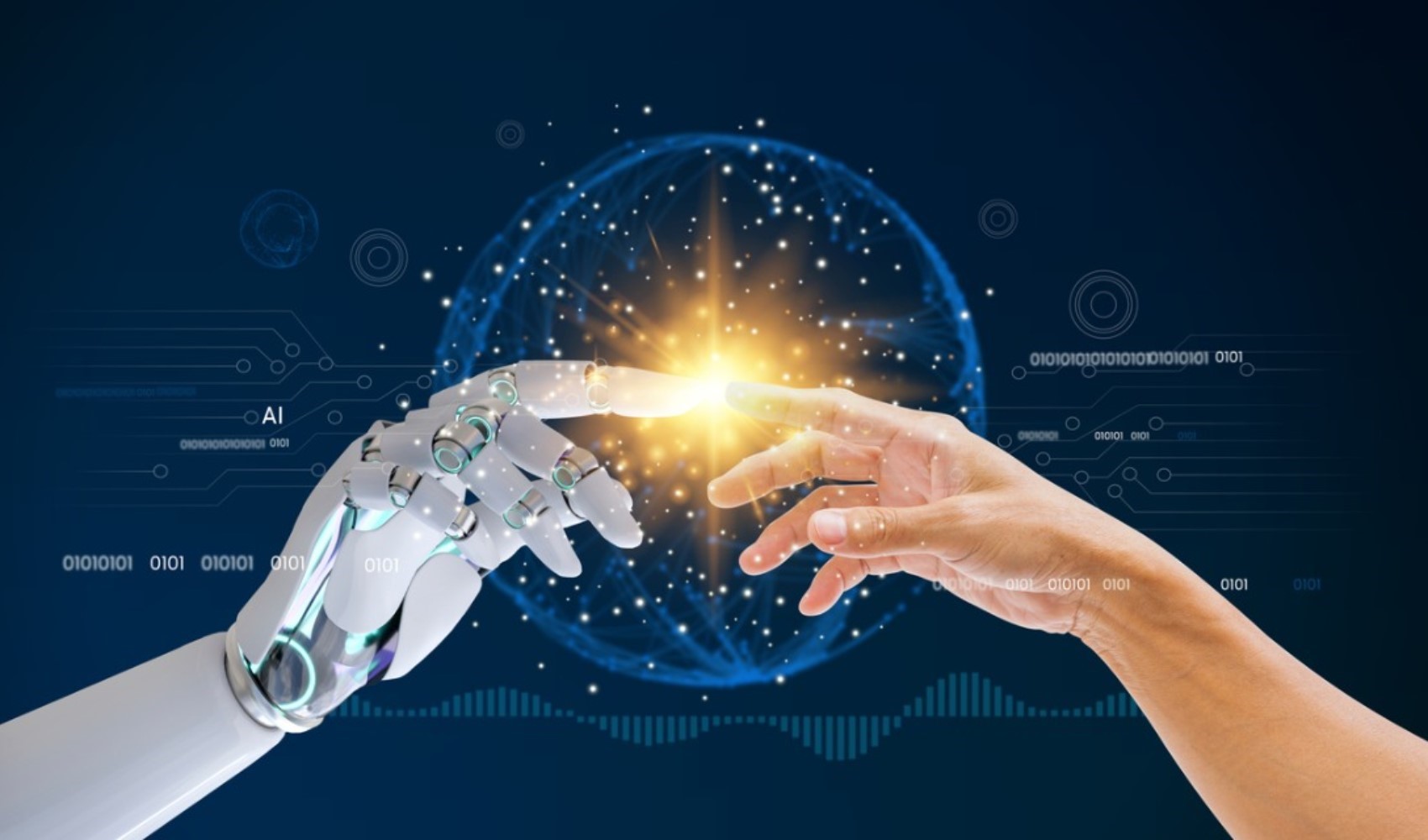
Artificial intelligence, which has become one of the realities of our time, continues to exert its influence in many fields. Having become a significant subject of research, AI is impacting everything from education to technology. In this exclusive article for 12punto, activist Erkan Erdem addresses the positive and negative aspects of artificial intelligence. Erdem also touches upon issues of data transparency and independent auditing.



Activist Erkan Erdem
Artificial intelligence (AI) is no longer just a part of science fiction movies, but a part of the real world. We see its traces everywhere, from recruitment to shopping recommendations, and from urban planning to healthcare systems. But we must stop and ask: Who is managing this technology? More importantly, where does Turkey stand in this great transformation?
TECHNOLOGY: A NEW STRATEGIC POWER?
It is becoming clearer how artificial intelligence technologies are shaping global power balances. The US decision to restrict the export of chips used for AI applications proves that technology is seen not only as a tool for innovation but also as a strategic weapon. This decision shows that artificial intelligence and the chips used in its infrastructure have critical importance in terms of economy and security.
Trump announced a massive 500 billion dollar data center investment plan to strengthen the private sector's AI infrastructure, which once again shows that artificial intelligence is no longer just a technological innovation, but a strategic part of the global power struggle.
If Turkey does not develop an independent and sustainable ecosystem in the field of artificial intelligence, it may be inevitable that it will face the technological hunger created by global restrictions.
TECH-OLIGARCHS: THE POWER HOLDERS OF THE DIGITAL AGE
The presence of tech giants like Musk, Cook, Zuckerberg, and Bezos at Trump's presidential inauguration clearly revealed that the world's power balances are established not only in politics but also on technology thrones. This picture showed that policies are no longer determined by national borders but by global technology strategies, and that the digital age carries the risk of turning into a kind of "feudal order."
Tech-oligarchs have become the leaders of the modern age, shaping people's preferences and managing daily life with data and algorithms. From social media platforms to search engines, these structures, which analyze user behavior, can influence individuals' thought systems.
"Should we thank these digital lords who determine everything from how you drink your coffee to which news you should believe?"
If these power centers are not regulated and cannot be audited, societies may inevitably surrender to the "feudal order of the digital age."
SIGNS OF THE DIGITAL CURRENCY ERA: TRUMP AND MELANIA COIN
In an era where tech giants are increasing their power, Donald Trump and his wife Melania Trump launching cryptocurrencies bearing their own names shows that the digital world has become the center of not only economic but also political power. These initiatives clearly declare that "tech-oligarchs" have completely taken over the stage as the new feudal lords of the digital age. While the $TRUMP coin reached a market value exceeding 9 billion dollars in a short time, the value of the $MELANIA coin reached 1.5 billion dollars. In this period, where technologies like cryptocurrencies and artificial intelligence have become strategic tools that determine not only innovation but also global power balances, everything will change very quickly.
GOODNESS ON THE SURFACE, DANGER BENEATH
We cannot deny the conveniences that artificial intelligence provides us. It facilitates many things, from applications that predict traffic congestion to fast credit evaluations. Municipalities in Turkey are utilizing AI for smart city projects; in the world of digital marketing, AI creates more effective campaigns by analyzing user behavior.
However, there are some cracks beneath this appearance of "goodness":
Algorithmic Biases: If you have applied for a loan and were rejected, do you know who decided this? Most likely, an algorithm that found you "risky." Well, what data was this algorithm based on? The neighborhood you live in? Your education level? Or a hidden bias that no one is aware of?
Deepening Inequalities: Although artificial intelligence seems "neutral," it actually makes decisions as biased as the data it is trained on. Since the female labor force participation rate is low in Turkey, a recruitment algorithm might automatically consider female candidates as "lower performing."
TURKEY'S DATA, TURKEY'S POWER
The power of artificial intelligence comes from data. More data = Better artificial intelligence. However, this data issue is a problem in itself in Turkey:
Incomplete and Biased Data: The data used to train AI in Turkey is often incomplete, outdated, or does not represent certain segments. For example, data on agricultural workers or seasonal laborers in rural areas is not included in the systems. This leaves them out of artificial intelligence decisions.
Data Security: Turkey has not yet fully reached international standards regarding data security. How is our personal data used? Which companies can access this data? There is no clear answer to these questions.
THE ETHICS OF ARTIFICIAL INTELLIGENCE: WHO WILL MAKE THE RIGHT DECISIONS?
Artificial intelligence is not just a technology, but also a system of values. How we use it, which problems we deploy it to solve, and how we define its boundaries is entirely an ethical issue. However, these philosophical foundations are not yet being discussed in Turkey:
What is our goal?: Will we use artificial intelligence for more profit, or to ensure social equality?
How do we approach information?: What our AI models accept as "correct information" may be based on the biases of the people who shape those models. So, how are these biases reflected in systems without being noticed?
Who controls it?: Most of the artificial intelligence projects in Turkey are in the hands of the private sector. However, the decisions of these companies do not carry social responsibility. Yet, artificial intelligence is a technology that affects everyone.
THE WAY OUT FOR TURKEY: TIME FOR A SOLUTION
Turkey's place in the world of artificial intelligence is possible by establishing an inclusive and neutral data system. Training AI with incomplete and biased data means coding our own biases into algorithms. Therefore, it is essential that our data is accurate, representative of diversity, and reliable.
Universities should not only train engineers but also bring technology and philosophy together. The philosopher's question of "Is this right?" needs to meet the engineer's question of "Does this work?". Only such a system can give birth to artificial intelligence projects that serve society.
Without ethical audit mechanisms, artificial intelligence becomes an uncontrolled power. Every project should be presented with a report examining its social impact. Instead of hiding behind the cliché that "the algorithm is neutral," independent audits should be conducted to see if these systems are truly fair.
Data transparency is also a must. People should know what data of theirs is being collected and how it is being used. Companies should present their "privacy policies" in understandable language. In short, the era of collecting data by saying "We care about you" must end.
CONCLUSION: WHERE ARE WE SITTING AT THE TABLE?
While artificial intelligence is "eating" the world, what position will Turkey have at this table? Will it be among those who set the rules, or those who follow them? If we do not establish the values and policies that will guide this technology now, we may become a society shaped by algorithms written by others in the future.
The widening gap between those who can use technology and those who cannot is emerging as the new source of inequality in the digital age. To not fall behind in this race, Turkey must adopt artificial intelligence not only as a tool for economic development but also as a tool for social equality.
The future is here; it is in our hands to take our place at the table. But for this place to be secure, we must knead technology with "philosophical reason." Because the issue is not just how smart artificial intelligence is, but how this intelligence shapes our future.
News Source: 12punto
Most Read

Striking picture for Özgür Özel's 'New Party'

Özgür Özel gives a dated response regarding the number of resignations

Forest fire in Antalya brought under control

Houthis strike Saudi-owned tanker

4 drones shot down near US Consulate General in Erbil

Özel’s new party move in the world press

The new rule of the field: Attrition
Zeydan Karalar's decision on the New Party

Key figure in Epstein files found dead at home

Famous director Ezel Akay and his brother have been detained