

Electronics Engineer Mehmet Özdağ writes: The item you don't see on your bill is the country's biggest hidden tax!
Electronics Engineer Mehmet Özdağ writes... The item you don't see on your bill is the country's biggest hidden tax!



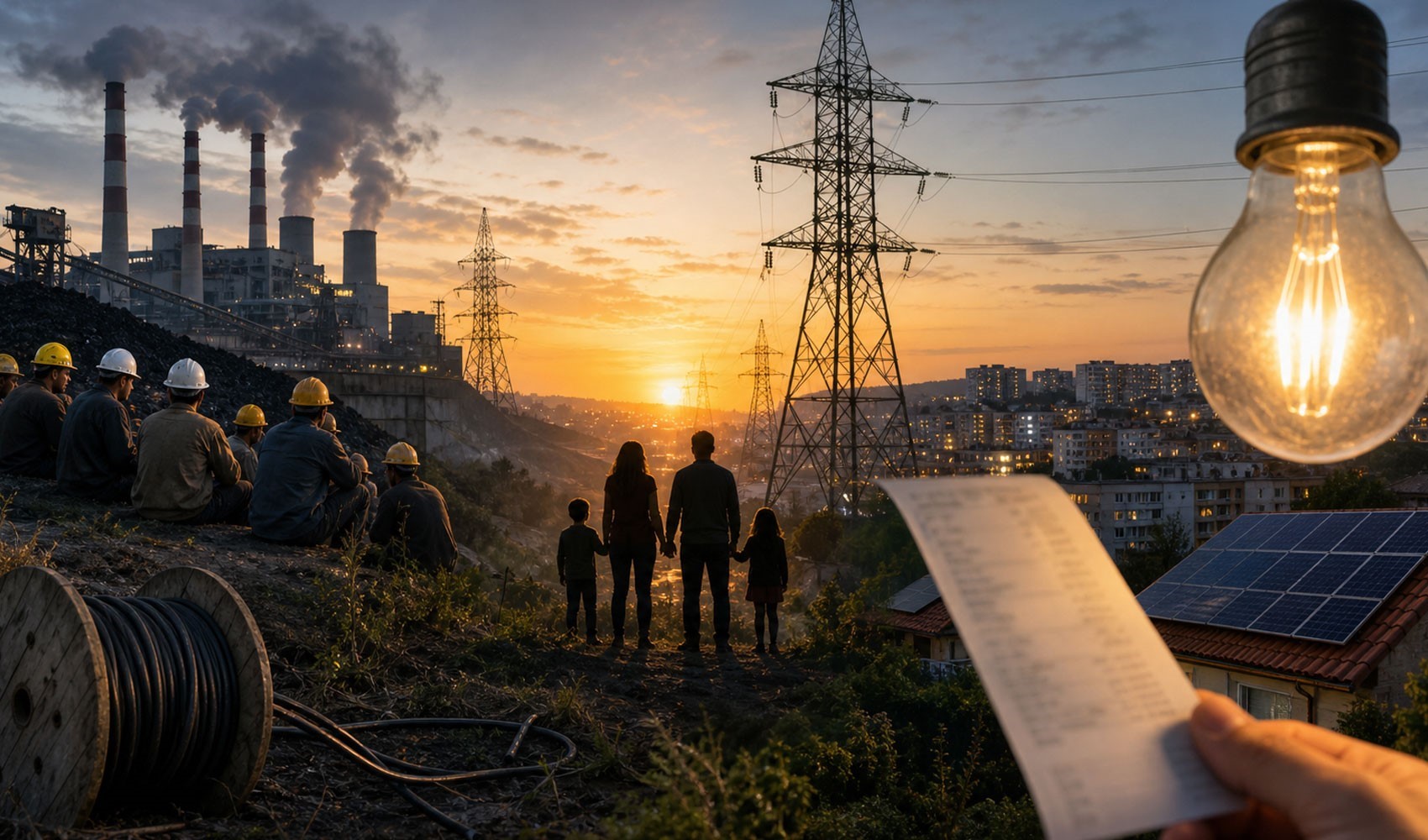
Last week, we wrote about how workers at Yıldızlar Holding’s Yunus Emre Thermal Power Plant were forced to work for months without receiving their salaries, and how private thermal power plants cannot operate without public guarantees. That was the production side. Now, let’s look at the other side of the coin, the distribution side. Because the electricity bill that arrives at our homes, paid for with the stolen wages of Doruk Madencilik A.Ş. workers, is two separate manifestations of the same model.
NATURAL MONOPOLY: COMPETITION DOES NOT EMERGE EVEN WITH PRIVATIZATION
First, we must recall this fundamental fact: Electricity distribution is, by its definition in economics textbooks, a natural monopoly. Laying a second cable to the same street is economically nonsensical; there is only one grid in a region, therefore the company operating that grid is a de facto monopoly. Between 2009 and 2013 in Turkey, the electricity distribution network was divided into 21 regions, and each region was transferred to private companies that have partnerships with one another. In other words, no competition emerged; the public monopoly was transformed into unregulated regional private monopolies. On top of this, an artificial layer called retail sales was added, but the vast majority of citizens still purchase electricity from the retailer under the umbrella of the distribution company in their region. Competition exists only on paper.
Even more dire is the fact that the holdings that own the distribution companies are also major investors in electricity production—meaning they have established vertically integrated structures from production to distribution. This structure carries the natural monopoly of electricity distribution over into production; when the same capital group manages production, distribution, and retail sales, the citizen's electricity bill skyrockets. This is a structure that cannot be defended even by the logic of liberal economics itself.
THE ITEM ERASED FROM THE BILL
For a few years now, what we see when we open our bills is a “simple” calculation: the energy cost and taxes, which we assume are derived from consumption. This simplicity is not a gesture of goodwill, but a deliberate obfuscation. On August 1, 2019, the Energy Market Regulatory Authority (EPDK) completely removed the “distribution fee” item from the bill; since that day, three-quarters of the money we pay flows into an invisible pocket.
The Chamber of Electrical Engineers’ July 2024 calculation is striking: The EPDK announced a 38% residential price hike, citing “increased production costs.” However, the actual increase in the energy cost within that hike was 2.5%; the distribution fee, meanwhile, had been hiked by 58.9%. In other words, almost the entire price hike forced upon the citizens was related not to production, but to the coffers of the distribution companies. If it had been a separate item on the bill, it would have been visible; because it wasn't, it went unseen.
The point we have reached in April 2026 is an indication of how entrenched this process has become. The minimum bill for a family of four is 744 TL; 74.8% of this bill is the distribution fee, while only 15.2% is the energy cost. As the Chamber of Electrical Engineers puts it, a “distribution fee black hole” has formed. Within five years, while the energy cost increased by 24.5%, the distribution fee rose by 880%. If distribution had increased in parallel with production costs, today’s 744 TL bill would be 228 TL. The 516 lira difference flows out of the pockets of millions of households every month and into the private distribution companies.
In 2025, Turkey consumed approximately 288 billion kWh of billed electricity. A one-cent increase on this figure would mean an additional collection of 2.9 billion TL annually. 75 percent of every cent collected from low-tier residential users will be transferred to private distribution companies. The farmer's irrigation costs, the baker's bread production costs, and the tailor's sewing costs all pass through the same outlet. The distribution fee is an invisible tax imposed on the country's entire production chain.
WHAT WE GET FOR WHAT WE PAY: SERVICE WITHOUT INVESTMENT
If this money at least provided a high-quality grid, perhaps the complaints would lose some of their validity. But as soon as you leave the metropolis, you face the reality. Elderly women in villages whose refrigerators burn out due to voltage instability, forest fires starting in the summer from sparks caused by poorly maintained lines, households trying to stay warm during hours-long power outages in the winter... On top of this, rooftop solar power investments based on self-consumption are left in limbo for months, sometimes years, with the excuse from distribution companies that there is 'no transformer capacity.' For the company, every solar panel is a lost customer; connection processes are deliberately slowed down. Most tragically, there is the situation of our citizens whose respiratory devices or dialysis machines stop during power outages. In a sector privatized with the promise of 'uninterrupted electricity,' this picture is not efficiency, but negligence.
PUBLIC IN CRISIS, MARKET IN NORMAL TIMES
The real issue is this: When are these companies market-oriented, and when are they public-oriented? Doruk Mining wants guaranteed purchase agreements in the coal market because they cannot operate when prices fall. Distribution companies do not invest because there is no competition. In a crisis, they take refuge in EÜAŞ (Electricity Generation Corporation), but in normal times, they say 'the state should withdraw.' The privatization of profit and the nationalization of risk and cost—this is our privatization balance sheet in a single sentence.
The wages stolen from the miners on hunger strike at Kurtuluş Park and the hidden surcharge on our household bills are two manifestations of the same system. On one end, the production worker's wages are seized; on the other, hidden items are embedded into the citizen's bill. The profit in between flows to the same capital circles fed by public resources.
The solution is also clear. Distribution, which is a natural monopoly, must be returned to the public; every item on the bill must be listed separately, and the production-distribution ownership of vertically integrated holdings must be restricted. Ending the blackout that EPDK (Energy Market Regulatory Authority) has maintained since 2019 is a prerequisite for discussing energy policy in this country. The path the Doruk workers are walking for their wages is the same path we must take to oppose the hidden surcharge on our bills.
News Source: 12punto
Most Read

Striking picture for Özgür Özel's 'New Party'

Özgür Özel gives a dated response regarding the number of resignations

Forest fire in Antalya brought under control

The PKK opening and Özgür Özel’s path!..

How did the newspapers view Özgür Özel's farewell to the CHP?

He killed his wife by slitting her throat: Their children witnessed the moments

What did the CHP do?

Özel’s new party move in the world press

The New CHP, against CEHAPE

Fire at TUSAŞ engine factory in Eskişehir under control