

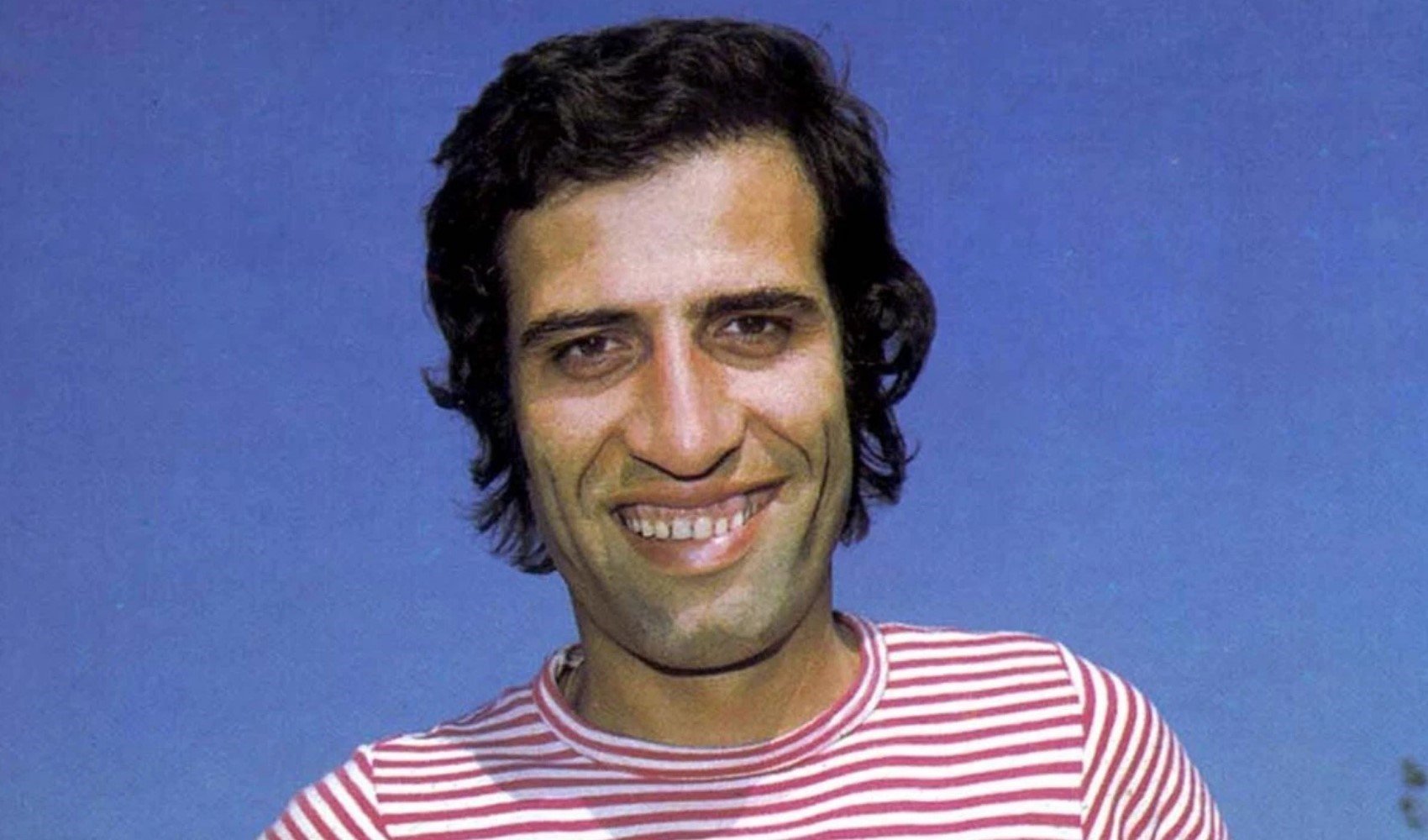
Kemal Sunal: The poet of laughter...
Hilal Özdemir writes: Kemal Sunal once made people laugh at an awards ceremony without even speaking. I once again respectfully commemorate the great master who could make us laugh just by standing there.



HİLAL ÖZDEMİR
I was nine years old on July 3, 2000. I learned that Kemal Sunal had passed away while playing in the neighborhood. I remember suddenly stopping my game, sitting on the curb, and sobbing.
How could that be?
Would I no longer be able to laugh out loud while watching Kemal Sunal?
That is exactly how it turned out. Since that day, whenever I watch a Kemal Sunal film, I get goosebumps and my heart aches.
I thought a lot about which of his films to write about. In the end, I decided on the following three films.
Çöpçüler Kralı (King of the Garbage Collectors), Kibar Feyzo, and Öğretmen (The Teacher)…
Çöpçüler Kralı
The 1977 film Çöpçüler Kralı stars Kemal Sunal, Şener Şen, and Ayşen Gruda. The film was directed by Zeki Ökten, with a screenplay penned by Umur Bugay.
Zabıta (Municipal Police) Chief Şakir uses the powers granted by his position to exert great pressure on local tradespeople and the 'garbage collectors.' Şakir, who is in love with Hacer (Ayşen Gruda), who comes to their house to clean, also has a rival: the neighborhood 'garbage collector' Apti Şakrak…
Filmed during the lead-up to the 1980 military coup, the movie reflects the political atmosphere of the era to the audience through these three characters. Şakir represents the administrator who uses the power of the state, Apti represents the governed, and Hacer represents the impoverished segment of society.
Şakir uses his window like a podium, barking orders at the neighborhood tradespeople, especially Apti. The only person he cannot command is his mother, who opposes his marriage to Hacer. He then takes out his suppressed authority at home on Apti.
Apti: 'From now on, it's like this, I won't work'
Apti is proud of his profession. After all, he is the 'municipality's sanitation worker with badge number 2548.' Because he is municipal property, he never lets go of his straw broom for a moment. He has retirement, insurance, and two suits a year. Becoming famous overnight in a nightclub he entered by chance changes his life, albeit briefly. However, this does not affect his commitment to his main profession. Because being a sanitation worker for the municipality is a guarantee for his future. Apti, changed by his experiences, realizes the power of workers derived from production. He understands that if he doesn't clean the neighborhood, neither his chief nor those who pressure him will have any authority left. By saying, 'From now on, it's like this, I won't work,' he shows his first act of resistance.
As for Hacer… Hacer's only wish is to marry the municipal police chief and escape poverty. But, would the 'state's high-and-mighty police chief' marry a maid…
The film successfully reflects the political atmosphere of the period on the screen. We learn what is happening in the country from the news given by the child distributing newspapers. Long bread lines, the under-the-counter sale of oil and sugar, those who write every problem they experience in the newspaper… On one side, the poverty in the shantytowns, and on the other, the lives of people living in apartment buildings.
Kibar Feyzo
Kibar Feyzo is a 1978 film directed by Atıf Yılmaz, with a screenplay by İhsan Yüce. It stars Kemal Sunal, Şener Şen, Müjde Ar, İlyas Salman, and Adile Naşit.
In the film, which is a powerful satire against the feudal system in villages, we watch Feyzo's rise against both traditions and the landlord (ağa).
As soon as Feyzo returns from military service, he heads straight to Maho, the village landlord. Maho is both the landlord of the village and the owner of the villagers. We say owner because all decisions, from who the villagers will marry to where they will relieve themselves, pass through his approval. There is no word above the landlord's word, no sh*t above his sh*t! As such, Feyzo's actions begin to stand out more and more.
Every time he is exiled from the village, he returns with new things he learned in the city. In the city, he learns that workers are unionized, that they seek their rights by going on strike, and that those who marry do not pay a bride price. Everything he learns means Maho losing his power in the village and his dominance over the villagers. However, he doesn't sit idle either. He threatens the villagers by saying, 'Watch out, I'll sell the village.'
The enlightened villagers come together and dethrone Maho the landlord. In the end, Feyzo kills Maho. In court, Feyzo asks, 'In your opinion, who is right, your honor?' One landlord leaves, another comes. And an even worse one at that!..
In the film Kibar Feyzo, Kemal Sunal shows the audience outdated practices like the bride price and that the peasant has more rights to the land they toil on than the landlord. While doing this, he uses elements of comedy.
Öğretmen (The Teacher)
Öğretmen is a 1988 film starring Kemal Sunal and Selma Sonat. Directed by Kartal Tibet, the film's screenwriter is İhsan Yüce. Unlike the others, Öğretmen is a drama, not a comedy.
Hüsnü Çelik: 'Our crime is doing good and right and getting noticed. Now we have to commit a real crime so they assign us to a village.'
Hüsnü Çelik (Kemal Sunal), a teacher at Hacı Mercan Village Primary School, is chosen as the most successful teacher of the year and is assigned to Istanbul as a reward. However, this reward soon turns into the greatest punishment of his life.
Living on a teacher's salary in Istanbul is not like in the village. Because house rents are high, he has to rent a house in a district far from the school. Because travel expenses are high, he starts walking to and from school. The situation is no different for his colleagues he chats with in the teachers' lounge. All of them have side jobs besides teaching. Hüsnü also starts working as a street vendor to make ends meet.
He wants to buy a house by agreeing with a cooperative he saw in advertisements. Hüsnü, who invests the money he earned from street vending as a down payment, is devastated by the news he sees in the newspaper. The cooperative he agreed with turns out to be a scam. From that hour on, irreversible problems begin for Hüsnü. His mental health deteriorates, and he starts shouting like a street vendor in the classroom and running away whenever he sees a municipal police officer while walking down the street.
With the film Öğretmen, Sunal makes the audience sad this time. Most people's ideas about the teaching profession are clear: a guaranteed state job, three months of vacation a year... However, we see in the film that teachers in big cities like Istanbul struggle to make a living due to high prices and have to settle for what they have because side jobs are forbidden. When we think about those who cannot be appointed today and those working as paid substitute teachers, the film sheds light from 1988 to the present day.
Before Kemal Sunal, the most prominent figures in the field of comedy in local films were İsmail Dümbüllü, the character 'Turist Ömer' brought to life by Sadri Alışık, and the characters played by Öztürk Serengil.
These productions, which filled the gap for comedy films in cinema for many years, mostly made the audience laugh by being influenced by theater and the Hacivat-Karagöz culture, based on errors in spoken language, profanity, and the clumsiness of the characters. However, as time progressed, along with the changing culture and political climate, the elements of humor in cinema also changed.
Kemal Sunal, whom we first watched in a supporting role in the 1972 film Tatlı Dillim, made his real breakthrough with the Hababam Sınıfı (The Chaos Class) films. Appearing in the film as 'İnek Şaban,' Sunal began to take the lead role in cinema with his 'Şaban' types. The Şaban character, unlike those before him, made people laugh not with mispronunciations and slang, but by putting people in higher positions than himself into difficult situations with his naivety, just like in Keloğlan fairy tales. He signed many films with master directors of Turkish Cinema such as Ertem Eğilmez, Atıf Yılmaz, and Kartal Tibet.
When his entire filmography is considered, Sunal's characters always have a problem with the administration, the government, the boss, or the landlord. He stands against the bad with his naivety. The characters he portrays represent the people. Sometimes he is a garbage collector, sometimes a doorman, sometimes a teacher, and sometimes a fake mafia boss. But no matter what his profession is, he is always on the side of the good.
This is the reason why his films have been loved for generations and watched over and over again. The characters he brought to life cover not only the period in which the film was shot but a wide span of time, shedding light on the present day.
Perhaps not in the way we mentioned here, but people in villages and cities are still facing various problems. The problems of farmers who cannot sell what they grow, the troubles of teachers trying to make a living by working as paid substitutes, and the pressure applied to workers by people in various levels of the state like the municipal police chief Şakir continue... But the problem is that these issues experienced in our country do not find much space in cinema. At least not in comedy films. If we leave a few films aside, we cannot produce successful works and characters in the comedy film category. While we still know the lines from Kemal Sunal's films by heart and laugh out loud, we don't come across these in today's productions. As with everything, we consume comedy quickly and forget it. In fact, the reason for this is that instead of creating characters that deeply affect the audience, more superficial comedies that rely heavily on slang are being written.
Because of this regression in the comedy category in cinema, we cling to Kemal Sunal films even more. These films, which raised many generations, are important in terms of being an example for new generations regarding what comedy should be like in our country.
I don't know if a new 'Şaban' will be created in cinema, but until then, it seems we will continue to watch Kemal Sunal with the same excitement and laughter as the first day.
On the occasion of this article, I re-watched the films Çöpçüler Kralı, Kibar Feyzo, and Öğretmen.
Much has been written about Kemal Sunal and his films to date, and it will continue to be written.
Sunal had made people laugh at an awards ceremony without even speaking. I once again respectfully commemorate the great master who could make us laugh just by standing there.
News Source: 12punto
Most Read

Striking picture for Özgür Özel's 'New Party'

Özgür Özel gives a dated response regarding the number of resignations

Forest fire in Antalya brought under control

The PKK opening and Özgür Özel’s path!..

How did the newspapers view Özgür Özel's farewell to the CHP?

Houthis strike Saudi-owned tanker

What did the CHP do?

Özel’s new party move in the world press

The New CHP, against CEHAPE

From self-efficacy to despair