

Reaction to Turkey's Syria policy: A lose-lose situation
Prof. Dr. Hasan Ünal stated that Turkey's Syria policy is being dragged into a deadlock, drawing attention to the landscape formed by the axis of Israel, PKK/PYD, Russia, Iran, and the Damascus administration. Ünal evaluated the risks Turkey might face in potential military scenarios.



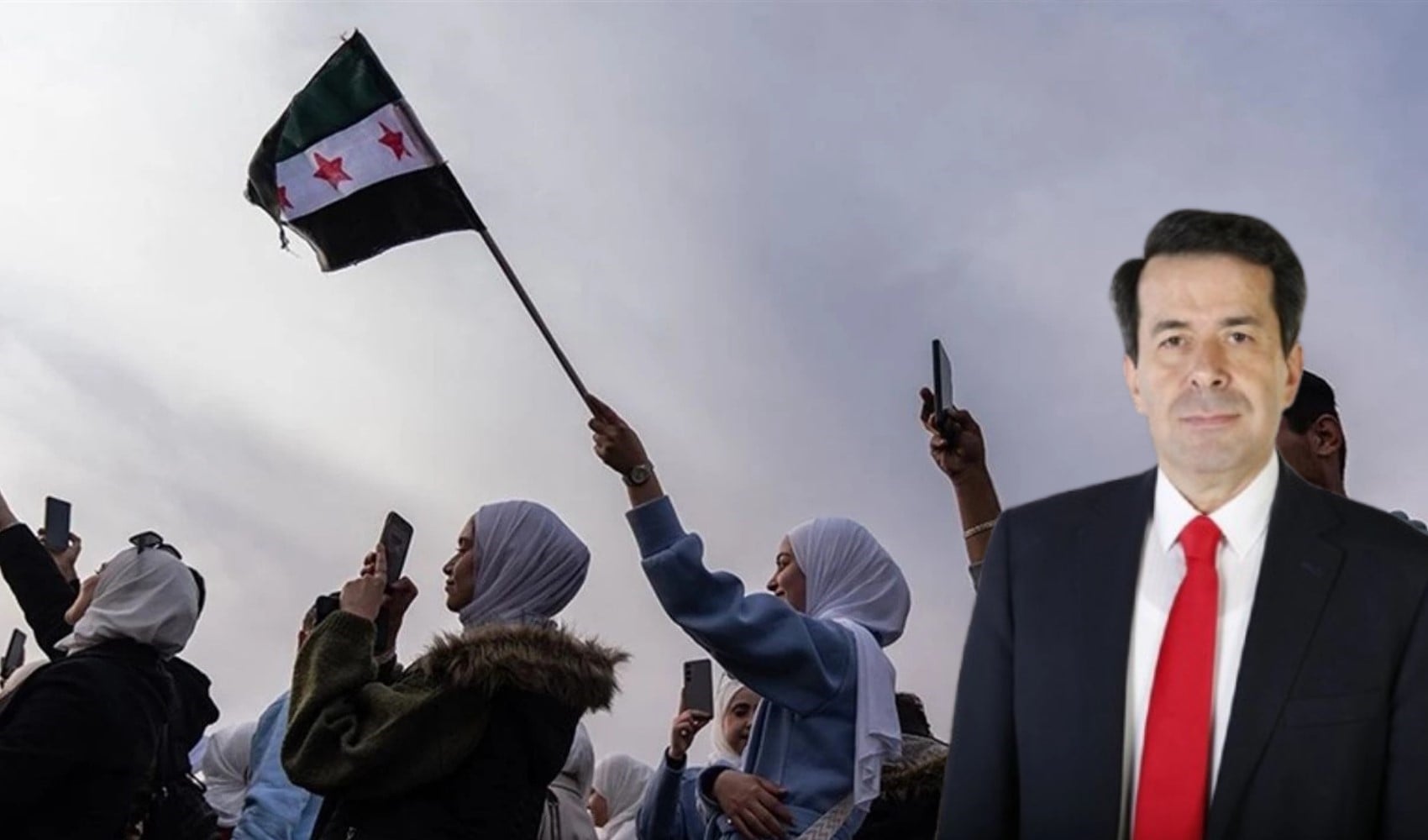
International relations expert Prof. Dr. Hasan Ünal stated that the policy Turkey has pursued in Syria has been progressing on problematic ground for a long time. According to Ünal, the process carried out for nearly 14 years to topple the Syrian administration directly or indirectly paved the way for the rise of jihadist structures and the strengthening of the PKK/PYD in the resulting power vacuum.
“CONQUEST RHETORIC IS A THING OF THE PAST”
Ünal noted that the rhetoric of “we have conquered Syria,” which was voiced on television screens a year ago, has completely lost its validity today. Emphasizing that Israel has found a wide area of maneuver in the Syrian theater as a result of the policies pursued by Turkey, Ünal noted that Israel is taking advantage of the weakening of the Syrian state, which has stood against it since 1948.
In his assessment, Ünal stated that Israel is pursuing an opportunistic policy, adding that attempts to fragment Syria have gained momentum and that Israel will not face difficulties in this process.
Stating that the most critical issue for Turkey is the presence of the PKK/PYD east of the Euphrates, Ünal said that this problem has now reached a more complex point. Ünal argued that results could have been achieved if a path of reconciliation with the Damascus administration had been taken in the past, and if political and military pressure had been exerted on the PKK/PYD while the presence of Russia and Iran in the field continued.
TRUST ISSUES WITH RUSSIA AND IRAN
According to Ünal, Turkey's efforts to re-establish contact with Russia and Iran, whom it had distanced from Syria for a period, are yielding limited results due to trust issues. He assessed that Israel is currently in a position where it prefers Russia over Turkey.
Touching upon the new power balances in Damascus, Ünal expressed that it is unclear to what extent Ahmed al-Shara can be trusted. Ünal stated that al-Shara could move closer to the US and Israeli line over time and is trying to balance Turkey within this equation.
JOINT OPERATION CLAIMS
Addressing the claims on social media regarding a possible military operation east of the Euphrates, Ünal said that conducting this operation in coordination with the Damascus administration is on the agenda. He conveyed that the high-level visits to Damascus in recent times could also be evaluated within this scope.
ISRAEL'S POTENTIAL INTERVENTION SCENARIO
Ünal emphasized that the most critical issue is the possibility of Israel launching an airstrike against Syrian forces during a potential joint operation. Reminding that Israel has previously bombed al-Shara's forces and areas where Turkey planned to establish military bases, Ünal pointed out that a similar situation could happen again.
Stating that Turkey would face a difficult choice in this scenario, Ünal expressed that if Israel's attacks are not responded to, Turkey's deterrence in the region would be questioned, and if they are responded to, risks such as direct conflict with Israel and economic pressure from the US would emerge.
Ünal's statements are as follows:
Turkey's Syria policy is heading toward a complete quagmire. It is clear that there are serious problems in Middle East policy as well, but it was obvious from the beginning that it would turn out this way. We spent nearly 14 years trying to topple a Syrian administration with which we had exceptionally friendly/brotherly relations, and we indirectly/directly caused the path to be cleared for jihadists and the emergence of a PKK/PYD puppet statelet from the vacuum.
The stories of “we have conquered Syria” told by sisters and brothers on television a year ago are long gone. Israel has literally settled into Syria thanks to us. Israel is opportunistic. It is ensuring the collapse of the Syrian state, which has always fought against it and supported those who fought against it since its founding in 1948, through our great efforts, and is now working for its fragmentation. It does not seem like it will have much trouble with this.
The issue of liquidating the PKK/PYD region east of the Euphrates, which is the most important problem for us, has become completely tangled. If we had turned back from the wrong war we started against Syria, even at a certain point, and reconciled with Damascus, and exerted psychological pressure on the PKK/PYD while Russia and Iran were there, and resorted to using military force if necessary, we would definitely have achieved results, and this would have been much more beneficial for the entire region.
Now we are trying to bring back Russia and even Iran, whom we practically drove out of Syria, but it appears that there is a trust issue between us and both countries. Israel, on the other hand, is in a position to prefer Russia over us. As for how much we can trust Ahmed al-Shara, that is quite open to debate. It seems like a matter of time before he slowly smiles at Turkey and turns completely toward the American/Israeli line. He must be thinking that he can manage us in his own way, especially through America.
If the social media news about a military operation against the PKK/PYD east of the Euphrates is true, it is understood that this will be coordinated with Damascus, that is, with Ahmed al-Shara's forces. In other words, a joint operation will be carried out. Perhaps the ministers and the intelligence chief who went to Damascus in recent days were there for this.
On the other hand, Israel is forming a joint front with the Greeks and the Greek Cypriots against us. In such an environment, it is unknown what results can be obtained from the meetings our people had with Tehran, but the main question is this: What will happen if Israel begins to subject Syrian forces to heavy bombardment when we start the operation and al-Shara's forces move for the same purpose? That is, not directly against us, but against our 'indirect ally'... Israel did not hesitate to carry out intense bombardment against al-Shara's forces that committed massacres against the Druze before. It also bombed the places where it was said we would build military bases. It can do this too...
If we say it is not directed at us and stand back, neither Syria nor any other state in the region will take us seriously. Conversely, if we do something, war with Israel... America openly or indirectly threatening our already disastrous economy, etc... It is a lose-lose situation... Let's see where things will evolve?
News Source: 12punto
Most Read

Striking picture for Özgür Özel's 'New Party'

Özgür Özel gives a dated response regarding the number of resignations

Forest fire in Antalya brought under control

The PKK opening and Özgür Özel’s path!..

How did the newspapers view Özgür Özel's farewell to the CHP?
Houthis strike Saudi-owned tanker

What did the CHP do?

Özel’s new party move in the world press

The New CHP, against CEHAPE

From self-efficacy to despair