

Retired SAS Commander Alp Lüleci writes... The pressure exerted on seafarers by attacks on commercial ships: Focusing on the small picture
Retired Naval Senior Colonel and SAS Commander Alp Lüleci writes: The pressure exerted on seafarers by attacks on commercial ships: Focusing on the small picture



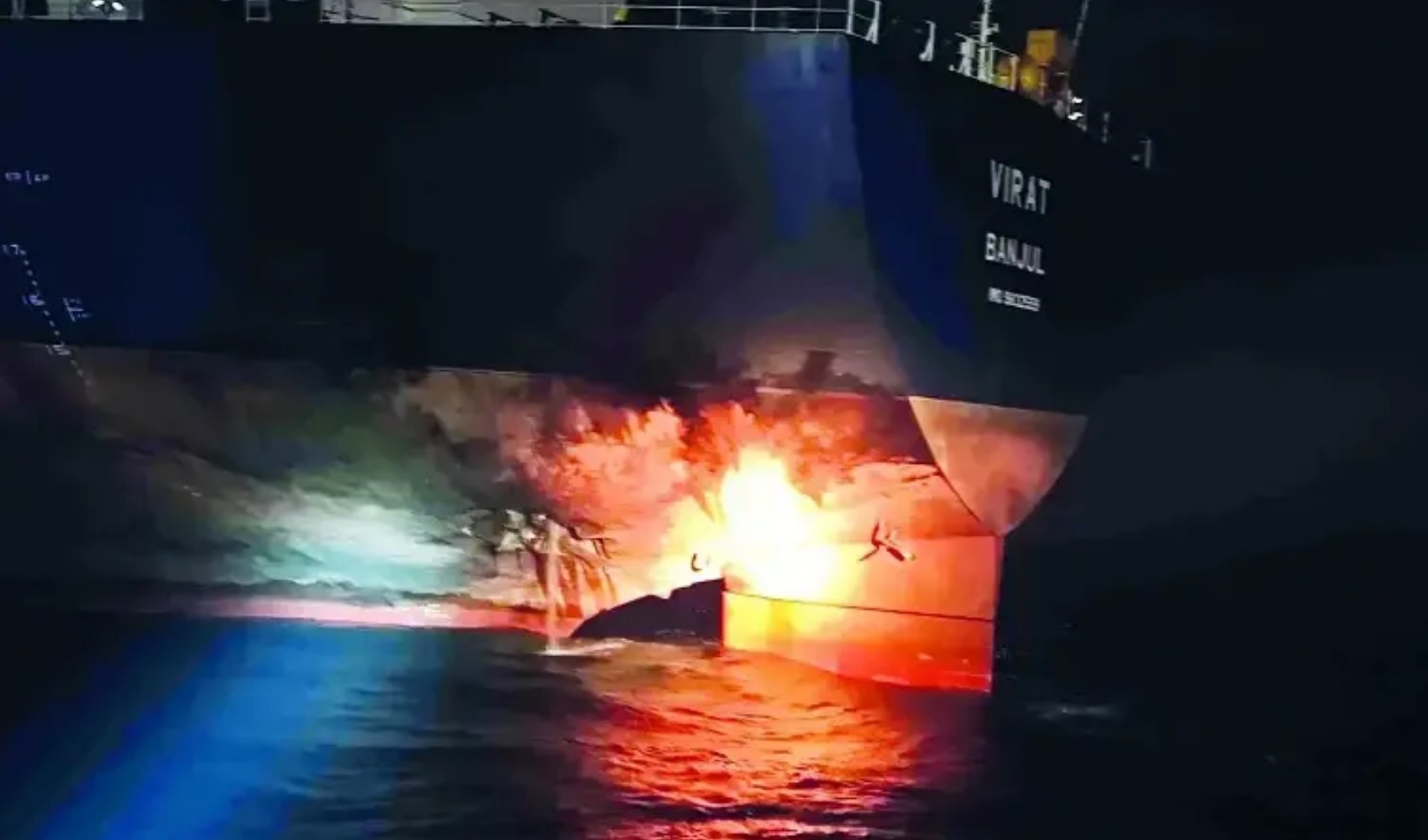
In recent days, much has been written and discussed regarding attacks on commercial tankers. There are highly esteemed statesmen who are experts in their fields, have spent their lives at sea, can evaluate events from a geopolitical and geostrategy perspective, and are trying to guide authorities with alternative roadmaps and immediate measures to be taken. My commander, Admiral Cem Gürdeniz, and several maritime doyens whose names I do not find appropriate to mention here due to their political identities, are some of these people. I believe that paying attention to the perspective they draw will create more value in the short and medium term—strategically, operationally, and tactically—than listening to the "military strategists and security experts" who seem to have a comment on every subject.
When we look at data easily accessible in open sources without confusing you with too many numerical values, Turkey entered the top 10 countries in the maritime transport league, which carries 88% of global cargo trade, in 2025. Focusing on the "BIG PICTURE," where the global risks, regional threats, and economic and social consequences of these attacks are evaluated, is of course of vital importance. However, there are approximately 2,000,000 (two million) people working in the field of global maritime transport, and when we add sectors such as fishing, tourism, and shipbuilding to this figure, there are approximately 100,000,000 (one hundred million) people. About 150,000 (one hundred and fifty thousand) of this figure are Turkish seafarers. Together with all sectors, this figure reaches approximately 450,000 (four hundred and fifty thousand) Turkish people. Therefore, I believe that focusing on the "SMALL PICTURE" for such a large community is also of vital importance.
With the Ukraine-Russia war, the public has become accustomed to a number of terms we hear frequently. Drones, kamikaze drones, UCAVs, UAVs, etc. However, with the recent attacks, the term "Limpet Mine" has also started to become a buzzword. So, what exactly is this thing called a Limpet Mine?
A limpet mine is a sabotage mine designed to explode by attaching to a ship's hull below the waterline using a system such as magnets, adhesive surfaces, or mechanical hooks, and can be placed by divers or unmanned underwater vehicles for the purpose of drilling, tearing, or causing flooding. They can contain different types of explosives, and mechanisms such as timers, magnetic sensors, anti-tamper devices, and, although difficult, remote-controlled mechanisms can be used as firing systems. Despite the small amount of explosives they contain, they create a major effect in terms of specific gravity and have the tactical power to change the course of a war. They first appeared on the scene of operations during World War II, but were later used by terrorist organizations as an element of asymmetric threat and an instrument of irregular warfare. In recent events, we are encountering the limpet mine as an element of a state-sponsored hybrid operation. Of course, when we think of military ships, there are many measures that can be taken against these mines in dispersal areas during war or tension, but the options for commercial ships are not that varied. However, considering all seafarers showing their flags on the seas regardless of their nationality or citizenship, there are applicable and sustainable measures that can be taken within the framework of the small picture.
We can list the most cost- and effort-effective of these measures as follows:
- Applying special coatings and paints to the ship's underwater hull to make it difficult for magnetic mines to adhere,
- Running the propeller at irregular intervals while in port or at anchor,
- Scanning the water surface with strong lights during the night period and checking for diver air bubbles,
- Requesting a hull inspection from the port authority just before departing from the port or anchorage,
- Conducting environmental surveillance with sea drones (unmanned surface vehicles), unmanned maritime vehicles (USVs), and unmanned aerial vehicles (UAVs), and identifying suspicious civilian boats, speedboats, or underwater vehicle approaches in advance to request support from relevant authorities,
- Using special barriers similar to those used to prevent marine pollution in ports and anchorages for such vehicles,
- Using underwater SRAD (Short Range Acoustic Device) in appropriate areas and models that do not risk harming marine life,
- Planning routes supported by convoys, escorts, and mine-clearing for ships sailing on lines considered "high risk," such as the Black Sea, Eastern Mediterranean, Caspian, etc.,
In conclusion, the adoption and implementation of all these measures, allocating a budget for them, ensuring their sustainability, and creating an impact are not things that the seafarers within the small picture framework, who are at the very end of the maritime ecosystem, can decide and do on their own. It is much more important for the owners of the big picture to show will, to care about the lives of their employees, to approach the issue with a life-oriented rather than a money-oriented perspective, to carry out inspections through sanctions as a state policy, and for the rhetoric of our beautiful country surrounded by seas on three sides to cease being just a nice phrase and become a real discourse... However, let this subject be the topic of another article for now...
News Source: 12punto
Most Read

Striking picture for Özgür Özel's 'New Party'

Özgür Özel gives a dated response regarding the number of resignations

Forest fire in Antalya brought under control

The PKK opening and Özgür Özel’s path!..

How did the newspapers view Özgür Özel's farewell to the CHP?

He killed his wife by slitting her throat: Their children witnessed the moments

What did the CHP do?

Özel’s new party move in the world press

The New CHP, against CEHAPE

From self-efficacy to despair