

The halay of Eyüp, who set out to kill Hemme…
Written by Hilal Özdemir: The halay of Eyüp, who set out to kill Hemme…



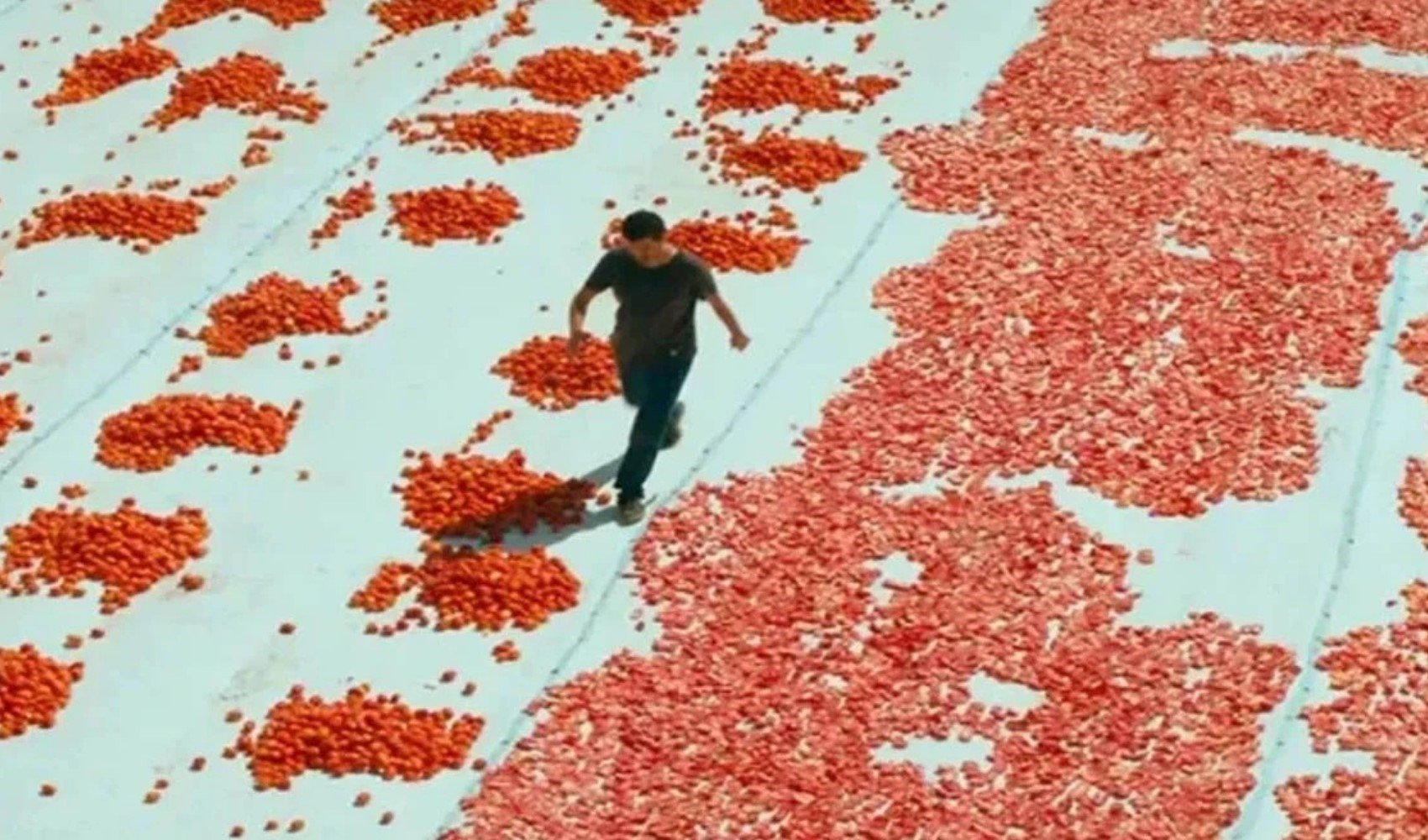
"One of the Days When Hemme Died," written, directed by, and starring Murat Fıratoğlu, has been selected by the Turkey Oscar Selection Committee as Turkey's official candidate for "Best International Feature Film" at the 98th Academy Awards. The film had previously won the Jury Special Prize at the Venice Film Festival and the Best Film award at the Golden Boll Film Festival.
Following this wonderful news in the world of cinema, I finally had the opportunity to watch the film, which I had been waiting to see for a long time. The 2024 film "One of the Days When Hemme Died" stars director Murat Fıratoğlu alongside Ali Barkın, Fırat Bozan, and Salih Taşçı.
Murat Fıratoğlu's debut feature film, "One of the Days When Hemme Died," opens with a halay scene. Following this rhythmic opening, the viewer finds themselves in the middle of the steppe, watching seasonal workers salting massive piles of bright red tomatoes under the scorching heat of the sun. One of those workers is Eyüp, who came to Siverek to work after his business in İzmir went bankrupt and he needed to pay off his debts.
As the workers talk among themselves, they mention that they haven't received their daily wages for some time. Naturally, Eyüp is the one who reacts most harshly. While the workers under Hemme show him respect, Eyüp ignores him. Annoyed by this, Hemme thinks he can exert pressure on Eyüp and earn his respect just as he did with the other workers, but that is not the case. Other workers try to separate the two as they begin to argue. However, the breaking point comes when Hemme insults Eyüp's mother. For Eyüp, who has set his mind on killing Hemme, his journey through the streets of Siverek begins.
The plastic bags caught in the wind and flying aimlessly over the tomatoes during the pair's fight are like a representation of how Eyüp, on his path to commit murder, is absurdly blown off course to completely different places.
The film depicts working conditions in villages and towns with a simple style. Eyüp, who was his own boss in İzmir before going bankrupt and returning to Siverek, does not just change his geography; he also experiences a decline in his status as a seasonal worker. Hemme, on the other hand, wants to be respected due to the power that comes with being a boss. Alongside all this, there is Ali, who maintains the balance between Hemme and the workers but is closer to Hemme. Ali, who calls to convince Eyüp to return to work, represents the individual who, no matter what Eyüp says, is dedicated to keeping the wheels turning rather than protecting the rights of the workers.
While the other workers remain silent, thinking, "As long as there is work, we will surely get our wages eventually" because they are accustomed to their conditions, Eyüp's refusal to submit and his decision to speak out make him stand out.
Although the film initially creates the impression that we will be watching a dramatic story, it subsequently turns into Eyüp's existential crisis. When he sets out to kill Hemme, his already poorly functioning motorcycle breaks down. He joins the conversation of two villagers, sees a shopkeeper who has fallen asleep while watching "Heidi" in the grocery store where he went to buy water, carries the watermelon of an elderly man who cannot walk in the heat to his home, and runs into an acquaintance he hasn't seen for a long time on the road. While all this is happening, what is striking is that while everyone is only talking about themselves, no one asks Eyüp what is wrong or what he is doing... Though it is uncertain whether he would have received the response he expected even if they had asked. Because in this town scorched by the heat, the apathy of people tested by poverty has become a way of life.
Hemme is not just the boss of Eyüp and the workers; he is the name of the wealth created by the system and the class conflict.
In this context, the film reminded me of "Kibar Feyzo." After killing Maho Ağa, Feyzo says to the judge, "Maho Ağa is dead. Another ağa has come to lead our village. I have heard the news, everyone has started looking for Maho Ağa." This is exactly what Eyüp experiences! People like Hemme die, and others take their place. The system continues to turn, even more rigidly than before...
Indeed, at the end of the road he took to kill Hemme, Eyüp is forced to dance the halay arm-in-arm with him at a wedding he attends out of necessity. The halay here is almost like a representation of the order. No matter how much we complain about our working conditions every day, in the end, we continue to join hands with managers, bosses, and other workers in jobs we are not satisfied with, and rhythmically continue to finish our work until the end of the day.
News Source: 12punto
Most Read

Striking picture for Özgür Özel's 'New Party'

The PKK opening and Özgür Özel’s path!..

How did the newspapers view Özgür Özel's farewell to the CHP?

He killed his wife by slitting her throat: Their children witnessed the moments

What did the CHP do?

Özel’s new party move in the world press

Fire at TUSAŞ engine factory in Eskişehir under control

The New CHP, against CEHAPE

From self-efficacy to despair

Kılıçdaroğlu's first message on Özgür Özel's new party announcement