

We are aging while becoming impoverished: This is not fate, it is the result of a political choice
Activist Erkan Erdem writes... We are aging while becoming impoverished: This is not fate, it is the result of a political choice



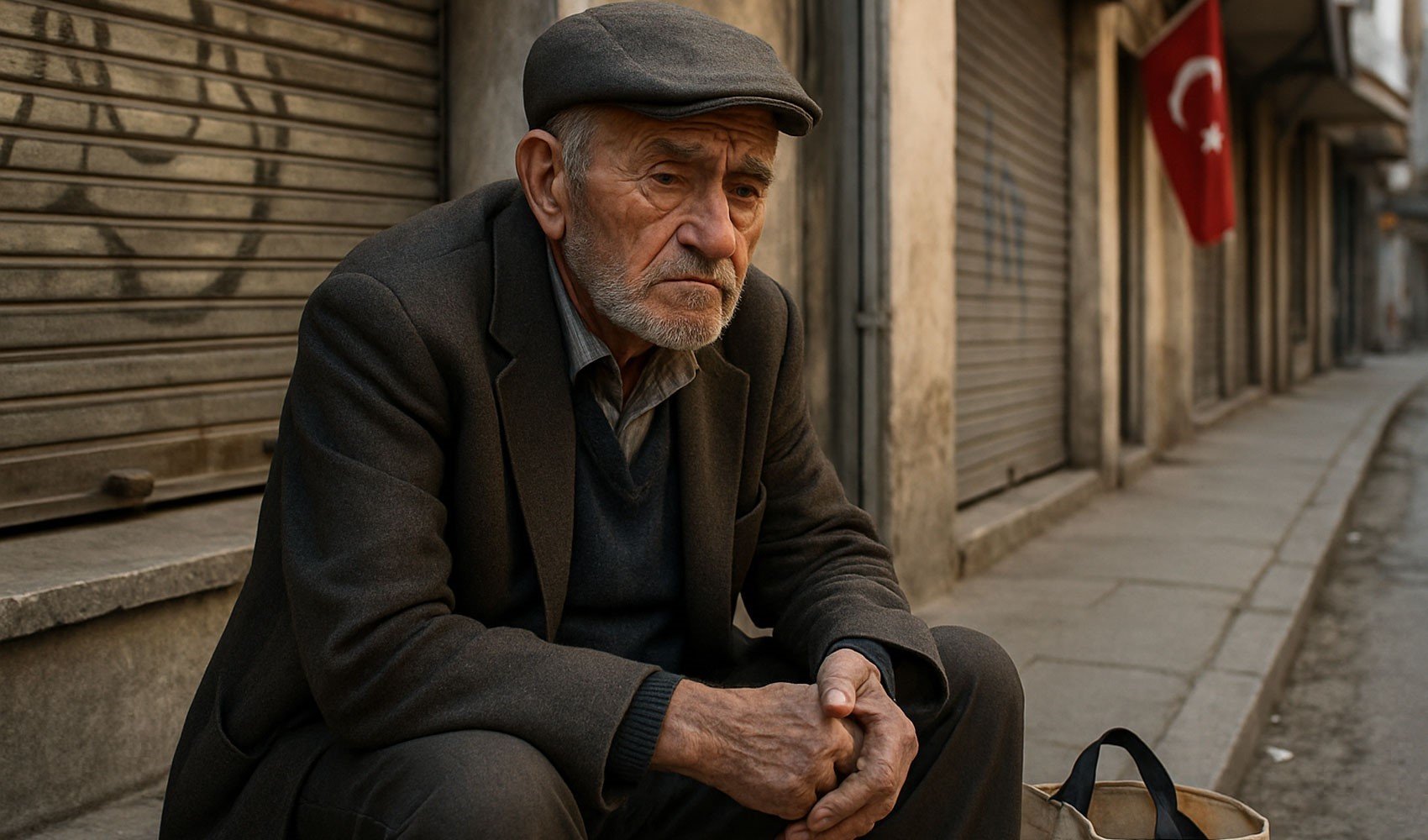
In Turkey, people are no longer just aging… They are aging slowly, silently, by being buried in poverty.
Old age, which was once spent enjoying grandchildren, is now spent picking through market scraps for fruit.
The elderly are no longer the memory of a generation; they are witnesses to an economic collapse.
And this picture is not fate. It is the result of a poverty regime being woven step by step.
Yet, old age is the conscience of a country.
If the elderly of this country still have to work to survive, what will the youth rely on to live?
Old age used to mean sunning oneself against a wall. It meant loving grandchildren. It meant telling stories of the past. Now, old age has become receiving a pension below the minimum wage, sorting through peppers at a checkout counter, or picking tomatoes from the trash at the market in the evening.
Today, old age has turned into a struggle for survival where poverty deepens a little more every year, rather than just a process of getting older.
Turkey is aging rapidly. But it is becoming impoverished even faster. And these two complement each other in the most ruthless way.
Looking at the figures from TURKSTAT, the picture is clear: the elderly population rate rose to 10.2% in 2023. It is 10.6% in 2024. (TURKSTAT, 2024)
In 2040, this rate will be 17.9%. That means one in five people will be elderly. So, how will one in five people live?
- 21.7% of the elderly are below the poverty line. (TURKSTAT, Income and Living Conditions 2023)
- In Istanbul, elderly tenants have reached 20%.
- In 2010, the pension was higher than the minimum wage. Now it is 35% lower.
- 12.2% of the population over 65 is working — two-thirds of them in fields, most without social security. (TURKSTAT, Elderly by Statistics 2024)
This is not a choice, it is a necessity.
It is not a story of “active aging”; it is a “drama of not being able to make ends meet.”
AUNT PAKİZE IS NOT JUST ONE PERSON, SHE IS REPRESENTATIVE OF MILLIONS
75-year-old Aunt Pakize has neither a pension nor a regular income. She receives only 4,664 TL in old-age pension per month. She has no teeth in her mouth and no proper shoes on her feet. If she can find work, she cleans apartment stairwells and goes to clean gardens. She forces her insufficient energy to take on heavy physical labor.
Aunt Pakize is the summary of old age in Turkey today: a tired body, a forgotten life, and a retirement dream that was never realized.
And she is not alone. Today, 76% of elderly women in Turkey remain outside the social security system. They are either widows who have lost their husbands or domestic workers who have worked without insurance their entire lives. They receive neither sufficient support from the state nor from society. Women's old age is woven with much deeper poverty.
In the past, the elderly did not work because they did not have to. Today, the elderly work because if they do not, they cannot survive.
The statistics we decorate as “long life” actually represent long years of poverty.
Turkey’s elderly are left alone with low pensions, rented houses, medicine queues, and the absence of a care system.
WHERE IS THE DIFFERENCE WITH EUROPE?
When you look at photos of retirees on social media or in the press, the truth becomes clear:
Retirees in Europe and retirees in Turkey seem to live not in the same era, but in different centuries.
There, retirees are walking, reading books, traveling…
Here, they are elderly people who cannot give pocket money to their grandchildren, who clean stairs, and who work in fields…
Same age, but completely different lives.
The elderly population rate in Europe is much higher than ours. But the elderly there do not live with their children; they live in their own homes. They can make ends meet with their pensions, go on vacation, and benefit from social services.
For example, in the Netherlands, the pension is 110% of the minimum cost of living, while in our country, it is not even 65%. In Germany, municipalities offer weekly visitation programs and free home care services for the elderly. In Turkey, the elderly have to rely on their grandchildren's internet data quotas.
In our country, old age has become a struggle. Moreover, it is a silent struggle.
Because the elderly do not complain loudly; their habits silence them.
But we must not remain silent.
Aging may be fate. But aging into poverty is not fate.
This is a choice.
And whoever made this choice, we must oppose them.
OLD AGE IS ALSO CLASS-BASED
In Turkey, old age is also class-based.
Because aging does not mean the same thing for everyone.
For some, old age means hosting grandchildren at a summer house, drinking morning coffee with a sea view, having regular check-ups at a private hospital, and participating in cultural tours.
For others, old age means trying to pay rent, chasing the cheapest cheese at the market, cleaning floors with worn-out knees, and sorting through market trash for tomatoes in the dead of evening.
It is not the same age, not the same body. It is not the same country, not the same life.
That is why old age is not just a biological process; it is a deep inequality shaped by economic, social, and cultural conditions.
Some transition into a “pleasant rest” in their old age, while others enter the most exhausting shift of their lives.
Those who have no retirement dreams will never be retired throughout their lives anyway. Because they have worked without insurance, remained unregistered, and their domestic labor has gone unseen. Especially for women, old age is a period defined more by deprivation than support, where poverty becomes permanent.
That is why even old age is privileged in this country.
While some go to “active aging” conferences, others clean stairwells.
While some say “how fast the years passed” in peace, others are still trying to find a job.
Not only is the lifespan class-based, but the shape of that life is too.
And this difference is not just individual; it is systematic.
If a country has a weak social security system, insufficient pensions, and privatized care services, this gap deepens. Local governments cannot escape responsibility by just looking at the central government. Any municipality that cannot reach the elderly and cannot understand the elderly is not human-centered.
Therefore, the issue is not just aging; it is how we age.
And more importantly: who is able to age humanely.
WHERE ARE THE LOCAL GOVERNMENTS?
Moreover, this picture cannot be explained solely by the policies of the central government. Local governments are also part of this process.
Municipalities are obligated to create age-friendly cities:
- Accessible transportation
- Public support centers
- Care support
Neighborhood-based solidarity networks for the elderly living alone...
But how many municipalities identify elderly women living alone in their neighborhoods? How many produce solutions for the loneliness crisis of the elderly? Today in Turkey, an elderly woman is slowly being pushed out of society while looking out the window. This silence is as much about loneliness as it is about poverty.
Because a city that prioritizes the elderly is a city that prioritizes people.
And no structure that does not prioritize people can survive.
WHAT SHOULD BE DONE?
1. Pensions should be restructured according to the minimum cost of living index.
2. Special rent support packages should be created for the elderly living in rented homes.
3. “Elderly councils” and neighborhood-based care support systems should be established at the municipal level.
4. Free health, care, and psychological support services should be expanded.
5. Flexible employment models based on volunteering should be developed for the elderly.
And the addressees of all these demands are clear:
- The central government is obligated to restructure the social security system.
- Municipalities are responsible for reaching the elderly, identifying those who are alone, and supporting them.
- Civil society is tasked with keeping the issue of aging on the agenda.
- And we are tasked with being the voice for this silent majority...
FINAL WORD
The civility of a country is measured by how its elderly live.
And today, we are failing that test.
But this grade is not the end.
If we take care of the elderly today, we can build a society that will take care of us tomorrow.
Let us not abandon our elderly to loneliness, poverty, and silence.
Because the mirror of a society is hidden in the lines on the faces of its elderly.
*ERKAN ERDEM*
News Source: 12punto
Most Read

Striking picture for Özgür Özel's 'New Party'
Özgür Özel gives a dated response regarding the number of resignations
Forest fire in Antalya brought under control

The PKK opening and Özgür Özel’s path!..

Houthis strike Saudi-owned tanker

How did the newspapers view Özgür Özel's farewell to the CHP?

What did the CHP do?

Özel’s new party move in the world press

The New CHP, against CEHAPE

From self-efficacy to despair