

Who Committed This Insolence?
Dr. Hasan Yazıcı, a retired professor from Istanbul University, evaluates Onur Öymen's speech titled "Lausanne: From Collapse to Victory" and his book of the same name.



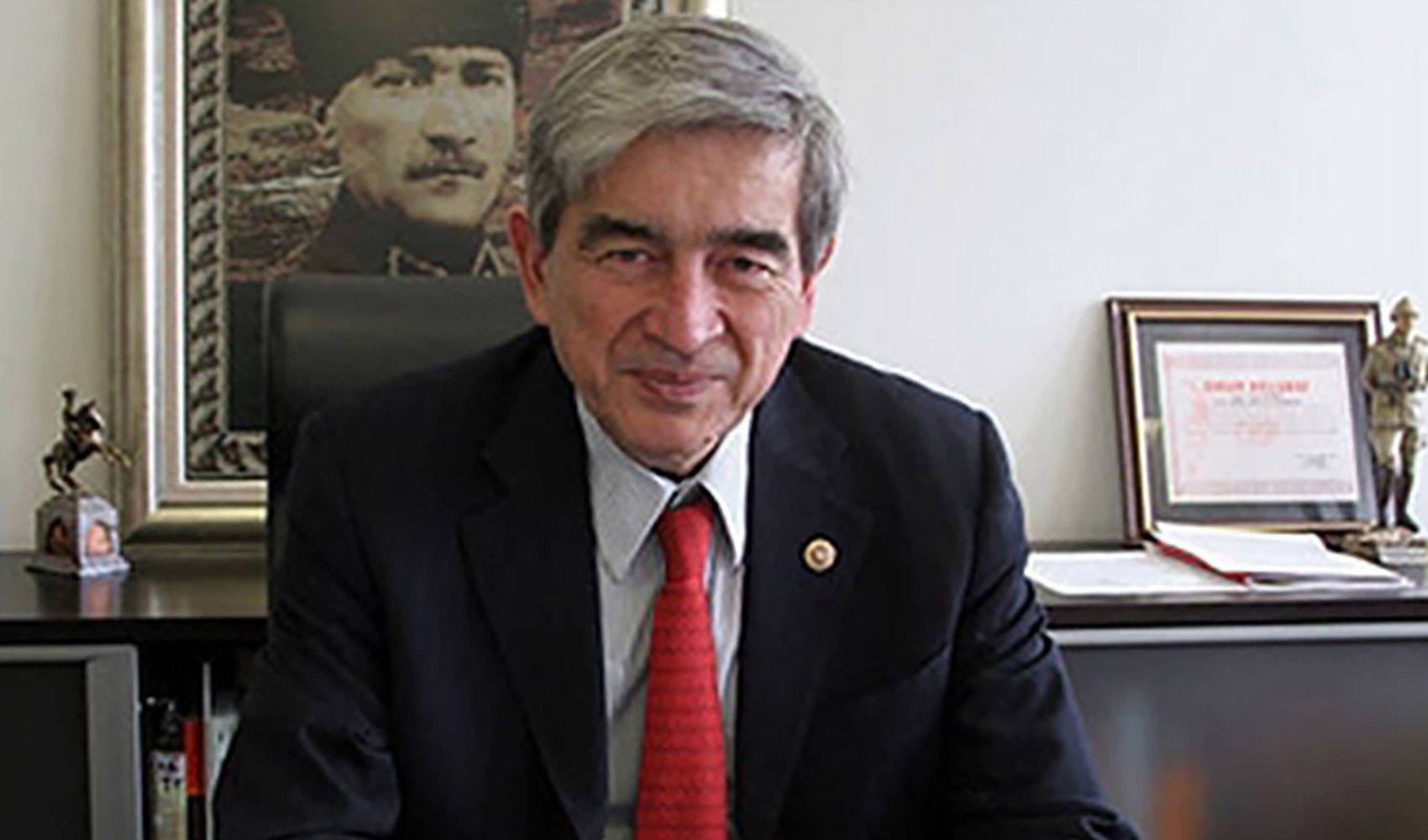
Dr. Hasan YAZICI - Retired Professor, Istanbul University
Mr. Onur Öymen gave an interesting speech titled "Lausanne: From Collapse to Victory" at the Tarihçi Kitabevi on Saturday, May 4, and introduced his book of the same name. I listened to his speech carefully and have read a large part of his book over the past few days. As I briefly stated to him and the audience at the end of his speech, I had no doubt that Lausanne is a document of victory in terms of my country's history. I also know that there are those who claim Lausanne was a defeat, and I would, at the very least, laugh at this ignorance. Mr. Öymen also ended his speech with excellent irony, saying, "Yes, Lausanne is a defeat, but it is a defeat for the countries that occupied our country before Lausanne." I declared that I fully agree with this as well.
On the other hand, I also stated to Mr. Öymen that I do not quite agree with the main theme of his speech, which I listened to with curiosity and learned from. I could not agree with holding our foreign enemies primarily responsible for the collapse of the Ottoman Empire. As far as I know, the fundamental element of the Enlightenment is self-criticism. As Öymen stated in his speech and wrote in his book, it turns out that Martin Luther, the founder of Protestantism and the most famous advocate of worship in the vernacular, was also among the enemies of the Turks. Öymen says in his book, "Luther frequently included accusatory expressions against the Turks in his writings. The title of one of the books he wrote was 'On War Against the Turks' (1529), and the other was 'On War Against the Turks' (1541)." Let us pause here. What is missing here is the motivation behind why Martin Luther wrote these. Let us not forget that 1526 was the year the Ottomans took Budapest (the capital of Hungary) and 1529 was the date of Suleiman the Magnificent's siege of Vienna. In short, I would say that the Europeans were absolutely right to fear the Ottomans, who had their eyes on their countries at that time. The Ottoman Rise Period begins with Fatih's conquest of Istanbul in 1453. One should not avoid self-criticism. The net balance sheet of this era is the forceful seizure of lands where other societies lived. We must admit that the natural consequence of this was that those whose homelands were seized did not like those who seized them very much. Well, did those whose lands were seized not seize the lands of others before and after? Undoubtedly yes, but in my opinion, the best answer to this is in the Mecelle (the Ottoman civil code enacted in the 19th century), one of the leading intellectual works of the Ottoman Empire: "A bad example is no example."
At the very beginning of his speech, Mr. Öymen quoted Atatürk, saying, "The Treaty of Sèvres is a document that declares that a great assassination attempt, which had been prepared against the Turkish nation for centuries and was thought to have been completed with the Treaty of Sèvres, has failed," and stated that the main purpose of his speech was to say that while we criticize ourselves plenty regarding the collapse of the Ottoman Empire, the role of foreign powers in this collapse is much greater than we think, and his speech continued on this truly interesting theme. What I want to emphasize with this article is that while the self-criticism we assume we are doing is abundant in quantity, it is quite far from quality. Let me put it more simply. We appear to be doing a lot of self-criticism, but in essence, we are not doing much. Significantly, there is almost no institutional self-criticism.
Here, I will touch upon only two problems that I see as vital. Unfortunately, these two problems are true not only for the collapse of the Ottoman Empire but also for today, and I must state with regret that they constitute the two weakest links of our Republic.
I. Lack of Universities. A university has 4 functions in short: a. It produces science; b. It provides high-level professional training; c. It provides consultancy on various problems of society and those who govern it; d. It becomes a constantly renewing museum of accumulated science, knowledge, and experience. The Ottoman Empire did not have a university, and this deficiency is often forgotten as a significant reason for its disintegration. In the current situation, the vast majority of our universities are vocational schools that do not produce original science, and instead of providing consultancy to society and those who govern it, they have become a social problem themselves. On the other hand, institutions that were able to approach being a contemporary university, such as the Boğaziçi University example, have been turned into institutions that are planned to be emasculated as soon as possible, rather than being institutions that preserve accumulated knowledge and experience. However, I would like to emphasize: The main reason for our current university problem was not the Higher Education Council (YÖK) after 1980. If we had been able to establish a truly proper and solid university since the Republic, there would not be, and could not be, a YÖK.
II. Our Judiciary Problem. I think our judicial system is our second legacy from the Ottoman Empire that leads in evil. As far as I can follow, society sees and knows our judicial problem very well and, unfortunately, has become resigned to it. Therefore, I will use only two quotes to emphasize the established gravity of the subject. The first is the well-known saying of the famous poet Fuzuli: "I gave a greeting, they did not take it because it was not a bribe." I cannot find the exact source of the second one. After his speech, I asked Mr. Öymen the following question:
"During the Lausanne talks, a British delegate (perhaps Lord Curzon) said to İsmet Pasha, 'It is seen that you will establish the state you desire so much, but I fear the life of this state will be short. Because your judges are famous for taking bribes.'"
I had read in various sources that Lord Curzon often made arrogant remarks to İsmet Pasha during the Lausanne talks, and even tried to make him sit in a smaller chair when the talks began. However, I could never verify the authenticity of these very hurtful words I mentioned. When I asked one or two historians, they also stated that they had heard this rumor but that there was no such thing in the minutes of the Lausanne meeting. Mr. Öymen's answer was similar. Then, suddenly, a worse possibility came to my mind. Could it be, could it be that this rumor was the result of a deep fear and lack of self-confidence that leads us to feel the need to express even our important criticisms about our country through the mouths of others? I have no intention of falling into the devastating hopelessness of this possibility.
News Source: 12punto
Most Read

Striking picture for Özgür Özel's 'New Party'

The PKK opening and Özgür Özel’s path!..

How did the newspapers view Özgür Özel's farewell to the CHP?

He killed his wife by slitting her throat: Their children witnessed the moments

What did the CHP do?

Özel’s new party move in the world press

Fire at TUSAŞ engine factory in Eskişehir under control

The New CHP, against CEHAPE

From self-efficacy to despair

Kılıçdaroğlu's first message on Özgür Özel's new party announcement