

Foreign Minister Hakan Fidan's 'nuclear' and 'Trump' commentary: Turkey blocked Netanyahu from going to Azerbaijan!
Foreign Minister Hakan Fidan stated regarding Donald Trump, who was re-elected as president in the US, "We cannot say with 100 percent certainty what Trump will do." Touching upon the Russia-Ukraine war, Hakan Fidan said there is a risk of nuclear war. While expressing that they might have to 'take steps' in Syria, Fidan confirmed that they blocked Netanyahu's visit to Azerbaijan by closing their airspace.



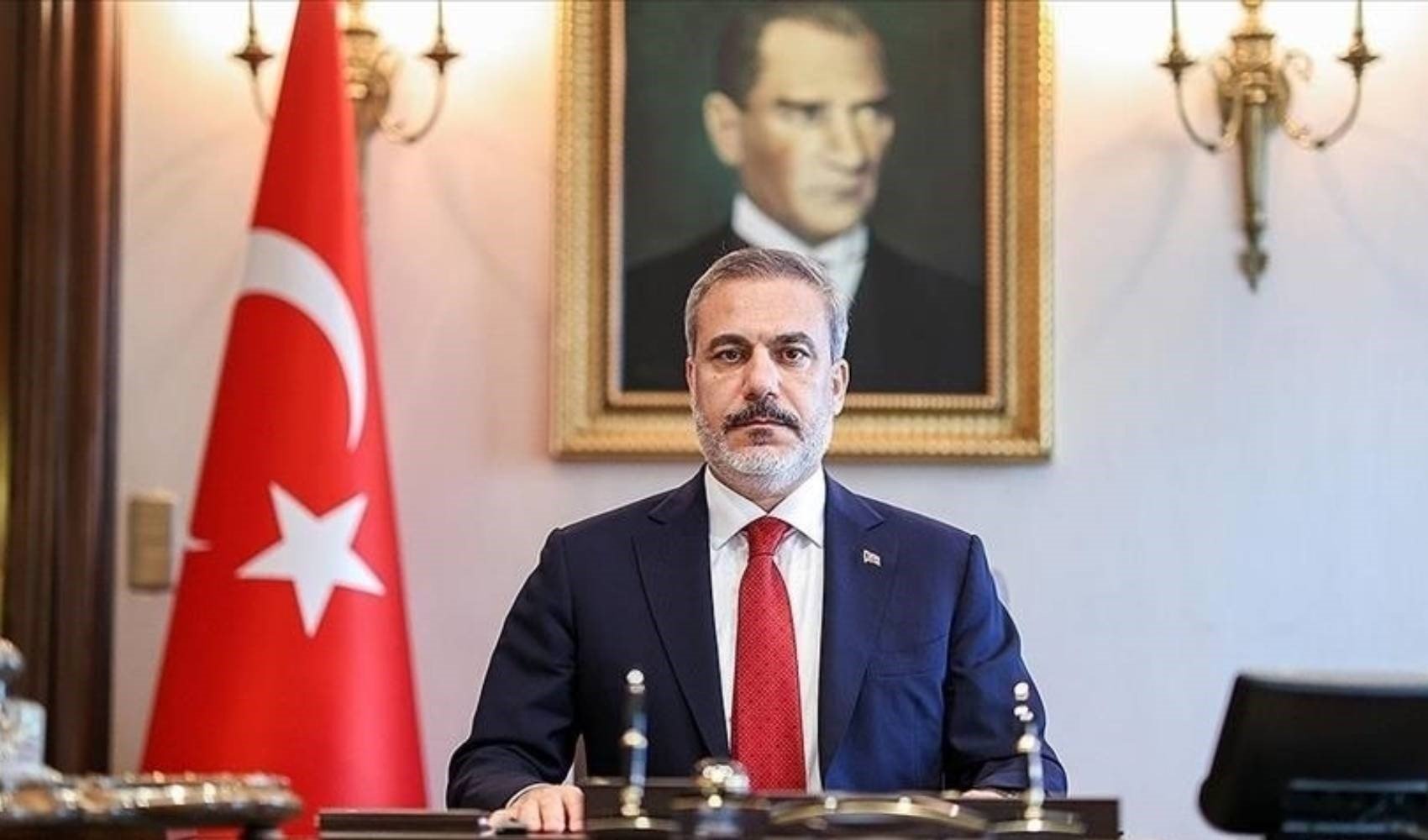
Foreign Minister Hakan Fidan met with Ankara representatives of media organizations.
Evaluating Trump's re-election as president in the US, Fidan said the following:
"The debates over who would win the election in America were left behind in November. After a four-year hiatus, we will now experience Trump's second term. This time, Trump has gained dominance in both chambers of Congress. This is not something every leader is granted in a single election. He has such an advantage.
Of course, the Democrats need to look back and ask themselves, 'What did we do, why did we suffer such a major loss?' The conditions that influenced the American voters' preferences must be well analyzed by everyone. With Trump's victory, it can be said that some of the geopolitical crises currently occupying our agenda will become a bit clearer. Regardless of whether it is in a good or bad direction, there is a perception that uncertainty will be lifted on certain issues. Of course, we will also need to look at how much this will be to our advantage. There is curiosity about what kind of steps will be taken to stop the Russia-Ukraine war. How much more support will the US give to Israel on the Gaza issue? Will it stop the war or support its expansion? Frankly, there is not enough data to allow us to say, 'He will do this 100 percent.'
There are basically two issues. First, if you look at the Cabinet, the indication is that such a pro-Israel cabinet will support all of Netanyahu's expansionist ambitions. The second is that Trump says, 'I am coming to end wars, not to start new ones.'
If you take this statement as a basis, it is also possible to speak of an indication in the exact opposite direction. Now, we will see in the coming period how much these two different, contradictory indications will balance each other and how this will reflect on the region.
PERHAPS WE WILL SHARE IN THE COMING PERIOD
In the meantime, of course, there are ongoing discussions, conversations, and strategic analyses regarding the Gaza war, the war in Lebanon, and the potential tension with Iran. There are consultations we have held with our counterparts in the region. Perhaps we will share those in the coming period as well. There are also certain convergences caused by these geostrategic ruptures. You are likely following them as well. For example, to what extent will the rapprochement between Russia and China go? Where will India remain in this? Now, North Korea's
The fact that Russia has entered the war on their side, and therefore that another military front will be formed, is significant.
There is the former Chairman of the Joint Chiefs of Staff of the Americans, Mark Milley, who called Trump a fascist. I listened to a speech of his last year. I listened to the same speech again this morning. He says, 'Our number one priority is to do whatever it takes to prevent Russia and China from coming together.' In fact, like playing chess, he sees which piece will gain how much power with which other piece.
THE TWO WINGS HAVE DIFFERENT VIEWS
He is making a prediction about what will happen so that a larger military force does not unnecessarily emerge against America. But now, the policy implemented by America brings this about. How does it bring it about? The two wings have different views. The Republicans are on the side that prefers a policy of intense pressure on China. The Democrats, on the other hand, are in favor of putting so much pressure on Russia that they almost desire to go for a regime change. Now, the Chinese are also receiving their share of tension from American administrations. The Russians have already received theirs.
Biden is developing further measures as he is on his way out. Ultimately, America itself is creating the reasons that would require Russia and China to seek different forms of cooperation against America right now.
TRUMP MAY HAVE FOUR OR FIVE MOVES
Now we will see with what kind of policy or diplomatic step the US will be able to achieve this. Each of these steps concerns us closely. We are following this very closely. As far as I can see, Trump may have four or five moves. Each move also has its own pros and cons. The impression I get from Trump is that he will continue the rhetoric on certain issues and leave critical issues to flow on their own at first. He may not take too many radical decisions. Perhaps the most important issue on which he will take a radical decision is related to his own hand, that is, to America. Especially fulfilling the promises he made regarding the issue of immigrants. This is the issue with the least cost in both domestic and foreign policy. Here, he needs to establish a more structural cooperation with some Latin American countries, primarily Mexico. The Democrats were also trying to achieve this for the last year or two.
For example, my counterpart Antony Blinken was constantly going back and forth to Mexico to discuss how the immigrant issue would be managed. For the Democrats, managing the immigrant issue was, of course, a somewhat handicapped subject. On one hand, you get votes from a base formed by immigrants, and on the other hand, you have to prevent migration from putting a burden on both the system and politics. Therefore, the Democrats preferred to take measures without declaring them domestically and abroad. Declaring this would have created a political cost for them. Even if they said, 'Let's talk to Mexico secretly, let's talk to the South American countries that are other transit routes, let's produce a package of structural measures so that we don't face a wave of migration that puts us under such political pressure,' they cannot openly engage in anti-immigration. Of course, as I said, these are the events that America is currently experiencing within itself. Trump may start his actions with one of these. In geopolitical problems, he may prefer a wait-and-see policy or a postponement policy. He may lean more actively into the Ukraine-Russia war in the first stage. We will all see these together.
Responding to journalists' questions, Foreign Minister Hakan Fidan gave the following answers:
-What are your expectations regarding Syria during the Trump era? Will the US continue its relationship with the PKK/PYD?
There are currently not many indications as to what Trump will do in Syria. However, based on some of his approaches during his first term, there are predictions about what he might do today. But I believe it would not be accurate to base our assessment solely on that. As long as the US cooperates with the YPG/PKK in Syria, the strategic area of conflict regarding Turkey will naturally continue. America, which pursues a security-oriented foreign policy, should actually be in the best position to understand Turkey. It is our duty to clearly demonstrate our stance on this issue, both with our diplomatic moves and our position on the ground. During the Trump era, the US wanted to withdraw from Syria and tried to do so. However, the American system at the time did not listen and did not agree. It was seen that the President's direct order did not have much military value in the eyes of defense bureaucrats. Trump must have learned lessons from what happened in the past. Indeed, we now see that he is looking to bring in staff more loyal to him to avoid experiencing similar events again.
-It seems like Syria is not on Trump's agenda right now. What do you think the US will do in Syria during the Trump era? In what direction will our fight against terrorist elements in northern Syria proceed?
There are several issues on the US table regarding Syria right now. What will happen to this DAESH? What will happen to those in the Al-Hol camp? What will be done about them? Another issue is the situation in Syria within the scope of the active war Israel has entered in the region. As you know, one of the most important reasons for the US presence in the Middle East is the security of Israel. Therefore, I think they will also seriously consider whether Syria has an impact on issues related to Israel's security. I assess that they will review their relationship with the PKK/PYD. Because we communicate to them at every opportunity how serious we are about this issue. The Democrats had recently entered into such a search. Because they also see that this cooperation is unsustainable. The fact that something that started temporarily has lasted this long and that an ally like Turkey has been pushed to a different point is a matter that has no rational or strategic explanation. Frankly, we are showing them that we cannot and will not tolerate this much longer. We need to continue on this path. There may be various alternative scenarios in the new period. The important thing is to continue the discussion. We are extremely clear in our counter-terrorism activities on the ground and in our position at the diplomatic table. We need to continue to defend and bring forward proposals. America sees that we are ready to take every step to ensure our own security in the region. They also see that we expect a change in attitude from them on certain issues. If we are conducting certain operations in different ways, the reason for this is to allow our expectations to be met. But if the situation on the ground necessitates a different type of operation, as our President has stated, the necessary action will of course be taken.
-Could a US withdrawal from Syria be on the table during the Trump era?
As I said earlier, Trump's attempt to withdraw American troops from Syria in his first term was thwarted by defense bureaucrats. If you remember, it was left to the Democrats to implement the Republicans' decision to withdraw from Afghanistan. But the Democrats did not do that withdrawal job well. Being in a difficult situation also created a huge political cost internally. They shelved the idea of withdrawing from Syria to avoid experiencing the same cost again. In fact, keeping 800 soldiers in Syria does not contribute much to the US. On the contrary, the presence of those soldiers in the region acts as an obstacle to American military operations. Because in any regional operation to be carried out against Iranian militias in particular, American soldiers in Iraq and Syria are used almost as hostages. When America strikes Iran or Iranian militias from somewhere, its soldiers in the region become targets for attacks. This, of course, creates a constant area of tension. But as I said, during the Democratic era, the Americans did not want to see in Syria the difficulty they experienced in the withdrawal from Afghanistan. Now that the Republicans have taken over power, there may of course be an opportunity for them to implement this. That is my assessment. A positive step could be taken.
-Could Turkey bring a different proposal to the US regarding the fight against terrorism in Syria? Could it invite the US to stop cooperating with the PKK/PYD in the name of fighting DAESH and to work directly with us instead?
Our message on this issue is clear. There is a point that both our Ministry of National Defense and we constantly draw the attention of our counterparts to during our meetings: We certainly support counter-terrorism operations in the region. As we have always said, it is wrong for America to work with another terrorist organization to fight DAESH in the region. There is no need for this either. But the Americans' insistence on being wrong is, of course, a separate issue.
-There are claims that there may be some negotiations between Russia and the new American administration regarding Syria. Therefore, considering the possibility that the two sides may reach some agreements, what does this mean for Turkey?
If there is a freezing or softening in the Ukraine-Russia war, they might perhaps talk about other issues regarding the Syrian matter as well. In other words, this is not out of the question. We are following the developments closely. It is also quite possible that the Americans will seek ways to prevent the actor they invested in from being harmed while leaving the region. The important thing is that we are prepared for any scenario.
-Is there any diplomatic contact with the Assad regime, other than intelligence units? Is a meeting between the leaders on the agenda?
You know our President had an important proposal on this matter. However, the Syrian side does not seem ready or open to evaluating certain issues too much, especially during this process. In other words, they are not even open to meeting with their own opposition. When I explain these, some say, 'Turkey is setting Assad's agreement with the opposition as a precondition.' No, this is not a precondition. But the way for him to solve my problem practically passes through something like this. In other words, it is not a solution for him to say to me: 'Let's make a deal, you trust me. I will fight terrorism, and you get out of my borders, don't interfere with the rest.' Because this has no basis in reality. The data I have shows this. When I am not there, the people living there will also come to my country as refugees. The Damascus regime going after certain groups will only produce more refugees and more instability. Thanks to the Astana Process, we have a ceasefire that we have achieved among the forces on the ground there and which has been continuing for years. What needs to be done is to change this with a better structural mechanism and only for a better goal. When you do not offer a better alternative than this, any proposal you bring will be an unacceptable proposal for us. The issue of what a better offer would be can only be resolved by sitting down and talking.
-While Israel continues its operations in Lebanon, we see that it is also hitting the Shiite militias, the most important supporters of the Damascus regime in Syria. How does this affect the future of Syria?
Syria is currently under intense pressure from Israel. We see that the Syrian regime is behaving as follows: 'I am not a party to the war between the militias and Israel. There are Iranian militias in Syria. Israeli forces are also coming here and attacking. You can fight your war among yourselves, but don't touch me, don't attack my infrastructure, don't kill my soldiers. You can fight each other, I cannot prevent this, understand me.' On the other hand, other actors in the region who support Syria's return to the Arab League think that they will ensure Syria stays away from Iran with this move. We have said from the beginning that this is not possible. Because there is a very intertwined cooperation between Iran and Syria. But both Damascus and Baghdad see this. Both countries say, 'Okay, let our relations with Iran be good, we are in solidarity in difficult times, but don't come and be effective in our administration.' But this phenomenon has become a subject that has turned into Ömer Seyfettin's story 'Diyet' (The Blood Money). Especially, this is seen in Iraqi politics. We are increasingly seeing the same thing in Syrian politics. Let's see how the ongoing process with Israel will evolve? They are also frankly waiting for Trump to take office on certain issues.
-Although there has not yet been a concrete response from Damascus to the call our President made to Assad, could Russia or Iran have a role in the normalization of relations?
This is actually somewhat related to the suggestions Russia and Iran will make to Syria. In what direction will they make suggestions, and how will they do it? Frankly, when we meet, we talk to them. Normalization between Turkey and Syria is not among Iran's priorities in Syria. As for Russia, since there is already a ceasefire in the region and no serious threat is manifesting itself too much, such a topic is not on the agenda. As Turkey, we are a country that has demonstrated our good intentions in this regard. In other words, we have no concerns about aggression or occupation. We have no concerns about regime change. When you demonstrate this, the other side does not generate an alarm situation from it. It continues its efforts to deal with the remaining issues in the region. According to our assessment, there is currently an approach that considers the continuation of the process we started in Astana to be sufficient. But of course, there is the issue of its sustainability. Because the necessary steps are not being taken in the fight against terrorism and regarding refugees, it is a threat that is gradually evolving within Syria. In other words, it could evolve into a threat whose cost of destruction for us increases with each passing day. For this, we are looking for solutions. Of course, where these search for solutions cannot be answered with diplomacy and a constructive approach, we will look at how we will necessarily take other types of steps when the time comes.
-Minister, while you were speaking about the region, and while you were speaking at the Planning and Budget Committee, you set your vision in foreign policy in a way that also includes the economy. In Iraq, there is both the issue of chronic terrorism and an expectation that oil revenues will now be spread to the entire state. Is the Iraqi state in a position of maturity to use all of these revenues? That is, has an integrity been achieved there? How do you see the upcoming period within the framework of Iraq?
First of all, let me touch upon the issue of how we conduct foreign policy and the economy. When we say peace and prosperity, security and economic issues inevitably come into play here. That is, you need to devote serious strategic time to security. Both energy transit lines and the good operation of trade areas, as well as routes in the region, are issues we prioritize. The fact that our relations and perspective with Iraq develop mainly through economy and other issues rather than security also causes security-related issues to be resolved more easily. We saw this when we were implementing the security agreement between our countries. After talking about the economy and development for a long time, we said the following at a point we reached: Now we will build the Development Road here, but international finance is needed for these, banks are needed. Even if it is a profitable project, it is difficult to bring financing and investors to a place where armed groups and terrorist organizations exist. Therefore, it is necessary to clear these out. The Iraqi Central Government knows that a large financial institution from Europe or elsewhere will not provide credit to conflict zones where armed elements exist and keep places under occupation, and if they do, the costs will be incredibly high. If this cannot be achieved, Iraq will have to realize this with its own resources. In the relations between Baghdad and Erbil, especially on the issue of the pipeline and the sharing of oil revenue, an agreement seems to have been reached to a significant extent. Erbil and Baghdad had already agreed in principle. But Baghdad had to sign agreements with companies that had previously signed contracts with Erbil, which are mainly Western companies. There was an issue of paying a certain fee per barrel in the agreement they made with Erbil. Now they need to do that again with Baghdad. As I understand it, some progress has been made. We expect the pipeline to open in the near future. This is what the Iraqi side tells us. The opening of the pipeline will, of course, bring a lot of activity to the region in their favor as well.
-Mr. Minister, if I remember correctly, in yesterday's budget speech, you said that the Ovaköy Border Gate would be opened in a short time within the framework of relations with Iraq. You also emphasized that the Development Project is very important. As I understand it, does Russia also have an intention to be involved in this project?
The Development Road Project is a project that we also support very much politically when we combine it with the economy. We always explain it as follows. As you know, Iraq has been exposed to incredible war, occupation, civil war, and many issues for the last 20 years and has been left with internal division. Now, at the point we have reached, there is an Iraq that has been gradually calming down for the last 3-4 years, where guns have been silenced, and a little more space has been opened for other areas. Of course, Iraq's oil revenue is a serious figure. That is, these figures have been neglected for many years and could not be realized. That is, the infrastructure services to be brought to the Iraqi people need to be completed. When the Prime Minister of Iraq first brought the Development Project to us, we accepted it immediately. By encouraging the participation of actors in the region, it is a project that truly puts Iraq on the agenda in a positive way for the first time in the last 20 years. We support it for this reason. I always say in my speeches. That is, our region needs to be an area of peace and prosperity. We need to create an atmosphere where conflicts and threats are reduced and economic cooperation is increased. We need to do professional work. We see the Development Road as such an opportunity area. With what intention are the Russians getting involved here? When we look at the map, the Russians' relations with the West have been severed in every field after the Ukraine war, and these logistics routes have also been severed. Now, nothing comes to Russia from the West by sea, land, or rail. Therefore, the Russians have to make their opening to world markets by reaching Basra in addition to their places in the Baltic. For this, they are entering a north-south opening. Now, when we look at the north-south opening, we are talking about a large railway project that starts from the northern cities of Russia, passes through Azerbaijan, enters Iranian territory, and crosses Iran from north to south. They have started work on this, and the point it will reach is the Persian Gulf. At that exact point, that is, in the same basin, there is the Faw Port where it opens to the Gulf. Faw is a small city in Iraq's Basra city that opens to the Gulf. It is the starting or ending point of the Development Road Project, depending on which direction you are coming from. It is a place where products coming by road and rail can also be opened to world markets and to the region. It makes its connection with Europe. Now, it will be possible for Russia, which cannot make its connection with Europe on the north-west axis, to also benefit from this axis. In the same way, the Middle Corridor line, which we call the Middle Belt, which is another logistics line that comes from Asia, passes through the Caspian, passes through the Caucasus, and passes through Turkey, and is east-west oriented, is also a route project that will intersect with what the Russians will do. These are, of course, projects that we, as the Ministry, follow closely. Especially when formulating scenarios related to diplomacy, one of the most important issues in the economic field is this issue of connectivity. It is an area we focus on heavily.
-I think Iraq also wants to be a facilitator in Turkey-Syria relations. I think they have such an initiative. They stated that they have an initiative to organize a conference. What is Turkey's approach to this?
On the issue with Syria, yes, they have such an intention. We told them, 'We would appreciate the steps or efforts you will take on this matter.' That is, if you want to host, we are open to this as well. Because Syria, Iraq, and Turkey are three countries that have land borders with each other. The three countries also need to come together and talk about certain heavy issues in a more structural way. This existed in the past. Before the Arab Spring. This now needs to be revitalized. Especially border security between Iraq and Syria is extremely important. Fighting terrorism is important. Preventing arms smuggling is important. There are issues in this regard that Iraq is also very much suffering from. That is, we frankly support a trilateral cooperation mechanism.
- Mr. Minister, last night the President of Russia used the expression global war. One, in your opinion, is there a global war? Two, after approving the nuclear doctrine, three of the four items have been fulfilled. Although the Pentagon stated that it was notified in advance that ballistic missiles were being used, do you see a risk of a nuclear doctrine being implemented? In addition, the expression North Korean soldiers drew a lot of attention in the Pentagon's statement, but this war, that is, does Turkey have any information on this matter, regarding how many foreign fighters are on the Ukraine and Russia line? One, has it spread even further, has a global war started, and how realistic do you find the danger of nuclear war within the framework of the doctrine? Mr. Minister, I would like to add one thing. If this Russia-Ukraine war turns into a Russia-NATO war, what would our stance be here? Currently, Hungary and Turkey are trying to remain neutral here. But in what position could we be in this situation in the future process?
The risk of global war that Putin has expressed—provided we use the term 'war' in its broad sense—is a subject we have also been constantly warning about. We see that the ongoing war in Ukraine and the war in Gaza are increasingly deepening fault lines and bringing certain actors together, with polarization on the rise. Consequently, certain blocs are beginning to observe one another. In this sense, there is a global expansion. Now, we see North Korea becoming an active party to the war from the other side of the world by sending its soldiers. The weapons America has been sending from the beginning, and the weapons Europe has sent, have created a situation where they are openly parties to the war. There is currently an all-out struggle continuing as an economic, political, and hot war. It is possible to characterize this as a global war in the broad sense of the word. What is important is that its intensity does not increase. It is to ensure that the economic and political war in certain places does not turn into a hot war. Now, both sides are raising the stakes and presenting a reality.
Do you think Biden could have made this decision without consulting Trump? Because it was announced after they met, the Oval Office meeting. I mean, is it possible that it was a decision made despite that?
I am of the opinion that the Democrats are now taking steps they wanted to take on certain issues without the pressure of an election. We see the steps being taken regarding Ukraine and Israel. Is there a nuclear risk here? Frankly, the moment the word 'nuclear' starts being spoken, a nuclear risk is created. He is saying this: 'If you carry out more missiles and attacks within my territory than I can tolerate, the way for me to stop this, if it cannot be done with the tools I have, is to use another superior tool.' He is saying this openly. This is not a joke. The other side says, 'Just because you have nuclear weapons and are threatening me with nuclear weapons, I will not allow you to occupy wherever you want.' It is a very troublesome issue. Of course, one of the issues that Westerners are most concerned about is what the Russians have given or will give to North Korea in exchange for so many soldiers. That is important for this reason: If a game-changing move is made that will disrupt the current balance built in the Korean Peninsula and the region, then a new additional front will have been opened for America and the Westerners. I mean, even if this front is not necessarily a front where there is a hot war, it will be an approach that requires being ready for a hot war. It will be an approach that requires providing South Korea with different capabilities as well.
-So, there are articles and comments regarding Russia providing capacity to North Korea in exchange for soldiers. You have summarized that you take this very seriously and that this will create a new front for the West.
Yes. Because this is now a solid strategic balance that needs to be thought about. When it is disrupted, you have to engage in another move. I mean, you have to allocate resources there, allocate money, allocate capacity. You have to bring something more deterrent according to the balance the other side has developed.
-In your speech at the TBMM Planning and Budget Committee, you defined the cyber threat as the fifth war front. Could you elaborate on this issue?
As in every field, we are witnessing an evolving process regarding the cyber threat. The threat definition was made 20 years ago. Following the increase in internet connectivity, which made autonomous systems and remote command systems possible, the cyber threat became capable of targeting critical infrastructure. It took on a framework that includes potential attacks on many issues, including finance, banking systems, and transportation. It gradually turned into a subject with a large market and customer base. The cyber threat has become an issue for which states are increasingly seeking solutions. The number of people going online has increased incredibly worldwide. Especially during the pandemic process, the online rate rose at a dizzying speed. The pandemic confined people to their homes, and everyone tried to do their work more through the internet. As a result, the amount of data that would normally be produced in 10-15 years was produced in a short period of time due to the pandemic. This is also the reason why the explosion in artificial intelligence happened at a time no one expected. This massive 'data' brought about by excessive online activity and internet activity served such a purpose. The concept of cyber threat is gradually changing. The cyber threat targeting critical infrastructure is now on its way to becoming a serious tool in hacking the human mind as well.
When you look at the development of artificial intelligence, we have evolved into another dimension. Social media is now being manipulated with this. Priorities can be read, behaviors can be predicted, and personality analyses can be done more easily. Affiliation analyses can be done much more easily. In a period where everything is done so easily, the threat naturally changes its dimension. I mean, aside from the issue of your critical infrastructure being targeted, you are offering a data set regarding predictability to others as a result of the activity you produce. Therefore, in new times, we have a border issue related to people's online activity in terms of data protection. Digital borders need to be established regarding the mobility of data. In other words, data regarding the functioning of my people and my state should not easily go back and forth everywhere. From all these aspects, the fact that our Cyber Security Presidency, which we have been working on since my time at the MIT, will soon come to life is of vital importance for our country.
-We see that Turkey has been in more frequent contact with the Benghazi and Haftar administration regarding Libya recently. Our ambassador was also there in recent weeks. There were even officials from Benghazi invited to Istanbul. Our Consulate General there has reopened. Could you summarize the current situation for us?
We are also advancing our relations with eastern Libya. We have opened our Consulate General in Benghazi. We have appointed our Consul General. We are also handling the building and other matters there. Our contacts with the authorities in eastern Libya continue. They are coming to Turkey. There are those going from Turkey. Especially our businessmen. As you know, our businessmen already had intensive activities in Benghazi. Now those activities are slowly reviving again. The environment of non-conflict, which Turkey pioneered and to which it attaches great importance for its continuation, is bearing fruit. As the non-conflict environment progresses, people's belief that this can be permanent increases. They are now turning to the economy, investments, and infrastructure works. They are taking steps in these areas. This creates an area of opportunity for our businessmen. As Turkey, we attach great importance to creating an environment that will ensure national unity and solidarity, taking into account the realities on the ground in Libya. We are doing our best to implement this step by step within a certain strategy.
-You discussed Aegean issues during your meetings in Athens on November 8. In the press conference, your Greek counterpart also used the expression that you evaluated the preconditions for starting the talks. What is meant by this? Is a new negotiation process being built for the problems in the Aegean? Are we moving to a new stage at the end of the negotiations that were first exploratory and then consultative?
We prefer to handle all issues, including problems in the Aegean, issues in the Eastern Mediterranean, and matters concerning the Turkish minority, as a package. We prefer to handle these all together and, if possible, discuss them away from the public eye. We do not find it right for the issues to be overly politicized. But as you know, especially in Greek domestic politics, issues related to Turkey can be overly politicized. We want to make progress through a positive agenda and with a win-win understanding. We aim to resolve existing problems through official channels and eliminate uncertainties without compromising our national interests. The Aegean Sea, which is an earthly paradise, should turn into an economic prosperity zone for our countries. This is our goal. Can this be done? It can be done. I believe that when there is the necessary amount of maturity on both sides, this goal can be achieved with creative solutions. Our searches and discussions with our Greek counterparts are already in this direction. Currently, the meeting of the High-Level Strategic Cooperation Council between our countries is planned to be held during Greek Prime Minister Mitsotakis' visit to Turkey in January or February.
-For the last week, there have been reports questioning Hamas-Turkey relations. It first appeared in the Israeli press, then there was a statement from the US State Department Spokesperson. After that, a sanctions decision was issued regarding Hamas members. It is said that Hamas' political office in Qatar has been closed, then Qatar denies it. Some talk about them coming to Turkey. Can you tell us what is happening?
As Turkey, we have denied these rumors. Our Ministry Spokesperson announced that the Hamas Political Office has not moved to Turkey. The Qataris also denied the rumors you mentioned. Therefore, there is no such thing as you mentioned at the moment. In other words, Hamas' Political Office has not come to Turkey. It seems that the Democrats in the US want to put a little more pressure on Hamas as they are leaving office. They are probably hoping to make some progress in their own way. Something like a ceasefire, a peace agreement, etc. they are looking to see if something will come out of it or if there will be a development regarding the hostages. But their current ceasefire conditions do not seem to be the conditions that Hamas has accepted.
- Israel does not care about United Nations resolutions, nor the decisions of the International Court of Justice. It does not recognize the arrest warrants issued by the International Criminal Court, and rejects them all. The reactions of regional countries remain weak. In your opinion, what should be done to stop Israel? How will Israel be stopped?
The International Criminal Court's issuance of arrest warrants for Netanyahu and Gallant is a historic event. This is an extremely valuable decision. The fact that certain major countries have stated they will implement this decision is an important development. This development has shown that results can be achieved through diplomacy and justice mechanisms that encompass means and tools other than the use of force. One would have wished for this result to come sooner. The international mobilization that led to the issuance of the arrest warrants also played a major role, as the human conscience has finally taken a common stance against the genocide pursued by Israel and united around a common discourse. Everyone has now reached the same point: there must be an immediate ceasefire, humanitarian aid must begin, and there must be a two-state solution. But Israel demonstrates with every action that it does not want these. It is, of course, significant that arrest warrants have been issued for Israeli officials who are committing clear genocide.
- Since humanitarian aid is still not being allowed into Gaza, 2 million people there continue to struggle with hunger...
It is important that arrest warrants have been issued for Netanyahu and Gallant, but this, of course, does not solve the problem you mentioned. There is now only one way to save the 2 million people there from starvation: an international initiative must be launched to bring food to Gaza. Because despite all the possibilities of diplomacy being used, 2 million people in Gaza are being deliberately starved to death in front of all of humanity. Unfortunately, the United Nations cannot prevent this. In this situation, the international community must consider other alternatives and find a remedy for this tragedy. But starving a civilian population as a method of warfare is an issue that humanity cannot tolerate. All the possibilities of diplomacy were used to prevent this cruelty. Initiatives at the United Nations to prevent this are always blocked by the US veto. It is impossible not to rebel against this human tragedy. We must not remain spectators to 2 million people in Gaza being left to die of hunger and thirst.
- Mr. Minister, if you allow me, I would also like to ask a question. There were reports in the press that we did not open our airspace to the Israeli President who wanted to go to Azerbaijan. Is this true?
Yes, it is true. We did not open our airspace in response to the massacre of 50,000 of our Palestinian brothers and sisters, including women and children. The fact that no steps are being taken to prevent the human tragedy in Gaza deeply wounds all of us as a nation. Therefore, we did not allow the use of Turkey's airspace. Our President's decision was in this direction. Permission was not granted.
- So, is the claim that the Azerbaijani side made a special request true?
The Azerbaijani side conveyed its diplomatic request regarding the matter. But our stance on this issue is clear. Ultimately, as I said, we did not allow the use of Turkish airspace.
News Source: 12punto
Most Read

Striking picture for Özgür Özel's 'New Party'
Özgür Özel gives a dated response regarding the number of resignations
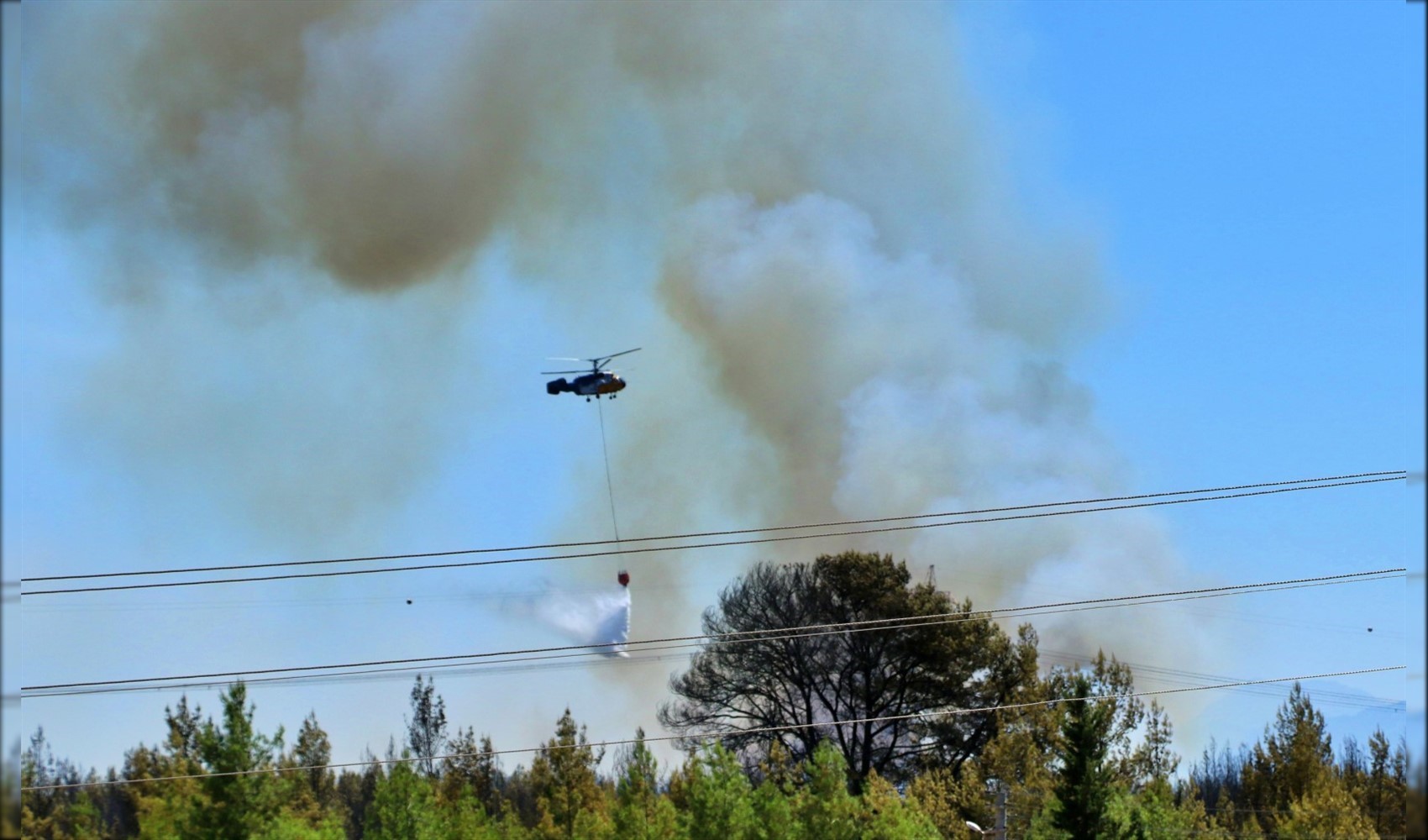
Forest fire in Antalya brought under control

The PKK opening and Özgür Özel’s path!..

How did the newspapers view Özgür Özel's farewell to the CHP?

He killed his wife by slitting her throat: Their children witnessed the moments

What did the CHP do?

Özel’s new party move in the world press

The New CHP, against CEHAPE

Fire at TUSAŞ engine factory in Eskişehir under control