

40,000-year-old microbes in Alaska reactivate due to thawing
Microorganisms that have remained dormant in Alaska's permafrost for tens of thousands of years are coming back to life following the thaw, contributing to carbon emissions. Researchers warn that the thawing of permafrost could pose new risks to the environment and climate due to microbial activity.



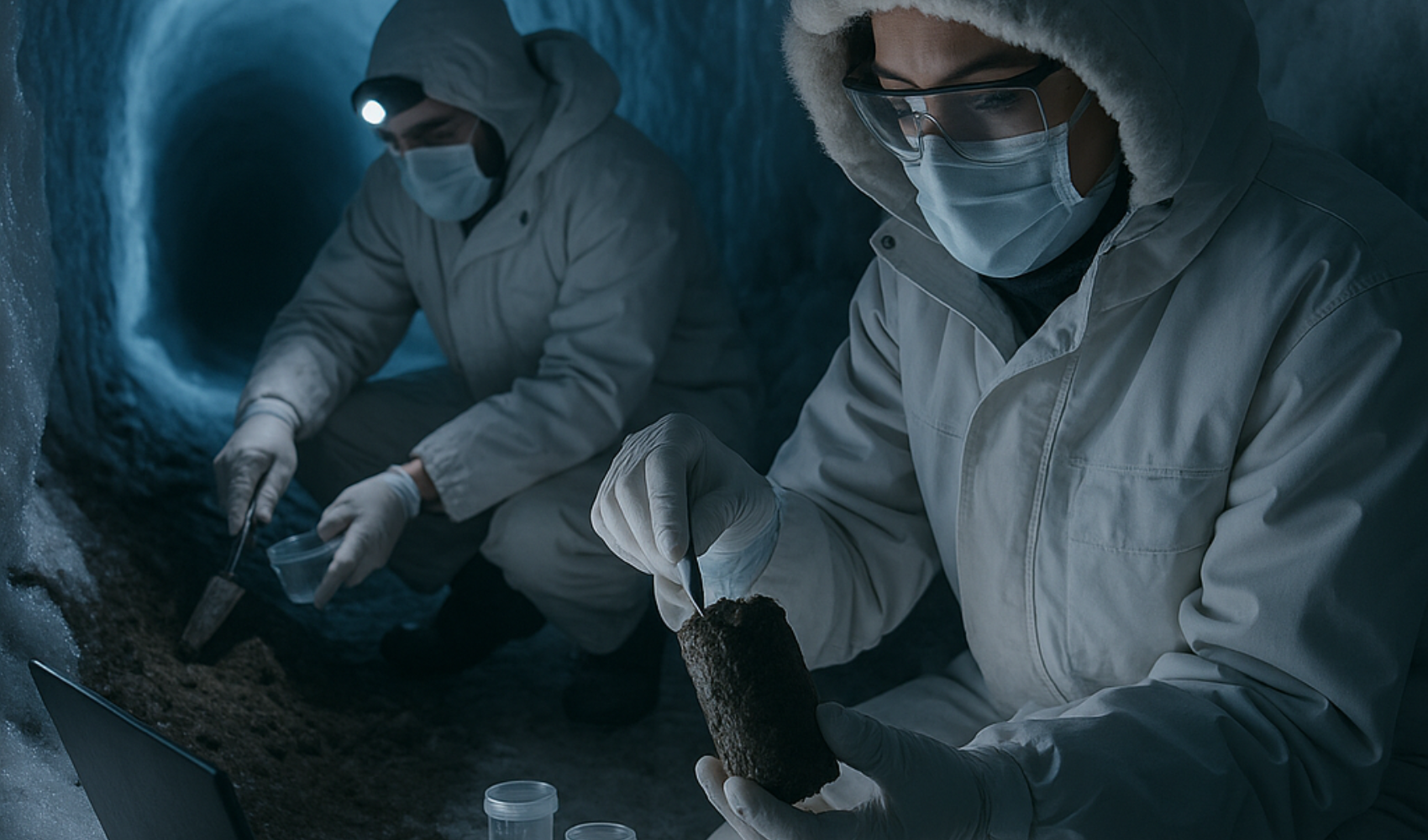
A scientific study conducted in the frozen soils of Alaska's interior has revealed that microbes dating back to the depths of history are still capable of clinging to life. These microorganisms, which remained motionless in ice for thousands of years, have become active again as the permafrost melts, beginning to decompose organic matter and produce carbon dioxide.
By examining samples taken from the depths of the permafrost through controlled thawing in a laboratory, researchers initially recorded extremely low levels of biological activity. However, as the process progressed, it became clear that the microbes were reviving, adapting to environmental conditions, and that biological activity was increasing noticeably.
According to geology experts, microbes that lived in the past within such frozen areas are able to adapt to a new life cycle. Tristan Caro, who led the research, stated, "These microorganisms are actually too active to be considered dead, and they activate immediately when environmental conditions become favorable."
It was observed that the microbes within the thawed permafrost decompose organic matter and convert it into carbon dioxide. Measurements taken by scientists showed that microbial activity is intensifying day by day, and consequently, greenhouse gas emissions could also increase. Microbiologists say, "The intense, damp, basement-like odor spreading in the environment was a concrete indicator of active organic decomposition."
The team working in the permafrost tunnel also reports that traces of prehistoric bison were found on the tunnel walls. This detail both added a different dimension to the research and pointed to the diversity of life within the ice.
PERMAFROST THAWING AND ITS IMPACTS ON CLIMATE
Geology expert Sebastian Kopf states that the thawing of permafrost could release billions of tons of carbon, which could accelerate climate change by increasing greenhouse gas levels in the atmosphere. According to Kopf, the reactivation of ancient microbial communities could cause greater environmental risks than expected.
Experts report that microbial life in frozen regions could become active more frequently and intensely as the climate warms. For this reason, the scientific community continues to examine the effects of this process on the global carbon cycle in detail.
Furthermore, it was noted that archaeological artifacts found in ancient cities continue to arouse curiosity in the scientific community. Art historians emphasized that the Athena statue, which dates back to the early classical period, draws attention with its elegant marble craftsmanship.
News Source: 12punto
Most Read

Özgür Özel gives a dated response regarding the number of resignations
Houthis strike Saudi-owned tanker

Forest fire in Antalya brought under control

4 drones shot down near US Consulate General in Erbil

Özel’s new party move in the world press

Famous director Ezel Akay and his brother have been detained

The new rule of the field: Attrition

'Papers with spells and curses' operation: 'Master, my spouse filed for divorce'

Key figure in Epstein files found dead at home

Bad news for the 'New Party' Özgür Özel is set to establish