

Acetic acid produced from plastic waste using sunlight and new technology
Canadian scientists have found a way to convert plastic waste into acetic acid, an important industrial substance, using solar energy and an innovative catalyst.



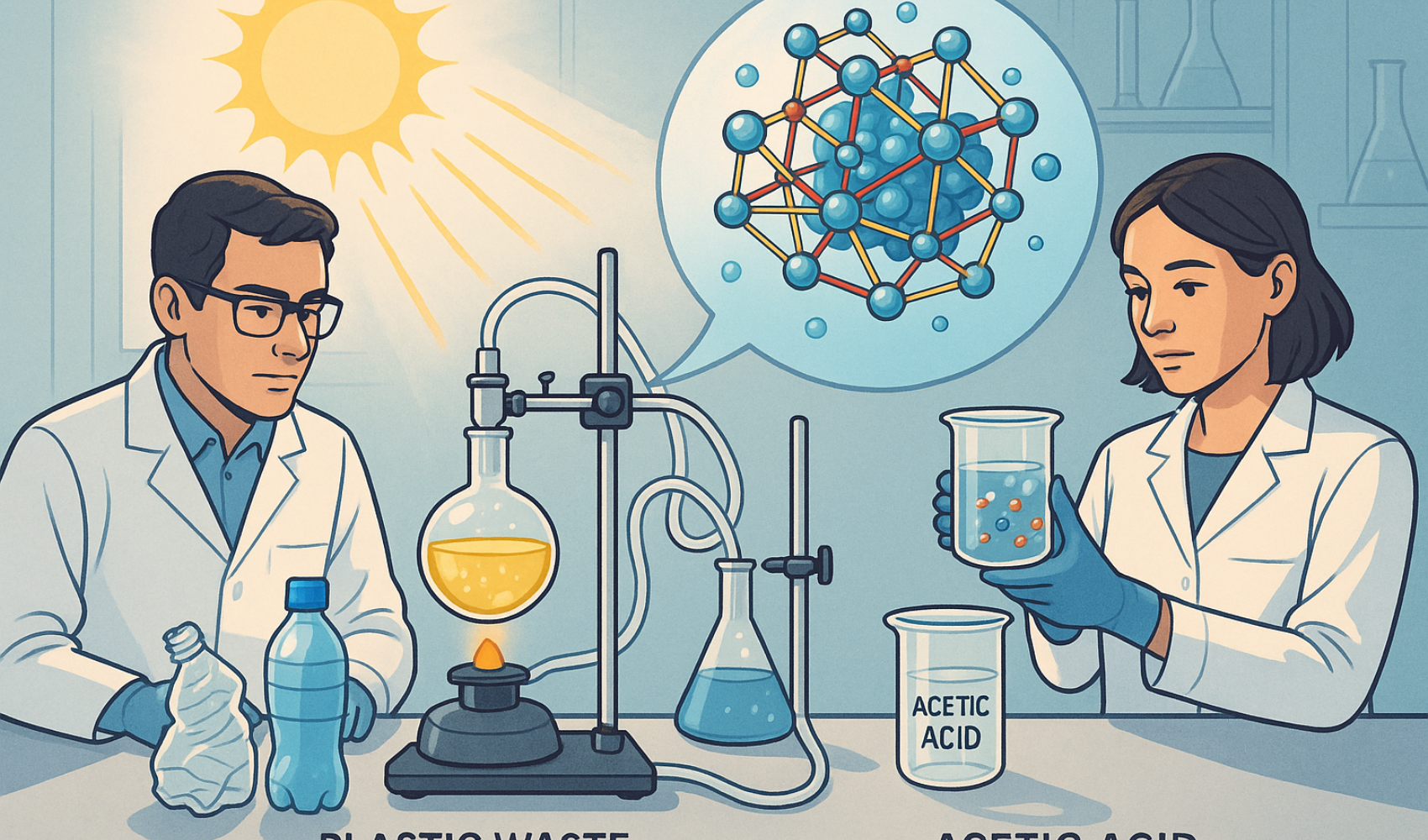
Research conducted at the University of Waterloo has led to the development of a new method for processing plastics—which take centuries to decompose in nature—without harming the environment or consuming high amounts of energy. In the system developed by the scientists, a special photocatalyst composed of iron atoms breaks down plastic chains into their basic components using sunlight. Thus, while waste plastics are eliminated, acetic acid, the main ingredient in vinegar frequently used in industry, is produced.
It is noted that the team was inspired by the way fungi break down wood in nature. By modeling their catalyst system after the mechanisms fungi use to decompose organic matter, the researchers convert plastics first into carbon dioxide and then directly into acetic acid. It is also emphasized that no additional carbon emissions occur during this successfully implemented process.
While traditional plastic recycling methods usually require waste to be sorted by type, this new technology also yields effective results in processing different types of plastics such as PET, PE, PP, and PVC in a mixed state. Furthermore, the method can be taken out of laboratory conditions and used successfully in open air under natural sunlight. The researchers state that when aluminum reflective plates are added to the system, production efficiency increases approximately fivefold.
This discovery, which makes it possible to both eliminate plastic waste and convert it into a high-value chemical, also offers hope for combating the major problem of plastic pollution in the oceans. Scientists state that if their laboratory-stage method can be implemented on a large scale, it could pave the way for sustainable plastic management.
News Source: 12punto
Most Read

Striking picture for Özgür Özel's 'New Party'

The PKK opening and Özgür Özel’s path!..

How did the newspapers view Özgür Özel's farewell to the CHP?

He killed his wife by slitting her throat: Their children witnessed the moments

What did the CHP do?

Özel’s new party move in the world press

Fire at TUSAŞ engine factory in Eskişehir under control

The New CHP, against CEHAPE

From self-efficacy to despair

Kılıçdaroğlu's first message on Özgür Özel's new party announcement