

Alarming decline in snow cover in Greece's mountains: Scientists warn
The reduction of snow cover in Greece's high-altitude regions by more than half over the last 40 years clearly demonstrates the impacts of climate change. Researchers state that rising temperatures threaten a wide range of areas, from water resources to the economy.



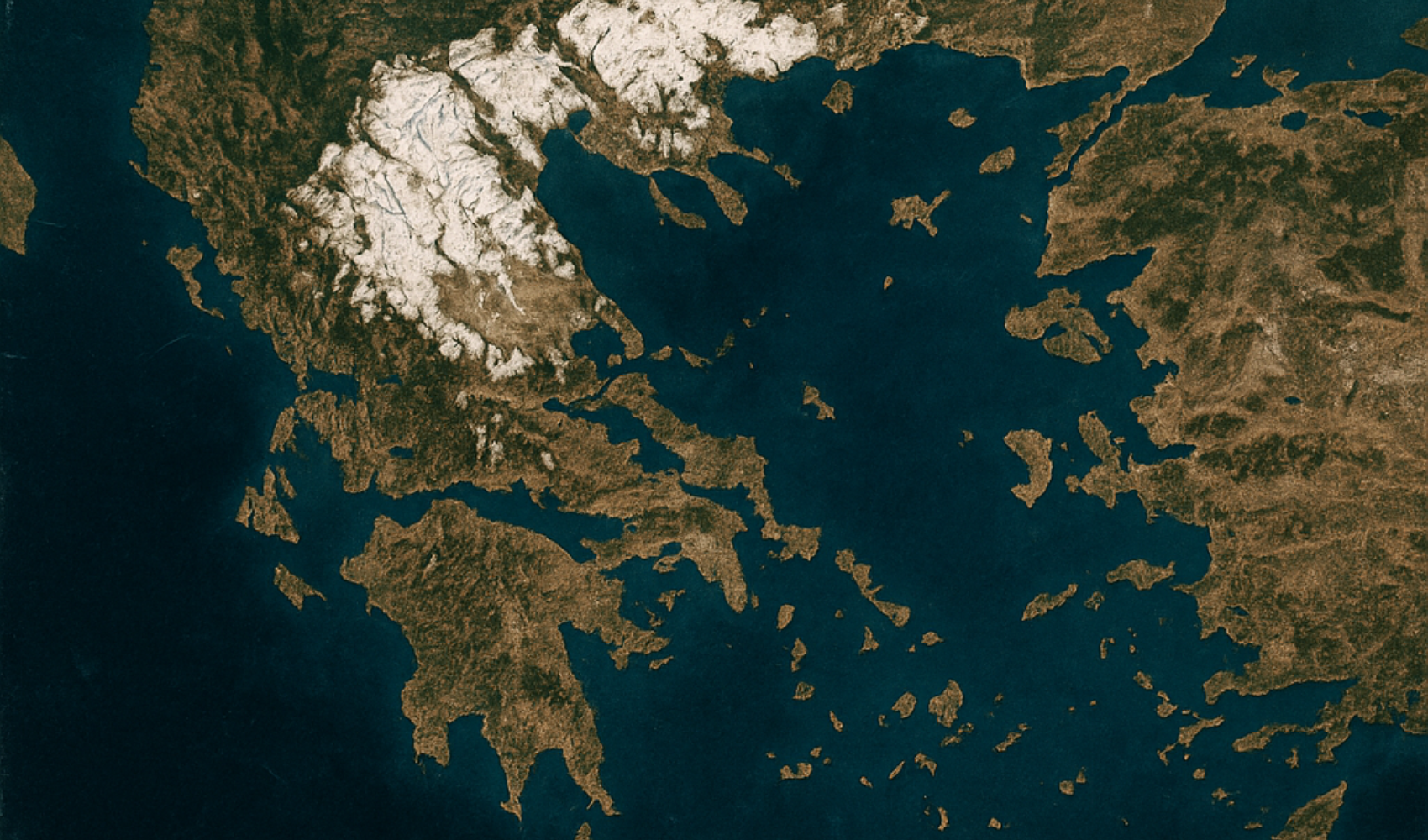
A recent comprehensive study on mountainous areas in Greece has revealed that the snow layer is disappearing rapidly. In the study conducted by a team from the University of Cambridge, various satellite images, climate statistics, and artificial intelligence-based assessments were combined. The results show that snow cover has decreased by 58 percent over 40 years.
Experts emphasize that rising temperatures are the primary driver of this dramatic decline. The findings, which have been met with interest in scientific circles, were published in the journal The Cryosphere.
Snow balances river, lake, and groundwater levels in the region, forming the foundation for vital sectors such as agriculture and hydroelectric power generation. Konstantinos Alexopoulos, the lead researcher of the study, drew attention to the role of snow, noting: “Snow is like a natural reservoir. It is like putting money into savings; instead of spending it immediately, it gains value over time.” It is emphasized that the gradual melting of snow feeds water resources, especially during the summer months.
Another critical finding is that not only the amount of snow but also the snow season has shortened significantly compared to previous years. The research team reports that weather conditions in recent times allow for later snowfall, while melting begins much earlier. Consequently, serious risks are emerging for water-dependent life and activities.
Prof. Ian Willis pointed out that the rise in temperature directly affects the form of precipitation, stating, “As temperatures rise, the likelihood of precipitation falling as rain instead of snow increases. The accumulated snow also melts faster.”
It is noted that Greece is one of the countries most severely affected by the negative impacts of climate change. Especially in winter months, the fact that air temperatures now very rarely drop below zero is leading to dangerous declines in water reserves. The snow deposits that once prevented drought are gradually disappearing.
According to regional scientists, if this trend continues, many economic areas, particularly tourism, will suffer a major blow in addition to water resources. The future of sectors such as ski tourism is under significant risk.
Finally, researchers point out that many mountainous areas around the world lack sufficient measurement infrastructure. However, it is stated that the newly developed analytical models can provide reliable predictions in such sensitive areas, even in the absence of local data.
News Source: 12punto
Most Read

Striking picture for Özgür Özel's 'New Party'

The PKK opening and Özgür Özel’s path!..

How did the newspapers view Özgür Özel's farewell to the CHP?

He killed his wife by slitting her throat: Their children witnessed the moments

What did the CHP do?

Özel’s new party move in the world press

The New CHP, against CEHAPE

Fire at TUSAŞ engine factory in Eskişehir under control

From self-efficacy to despair

Kılıçdaroğlu's first message on Özgür Özel's new party announcement