

Apple snails' ability to regenerate eyes surprises scientists
It has been discovered that apple snails can completely regenerate eyes they have lost within four weeks. Scientists state that this extraordinary ability could inspire innovative treatments for human eye health.



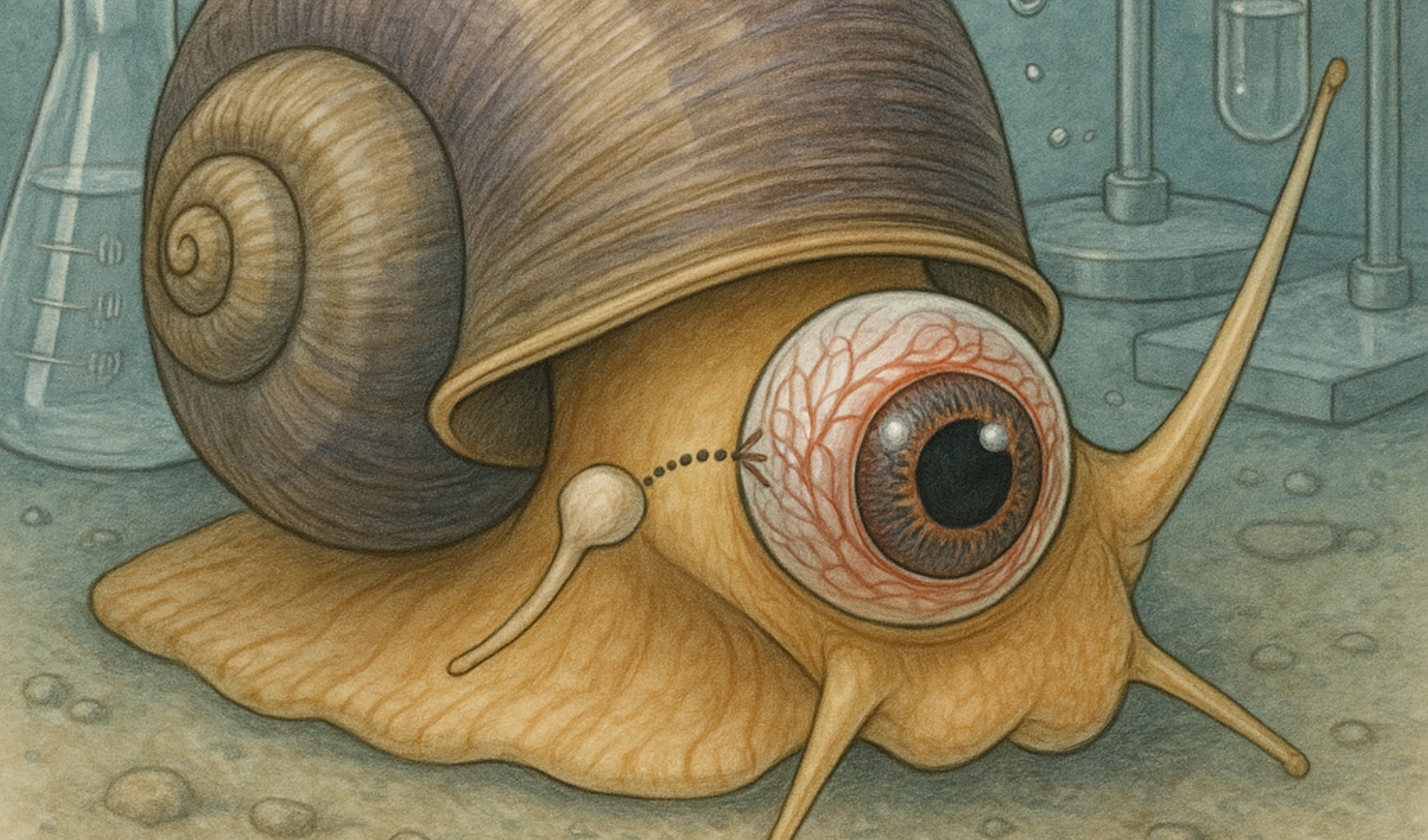
Native to certain regions of South America, apple snails (Pomacea canaliculata) have begun to threaten ecosystems in Asia, Europe, and North America due to their invasive characteristics. The unique biological properties of these creatures are also attracting the attention of the scientific world.
A new study has revealed that after the eyes of apple snails are completely removed, they are able to fully regenerate this vital organ within 28 days. While the first signs of eye growth were observed before two weeks had passed, it took approximately four weeks for a fully functional eye to emerge. Interestingly, the regeneration of different parts of the eye does not occur all at once, but follows a specific sequence.
It was reported that the research emerged while studying invasive apple snails in Italy. After carefully removing the snails' eyes under laboratory conditions, scientists monitored the rapidly beginning repair process step by step.
In the study, which was supported by genetic analysis, it was discovered that the regeneration of the eye occurs in four basic stages: first, wound healing, followed by the formation of a specialized cell mass, and then the development of the lens and retina. In the final stage, all components of the eye mature, and a functional organ emerges.
Although there are similarities between the human eye and apple snail anatomy, humans are only capable of performing the wound-healing step of this process. Researchers emphasize that finding which genes are responsible for triggering the remaining processes could be vital for human eye treatments.
In the study, the importance of the gene called pax6, which plays a key role in eye development, came to the fore. It was observed that no new eyes formed in snails whose gene function was halted using the gene-editing technology CRISPR. Scientists aim to shed light on the biological foundations of eye regeneration by analyzing which genes are active at each stage.
Dr. Alejandro Sánchez Alvarado stated, “Understanding how some creatures can regenerate complex eyes and what genetic mechanisms lie behind this could be an important step in the future treatment of eye injuries in humans.” The fact that many genes that enable eye regeneration in snails also play a role in the eye development of vertebrates makes this research special. Dr. Alice Accorsi commented, “Even though the eyes of the apple snail and humans have completely different evolutionary histories, we see that fundamentally the same genetic building blocks guide the process.”
These findings offer hope for human eye regeneration while pushing the boundaries of biology a little further.
News Source: 12punto
Most Read

Striking picture for Özgür Özel's 'New Party'

Özgür Özel gives a dated response regarding the number of resignations

Forest fire in Antalya brought under control

The PKK opening and Özgür Özel’s path!..

How did the newspapers view Özgür Özel's farewell to the CHP?

Houthis strike Saudi-owned tanker

What did the CHP do?

Özel’s new party move in the world press

The New CHP, against CEHAPE

From self-efficacy to despair