

Astrophysicist Dr. Umut Yıldız evaluates Turkey's space journey
Former NASA astrophysicist Dr. Umut Yıldız wrote about Turkey's first manned space mission and the importance of space research for Anadolu Agency.



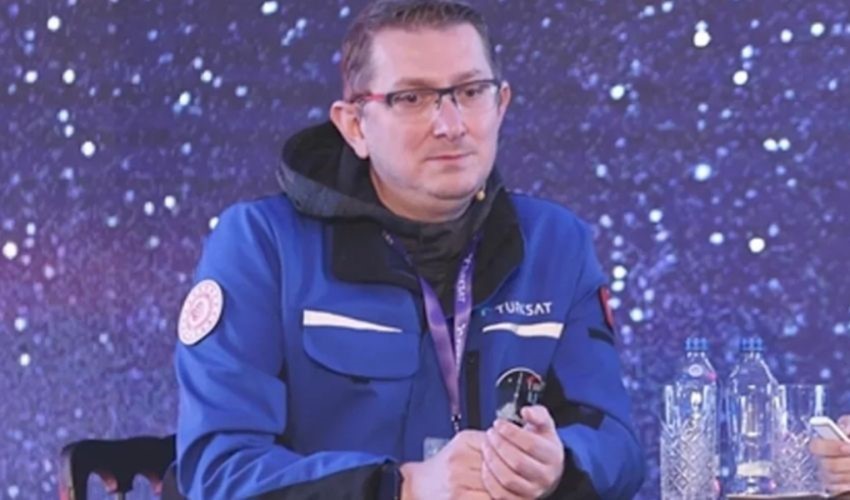
Yıldız's analysis, which touches upon Turkey's years of preparation and its progress toward sending a citizen into space for the first time, continues as follows:
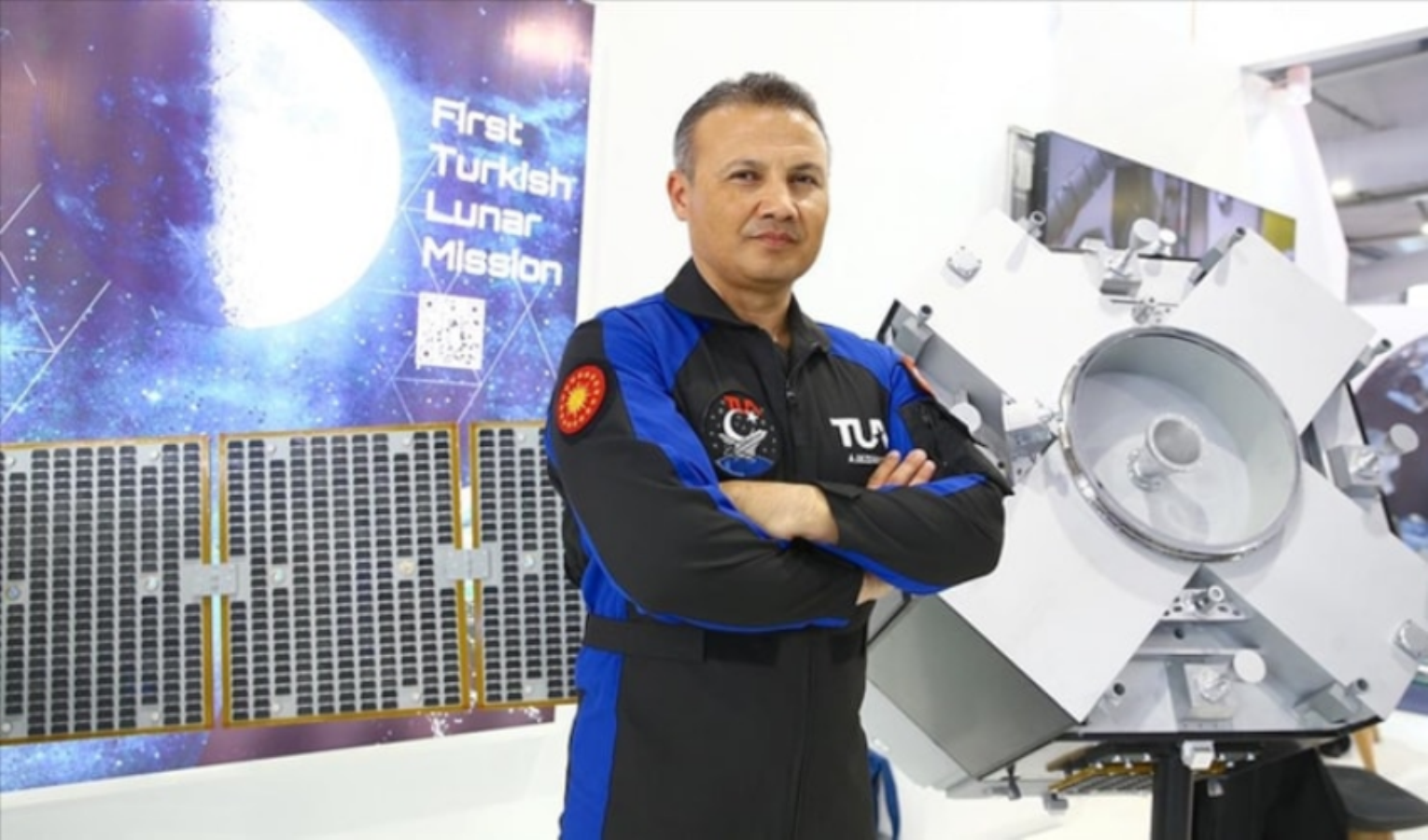
Turkey is witnessing the historic moment it has awaited for years this week. By sending its first astronaut into space, it is joining the club of nations that have sent their own citizens into space. Our first Turkish astronaut, Alper Gezeravcı, earned the right to go to space after serving as a pilot in the Air Force for many years, meeting the astronaut application criteria set by the Turkish Space Agency, and passing the subsequent rigorous tests to reach the finals. This has been a process that has filled us with immense excitement, as it is an endeavor the country has been anticipating for many years. Alper Gezeravcı will travel to the International Space Station using a SpaceX rocket via the company Axiom Space, where he will stay for 14 days to conduct 13 space experiments prepared by researchers working at universities in Turkey.
We see that there are some who do not view this space journey as a major event because we are not traveling on our own rocket. But that is not the case. Of course, it would have been wonderful if we had built our own rocket and launched into space from our own launch pad, but there are only a few countries in the world that can send humans into space. Today, many other countries go to space using the rockets of the few nations that possess this capability.
SPACE TRAVEL IS DIVERSIFYING AND INCREASING
In the Cold War environment of 1961, Yuri Gagarin became the first human to go to space, and the Soviet Union used this as an opportunity to demonstrate its power. Shortly thereafter, the USA sent its first astronaut into space, and the space race intensified.
Although sending a vehicle to space has become quite common today, security measures tighten according to the value of the payload inside the spacecraft. Since the most valuable cargo is human life, manned space missions can only be carried out after the state institutions sending them have fulfilled very long and difficult requirements. Even though astronauts make this journey inside a safe capsule at the very top of the rocket, they are perhaps doing the most dangerous job in the world, considering that tons of fuel in the rocket beneath them are burning in seconds. Because space travel can only be achieved at high costs with rockets, there is still a very small crowd that has experienced space travel. In the years since Gagarin, more than 600 people from many countries have gone to space. The vast majority of these people went to the International Space Station, where they stayed for certain periods to conduct experiments that answer questions of curiosity for humanity. Those who perform this work do so as a profession and remain on standby to return to space at any moment to continue their countries' work in space until they retire.
There have also been space tourists who paid for their own travel and accompanied astronauts. Real estate billionaire Dennis Tito became the first space tourist by traveling to the International Space Station from Russia in April 2001. After him, 8 more tourists went to space on Russian rockets until 2009, but these trips were halted due to complaints from the USA. This was because the USA argued that the International Space Station was built for scientific purposes and that using it for tourism was wrong. After 2009, space tourism was completely handed over to the private sector, and many companies began their own work for manned missions. In fact, NASA launched a funding program called the Commercial Orbital Transportation Services (COTS) and showered many companies with support simultaneously. Although many of these companies went bankrupt, SpaceX, Blue Origin, and Virgin Galactic, whose names we hear very often today, were born in that same era and benefited from this support.
The launch of our first astronaut into space, in addition to demonstrating Turkey's will in space research, also appears as an expression of national pride. Engineers and scientists over a certain age, especially those working at NASA and similar space agencies in the USA, say they became space engineers after being inspired by watching the moment the USA first landed on the Moon. As it is a national issue, Turkey's space journey will also give everyone, from our country's most developed cities to its most remote villages, a sense of achievement. Therefore, a series of changes and developments will take place in Turkey. In fact, I hope that Turkey's space adventure will not be limited to this journey and that our people will develop more space projects. This national pride in space research can strengthen the country's future scientific potential by directing young people toward careers in science and engineering. Indeed, the 13 experiments to be conducted in different fields in space will serve this purpose.
On the other hand, space research is of great importance not only for science but also for international relations. Going to space, in addition to showcasing a country's technological and scientific work, also increases its prestige in the international arena. Turkey sending an astronaut to space can also be considered part of an effort to strengthen our country's role on a global scale and increase its interactions within the world community. I also believe it will increase international collaborations.
There have been several state institutions related to space in our country for many years, but from now on, as more people turn to this field, more job areas will inevitably have to be created. Therefore, state institutions alone will not be enough, and private space companies will be established to ensure the development of the ecosystem. This will also lead to the formation of a space economy in Turkey.
In conclusion, Turkey sending an astronaut to space aims not only to increase its achievements in the fields of science and technology but also to boost its national pride and effectiveness in the global arena. This, in addition to demonstrating Turkey's potential in space research, will attract the interest of the younger generation by leaving a scientific legacy and will place Turkey in a stronger position internationally.
News Source: AA
Related News

Most Read

Striking picture for Özgür Özel's 'New Party'

Özgür Özel gives a dated response regarding the number of resignations

Forest fire in Antalya brought under control

The PKK opening and Özgür Özel’s path!..

How did the newspapers view Özgür Özel's farewell to the CHP?

What did the CHP do?

Özel’s new party move in the world press

The New CHP, against CEHAPE

From self-efficacy to despair

The return of craftsmanship in the age of artificial intelligence